


Site Admin
27. Roy White
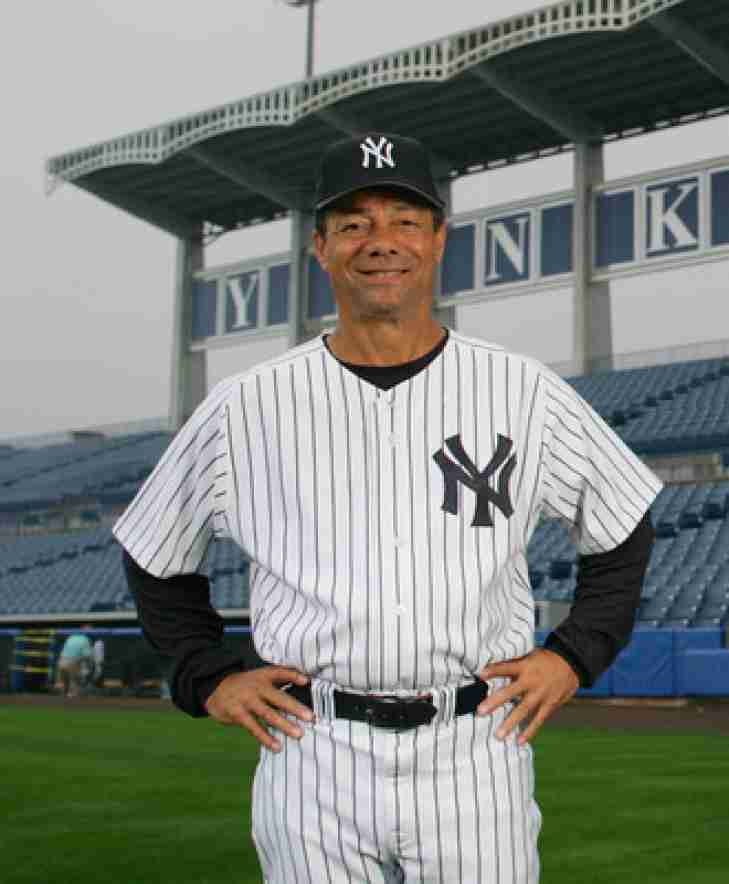
Roy White entered the Bronx clubhouse in September 1965, during the Yankees’ decline from their mid-century dynasty. While fans lamented the team's fall, White, a switch-hitter from Los Angeles, quietly became a steady bridge between two championship eras. With dignity, he endured rebuilding years before winning October titles.
White exemplified a masterful, quiet approach to situational hitting, balancing discipline and patience at the plate. With a highly disciplined visual clock and a rare patience, he avoided expanding his strike zone to appease impatient pitchers. During his time with the Yankees, he exceeded 70 walks seven times, including a standout 1972 season when he led the American League with 99 walks and posted an impressive .384 on-base percentage. Additionally, White demonstrated a unique ability to manufacture runs for his team; in 1971, he set a league record with 17 sacrifice flies, exemplifying a consistent, team-oriented focus that kept the offense active.
While his keen eye was his main weapon, White enhanced his play with a lively, multi-faceted presence on the bases and unexpected pop in his bat. He surpassed 15 home runs five times, including a career-high 22 during a remarkable 1970 All-Star season, when he also scored 109 runs and drove in 94. Once on base, he employed a highly effective running style that placed him in the junior circuit's top ten in power-speed seven times, leveraging his speed to amass 233 career stolen bases while playing for New York.
On the grass, his defense was the ultimate benchmark for late-game security. White held down left field with graceful, flawless movement, eventually appearing in 1,521 games at the position, the highest number by any left fielder in the franchise's long and star-studded history. His positioning and consistent play offered crucial stability as the team grew into a powerhouse again in the late 1970s. White was the experienced, professional presence that anchored the back-to-back World Championship teams in 1977 and 1978, providing vital steadiness alongside the more flamboyant, prominent figures of the "Bronx Zoo.”
He ended his 15-year major league career after 1979, then went to Japan to play with the Yomiuri Giants. He left the Bronx with notable stats: seventh in games played (1,881), eighth in walks (934), and career totals of 1,803 hits, 160 home runs, and a .360 on-base percentage.
33. Joe Gordon
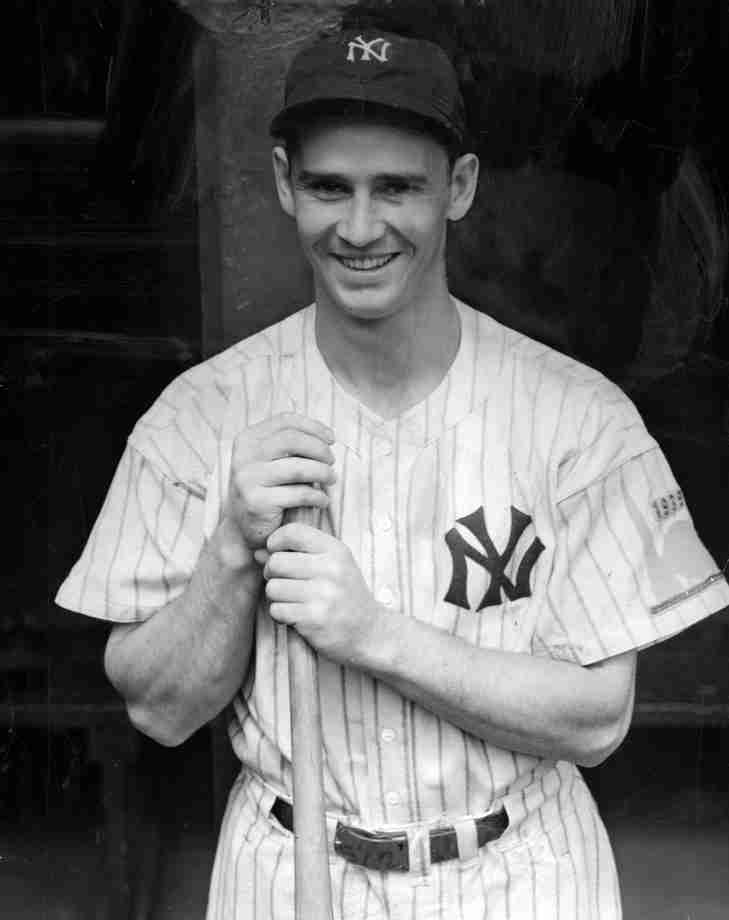
In 1938, Joe Gordon replaced Tony Lazzeri. At 23, he handled the pressure and transformed second base defense into acrobatics, covering the right side with aerial, diving range that redefined physical limits at the position.
Gordon was a complete defensive force, greatly influencing the game's pace. He had a lightning-fast transfer and an exceptional sense of spatial awareness, often grabbing balls from the dirt and twisting mid-air to start double plays. Advanced statistics support his reputation, as he ranked in the top five in defensive bWAR in the American League seven times with the team, including four outstanding seasons surpassing 2.0 defensive bWAR. He led all second basemen in the junior circuit with assists four times and double plays three times, setting a high standard for middle-infield excellence.
While his acrobatic glove work kept the infield steady, Gordon added a powerful, groundbreaking bat to the bottom of the order. By hitting 25 home runs as a rookie, he broke the mold for middle infielders and set a new major league record for second basemen. Over his career, he exceeded 20 home runs seven times, serving as the clutch power hitter who maintained the offense behind Joe DiMaggio.
The unique blend of elite run prevention and powerful middle-infield play reached its peak in the historic 1942 season. Gordon delivered a remarkable offensive performance, hitting a career-high .322 with 29 doubles, 18 home runs, and 103 RBIs. His outstanding all-around contribution earned him the 1942 American League Most Valuable Player award, narrowly beating Triple Crown winner Ted Williams due to his significant, multi-faceted value to the pennant-winning Yankees.
He was a relentless winner who regarded October as his personal stage. Gordon led New York to five American League titles and four World Series wins (1938, 1939, 1941, and 1943), batting an impressive .400 during his first Fall Classic sweep of Chicago. Like many icons of that time, his prime years were interrupted by World War II, as he gave up two key seasons in 1944 and 1945 to serve in the Army Air Corps.
Upon returning, he played one final season in the Bronx in 1946 before the front office executed a historic, challenge-ending blockbuster trade, sending Gordon to Cleveland in exchange for starting pitcher Allie Reynolds. The move proved brilliant for both sides; Gordon immediately anchored the Indians' infield and clubbed a career-high 32 home runs to pilot Cleveland to its historic 1948 World Series title.
Gordon played exactly 1,000 games for the Yankees, accruing 1,000 hits, 153 home runs, and 617 RBIs. He was inducted into the Baseball Hall of Fame through the Veterans Committee in 2009.
28. Herb Pennock
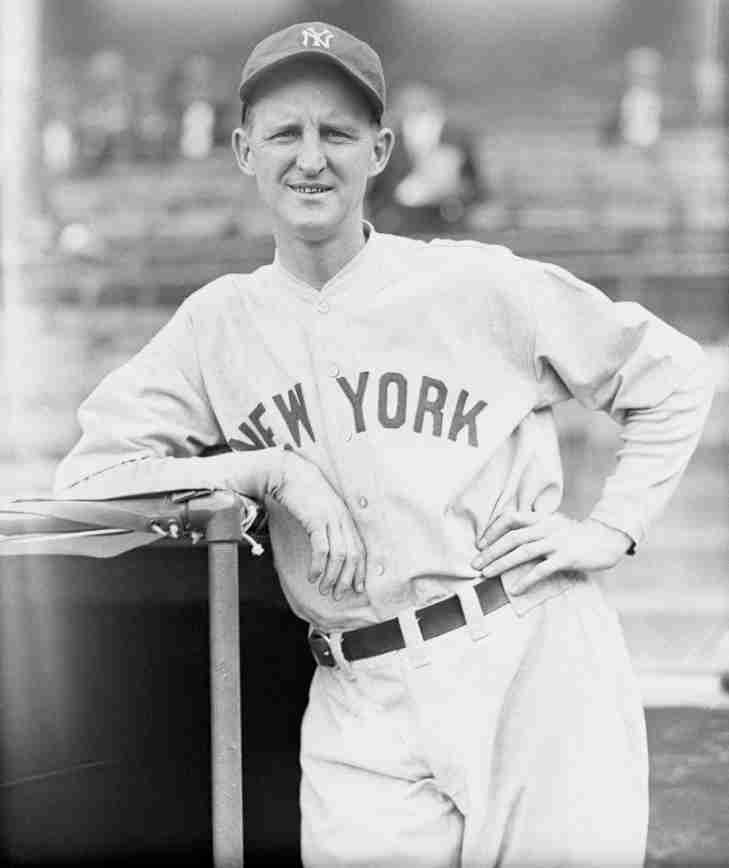
Miller Huggins once said that if his ace's head was cut open, "the weakness of every batter in the league would fall out," highlighting Herbert Jeffries Pennock's operational intelligence. While the 1920s Bronx were known for their power hitting, "The Knight of Kennett Square" was the smooth, elegant southpaw who stabilized the rotation. Acquired in January 1923 from Boston, the veteran left-hander had a graceful, refined delivery that made heavy workloads seem effortless.
Pennock demonstrated a masterclass in refined, strategic control. Instead of relying on overwhelming velocity to break down lineups, he utilized a diverse, deceptive speed repertoire and an exceptionally sharp curveball to keep hitters constantly off balance. His advanced visual perception enabled him to consistently target the very edges of the strike zone, leading the American League in WHIP twice and ranking among the best in fewest walks per nine innings three times. This careful efficiency resulted in two top-five finishes in American League MVP voting: third in 1924 with 21 wins and a tiny 2.83 ERA, and fourth in 1926 during a dominant 23-win season.
This exact regular-season performance set the stage for a remarkable and unparalleled big-game record. Pennock maintained an immaculate 5-0 record in his World Series career, displaying consistent calmness on baseball's biggest platform. In the historic 1927 "Murderers' Row" Fall Classic, he delivered a pitching masterclass in Game 3 against the Pittsburgh Pirates, nearly pitching a perfect game into the eighth inning before completing a game of just three hits. He was a key pillar on four different Yankees championship teams (1923, 1927, 1928, and 1932), providing a steady pitching presence that complemented Babe Ruth’s powerful, high-pressure role.
His arm gave out after an 11-year career in pinstripes, ending with a sentimental return to Boston before retiring in 1934. Pennock finished in the Bronx with a 162–90 record, a .643 winning percentage, a 3.54 ERA, and 165 complete games.
As a Yankee, Pennock gave the team 162 Wins against 90 Losses with a 3.54 ERA. He would enter the Baseball Hall of Fame in 1948, just months after he passed away from a cerebral hemorrhage
26. Graig Nettles
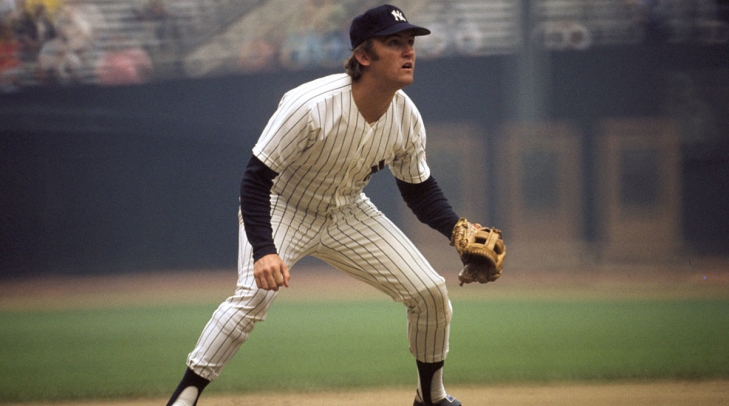
When Graig Nettles was acquired from the Cleveland Indians in November 1972, the New York Yankees knew they were landing a sound third baseman. However, they got a defensive maestro whose glove work at third base stabilized the left side of the field, supporting the late-1970s pinstriped revival. With dry wit, an intense demeanor, and a knack for reading a baseball off the bat, Nettles grew into a key clubhouse leader.
Nettles transformed games with his fielding, yet he was also a powerful left-handed hitter perfectly suited for Yankee Stadium's short porch. He started his New York career with seven straight seasons of over 20 home runs, culminating in 1976 when he led the league with 32 home runs and secured the American League title. In 1977, he had an even more impressive season, hitting a career-high 37 home runs and driving in 107 runs. His consistent excellence during this notable period earned him wide national acclaim, including a fifth-place finish in the 1977 American League MVP voting and sixth place the following year.
However, highlighting his offensive punch only tells part of the story. Nettles was essentially a defensive black hole whose value increased dramatically under postseason pressure. He won two straight Gold Glove Awards in 1977 and 1978, but his greatest achievement was displayed in Game 3 of the 1978 World Series against the Los Angeles Dodgers. With the Yankees trailing two games to none and under intense pressure, Nettles delivered a stunning defensive performance at third base. He executed four incredible diving stops along the line, preventing the Dodgers from securing extra-base hits, and decisively shifted the momentum of the series, helping New York secure back-to-back championships.
His fierce drive and leadership earned respect, leading to his 1982 designation as the 14th franchise captain. He held this role with pride in his final two seasons before an offseason trade to San Diego in 1984 sparked a youth movement.
Nettles left the Yankees after 11 seasons, with 1,396 hits, 230 doubles, 250 home runs, and 834 RBIs. The Yankees would later honor him with a plaque in Monument Park in 2014.
