


Site Admin
42. Spud Chandler
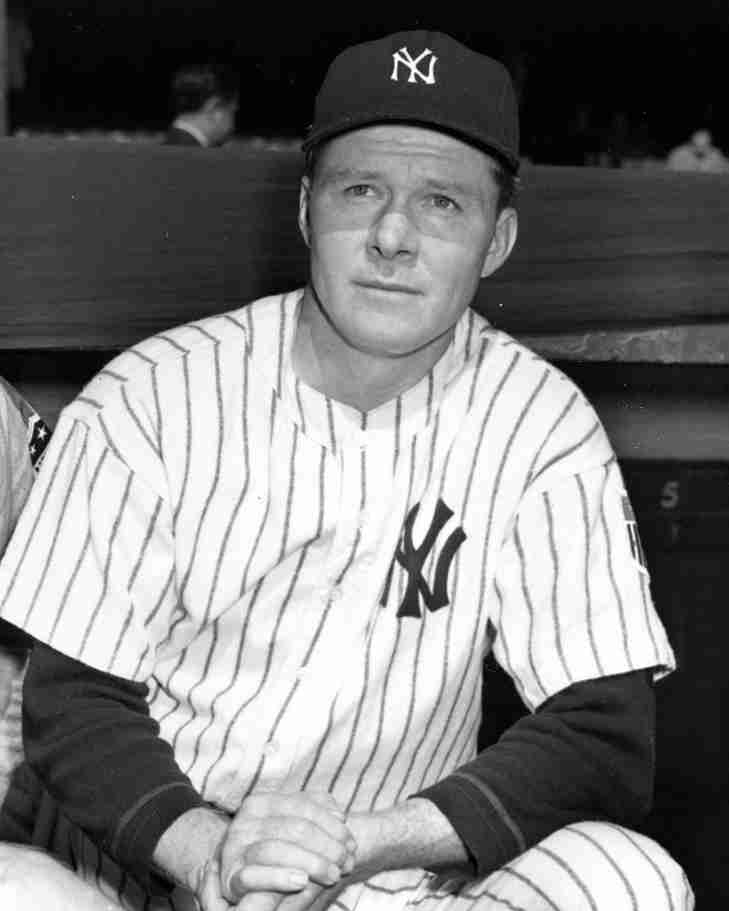
"Spud" Chandler patrolled the area around the pitching rubber at Yankee Stadium with fierce intensity that treated hitters like enemies. Because he didn't debut until age 29 and missed nearly two prime summers to WWII, many overlook his legacy.
We won’t do that here.
Armed with a heavy, biting slider, a relatively rare and devastating pitch that sharply cut across the plate, Chandler specialized in breaking opposing bats and inducing weak contact. Despite limitations from nagging arm fatigue and injuries in his early thirties, he fully realized his potential as a dominant, front-of-the-rotation pitcher as the 1940s began. He was a steadfast workhorse for manager Joe McCarthy, posting an impressive 16–5 record in 1942 and delivering an outstanding performance the following summer.
His historic 1943 regular-season performance remains one of the most dominant pitching displays in Bronx history. Chandler completely shut down American League lineups, leading the staff with 20 wins against only 4 losses. He showcased exceptional run prevention, finishing the season with 20 complete games, 5 shutouts, a tiny 0.992 WHIP, and a stellar 1.64 ERA; the lowest single-season ERA by any Yankees starter in the modern era. His consistent excellence was so evident that he overwhelmingly won the 1943 American League Most Valuable Player award, making him the only starting pitcher in franchise history to earn this honor.
During the postseason, Chandler transformed into an indispensable asset. He contributed to six World Series wins with the Yankees (1937, 1938, 1939, 1941, 1943, and 1947), but his standout performance was in the 1943 Fall Classic against the St. Louis Cardinals. He pitched in two games, delivering two complete-game victories, allowing only one unearned run over 18 impressive innings, and sealed the championship with a dominant Game 5 shutout, securing the title for the Yankees.
Just as he reached the peak of his powers, his career was significantly interrupted. Chandler dedicated almost all of the 1944 and 1945 campaigns to serving in the United States Army. Upon returning to the Bronx full-time in 1946, he didn't miss a beat. At age 38, he pitched a career-high 257.1 innings, completed 20 games, and struck out 138 batters, achieving his second 20-win season.
A four-time All-Star who spent his entire 11-year career in the pinstripes, Chandler pitched his final major league game in 1947 due to severe elbow chips that severely affected his arm. He retired with an impressive 2.84 ERA, a 109-43 record, and 26 shutouts, setting a high standard of competitive excellence. Bill Dickey called him the best pitcher he ever caught, and Ted Williams often listed him among the toughest opponents he faced; a distinguished legacy for a winner who refused to let the Bronx down.
43. Snuffy Stirnweiss
Hmmm.
This is another tricky one.
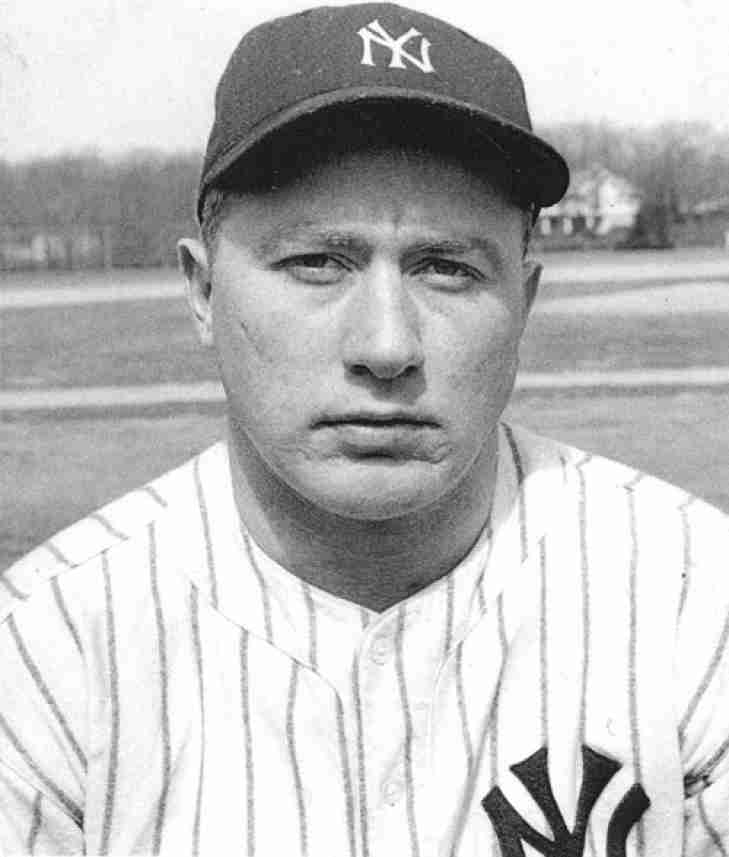
Regarding pure talent, Snuffy Stirnweiss isn’t typically considered among the best, with his peak seasons occurring during World War II when MLB rosters were short-handed. He secured his infield position while Joe Gordon was serving in the military and lost it upon Gordon's return. The undeniable truth in professional sports is that a player can only compete against the opponents present. During the wartime roster shortages, Stirnweiss didn't just occupy a position; he maximized his athletic abilities to produce a two-year performance that modern analytics recognize as truly elite.
When Joe Gordon left for military service, Stirnweiss took over the everyday second base role and evolved into a highly efficient, dynamic leader at the top of the lineup. A former college football star at North Carolina and a drafted NFL player, he utilized his incredible speed to revolutionize the Yankees’ run production strategy. In 1944, he racked up an impressive 205 hits, 125 runs, 16 triples, and 55 stolen bases, all while maintaining a strong .319 batting average. Advanced statistics highlight his exceptional performance, with a remarkable 8.6 bWAR that led the entire American League.
He demonstrated it was not a fluke by delivering an even more impressive masterclass in 1945. Stirnweiss dominated the American League leaderboard, leading in hits (195), runs (107), triples (22), and stolen bases (33). More notably, he won the junior circuit batting title with a .309 average and topped the league in slugging percentage (.476) and OPS (.862), a remarkable display of all-around skill for a 5-foot-8 leadoff hitter. His 8.8 bWAR again led the league, bringing his total to 17.4 bWAR over these two historic years. Although traditional MVP voters placed him fourth and third, respectively, modern sabermetrics argue he was the most valuable player on the planet during that period.
When the pre-war superstars returned from service in 1946, Stirnweiss’s individual numbers naturally regressed toward his true baseline. He surrendered the everyday second base job back to Joe Gordon, shifting into a multi-positional utility hand. Yet, dismissing him as a mere wartime fluke ignores his continued structural value to the dynasty. He reclaimed a starting infield spot and served as a highly productive, steadying presence for the 1947 world championship roster, scoring 102 runs and drawing 89 walks to keep the line moving ahead of Joe DiMaggio. He was a bankable constant for three World Series title teams in New York (1943, 1947, and 1949), playing a quiet, essential supporting role long after his days as a frontline superstar had faded.
Following a mid-season trade in 1950, he wrapped up his decade-long major league stay with brief stops in St. Louis and Cleveland, walking away from the diamond with 989 hits, 134 stolen bases, and a fantastic .362 career on-base percentage. Tragically, his life was cut short when he passed away in a New York area train derailment in 1958 at the young age of 39.
45. Rickey Henderson
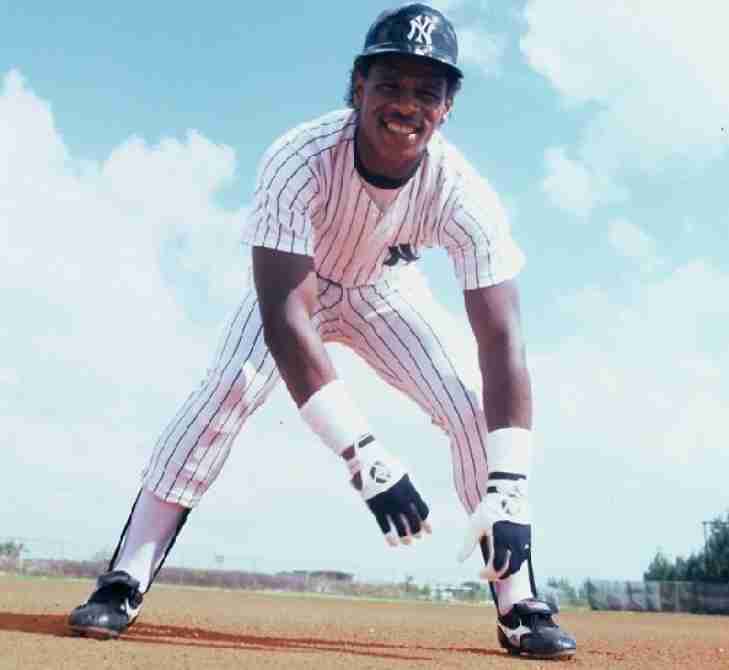
Rickey Henderson is, and will always be, an Athletic. Yet…
His move to New York was anything but ordinary—it was an exciting winter event at the 1984 Winter Meetings, highlighting George Steinbrenner's strong passion for top talent. By the end of 1984, the Athletics, his hometown team, were struggling with consecutive losing seasons and hesitated to offer Henderson a lucrative contract extension as he was nearing free agency. Seeing a special opportunity to acquire a legendary player at his peak, the Yankees eagerly joined a competitive bidding battle with the Orioles, Dodgers, and Rangers.
To win the sweepstakes, New York had to meet Oakland GM Sandy Alderson’s demand for a five-player package. On December 5, 1984, the Yankees made the deal, trading future talent for Henderson and reliever Bert Bradley. They sent reliever Jay Howell and four top prospects, Tim Birtsas, Stan Javier, Eric Plunk, and Jose Rijo, seen as Oakland's key piece, while receiving Henderson and Bert Bradley.
Henderson did more than just play baseball in New York; he controlled the pace and flow of the game entirely. With a highly disciplined strike zone and an advanced visual clock, he transformed the leadoff position into a key threat for opposing pitchers. His 1985 debut season in the Bronx was a masterclass in modern run production, as he posted a .314/.419/516 batting line, hit 24 home runs, drew 99 walks, and scored 146 runs, leading the league. His quick baserunning created chaos, leading all players with 80 stolen bases. Achieving a remarkable 9.9 bWAR that summer, he delivered one of the most dominant individual seasons in franchise history, finishing third in AL MVP voting.
While the casual fan fixated on his historic stolen base totals, his tenure in New York unlocked a rare, multi-dimensional completeness. He averaged over 20 home runs per season during his first three full summers in the Bronx, providing a shocking power baseline for a leadoff hitter.
Surprisingly, his defensive skills peaked during his time patrolling the outfield at Yankee Stadium. With an exceptionally quick first step and excellent spatial awareness, Henderson regularly turned difficult line drives into easy outs, significantly improving his efficiency in advanced metrics. He was a constant presence on the national stage, earning an All-Star selection in every complete season he played for the junior circuit in pinstripes.
Despite internal turmoil and roster changes in the late 1980s, Henderson’s impact remained significant. Even after being traded back to Oakland in June 1989, he left a lasting legacy on the team's leaderboard. He finished his Bronx career with 326 stolen bases, a remarkable figure that still places him among the top five in franchise history, despite playing fewer than 600 games in pinstripes. His time with the Yankees achieved an impressive 30.6 bWAR, a notable accumulation of value that surpasses many long-standing organization icons.
Appropriately, Henderson was a first ballot Baseball Hall of Fame inductee in 2009.
41. Bobby Murcer
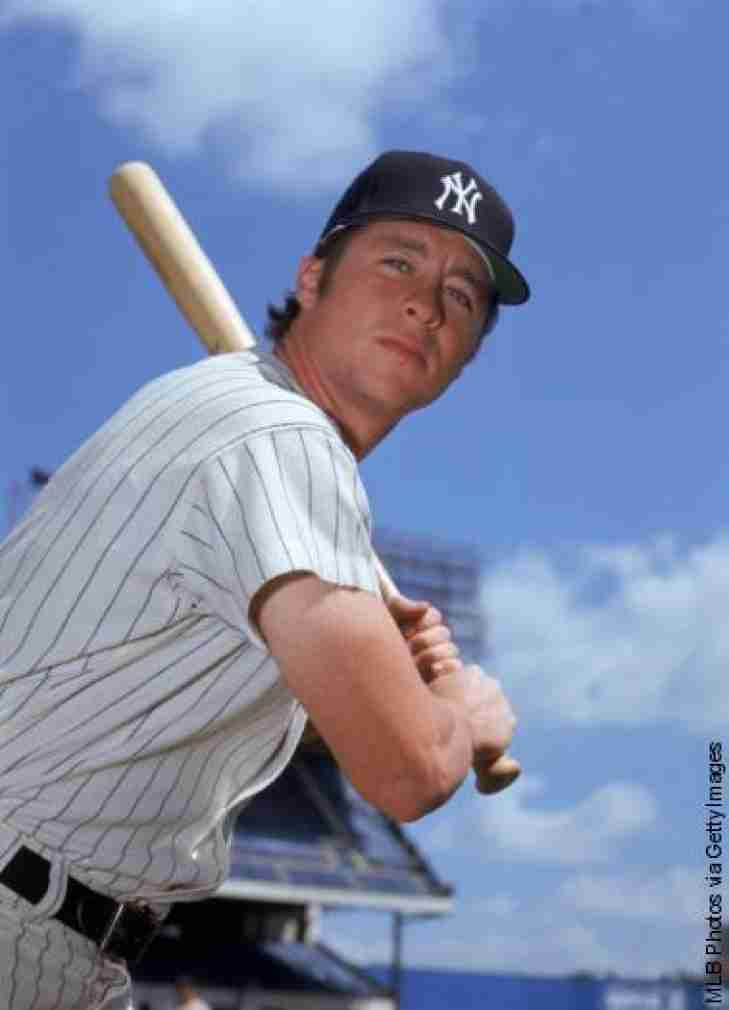
When New York called up Bobby Murcer as a teenager in the 1960s, the team saw him not just as a promising player but as the direct heir to Mickey Mantle, placing an unfair burden on him. Both proud Oklahoma natives, signed by legendary scout Tom Greenwade, they shared athletic, left-handed swings that inevitably drew comparisons. Murcer even took over Mantle’s locker and his role in center field. While living up to the mythical status of such a legendary figure was impossible, Murcer forged his own significant legacy, becoming the franchise’s emotional core during some of its toughest years.
After a mandatory two-year stint serving in the United States Army during the peak of the Vietnam War, Murcer returned in 1969 to take a central role in a transforming pinstriped batting lineup. He adopted a patient stance at the plate, effectively combining a keen visual sense with a smooth pull swing that was ideally suited to target the short right-field porch at Yankee Stadium. He achieved five straight summers with over 20 home runs early in his full-time career, peaking in 1971 when he led the American League with a remarkable .427 on-base percentage and a .969 OPS. The following year, he delivered an outstanding 1972 season, leading the league in runs scored (102) and total bases (314), while hitting a personal best of 33 home runs and driving in 96 RBIs. His consistent performance earned widespread recognition nationwide, securing four consecutive All-Star selections and four top finishes in the American League MVP voting, including a notable fifth-place finish in 1972.
On the grass, his defensive skills set a remarkable standard for outfield security. He moved with a swift first step, taking careful routes to the ball and earning a Gold Glove Award in 1972. His excellent throwing mechanics made him a formidable player; throughout the 1970s, Murcer recorded 119 outfield assists, leading all major league outfielders for the decade and making aggressive baserunners think twice. Yet, just as the front office began constructing a championship roster around him, Murcer was abruptly traded to San Francisco for Bobby Bonds in a stunning November 1974 deal. The trade meant he painfully missed out on the team's late-1970s world championship resurgence.
In June 1979, the Yankees reacquired their star from the Chicago Cubs, placing him in a veteran role. His return included a memorable moment on August 6, 1979, just hours after eulogizing his close friend and captain Thurman Munson. Murcer rallied the Yankees emotionally, driving home all five runs—including a game-winning two-run single in the bottom of the ninth—to beat Baltimore 5–4.
He spent four summers in a supporting leadership role before moving to the broadcast booth mid-season in 1983. Murcer ended his career with 1,238 hits, 192 doubles, 177 home runs, and 692 RBIs in 1,261 games.
