


Site Admin
35. Elston Howard
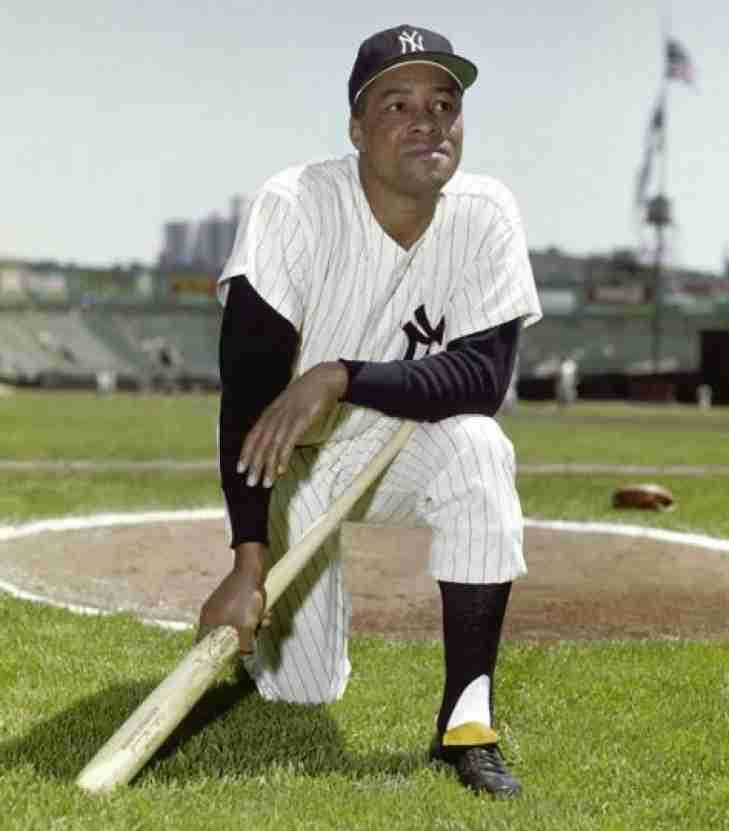
When Elston Howard finally made his major league debut in April 1955, he carried a historic weight that extended far beyond the white lines of the diamond. As the first African-American player to break the color barrier for the sport's most successful franchise, Howard faced immense, high-pressure scrutiny with quiet dignity and resilience. A former standout for the Kansas City Monarchs in the Negro Leagues, the St. Louis native was intentionally converted into a catcher by the New York front office during his minor league journey, a strategic move that would eventually transform the backstop position for a new generation in pinstripes.
Securing regular playing time early on demanded a lot of patience with team structure. Howard joined the Bronx during a period when the legendary Yogi Berra was still performing at an MVP-level behind the plate. Instead of leaving his defensive skills unused on the bench, manager Casey Stengel utilized Howard's athleticism by making him a versatile player capable of handling multiple positions. Throughout the late 1950s, he fluidly played left field, right field, and first base while serving as Berra's main backup. Despite the constant changes in defensive roles, Howard's exceptional performance gained national recognition, earning him his first of nine straight All-Star selections in 1957.
When Ralph Houk assumed the managerial role in 1961, Howard was finally appointed as the team's full-time catcher, beginning a legendary era of individual achievement and team excellence. He provided stability to the pitching staff with his calm demeanor, using exceptional game-calling skills and a rapid release that earned him two Gold Glove Awards. Complementing his defensive mastery with significant power hitting, he smashed 21 home runs and led the historic 1961 "M&M Boys" team to a world championship.
In 1963, his exceptional two-way skills reached their peak during a historic season. Howard dominated the junior circuit, hitting a career-high 28 home runs, driving in 85 RBIs, and posting a strong line of .287/.342/528, all while providing perfect defensive security behind the plate. His consistent performance earned him the 1963 American League Most Valuable Player award, the first time an African-American player received this honor in American League history, as he single-handedly led an injury-ravaged Yankees team to another pennant.
In October, Howard was a consistently reliable figure, appearing in an impressive ten World Series throughout his career. He played a key role in leading the Yankees to four championships (1956, 1958, 1961, and 1962). Known for his expert postseason performance, he managed high-pressure pitching staffs with complete composure. After a late-career trade to the Boston Red Sox in 1967, during which he contributed to the famous "Impossible Dream" pennant run, he officially retired after the 1968 season.
Howard quickly returned to the Bronx dugout, becoming a highly respected and level-headed first base coach for more than ten years. He shared his extensive operational expertise with the next generation of stars, including Thurman Munson, contributing to the team's consecutive World Championships in 1977 and 1978, and earning six rings in total. Sadly, his life was abruptly ended when he died of sudden heart issues in December 1980 at age 51.
On July 21, 1984, the franchise retired Howard’s iconic number 32 jersey and dedicated a bronze plaque in his honor inside Monument Park.
39. Roger Maris
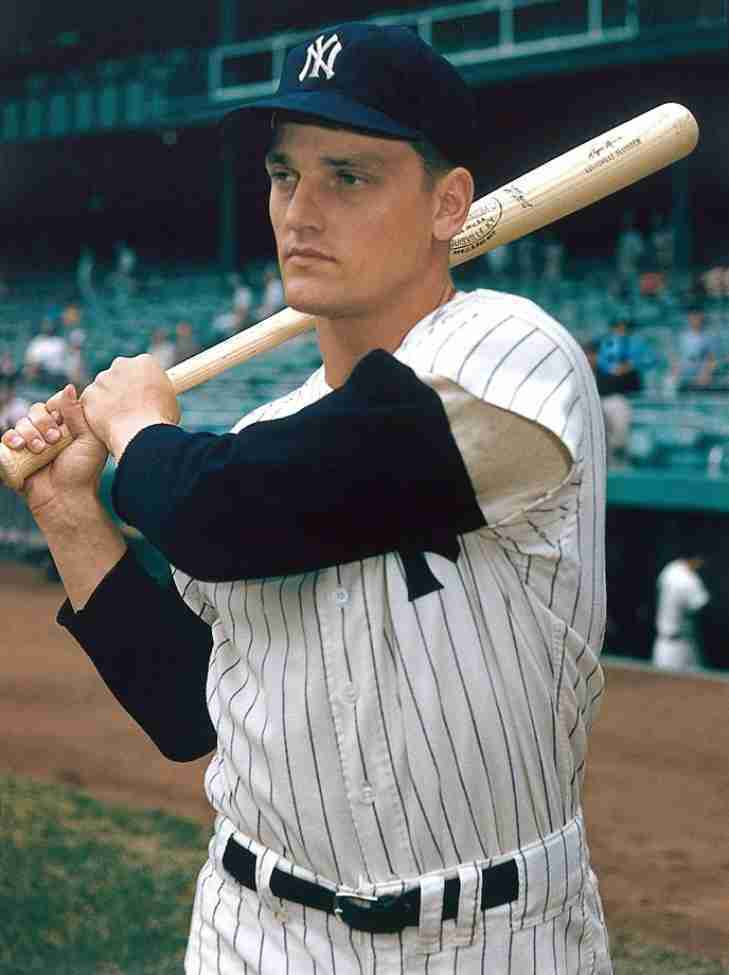
When Roger Maris arrived in the Bronx before the 1960 season through a multi-player trade with the Kansas City Athletics, few expected the quiet, crew-cut kid from Fargo, North Dakota, to immediately challenge the franchise's legendary status. Many thought he would simply serve at best as a reliable, power-hitting sidekick to Mickey Mantle. However, Maris found himself under intense pressure, propelling him into a historic period of exceptional performance that would change baseball forever and solidify his place in American folklore.
Maris didn't gradually step into the spotlight; he made a striking entrance. His swift, elegant left-handed swing, perfectly suited for Yankee Stadium's short right-field porch, allowed him to dominate American League pitching during his debut summer. He hit 39 home runs, led the league with 112 RBIs, and showcased spectacular, Gold Glove-winning right-field defense. His dynamic, multi-faceted impact helped the Yankees secure the pennant and earned Maris the 1960 American League Most Valuable Player award, cementing his superstar status before the chaos of the next summer even began.
In 1961, Maris engaged in a tense, summer-long race with teammate Mickey Mantle to break Babe Ruth's single-season record of 60 home runs. As an understated Midwesterner and outsider, he faced intense psychological pressure, with much of the New York media and his fans hoping Mantle would surpass him and claim Babe Ruth's legacy. The constant stress was so overwhelming that his hair reportedly started falling out in clumps.
Yet, Maris showed remarkable resilience under pressure. On October 1, 1961, the final game of the season, he hit a historic line-drive home run off Boston’s Tracy Stallard into right field, tying the record with his 61st homer. Instead of receiving pure praise, his achievement was quickly marred by Commissioner Ford Frick’s controversial decision to add an asterisk, citing that Maris played in a 162-game season, unlike Ruth's 154. Many casual fans overlook that his impressive 61-home-run, 141-RBI season also earned him his second straight American League MVP award, a rare back-to-back distinction that cemented his place among baseball’s legends.
Beyond just chasing home runs, Maris was a determined winner who solidified the middle of the lineup for consecutive world championship teams in 1961 and 1962. While his powerful hitting was central to his legacy, teammates often admired his exceptional baseball instincts, top-tier baserunning skills, and strong team loyalty. He hit 203 home runs over his first seven seasons in New York, helping the franchise secure five straight American League pennants.
The significant structural wear from injuries and the fatigue of the New York spotlight eventually reduced his productivity, resulting in a late-career trade to St. Louis. There, he contributed to guiding the Cardinals to two additional pennants before retiring from baseball after the 1968 season.
While the National Baseball Hall of Fame left his resume outside its plaque gallery, the Yankees honored him with a celebration on July 21, 1984, retiring his number 14 and dedicating a bronze plaque in Monument Park.
37. Dave Winfield
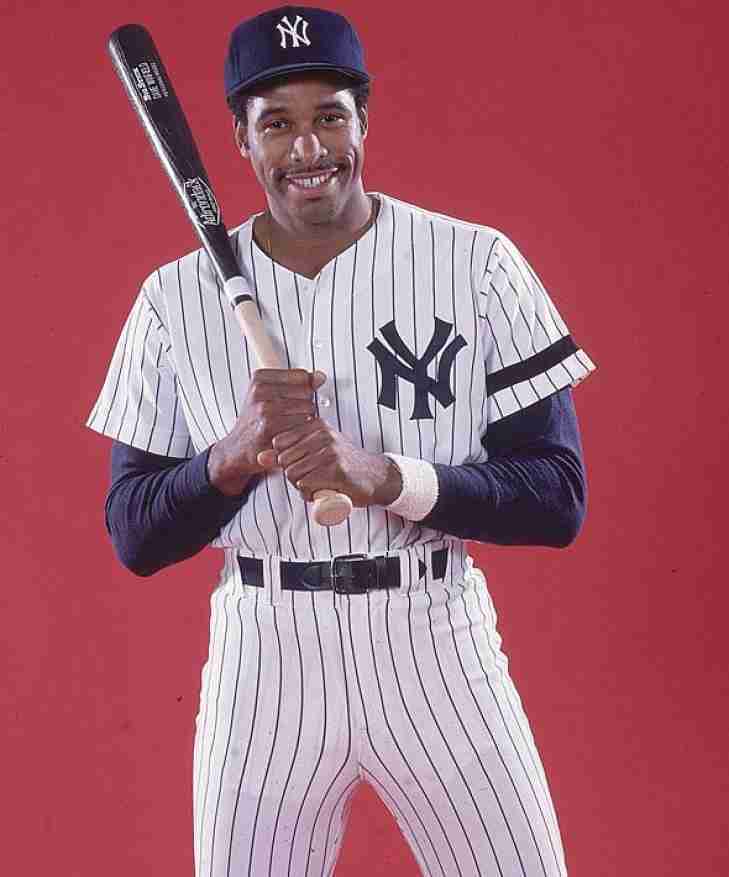
In December 1980, Dave Winfield stunned the sports world by signing a groundbreaking ten-year deal with the New York Yankees. This move not only set financial records but also plunged him into a prolonged media spotlight. The St. Paul native, standing 6-foot-6 and known for his smooth athleticism—traits that had led to drafts in three professional sports—brought a commanding, superstar aura to the Bronx. However, his time with the team was marked by a tumultuous, often confrontational relationship with owner George Steinbrenner, who famously called him "Mr. May" after a brief postseason slump.
Despite ongoing off-field drama and a highly publicized feud in the front office, Winfield’s consistent on-field performance stood out. He transformed the middle of the lineup into a reliable power source, thanks to his long, strong right-handed swing that often challenged American League pitchers. Winfield recorded eight straight seasons with over 20 home runs in New York, hitting a career-high 37 in 1982 along with 106 RBIs. Known for his ability to produce extra-base hits, he surpassed 100 RBIs five times as a Yankee and maintained an impressive .495 slugging percentage, consistently pressure opponents’ pitching staff.
On the grass, his defensive evaluation continues to be one of the most divisive aspects of his legacy. To casual observers and classic award voters, Winfield appeared as a top defensive player; his powerful arm frequently caught aggressive baserunners, and his extensive reach earned him five Gold Glove Awards in pinstripes.
However, modern advanced metrics reveal a more complex picture. His defensive bWAR was consistently lower, indicating that his positioning and lateral range were often below average, leading to many balls dropping in the gaps and reducing his overall efficiency compared to top-tier defenders.
His overwhelming offensive output and consistent excellence during the regular season made him a prominent figure on the national stage, earning him eight straight All-Star selections for the American League. He played with a strong, professional presence that kept the clubhouse focused despite the chaos upstairs, accumulating large hit totals until a severe back injury forced him to miss the entire 1989 season.
Following a highly tense standoff with the front office, Winfield was finally traded to California in May 1990, concluding his tumultuous yet incredibly productive pinstriped stay with 1,300 hits, 236 doubles, 205 home runs, and 818 runs batted in across 1,172 games. Winfield was inducted into the Baseball Hall of Fame in 2001 on the first ballot.
38. Mel Stottlemyre
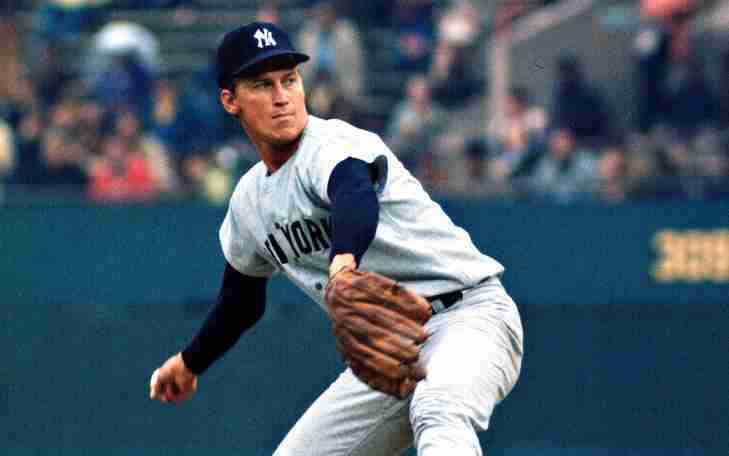
Mel Stottlemyre made a striking debut in Major League Baseball in August 1964, quickly establishing himself with a dramatic entrance. During a tense late-summer pennant race with the Yankees, and with veteran Whitey Ford out due to a hip injury, the 22-year-old rookie was called up to step in immediately. He responded by pitching a complete-game win in his first game, finished the season with a 9–3 record in critical late-season games, and famously matched up against Bob Gibson by pitching three times in the 1964 World Series. This remarkable start hinted at a future career illuminated by October's spotlight.
Instead, the historic pinstriped infrastructure around him collapsed, thrusting the organization into a rare, decade-long rebuilding slump. Although casual baseball history often overlooks this dormant period, Stottlemyre became the unwavering, essential figure of the franchise. Equipped with a powerful sinker that consistently forced opposing batters to hit the ground, he demonstrated relentless durability. Each summer, he regularly pitched over 270 innings, serving as a dependable frontline starter and leading the American League in complete games twice.
Stottlemyre exemplified an elite, high-volume workhorse, surpassing 20 wins three times with the Yankees, achieving 20 victories in 1965, a career-high 21 in 1968, and another 20 in 1969. His consistent regular-season performance earned national recognition and five All-Star selections over six years.
While he dominated games from the mound, Stottlemyre also proved to be a highly effective asset at the plate. In an era before the designated hitter rule, he was a formidable, well-coordinated hitter for a pitcher. He amassed 120 career hits and hit 7 home runs. His most remarkable offensive achievement came on September 26, 1964, when he tied a major league record for pitchers by collecting five hits, four singles and a double in a single game against Washington.
Sadly, his remarkable career ended abruptly just as his veteran leadership was about to help a rising team regain success. A serious, career-ending rotator cuff injury in his shoulder led to his early retirement during the 1974 season at age 32, stopping him from being part of the franchise's late-1970s comeback from the mound. He finished his impressive, single-team playing career with a 164–139 record, 40 shutouts, and a 2.97 ERA, which still stands as a benchmark for run prevention among pinstriped pitchers. Advanced stats strongly support his underrated greatness, with a career pitching bWAR of 43.1—keeping him securely in the top ten of the franchise's all-time pitching leaders.
Stottlemyre returned to the Bronx dugout as Joe Torre’s brilliant, highly respected pitching coach from 1996 through 2005. Operating with a calm, masterful authority, he skillfully guided the pitching staffs of the modern dynasty to four World Series championships, and in 2015, a plaque in his honor would be permanently placed in Monument Park.
