


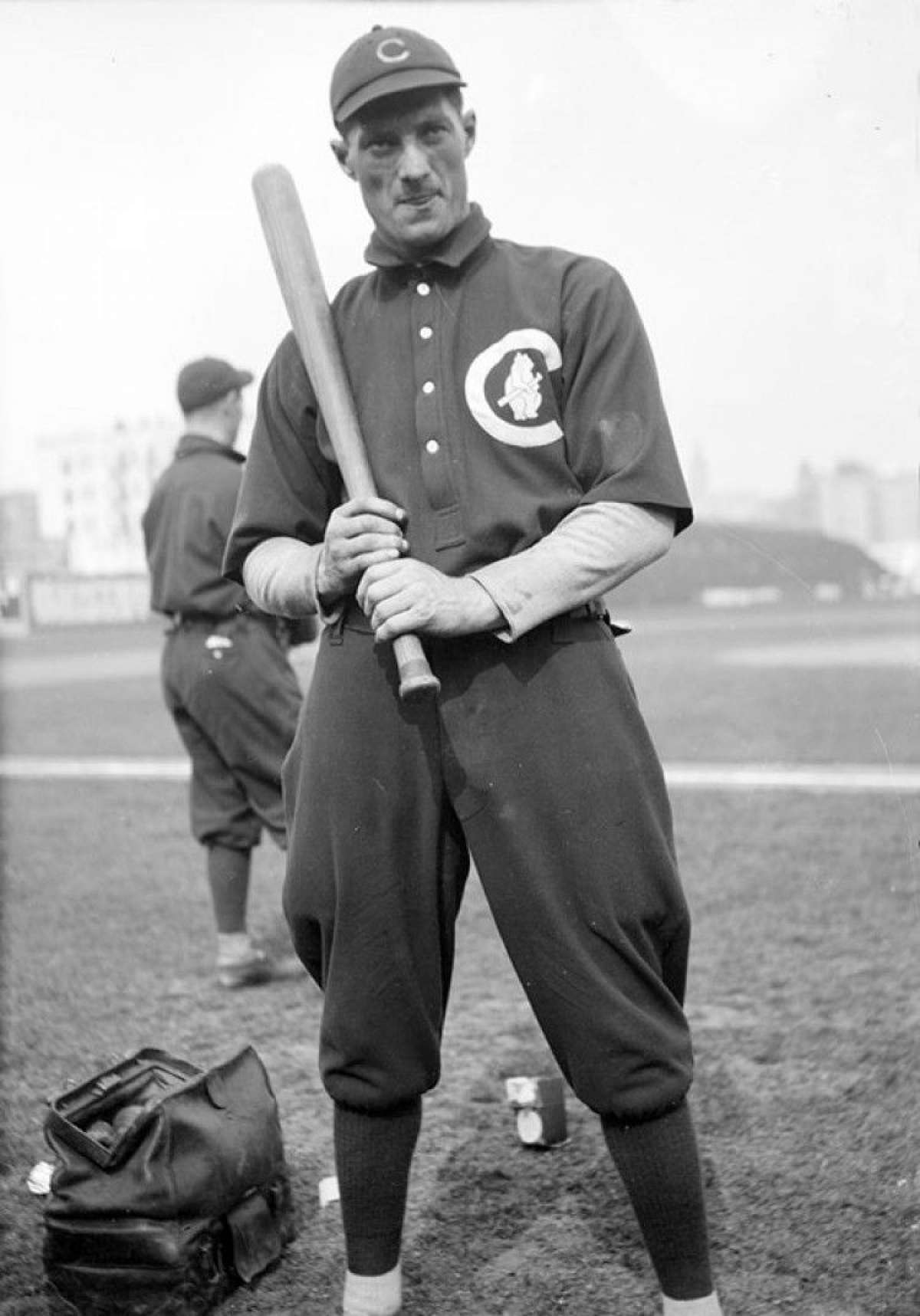


Heinie Zimmerman’s journey began as a young utility man on the legendary 1907 and 1908 World Series championship teams. During those early years, he matured slowly in the shadow of established icons, waiting for the path to clear at third base. He arrived with a raw, aggressive hitting style and eventually evolved into a statistical titan as the new decade dawned. By the early 1910s, he had transformed from a bench option into the primary force of the Cubs' lineup, a high-volume producer who could change the complexion of a game with a single swing.
The absolute pinnacle of his career arrived in 1912, a season of such profound dominance that it remains a benchmark in franchise history. That year, Zimmerman authored a Triple Crown masterpiece, leading the National League in batting average (.372), home runs (14), and RBIs (103). He was an efficiency machine, also leading the league in hits (207), doubles (41), and slugging percentage (.571). Despite this historic run of run production, he famously finished only sixth in the MVP voting—a curious footnote to a season where he was clearly the league's most feared offensive threat.
His identity was synonymous with a high-contact, "swing-at-everything" mentality that made him a fascinating outlier of his era. While he lacked the patient eye of some contemporaries, evidenced by a more modest .343 on-base percentage, he was a master of the "Live-ball" approach before the era even truly began. He rattled off two other .300 seasons during his Chicago stay, accumulating 1,112 hits and maintaining a robust .304 career average with the club. Whether he was vacuuming up grounders at the "hot corner" or lacing a double into the gap, he played with a fiery, high-stakes energy that defined the Cubs' transition into the modern age.

Comments powered by CComment