


Site Admin
34. Jim Beattie
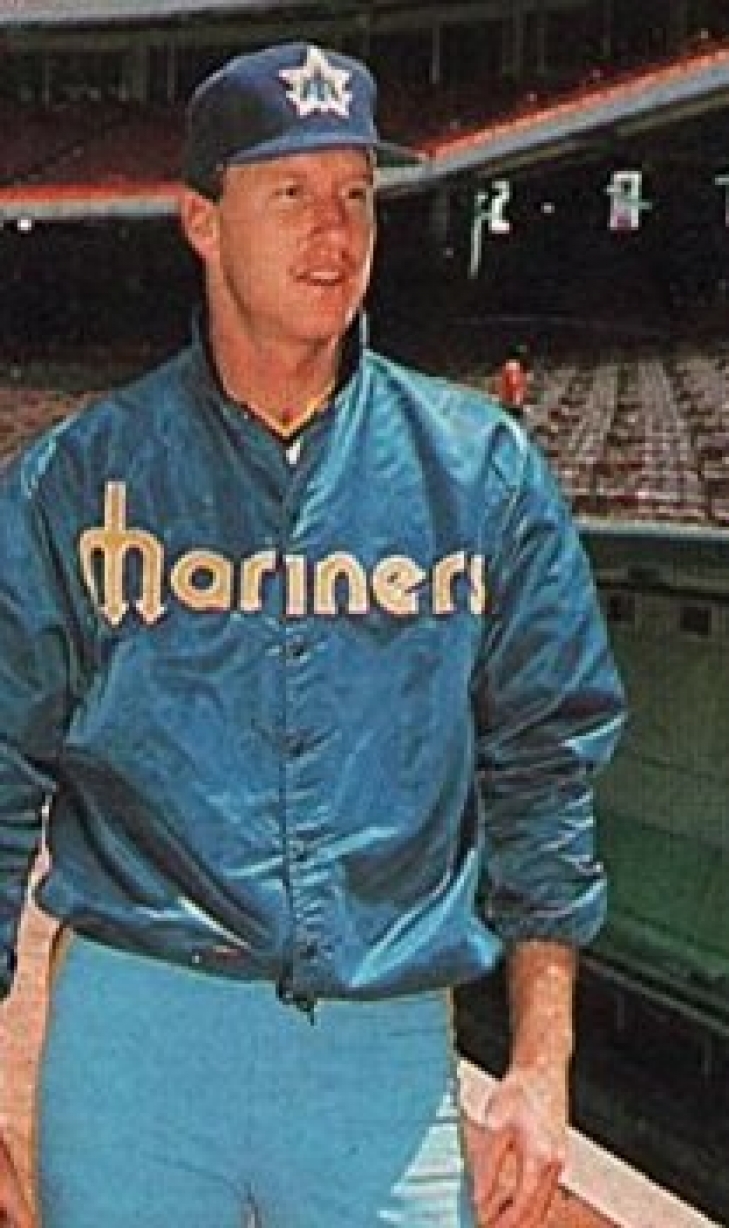
Jim Beattie came to the Pacific Northwest with credentials that few of his new teammates could rival. An Ivy League star from Dartmouth, this tall 6-foot-5 right-hander had already achieved baseball's highest honor as a rookie in 1978 by starting and winning Game 5 of the World Series for the New York Yankees. But the intense New York environment changed quickly, and after just two winters, Beattie was traded to the expansion Seattle Mariners in a multi-player deal. He went from the high-pressure spotlight of New York to the challenges of a franchise seeking its identity, moving from a playoff contender to the bottom of the American League.
His initial time on the Kingdome turf was a tough baptism, marked by misfortune and little local support. Beattie faced a difficult 1980 debut, ending with a 5–15 record and a 4.85 ERA. After a similarly tough start in 1981, which included a brief demotion to Triple-A Spokane, he returned to the major leagues with a completely revised approach. Despite continuing to post losing records—a common outcome for a team that often finished last in the division—Beattie quietly became a reliable, intelligent mainstay of the starting rotation.
His major breakthrough as a key pitcher came in a remarkable 1982 season. Over 26 starts, Beattie posted a strong 3.34 ERA, ranking seventh in the American League, and his 140 strikeouts placed him eighth in the league. He combined impressive swing-and-miss ability with effective efficiency, becoming a star attraction for local fans who saw that his talent greatly surpassed his misleading 8–12 record.
That durability reached its peak during the crucial summers of 1983 and 1984. On September 27, 1983, Beattie achieved a historic milestone by pitching a one-hit shutout against the Kansas City Royals—the first in franchise history. He continued with a heavy workload in 1984, pitching 211 innings and completing 12 games. His consistent ability to go deep into games and keep his bullpen fresh earned him top-ten bWAR rankings among American League pitchers in both years, exemplifying a model of stable and focused performance.
After a sharp decline over two injury-plagued winters, Beattie threw his final major league pitch in August 1986. He left with a 43–72 record, 24 complete games, and 563 strikeouts over 944.1 innings.
33. Phil Bradley
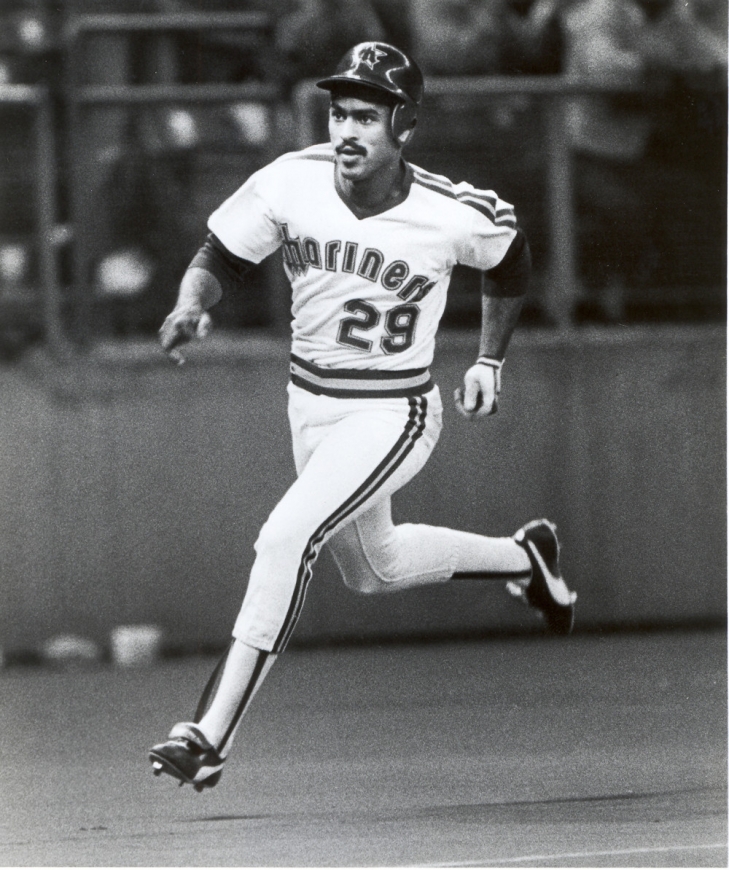
Before Phil Bradley became an accomplished major-league outfielder, he was already a notable athlete in the Midwest. At the University of Missouri, he excelled as an All-American outfielder and simultaneously was a three-time Big Eight Offensive Player of the Year as a quarterback. After being picked in the third round of the 1981 amateur draft by the Seattle Mariners, he quickly developed his exceptional hand-eye coordination in the minors. By 1983, he had made it to the big leagues, bringing energetic athleticism to a young team eager for talented table-setters.
Bradley’s breakout came during the historic 1985 season, a summer when he produced one of the most explosive individual performances for the franchise that decade. As the team's regular left fielder, his quick wrists and disciplined hitting overwhelmed opposing pitchers. He hit an impressive .300, ranking seventh in the American League, and achieved career highs with 192 hits, 33 doubles, 26 home runs, and 88 RBIs. His standout season included a dramatic walk-off grand slam against the Minnesota Twins on April 13, which led to his first All-Star selection and a 16th-place finish in the AL MVP voting.
He demonstrated how his exceptional performance in the 1986 season relied on selective patience rather than raw power. While his home runs remained steady at 12, Bradley improved his batting average to an impressive .310, placing him eighth in the league. His disciplined approach made him a difficult matchup, drawing 77 walks and achieving a stellar .405 on-base percentage, which ranked among the top ten. Coupled with his 21 stolen bases, he consistently created scoring chances at the top of the order.
In 1987, Bradley had a highly productive summer in the Pacific Northwest, hitting .297 with 14 home runs, 38 doubles, and 101 runs scored. He also showcased his speed by stealing 40 bases, a career high. Despite his popularity and efficiency, the team traded him to the Philadelphia Phillies in December 1987 for a package that included utility player Mike Jackson and outfielder Glenn Wilson. While he continued to perform well with the Phillies, Orioles, and White Sox, Bradley’s prime physically was spent entirely in Seattle.
Bradley compiled 52 home runs, 107 stolen bases, and an exceptional .301/.382/.449 slash line across 607 games in Seattle.
29. Floyd Bannister
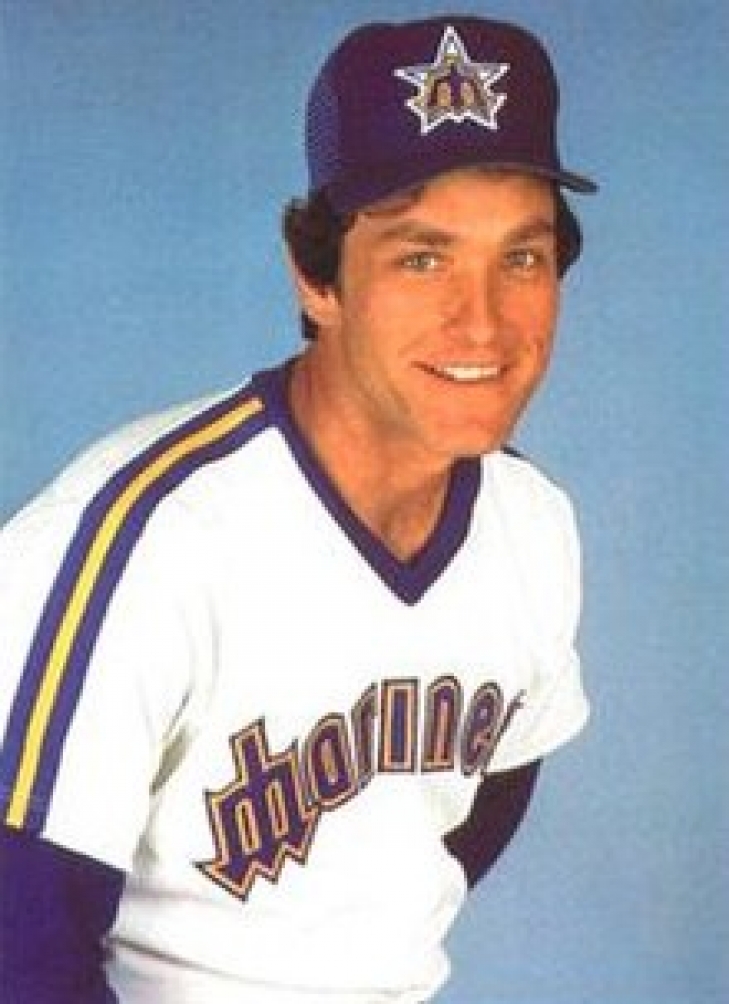
Floyd Bannister had already carried sky-high expectations as the Houston Astros’ number-one overall draft pick in 1976. After two up-and-down developmental seasons in Texas, the Mariners front office made a crucial trade in January 1979 to bring the Seattle-area high school phenom back home to the Pacific Northwest. Stepping directly into the top tier of manager Darrell Johnson’s starting rotation, Bannister instantly provided a struggling, third-year expansion roster with a dynamic power arm that commanded respect around the league.
Bannister’s four-year residency in the Emerald City was defined by a heavy, rising fastball and a sharp, devastating curveball that routinely baffled opposing lineups. Because the early Mariners rosters were plagued by a lack of run support and defensive inconsistencies, his surface win-loss numbers suffered, resulting in a deceptive 40–50 record across his tenure. However, advanced metrics revealed a far different reality; Bannister was a highly competent, high-volume anchor who consistently chewed up frames in the hitter-friendly Kingdome, logging back-to-back seasons of at least 217 innings pitched while maintaining a stingy 3.75 ERA that kept a young team afloat.
His individual masterpiece arrived during the historic 1982 campaign, a summer when his raw potential translated into era-defining dominance. Bannister caught fire under manager Rene Lachemann, taking the ball in 35 high-intensity starts and throwing 247 masterful innings. He weaponized his signature swing-and-miss stuff to lead the entire American League, racking up a career-high 209 strikeouts and securing the league's strikeout crown. That spectacular performance earned him a well-deserved selection to his first and only Major League Baseball All-Star Game, validating his standing as one of the premier left-handed power arms in the junior circuit.
While his high-strikeout efficiency made him a marquee attraction for local fans, the financial realities of a small-market expansion club ultimately cut his hometown stay short. Following his spectacular, award-winning 1982 showcase, Bannister tested the open market as a highly coveted free agent, parlaying his elite Seattle resume into a lucrative multi-year contract with the Chicago White Sox. He would immediately help guide Chicago to a division title the following winter and embark on a highly successful 15-year big-league career across multiple organizations.
Bannister walked away from the Kingdome mound having logged 118 appearances for the organization, accumulating 564 strikeouts and 24 complete games.
27. Raul Ibanez
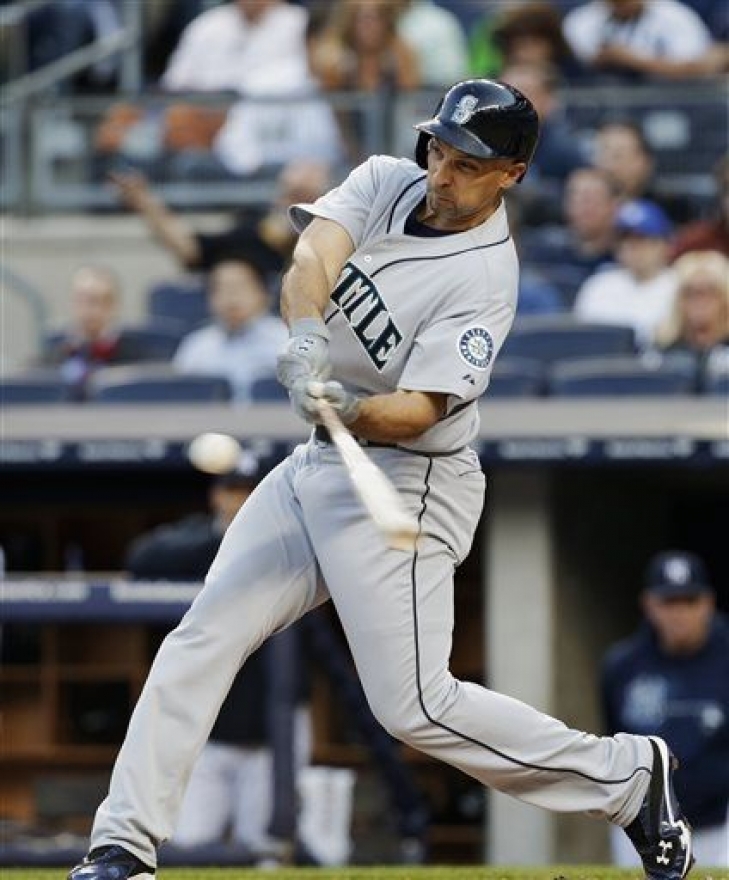
Playing 19 seasons in the major leagues is a remarkable feat for anyone, but it’s especially extraordinary for a player picked in the 36th round of the 1992 amateur draft. Drafted as a catcher from Miami-Dade Community College, Raúl Ibañez overcame the odds with his legendary work ethic and a smooth, left-handed swing. This combination helped him succeed in three separate stints with the Seattle Mariners, linking multiple generations of Pacific Northwest baseball.
His early days in Seattle tested his patience and perseverance. Debuting in the majors in 1996, Ibañez spent five years shuttling between the Kingdome and the minors, struggling to find regular playing time on star-packed teams with Ken Griffey Jr., Alex Rodriguez, and Edgar Martinez. After becoming a free agent after 2000, he moved to the Kansas City Royals, where he finally realized his potential as an everyday left fielder and laid the groundwork for the offensive success that would define his prime.
The Mariners, acknowledging they had missed out on Ibañez, quickly reacquired him before the 2004 season with a three-year free-agent contract. This second phase of his career marked his greatest achievement. Over five years of remarkable durability, he established himself as a consistent run producer in Seattle's lineup, posting five straight seasons with a .280+ batting average and reaching at least 20 home runs four times.
Although his defensive stats in left field were inconsistent, his powerful batting more than made up for any weaknesses on defense. His best offensive season was in 2006, when he hit a career-high 33 home runs and had 123 RBIs, the third-best in the American League. He continued with seasons of 105 and 110 RBIs, helping the team through tough times and earning MVP votes in 2006 and 2008.
After walking away again via free agency in 2009 to reach an All-Star game and a World Series with Philadelphia, the ultimate testament to his longevity arrived in 2013. Returning to Safeco Field as a gray-bearded, 41-year-old veteran, Ibañez electrified the fan base with a staggering exhibition of old-man power. He tied Ted Williams' historic major-league record for the most home runs in a single season by a 41-year-old, launching 29 longballs to provide a vital spark of leadership for a young, developing roster before concluding his playing days a year later.
Across his 1,110 games with the Mariners—over half of his 2,161 career MLB appearances—Ibañez had 1,077 hits, 216 doubles, and 156 home runs.
