

Committee Chairman
7. Aaron Judge
All rise!
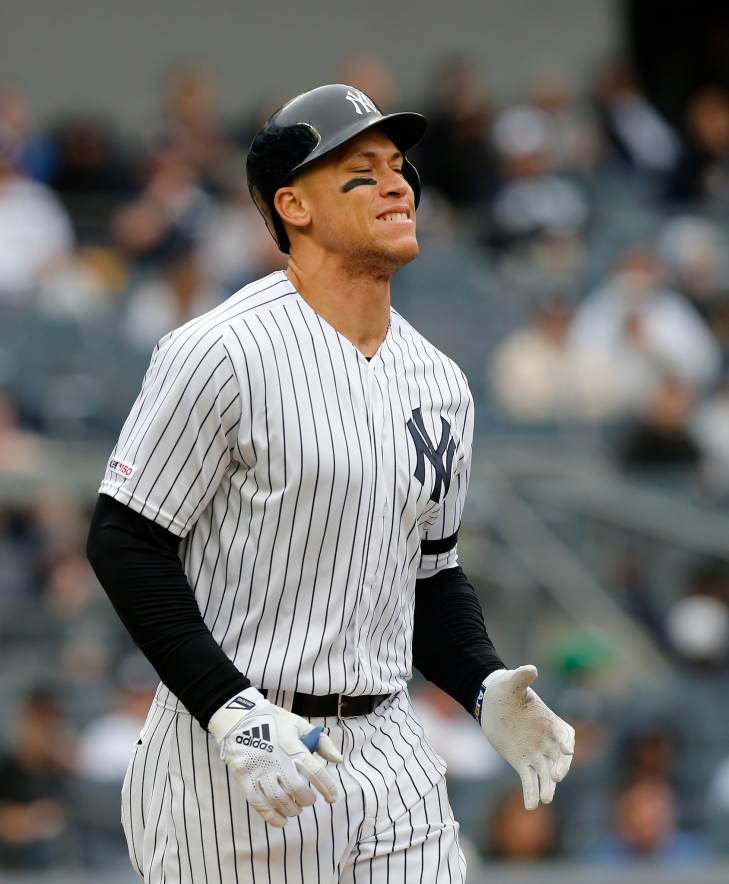
Aaron Judge came to the Bronx in August 2016 as a towering, physically imposing outfielder whose commanding presence instantly changed the layout of the field. Although he kept his rookie status into the next spring, he has since been the undisputed focal point and leading offensive force of the team from his first full season.
His early pinstripe career was marked by a stunning 2017 AL Rookie of the Year win that shook Major League Baseball. That summer, Judge made a remarkable debut, breaking records by leading the American League in home runs (52), runs(128), and walks (127), earning a Silver Slugger and finishing as MVP runner-up. He proved this was no fluke by hitting 27 homers in 2018 and 2019, demonstrating strong power despite physical setbacks that limited his playing time.
Once fully healthy, Judge secured legendary, lasting greatness by leading a historic era of dominance that transformed the modern game. In 2022, he carried the franchise alone, earning his first AL MVP after hitting a spectacular 62 home runs, an American League record that broke Roger Maris’s 61-year-old mark. He maintained this extraordinary level of performance over the following two years, peaking in a remarkable 2024 season that helped the Yankees win their first American League pennant in 15 years. That summer, he won his second MVP, leading the league with 58 home runs and 144 RBIs, while achieving career-best on-base percentage (.458) and slugging (.701).
Any worries that Judge might have a typical hangover after his intense October 2024 run were completely eliminated during an extraordinary 2025 season. At the peak of his individual performance, he overcame a mid-season flexor strain to win his first Major League Batting Title with an impressive .331 average, making him the tallest batting champion in history. He combined this hitting precision with incredible power, smashing 53 home runs and driving in 114 runs, while leading the majors in on-base percentage (.457), slugging (.688), and posting a remarkable 1.145 OPS. His historic regular season earned him the 2025 American League MVP award, his second in a row and third overall in his career.
Judge continues to ascend the ranks of the sport’s greatest, possibly ranking among the top five Yankees of all time. Aaron Judge's greatness truly stands out.
Online Sports Betting Sites: Are Their Prices Inelastic?

Many online sportsbooks in the U.S. today are marketing to recreational bettors. Offers like welcome bonuses and loyalty rewards may entice more people to consider betting online.
This strategy appears to be aimed at increasing the sportsbooks’ customer base. These offers may also affect the customers’ decision-making and betting behavior more than the pricing can.
With its legalization in the U.S. in 2018, sports betting has become more accessible to more people. Furthermore, the recent COVID-19 pandemic has driven more people to stay at home and spend more time and money on online betting.
In 2020, sports betting generated a $1 billion revenue in the U.S. At the beginning of 2021, 23.2 million Americans expressed interest in betting $4.3 billion on the Super Bowl alone, and 7.6 million people said they would bet online.
With this current landscape, online gambling may be expected to grow into a $100 billion industry by 2026.
As more sports betting sites appear, the need to offer competitive prices to bettors becomes paramount. In this case, will adjusting prices be enough to increase the demand for online betting?
This article discusses price elasticity in sports betting and the factors that affect sports betting demand in the U.S.
Price Elasticity in Online Sports Betting
Theoretically, if online sports betting prices were elastic, demand should change significantly with only a slight price change.
For example, a slight reduction in a bookmaker’s vig can narrow their profit margin. However, that reduction may significantly increase the number of bets. In this case, the bookmaker’s prices may be relatively elastic.
However, are price changes sufficient to significantly change the demand for sports betting in real-world scenarios? Put another way, do price changes even matter when sportsbooks try to market their products?
Below are some factors that can influence bettors’ preferences when it comes to online sports betting.
Factors Affecting Sports Betting Demand in the U.S.
Price
Historically, Las Vegas and U.S.-facing offshore sportsbooks significantly influenced how line prices were set.
Nowadays, because of U.S. market regulations, operators and sportsbook suppliers in large states are now playing a role in providing competitive prices.
In addition, the regulations ensure that the operators are pricing their lines competitively.
A sportsbook with a high price elasticity should experience a high surge in demand with just a slight reduction to its vig. Alternatively, bettors may shy away from the sportsbook if it were to increase its house take.
However, that scenario is only theoretical, and pricing is not the only factor influencing demand for online sports betting.
Brand Association
Bettors also look into an online sportsbook’s brand reputation and association. Most legally operating sportsbooks have partnerships with physical and online casinos, big sports betting brands, or other gambling entities that give the sportsbook more credibility.
This credibility is likely to increase the sportsbook’s value and make bettors trust the sportsbook more. This trust may influence the bettor’s behavior in favor of the sportsbook, dictated not only by the price but also by the brand.
For example, partnerships with major sports leagues mean the sportsbook is reliable enough to be recognized by those leagues.
Other betting sites may receive backing from big brands. If bettors prefer those brands, the sponsorship may increase the chances of the bettor favoring the sportsbook.
On-Par Product and Experience Delivery
Competitive pricing and reputable brand association may not be enough to influence demand. Bettors may also ask for products and services of equal or higher value to the sportsbooks’ prices.
One way for this strategy to work is to ensure that bettors experience the convenience worth their money. This way, pricing may matter less as long as the bettor experiences quality service.
For example, the bookmaker’s online platform must be user-friendly and navigable. Sportsbooks may also provide welcome bonuses and rewards for bettors to maximize their deposits.
If the sportsbook has a mobile app, that feature may be considered a plus for accessibility. Mobile apps allow bettors to place bets, even when traveling or watching a live game in a stadium.
Additional payment options other than credit cards can also favor both the bookmaker and the customer.
More options to fund betting accounts, like online payment gateways, provide more convenience to bettors, increasing customer demand for the bookmaker’s services.
Other features that can add to a sportsbook’s ability to deliver quality services include moderating a bettor’s gambling habits and protecting their personal information.
Bettors must know that their private data is safe or that the sportsbook cares enough to help them curb developing gambling problems. These efforts may help them associate a positive experience with the sportsbook.
Bookmakers can further improve customer experience if they have a connection with advocacy groups promoting responsible gambling. This connection shows that the sportsbook encourages bettors to have a healthy gambling lifestyle.
Legal vs. Offshore Operators
The issue between offshore and U.S.-based legal sportsbook operators is that the U.S. sportsbooks are regulated while the offshore ones are not. This situation puts the U.S. sportsbooks in a challenging position against their offshore counterparts.
U.S. operators may think of offering products and services at par with the offshore operators to remain competitive. However, bettors may see no incentive to prefer U.S. sportsbooks if this were the case.
Instead, U.S. operators need to offer better products and services than offshore sportsbooks’ to stay on top of the game.
Conclusion
Demand for online sports betting is unlikely to change by simply adjusting the prices offered by the bookmakers. For some people, this situation may be indicative of price inelasticity.
That said, other factors have to be considered, including brand association, product and experience delivery, and the choice between offshore and legal operators.
These factors may affect the bettors’ outlook toward the sportsbook and influence demand more than just price changes alone can do.
Individuals interested in online sports betting should check their local state laws if sports betting is legal in their area.
21. Eric Show
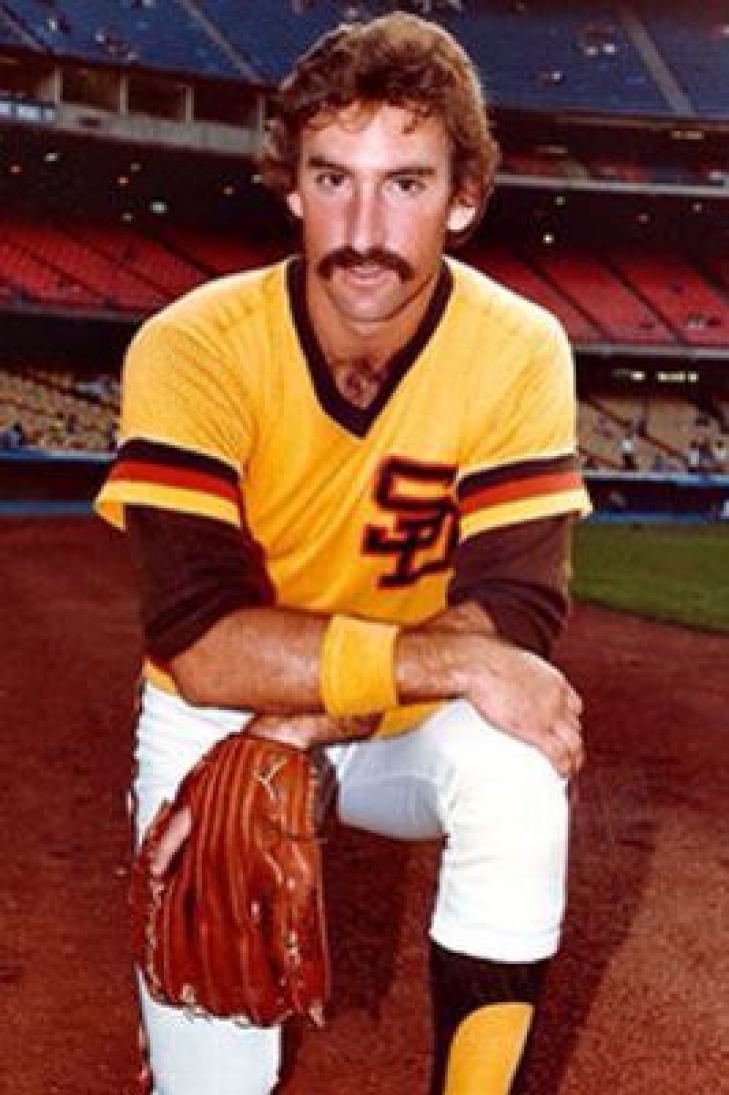
While some baseball narratives are characterized by smooth, unblemished trajectories towards legendary status, the history of the 1980s San Diego Padres pitching staff cannot be told without considering a deeply complex and highly polarizing figure. Eric Show did not conform to the conventional mold of a major league baseball player. An eccentric jazz guitarist, a born-again Christian, and an openly affiliated member of the far-right John Birch Society, his intellectual and political leanings often estranged him from his own clubhouse. Nevertheless, despite ongoing friction, mood swings, and a career overshadowed by a tragic conclusion, the right-handed pitcher served as the reliable and unwavering engine of the San Diego rotation for an entire decade.
His brief debut in September 1981 led to a impactful 1982 season, splitting time between relief and starting with a 10–6 record and 2.64 ERA over 150 innings. By spring 1983, he secured a permanent spot in the starting rotation, beginning a period of consistent durability. Show achieved consecutive 15-win seasons in 1983 and 1984, moving away from his bullpen duties to become an essential part of the middle rotation. His 15–9 record in the impressive 1984 regular season contributed significantly to the Padres’ first-ever National League pennant, providing the small-market team with reliable support during their critical moment.
To be fair, Show was seldom viewed as an elite, top-tier superstar, and he was never selected for an All-Star game. His role was mainly as a dependable, middle-of-the-rotation pitcher, with five seasons pitching at least 200 innings. His best individual season came in 1988, when he achieved a career-high 16 wins, maintained a solid 3.26 ERA, and pitched an impressive 13 complete games.
Despite his on-field skills, his performance was often overshadowed by unfortunate events and clubhouse instability. On September 11, 1985, Show made a lasting mark in baseball history by giving up Pete Rose's 4,192nd career hit, a record that came with a bittersweet sense of closure. The extended, circus-like delay afterward annoyed everyone, and the pitcher sat on the mound with crossed arms, a move that attracted harsh public criticism and irritated teammates who saw it as unprofessional. His combative nature boiled over again in 1987 when he beaned Chicago star Andre Dawson in the face, spiking a violent, bench-clearing brawl that required umpires to remove Show from the field for his own physical safety.
The unavoidable end to his career came in 1990. Suffering from chronic back pain and early signs of substance abuse that would later derail his life, his mechanics worsened considerably, resulting in a buyout from the Padres management. He then signed as a free agent with the Oakland Athletics for the 1991 season, but after a brief and forgettable relief appearance with a high 5.92 ERA, he was released the next spring and never pitched in the majors again.
Tragically, his post-baseball life unraveled into a severe, high-velocity downward spiral. On March 16, 1994, just three years after throwing his final big-league pitch, Show suffered a fatal drug overdose at a rehabilitation facility in Dulzura, California, cutting his life short at the age of 37.
Show compiled exactly 100 wins against 73 losses, a steady 3.59 ERA, and 951 strikeouts across 1,603.1 innings.
20. Brian Giles
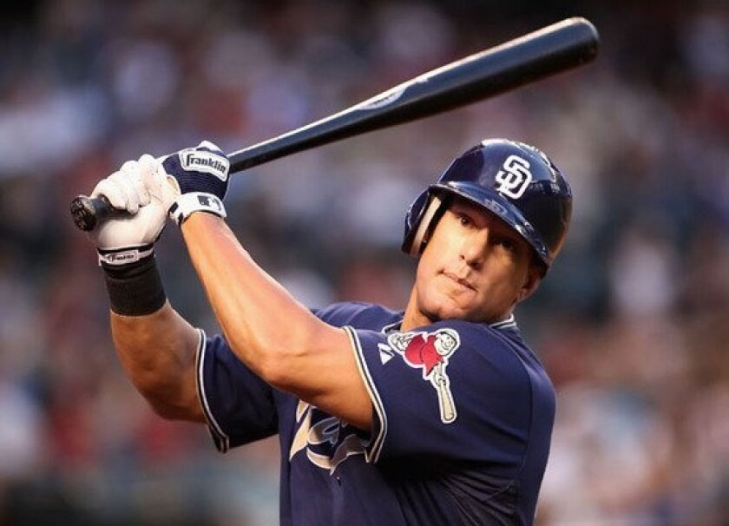
If you sought an elite clinic in modern strike-zone management, you wouldn't focus on the marquee stars; instead, you'd look at the patient—an outfielder with a lethal stroke who made walking appear as an aggressive offensive move. Brian Giles, raised in El Cajon, California, was acquired from the Pittsburgh Pirates in late August 2003, making it more than just a roster upgrade; it was a homecoming. Already a top-tier, multiple-time All-Star in Pittsburgh, this left-handed slugger brought a highly disciplined plate approach to the San Diego Padres, a team in dire need of an advanced table-setter.
He smoothly adjusted his gameplay to suit the large, pitcher-friendly dimensions of the newly opened Petco Park. During his first three full summers as a Padre, he made collecting base hits a focused daily habit, achieving at least 159 hits each season. His 2005 regular-season performance remains one of the most uniquely dominant offensive displays in the franchise's history. Giles systematically controlled deep counts to lead the National League with 119 walks, forcing opposing pitchers to change their strategies. He combined this patience with a strong .301 batting average, and his impressive .423 on-base percentage was third best in the league. Giles had a well-deserved ninth-place finish in the league's Most Valuable Player voting, marking the highest individual finish of his 15-year major league journey.
Although the large gaps of his home park naturally limited his home run numbers compared to his Pittsburgh days, Giles still offered significant power for the San Diego lineup. He hit 83 home runs while using a short, compact swing to drive the ball into the gaps and routinely score runs. He stayed a dependable, top-tier presence in right field through 2008, rebounding from a slow patch to produce an impressive 171-hit season at age 37.
Regrettably, his 2009 local residency ended abruptly due to injury. Severe arthritic knee issues impaired his mechanics, dropping his average to .191 over 61 games, and led to a permanent disabled list stint in June.
He signed with the Dodgers as a Free Agent but would not make the team. He would have a slash line of .279/.380/.435 and 872 hits with San Diego.
