

Committee Chairman
32. Joey Hamilton
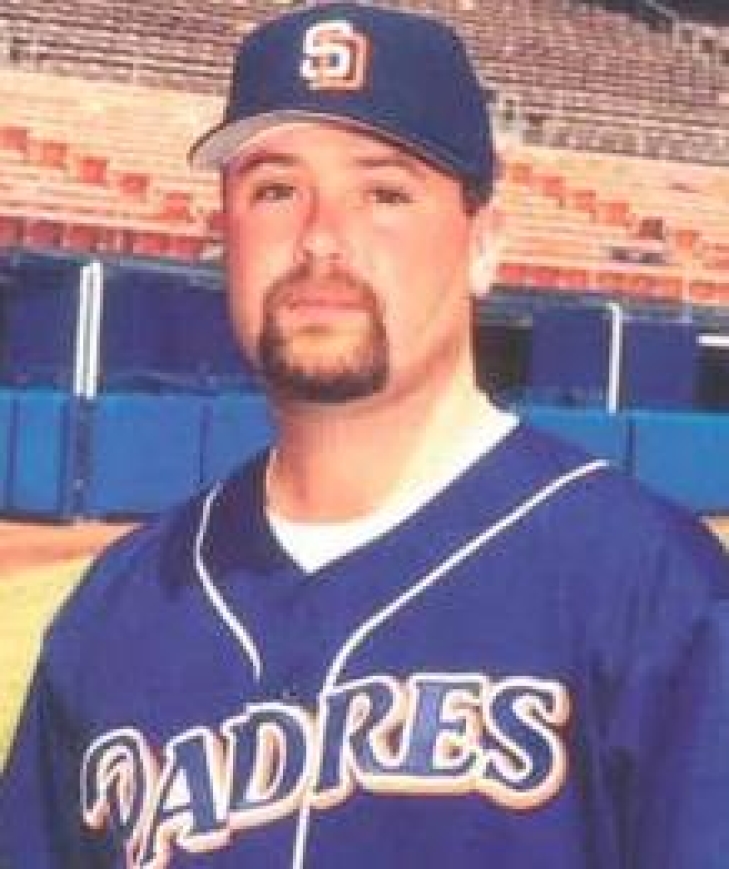
Joey Hamilton was selected eighth overall in the 1991 amateur draft from Georgia Southern University. He was considered a highly valuable player and, interestingly, caught the organization by surprise. According to Hamilton himself, the Padres hadn't shown much interest in scouting him before they called his name on draft day. Although his path to the majors had its challenges, he ultimately became a reliable and hardworking fixture in the middle of the San Diego rotation, especially during a time of big changes within the organization.
Hamilton finally broke through to the big leagues in May 1994, and his introductory phase was immediately impactful. He turned in a brilliant rookie campaign, posting a 9–6 record with a sharp 2.69 ERA across 108.2 innings to finish fifth in the National League Rookie of the Year balloting.
Over the next two summers, he proved himself as a top-tier, high-efficiency innings-eater. Despite finishing 6–9 in 1995, his advanced metrics remained impressive, ranking seventh in the National League with a bWAR of 4.6, thanks to his knack for limiting runs in an era favorable to hitters.
As the franchise shifted toward the high-leverage championship window of the late 1990s, Hamilton continued to provide critical durability. While his ERA climbed above the 4.00 threshold and his WHIP inflated as he relied more on run support, he remained a vital rotation stabilizer.
He was a key member of the staff that captured the 1998 National League pennant, famously stepping out of the bullpen to provide relief during the World Series against the New York Yankees.
With the organization looking to reallocate resources and shuffle the rotation, the front office engineered a definitive trade in December 1998, shipping their veteran starter to the Toronto Blue Jays in exchange for a package centered on Woody Williams, Carlos Almanzar, and Peter Tucci.
Over five seasons representing the Padres, he compiled a 55–44 record, a 3.75 ERA, and 639 strikeouts over 934.2 innings of work.
RIP: Ronnie Spector
2022 feels a lot like 2021.
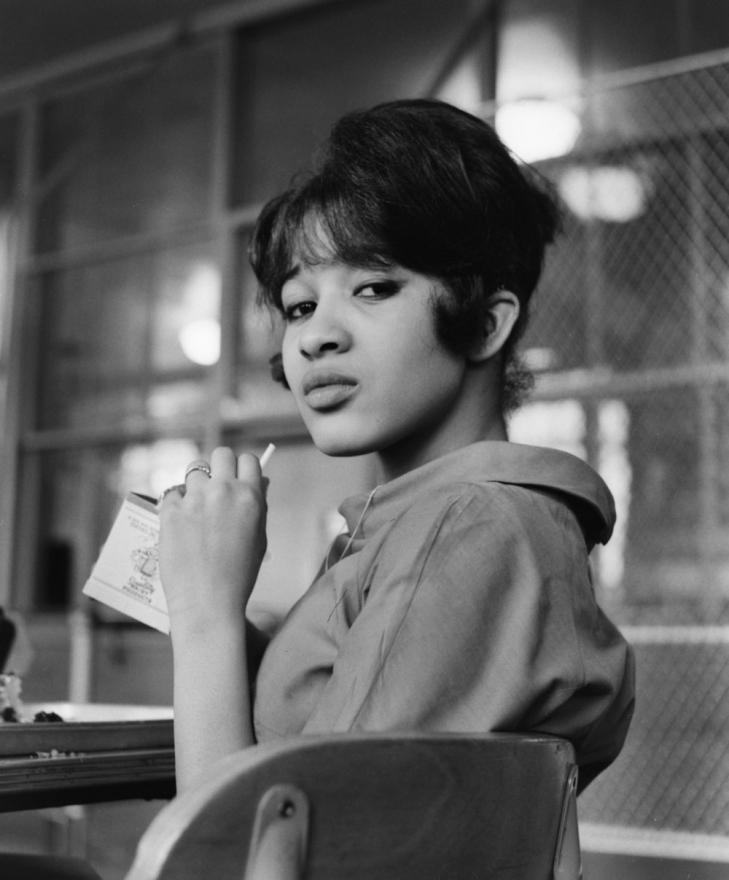
Rock and Roll Hall of Fame inductee, Ronnie Spector died today from cancer at the age of 78.
There were a lot of girl groups in the 60s, but none of them exuded the sexiness of Spector, the leader of the Ronettes. Under the guidance of her eventual husband, Phil Spector, the Ronettes had a three-year run of hits, most notably with the 1963 smash, “Be My Baby”. Ronnie married Phil in 1968, but the relationship became abusive, so much so, that Phil kept his wife as a virtual prisoner in their home. They would divorce in 1974, and she enjoyed a revival of sorts on the classic rock circuit as a solo artist.
The Ronettes were inducted into the Rock and Roll Hall of Fame in 2007.
We here at Notinhalloffame.com would like to extend our condolences to the fans, family and friends of Ronnie Spector.
25. Bruce Hurst
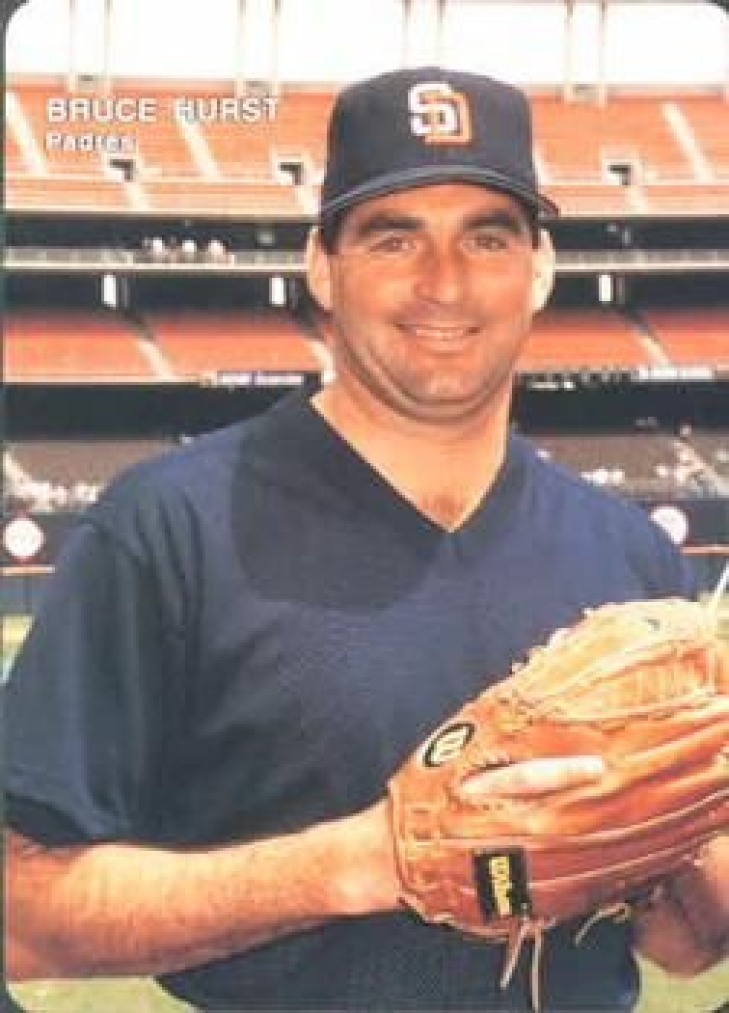
When a small-market team aims for national success, signing a postseason veteran can boost a rotation's competitiveness. In December 1988, the San Diego Padres made a key upgrade by signing left-handed starter Bruce Hurst to a lucrative free agent deal. Coming from a celebrated decade with the Boston Red Sox, including a near-MVP performance in the 1986 Fall Classic, Hurst brought professionalism and stability to Jack Murphy Stadium. Instead of a typical cross-country decline, the cerebral southpaw adapted quickly to the National League, matching his East Coast success and strengthening the Padres' top rotation.
His 1989 Padres campaign showed durability and run suppression. Hurst dismantled lineups with his split-finger fastball off his high-three-quarters delivery. He made finishing his starts a routine, leading the NL with 10 complete games. He finished 15–11, pitching 244.2 innings in 33 starts. His efficiency was unmatched; he posted a 2.69 ERA and 1.132 WHIP, proving his status as a top ace.
Hurst consistently maintained high-volume authority over three years, providing a reliable presence for the pitching staff with 40 wins and 29 losses from 1990-1992. He had an 11-complete-game performance in 1990 and a 15-win season in 1991, keeping his WHIP below 1.200 during his peak, which challenged opposing managers’ strategies.
Tragically, the immense workload required to sustain that front-of-the-rotation baseline eventually invited a sudden, injury-enforced career exit. Severe shoulder ailments completely derailed his 1993 campaign, robbing him of his signature velocity and limiting him to just two highly painful assignments in a San Diego uniform.
Recognizing an impending transition, the front office packaged the ailing veteran in a multi-player trade to the Colorado Rockies that July. Hurst only played another year, but was never the same. He might be best known for his work in Boston, but his 55-38 record with the Padres was a decent haul.
31. Garry Templeton
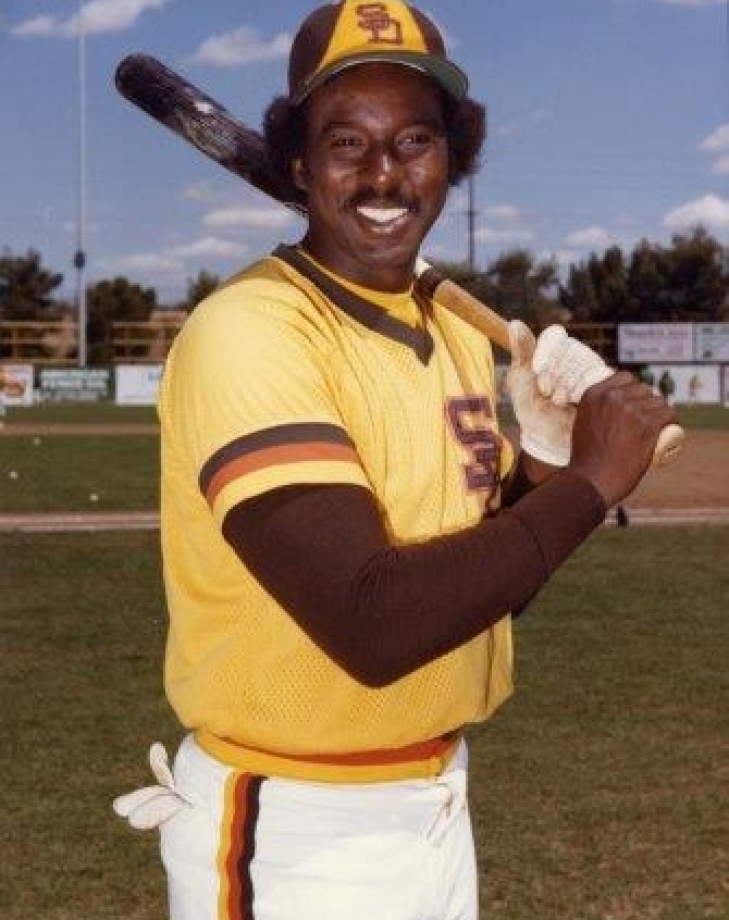
Few in modern baseball have careers so defined by a single trade, like the switch-hitting shortstop who anchored San Diego infield in the 1980s. Acquired in a blockbuster in December 1981, Garry Lewis Templeton arrived in America's Finest City in exchange for future wizard Ozzie Smith. It was a massive, high-pressure swap linking the two players forever. To be fair, historically, Templeton never reached the defensive heights of Smith nor did he match his offensive peaks. Yet, framing his career only as a trade does a disservice to a gritty contributor who provided steady leadership during a major franchise transformation.
His initial adjustment under the Southern California sun was tough, but he quickly became a reliable, everyday presence. Templeton made flashing his infield tools a daily routine, anchoring the defense for a 1984 team that shocked the circuit. During that pennant race, he hit 19 doubles and won a Silver Slugger Award, helping the Padres reach their first National League Championship Series and the World Series.
He backed up his 1985 campaign with a .282 average and 30 doubles, earning an All-Star selection and team MVP honors. Beyond offense, his steady presence and clubhouse influence solidified his legacy. Recognizing his maturity and focus, manager Larry Bowa named him team captain in 1987. Templeton proudly served as captain for four seasons, guiding a transitioning roster.
Evaluating his role in an algorithmic review involves examining efficiency leaks that limited his advanced metrics. Templeton was an old-school, aggressive contact hitter with a low OBP of .289, due to his reluctance to draw walks, and had modest power.
With the front office leaning heavily into a total youth movement and giving way to younger infield prospects, management engineered a quiet trade in May 1991, shipping their veteran captain to the New York Mets in exchange for infielder Tim Teufel, drawing a definitive curtain on his decade-long residency.
Across his 1,286 games strictly representing the Padres, Templeton accumulated exactly 1,135 hits, 195 doubles, 36 triples, and 427 runs batted in. Advanced analytical anchors reinforce his localized defensive durability, as his crisp .965 fielding percentage stood as the finest career mark by any shortstop in franchise history up to that point. Templeton was inducted into the Padres Hall of Fame, reminding the city that he was a good player in his own right.
