


Committee Chairman
28. Greg Harris
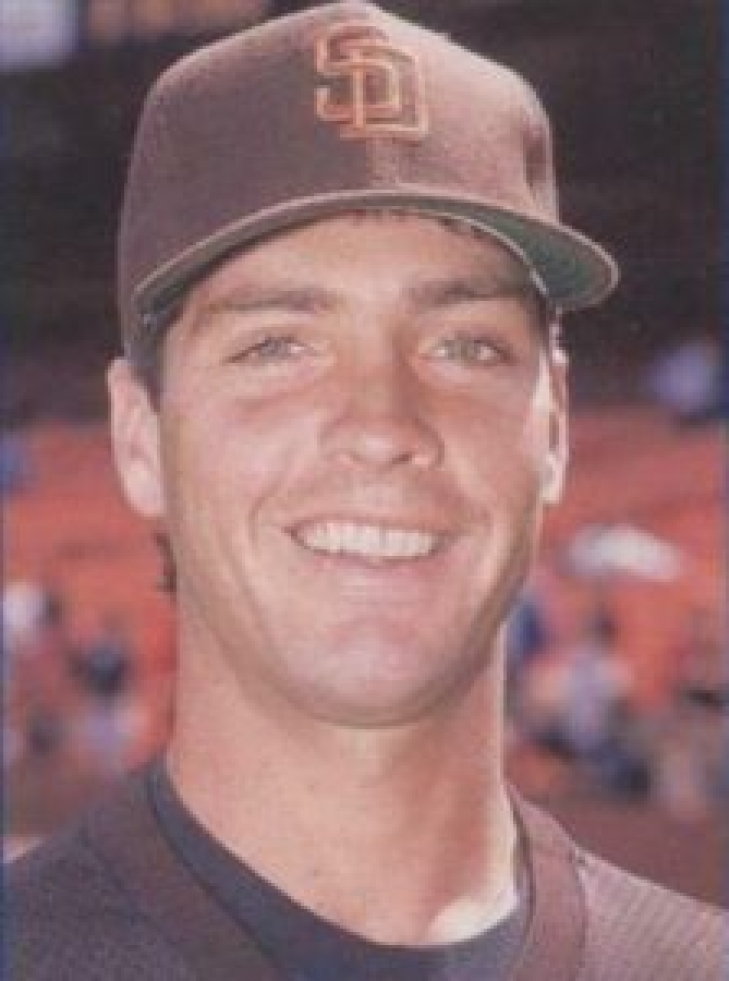
Looking at baseball rosters, some pitching stats can hide a player's true value. A 41–39 record doesn't usually signal a star, but advanced filters reveal the flaw in relying on win-loss percentages. Drafted by the Padres in 1985, Gregory Wade Harris used a dominant curveball, considered among the best in the NL. Over his career in Southern California, he evolved from a bullpen pitcher to a top-quality starter, setting local records with his outstanding run prevention.
His September 1988 debut featured three appearances, launching his historic rookie season. In 1989, Harris made 56 appearances, eight starts, throwing 135 relief innings. He finished with an 8–9 record, six saves, a 2.60 ERA, and 106 strikeouts, finishing seventh in the NL Rookie of the Year voting.
He maintained frontline reliability in 1990, serving as the main eighth-inning bridge and occasional closer for the pitching staff. Harris increased his workload to 73 appearances, tiring out NL lineups over 117.1 innings. He systematically dismantled hitters deep in counts, securing nine saves and lowering his ERA to 2.30.
The coaching staff made Harris a permanent part of the starting rotation in 1991. Despite physical issues limiting him to 20 starts, he excelled, with a 9–5 record, three complete games, two shutouts, a 2.23 ERA, and 133 innings. His performance was a stabilizing force, demonstrating his top-tier skills could handle top-of-the-rotation duties.
To be fair, the extreme physical grind of back-to-back heavy seasons generated a natural middle-ground reality check during the 1992 calendar. Harris labored through mechanical inconsistency, watching his ERA rise to an elevated 4.12 over 20 assignments. Yet, demonstrating the signature resilience that defined his entire residency, he successfully righted the ship during the 1993 schedule. He returned to his mechanics to win 10 games with a solid 3.67 ERA and four complete games over 22 starts; however, he was traded to the Colorado Rockies during the season.
Harris had a 2.95 ERA with a 41-39 Record and 462 Strikeouts with the Padres.
23. Ryan Klesko
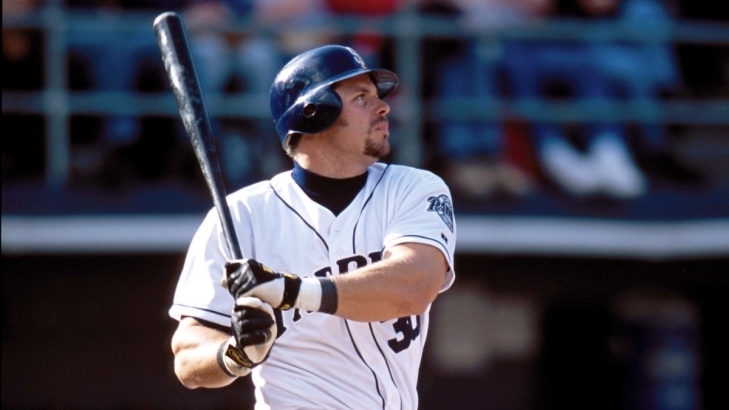
At the turn of the century, the San Diego Padres sought to add immediate, high-impact muscle to their baseball lineup. They achieved this by directly targeting the reigning National League champions. Ryan Klesko was acquired through a multi-player trade with the Atlanta Braves in December 1999. As a proven postseason hero with a World Series ring, the physically imposing, left-handed slugger arrived in Southern California with an aggressive and intense style. Instead of merely maintaining his established performance from Georgia, Klesko started the most versatile and dynamic phase of his career under the Qualcomm Stadium rafters.
Klesko turned his daily routine into a powerful part of his game during his first season in 2000, hitting 26 home runs and driving in 92 runs. But what caught everyone off guard was his sudden burst of speed on the bases. Before joining San Diego, he had never stolen more than six bases in a year. However, with the support of the Padres coaching staff, he channeled his fighting spirit and achieved back-to-back summers with exactly 23 stolen bases in 2000 and 2001. Combining that speed with strong muscle, he became one of the rare players in franchise history to join the exclusive 20-20 club in two straight seasons.
In 2001, Klesko exhibited exceptional dominance in the middle of the lineup, significantly impacting the Senior Circuit's pitching efforts by hitting 30 home runs and achieving a career-high total of 113 runs batted in, the highest ever recorded by a primary Padres first baseman. His advanced efficiency metrics were unparalleled; he drew 88 walks, hit 34 doubles and 6 triples, thereby bolstering the offense and earning his first career All-Star selection. He maintained this high level of performance into the 2002 season, delivering his most impressive all-around statistics by batting .300, along with 39 doubles, 29 home runs, and 95 RBIs.
Although he hit his fourth straight 20-home run season in 2003, the intense physical strain from his aggressive approach started causing ongoing health problems. Chronic lower-back pain and a natural decline in bat speed gradually reduced his playing time over the following summers, turning his role into more of a part-time, high-efficiency contributor.
After laboring through a limited, injury-plagued 2005 run, disaster struck ahead of the 2006 schedule. A major shoulder injury cost him nearly the entire calendar, reducing his final summer in a San Diego uniform to a brief, six-game cameo as a pinch-hitter that September. He smacked 133 dingers with the Padres, had 786 hits, and batted .279.
19. Phil Nevin
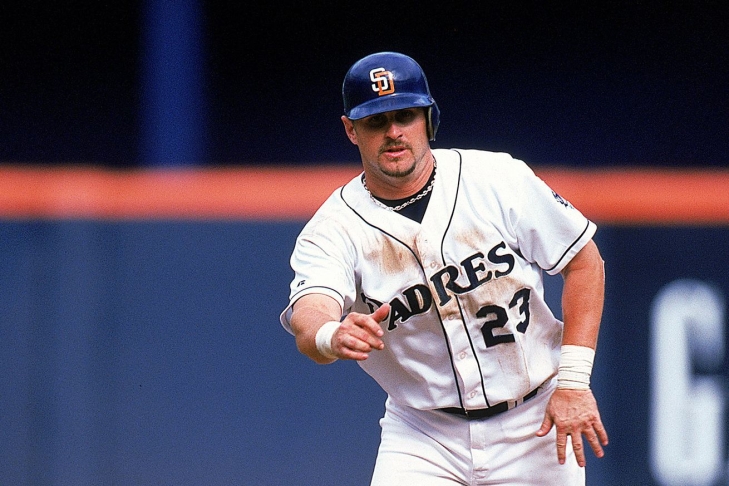
When evaluating the premier contributors to high-intensity offensive strategies at the turn of the century, few athletes in franchise history matched the raw, emotional intensity and multi-positional versatility of Phil Nevin. Selected as the first overall pick in the 1992 amateur draft by the Houston Astros, the former collegiate standout bore a substantial burden of public expectation that initially threatened to impede his career development. The Astros prematurely lost confidence in his progress, transferring him to Detroit in 1995, who subsequently traded him to Anaheim two winters later. Unable to secure a regular starting position at either franchise, his career path appeared perilously close to being labeled a failure until a spring trade in 1999 dispatched the disgruntled infielder to the San Diego Padres, a move that fundamentally transformed his professional trajectory.
He skillfully incorporated his powerful right-handed swing into the middle of the lineup, hitting an impressive 24 home runs in his debut 1999 season. He continued to build on that momentum into 2000, boosting his production with a remarkable 31 home runs and 107 RBIs. That summer also marked his first time hitting over .300, ending the season with a fantastic .303 batting average, solidifying his role as a key leader of the offense.
In 2001, Nevin had the best year of his life. He put on an unadulterated clinic in high-leverage situations, terrorizing National League pitching and establishing career watermarks across the board with 167 hits, 41 home runs, and a spectacular 126 runs batted in. His advanced efficiency filters were entirely unrivaled; he dominated deep counts to forge a magnificent .306/.388/588 slash line, marking his third consecutive summer with a slugging percentage above .500. For his efforts, he finished 21st in MVP voting.
Severe shoulder injuries sidelined him for his next two summers, limiting him to just 166 games in 2002 and 2003. However, showcasing his characteristic grit, Nevin made a remarkable comeback in 2004. He adapted well to Petco Park's large, pitcher-friendly gaps, leading the lineup with 26 home runs, 105 RBIs, and maintaining a solid .289 average over 147 games.
By the middle of the 2005 campaign, however, with the veteran approaching his mid-30s and the small-market organization pivoting toward younger financial structures, the inevitable business exit arrived. The front office traded the veteran slugger to the Texas Rangers in July, drawing a definitive curtain on his time in San Diego. He left the Padres with 156 home runs, 573 RBIs, and a slash line of .288/.359/.503.
5. Fernando Tatis Jr.
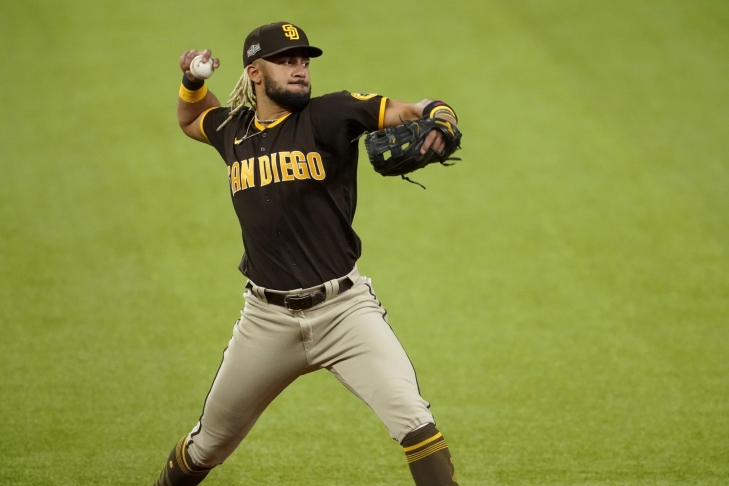
Few baseball archetypes evoke the raw electricity of a true cultural phenom, but Fernando Tatís Jr. has made Southern California his theater. Known as "El Niño," the Dominican superstar doesn't just play baseball; he injects it with swagger that demands attention. Son of 14-year MLB veteran Fernando Tatís, he was originally signed by the White Sox as an amateur free agent in 2015. Before playing an organized game, the White Sox traded him to San Diego in June 2016 for James Shields, a monumental, landscape-shifting deal that will haunt the South Side for decades. With explosive bat-speed and lightning-fast baserunning, Tatís quickly rose through the minors, debuting at 20 and setting the stage for a dramatic career.
His 2019 debut dramatically energized Petco Park, turning regular crowd noise into a nightly highlight of the season. Tatís showcased an outstanding rookie performance, hitting .317 with 22 homers in just 84 games, securing third place in the National League Rookie of the Year voting. Despite the disruptions caused by COVID-19 in 2020, Tatís maintained his high level of play. He became a prominent national figure, hitting .277 with 17 homers in 59 games during the shortened season. His achievements included winning his first Silver Slugger, finishing fourth in MVP voting, and earning a spot on the inaugural All-MLB First Team. He repeated as a Silver Slugger winner, secured another All-MLB First Team honor, and placed third in the NL MVP voting.
Heading into 2022, the sky seemed the limit, but an abrupt, permanent setback changed everything. Tatís suffered a fractured wrist in a winter motorcycle accident, sidelining him for the first half of the season. Just as he was approaching a comeback in August, Major League Baseball suspended him for 80 games due to a performance-enhancing drug violation. These two setbacks resulted in him playing no games in 2022 and abruptly halted his quick rise.
Returning to the active roster in late April 2023 after completing his ban, Tatís encountered significant public scrutiny and doubts about his performance. He responded by mastering positional adaptation, permanently transitioning from shortstop to right field to protect his health and adapt to roster changes. He then delivered an outstanding defensive performance.
What could have been a tough transition turned into a showcase of hardware-backed excellence. Harnessing a powerful arm and exceptional closing speed, Tatís excelled in advanced defensive metrics, recording 29 Defensive Runs Saved and a 2.3 defensive bWAR. Despite being overlooked for the midsummer classic, he posted a .257 batting average, hit 25 home runs, stole 29 bases, and earned both his first Gold Glove and the prestigious Platinum Glove award as the league's top defender.
However, his aggressive playing style faced more challenges during a difficult and injury-prone 2024 season, in which a serious femoral stress reaction in his right leg restricted him to 102 games. Despite this, he hit 21 home runs.
As the 2026 Major League Baseball season approaches, Tatís begins spring training following a highly disciplined and extremely durable 2025 season. That campaign established him as the franchise's key, versatile cornerstone. Demonstrating his long-term endurance, he played a career-high 155 games last summer, transforming his offensive output into a consistent daily presence.
