


Committee Chairman
36. Steve Finley
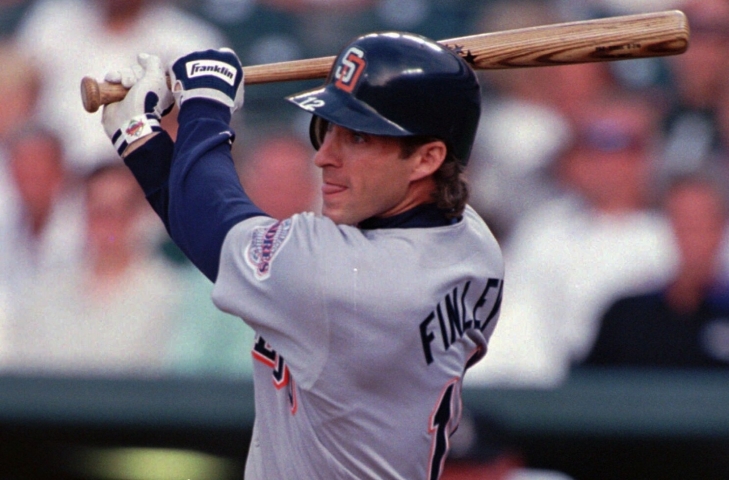
Few players have traveled the major leagues as extensively as the center fielder who played for eight teams. While Steve Finley later became a division champion and World Series winner in other teams, his early career in Southern California marked his rise from a potential asset to a superstar. Coming from the Astros before 1995 in a trade with Ken Caminiti, the left-handed hitter didn't just fill a defensive need but brought speed, power, and energy that changed the team’s trajectory.
His introductory 1995 campaign instantly proved that his natural toolkit was perfectly optimized for the spacious coordinates of his new home ballpark. Finley turned lashing line drives and tracking deep fly balls into a strict daily routine, hitting a career-high .297 with 167 hits, 104 runs scored, and a magnificent 36 stolen bases.
His sophomore year with the Padres marked his best season in baseball. Finley delivered an outstanding all-around offensive performance, setting career highs with 195 hits, 45 doubles, and 126 runs scored. Most notably, his power surged unexpectedly; previously never hitting more than 11 home runs in a season, he used a quick pull swing to hit 30 home runs and drive in 95 RBIs. This effort earned him tenth place in the National League MVP race and helped San Diego secure a surprising division title. He beautifully maintained that dynamic frontline baseline over the next two summers, weaponizing enough muscle to hammer 28 more home runs in 1997 to command his very first career All-Star selection.
Nevertheless, a thorough algorithmic review reveals his defensive contributions. While traditional voters praised his speed and impressive, wall-crashing plays—earning him consecutive National League Gold Glove Awards in 1995 and 1996—modern efficiency metrics and retrofitted defensive measurements tend to undervalue his hardware. They consider his overall route efficiency and deep-range coverage to be quite inconsistent, leading to a career -0.4 defensive bWAR with San Diego that significantly limits his overall advanced value.
He made 159 appearances in the 1998 pennant-winning season, but his offensive efficiency declined; his batting average dropped to.249, though his 40 doubles and 14 home runs helped the underdogs reach the Fall Classic against the Yankees.
The inevitable business exit occurred right after that last World Series appearance. With his contract ended and the front office unable to afford his rising market value due to an aggressive roster rebuild, Finley entered free agency. In December 1998, he made a clear business move by signing a lucrative deal with the regional rival Arizona Diamondbacks.
With San Diego, Finley compiled 662 hits, 134 doubles, 31 triples, 82 home runs, and 88 stolen bases.
27. Wil Myers
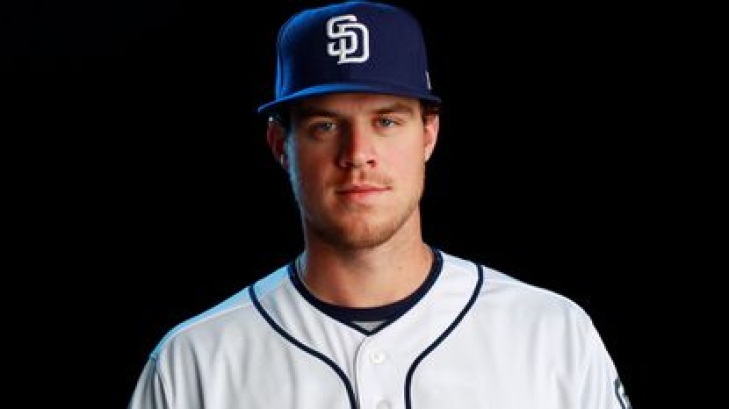
In 2015, as part of a major roster overhaul by the front office, a high-profile three-team trade involving Tampa Bay and Washington brought Wil Myers to Southern California. Coming with the title of American League Rookie of the Year, he showcased a smooth right-handed swing and an athletic build, signaling potential as a franchise cornerstone. Over the following eight summers, his time beneath the palm trees became one of the most intriguing, complex, and versatile periods in recent club history, characterized by long stretches of inconsistent performance mixed with moments of outstanding brilliance.
His initial introduction to the local fan base was significantly impeded by physical ailments, as severe wrist injuries restricted his debut season to merely 60 games. The definitive, healthy breakthrough occurred during the 2016 calendar year, facilitated by a permanent transition to first base. Myers transformed run production into a consistent daily routine, recording 155 hits, 29 doubles, and a career-high 28 home runs while driving in 94 runs. This outstanding performance earned him his first career All-Star selection, inspiring great local enthusiasm as he became the prominent face of the franchise during the hosting of the Midsummer Classic at Petco Park. He sustained this momentum the following summer, managing a slight decrease in contact efficiency to achieve a career-best 30 home runs and steal 20 bases during the 2017 season.
Yet, sustaining that frontline trajectory proved maddeningly elusive. Over the next two schedules, Myers was thrust into a highly volatile defensive carousel, shuffling between first base, third base, left field, and center field as managers desperately sought to maximize his athletic tools. That persistent positional fluidity frequently disrupted his timing at the plate, resulting in high strikeout volume and a noticeable drop in overall efficiency.
In 2020, Myers excelled under manager Jayce Tingler, settling in right field, playing superb defense, and hitting well. Over 55 games, he posted a .288 average, 15 homers, and 40 RBIs. His stats included a .606 slugging and a .950 OPS, helping the Padres reach the postseason for the first time in 14 years. He finished 16th in NL MVP voting.
Over his last two summers in San Diego, his production declined due to knee and finger injuries that slowed his bat speed. After a key role in the team’s 2022 NLCS run, he left Southern California that winter to sign with the Cincinnati Reds, ending his multi-era residency.
Myers had 134 Home Runs and 771 Hits with the team.
37. Mark Loretta
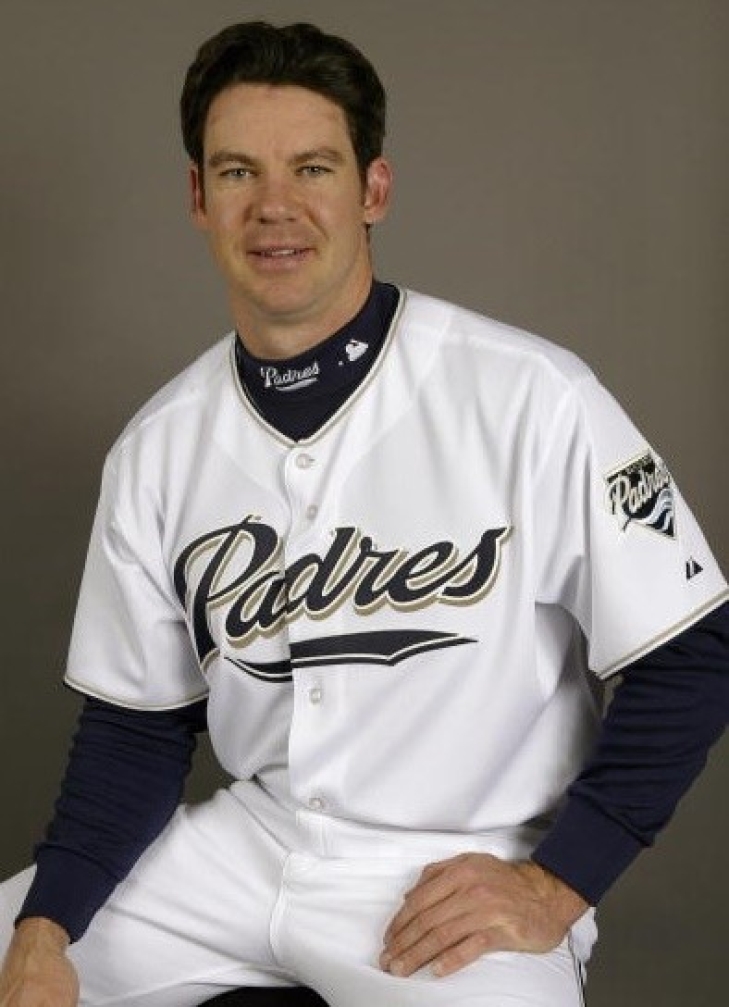
The 2004 season marked a major change as the club moved from Jack Murphy Stadium to the new Petco Park, designed for pitching and defense. Fans wondered who would boost the offense, and the answer was a skilled, cerebral right-handed infielder who had spent eight years as a versatile utility player for the Milwaukee Brewers. He was signed to a modest free-agent deal before the 2003 season.
In 2003, he quickly set a high standard with outstanding top-of-the-order performance, smoothly settling into the West Coast vibe. He finished the season with a solid .314 batting average, 185 hits, 28 doubles, and 13 home runs. Loretta made hitting line drives into a daily habit, earning the team's local Most Valuable Player honors, showcasing his dedication and talent.
Nevertheless, that initial achievement served merely as a preparatory indication for the momentous, award-winning breakthrough he revealed during the notable 2004 stadium inauguration. In simple terms, Loretta produced a regular-season performance of exceptional quality that skillfully emulated the renowned batting style of Tony Gwynn himself. Loretta employing a concise, line-drive swing to lead the senior league with an outstanding, career-high of 208 hits—joining Gwynn as the sole players in franchise history to surpass the distinguished 200-hit mark in a single season.
Loretta concluded that the remarkable 2004 season, during which he achieved career bests across all statistical categories: 108 runs scored, 47 doubles, 16 home runs, and 76 runs batted in, was notably anchored by an impressive .335/.391/495 slash line. He notably struck out only 45 times in 707 plate appearances, a testament to his efficiency, and finished third in the National League batting race. These outstanding achievements readily earned him his first career All-Star selection, a well-deserved National League Silver Slugger Award, and an exceptional ninth-place finish in the National League Most Valuable Player balloting.
Before the 2005 campaign, a severe thumb ligament injury required complex surgery, reducing his leverage and costing nearly two months of play. Despite returning to 105 games, his power dropped to three home runs and 38 RBIs, with a batting average of .280. He was traded to the Red Sox after the season.
With San Diego, Lorreta had 506 hits, 91 doubles, 32 home runs, and 186 runs batted in, entirely validated by an exceptional .314 batting average and a pristine .377 on-base percentage.
40. Roberto Alomar
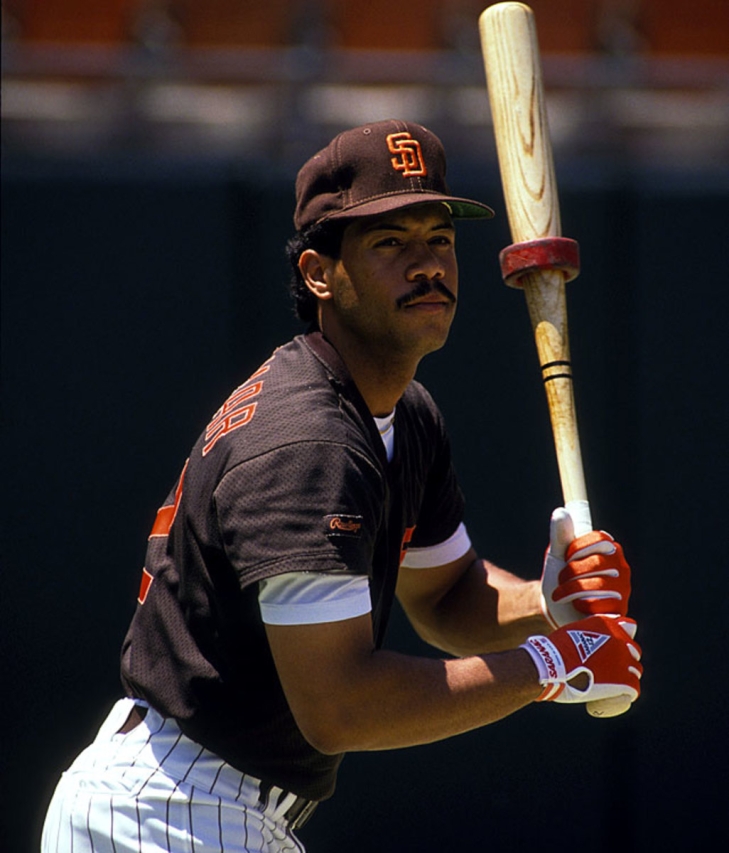
It’s tempting to judge Roberto Alomar’s legacy solely by his legendary postseason moments, ten Gold Gloves, and his induction to Cooperstown with a Blue Jays cap on his plaque. However, before he became an international baseball icon, Alomar was a highly regarded 20-year-old prodigy challenging expectations in Southern California. When he debuted in the majors in April 1988, his exceptionally smooth switch-hitting style meant he didn't need a long development period; he seamlessly filled the second baseman role and immediately brought a vibrant mix of aggressive baserunning, precise hitting, and innate style, indicating a future baseball superstar.
His 1988 intro showed his advanced baseline as he swiftly bypassed early challenges. Alomar made collecting line drives and playing infield his routine. He systematically dismantled NL pitching, earning 145 hits, 24 doubles, and 24 stolen bases, finishing fifth in NL Rookie of the Year voting.
He really shone that year, making a remarkable breakthrough in 1989 and demonstrating excellent skill at the top of the order. That summer, Alomar worked on his batting, hitting a team-high 184 times, maintaining a strong .295 average, and stealing a career-high 42 bases, leading the local offense and establishing himself as a key player. Beyond his hitting, his great range and sharp instincts impressed fans and teammates alike. Though he didn’t officially win a Gold Glove during his brief three seasons in San Diego, an award he would later earn many times, advanced stats now show that his quickness and awareness on the field were truly deserving of recognition.
He earned his very first career All-Star selection in 1990, hitting a steady .287 with 168 hits, 27 doubles, and 60 runs batted in, proving to be the highly coveted engine of a rising team.
It’s easy to mistakenly remember him staying on through the following campaign, but in reality, the front office made its most famous blockbuster move before the 1991 season even started. Eager to add a powerful, middle-of-the-order hitter under general manager Joe McIlvaine, the Padres teamed up with Toronto for an exciting four-player trade in December 1990. They sent their promising young second baseman and outfielder Joe Carter to the Blue Jays in exchange for Fred McGriff and Tony Fernandez. This was a remarkable, high-stakes swap that truly benefited both teams; McGriff brought impressive power to San Diego, while Alomar's arrival in Canada helped lead the Blue Jays to two consecutive World Series titles in 1992 and 1993.
In San Diego, he accumulated exactly 497 hits, 78 doubles, and 90 stolen bases, entirely validated by a sharp .283 batting average. His Cooperstown call came on his first ballot in 2011.
