

Committee Chairman
10. Barry Bonds
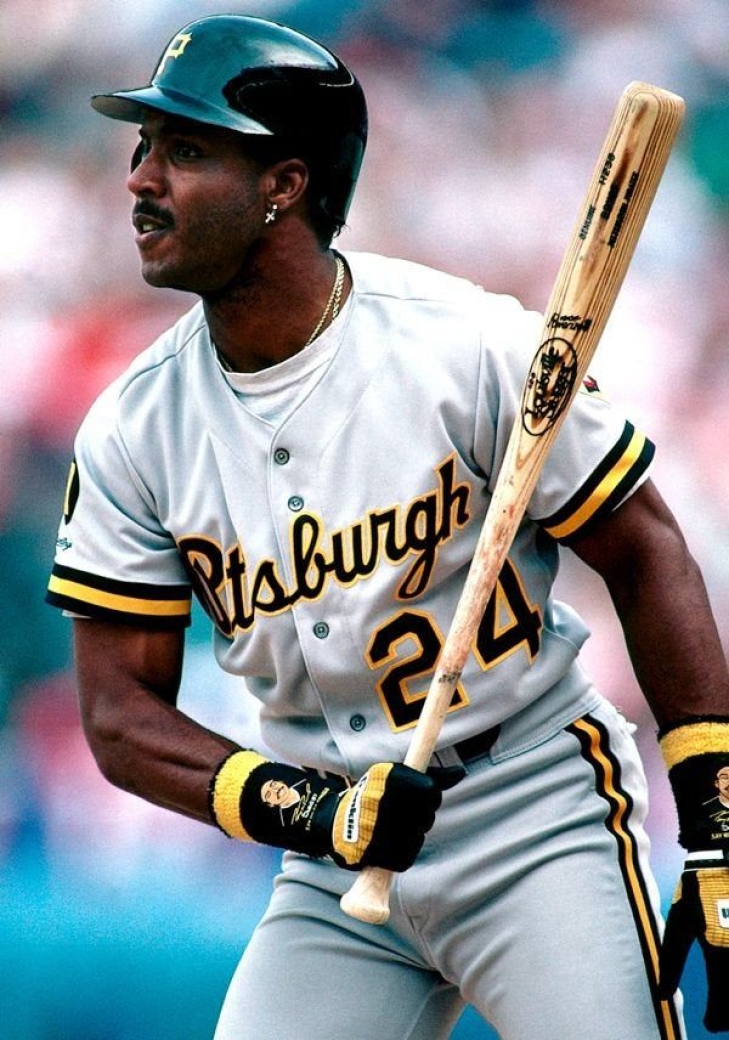
Many in the baseball community often see Barry Bonds as a figure surrounded by heated debates, mainly focusing on his transformation during his late years in San Francisco. But before he became one of the most controversial and dynamic players of the modern game, he spent seven summers in western Pennsylvania building a very different kind of legacy. In Pittsburgh, Bonds wasn't just a towering slugger; he was a slim, incredibly fast, five-tool talent who blended amazing athletic skill with a sharp, instinctive eye. His efforts helped lift a struggling small-market team from the bottom of the National League standings into a long, exciting period of championship chase.
Drafted sixth overall in 1985, Bonds inherited incredible talent from his father, Bobby Bonds, and his legendary godfather, Willie Mays. He quickly advanced through the minor leagues and made his major league debut the next summer. By the start of the 1987 season, he had earned the regular spot in left field, ready to shine.
Although his initial campaigns from 1987 to 1989 were undoubtedly effective, they occasionally failed to meet the expectations of a local fan base and media that anticipated immediate, generational excellence. Additionally, his confrontational and highly defensive interactions with journalists and management swiftly created an impression that he was exceedingly difficult to handle behind the scenes.
His career's key turning point occurred during a historic 1990 breakout season, when his raw talent finally transformed into remarkable efficiency. Bonds delivered an outstanding multi-faceted performance that earned him his first National League MVP Award. He hit .301, led the league in slugging percentage (.565), and had an OPS of .970. He also hit 33 home runs, drove in 114 RBIs, stole 52 bases, and played Gold Glove defense, helping the Pirates win their first National League East division title in over ten years.
Far from being just a one-summer anomaly, Bonds spent the following two years dominating National League pitching staffs. He narrowly missed the MVP award in 1991, finishing as the runner-up after leading the league with a .410 on-base percentage, and then delivered an exceptional performance in the 1993 season.
In the impressive 1992 regular season, Bonds earned his second MVP award by hitting 34 home runs, driving in 103 runs, and drawing a league-high 127 walks. He dominated advanced analytics by leading all of baseball in on-base percentage (.456), slugging (.624), and OPS (1.080), while also earning his third straight Gold Glove and Silver Slugger awards.
Despite leading the team to three straight National League Championship Series, underlying tensions persisted. The fans, often alienated by his distant attitude and disappointed by his postseason struggles, never truly warmed up to him. Given the harsh financial constraints of small-market baseball, everyone in Pittsburgh knew the front office could never offer him the lucrative contract available in free agency.
Bonds signed with San Francisco in 1993, and he became the most feared offensive player, perhaps ever. Over his tenure in Pittsburgh, Bonds smacked 176 Home Runs, 556 RBI, with a sick Slash Line of .275/.380/.503. As of this writing, Bonds is the only two-time MVP in franchise history.
9. Max Carey
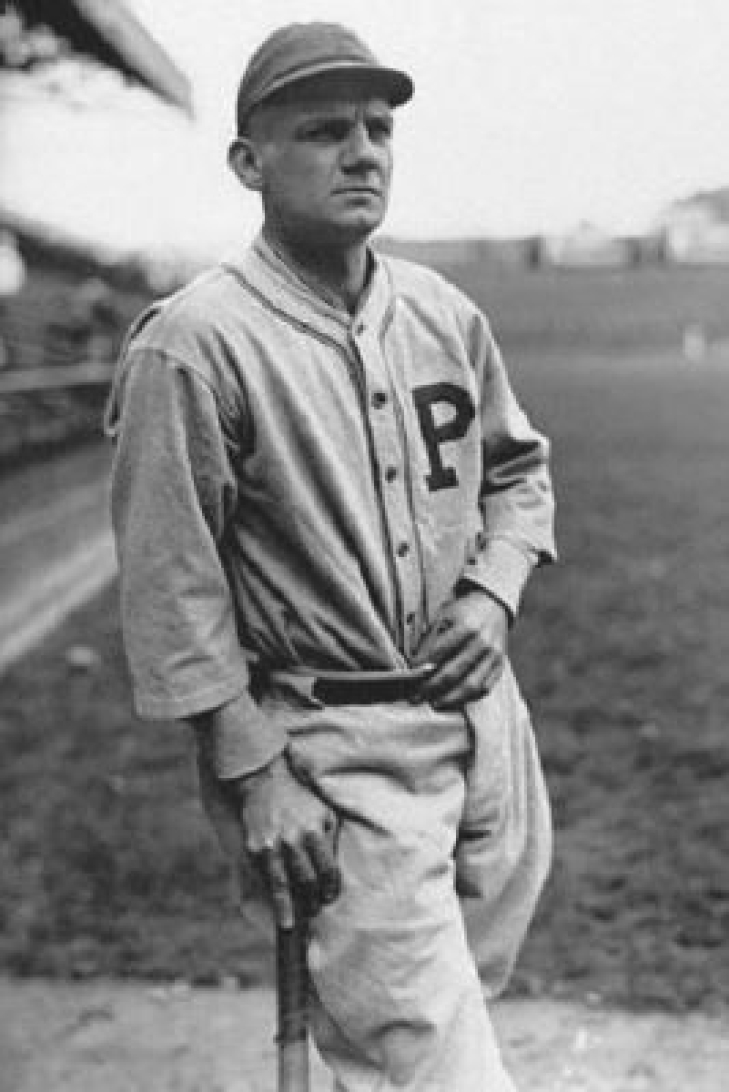
The modern idea of an elite leadoff hitter often evokes images of quick speedsters, but Max Carey combined agility with keen, strategic thinking. Originally on track to become a Lutheran minister, the Indiana-born player unexpectedly shifted to baseball, applying a deliberate, tactical approach to base running that changed the run game. His modest debut over two games for the Pittsburgh Pirates late in 1910 showed the team they had found their fastest player, a base stealer who would spend fifteen years making the bases his domain.
Carey made table-setting a staple of his regular-season routine, expertly navigating the Deadball Era with a pristine left-handed bat and sharp eye. While he lacked power for the middle of the lineup, he was a highly effective contact hitter who surpassed the .300 batting average six times during his tenure in Western Pennsylvania. He consistently overwhelmed opposing pitchers with his patient approach, leading the National League in walks twice and frequently maintaining on-base percentages that kept the infield in a constant state of high alert.
Once Carey produced a free pass or a single, the true operational magic started. He didn't sprint blindly; instead, he analyzed pitchers' movements with precise detail, leading the way in timing jumps over simply depending on quick footwork. His breakout on the leaderboard came in 1913, when he captured his first National League stolen base crown with 61 swipes.
Carey delivered an exceptional display of stolen-base prowess, unmatched in National League history. Over his career, he led the league in stolen bases ten times. His peak came in 1922 when he stole 51 bases in 53 attempts, achieving a remarkable 96.2% success rate despite the era's defensive technologies and pitch-out strategies designed to contain him. He ended his career with 688 stolen bases in the Steel City, a record that still stands as the all-time high in Pirates history.
Nevertheless, evaluating his historical impact solely through his legs underestimates his overall defensive contribution on the field. As a roaming center fielder endowed with exceptional instinctual reads and spatial agility, Carey revolutionized the outfield, rendering it virtually impenetrable for opposing line drives. He consistently led the league in putouts and assists, building a defensive record that would have easily earned him multiple Gold Gloves if such awards had been available in his time.
The peak of his team's achievement came during the historic 1925 regular season, where his veteran leadership led the Bucs to a National League pennant. In the seven-game World Series against the Washington Senators, Carey delivered an outstanding performance, hitting an impressive .345 and helping Pittsburgh win the world championship.
Tragically, his long tenure with the club ended suddenly and without ceremony in the middle of 1926. Amidst a fierce and widely publicized dispute within the front office, involving player-coach Fred Clarke, often called the "ABC Affair' by historians, the aging captain was quickly placed on waivers and subsequently claimed by the Brooklyn Robins.
He departed the organization with an exceptional localized baseline of 2,425 hits, 1,415 runs scored, and 306 doubles over 2,130 games. Carey was chosen by the Veterans Committee in 1961 for the Baseball Hall of Fame.
8. Wilbur Cooper
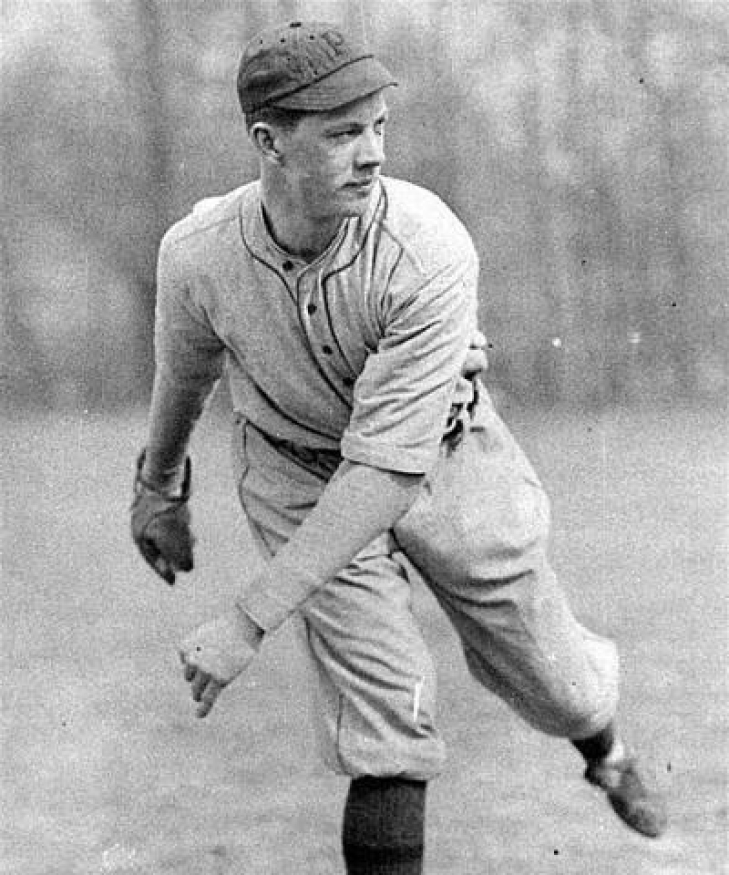
A century's passage can easily erase the legacy of a frontline ace, leaving their greatest accomplishments forgotten in early baseball history. Wilbur Cooper exemplifies this neglect within Pirates history. A skilled, left-handed pitcher who used a sharp changeup and sinking fastball, Cooper spent over ten years dismantling National League lineups with calm precision. However, because his prime coincided with a rare, transitional period between the franchise's early wins, his name is seldom spoken with the same admiration as his peers.
His arrival in Pittsburgh midway through the 1912 season immediately revealed him as a dependable workhorse. Cooper made consistent durability a core part of his routine, expertly managing the tough transitions of the Deadball Era to secure his spot in the starting rotation.
His authentic ascent to elite status took place over an impressive eight-year peak from 1917 to 1924, during which he established himself as one of the most formidable and effective southpaws in Major League Baseball. Throughout this dominant period, Cooper consistently ranked in the top ten of the National League across nearly all key pitching categories, regularly surpassing 200 strikeouts and 300 innings, all while making run prevention appear effortless.
He surpassed the prestigious 20-win threshold four times while playing for Pittsburgh, highlighted by an outstanding 1922 season with a career-best 23 wins, 28 complete games, and a solid 3.18 ERA.
Through his remarkable longevity, Cooper etched his name into the major league record books as the first left-handed pitcher in the National League to reach 200 career wins. Although he didn't extend his total much beyond that, ending his career with 216 wins, his impact remains unparalleled. He is still the winningest pitcher in Pittsburgh Pirates history, with an impressive 202 victories that remain unmatched.
The tragic aspect of Cooper's legacy lies in unfortunate historical timing. After dedicating 13 seasons to the organization, he was traded to the Chicago Cubs before the 1925 season. That autumn, the Pirates secured an exciting World Series victory without him. If Cooper had been part of that championship team, his name might have been honored with a retired number and physical memorials, solidifying his place in history.
Modern advanced metrics and analytical filters have thankfully begun to rescue his profile, highlighting his immense 48.2 career bWAR anchor as a Pirate.
7. Ralph Kiner
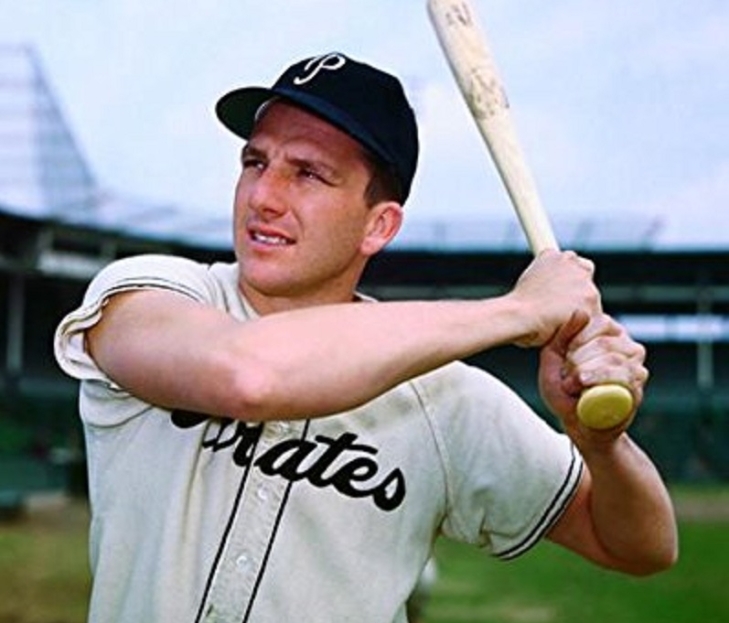
The history of major league baseball features many legendary sluggers with impressive career statistics, but Ralph Kiner stood out in the post-war era for his extraordinary power. For seven summers after World War II, this handsome, broad-shouldered left fielder transformed Forbes Field's left-field seats into his personal zone of dominance. During a difficult period for the franchise, Kiner alone kept attendance high by setting a record for home run frequency that remains unmatched.
His debut in the major leagues during the 1946 season provided little hint of the monumental impact that would come later. Although Kiner secured the National League home run title as a rookie, his stats were somewhat misleading: he ended with only 23 home runs, led the league with 109 strikeouts, and had a rather modest .430 slugging percentage.
Instead of allowing rookie struggles to shape him, Kiner undertook a remarkable journey of self-improvement, guided by his new teammate Hank Greenberg. He methodically adjusted his batting style, reducing his swing size and significantly increasing his plate discipline, turning his extra-base power into a consistent part of his daily game.
What followed was a stunning, high-output assault on the record books. Kiner achieved an incredible streak of seven straight home run titles from 1946 to 1952, a feat that still stands unmatched in baseball history.
Over the next five summers, he consistently surpassed 40 home runs, with two seasons exceeding 50. His best season was in 1949, when he hit a career-high 54 home runs, drove in 127 RBIs, and achieved an impressive .658 slugging percentage.
Kiner was far from a simple, all-or-nothing free swinger. He developed an exceptionally keen eye at the plate, leading the Senior Circuit in walks three times and surpassing a .400 on-base percentage three times, notably hitting a league-high .452 OBP in 1951. He won three slugging titles, three OPS titles, and finished in the top ten in National League MVP voting for five consecutive years from 1947 to 1951.
Sadly, Kiner’s remarkable individual achievements took place on Pittsburgh teams that were mostly poor, finishing with only one winning record during his time. This clear contrast between his superstar performance and the team's struggles led to a well-known financial dispute with GM Branch Rickey. After Kiner refused a salary cut after hitting 37 home runs, Rickey famously declared: "We finished last with you; we can finish last without you."
True to his promise, Rickey traded the franchise icon to the Chicago Cubs in mid-1953 in a large ten-player deal. Kiner's peak performance, characterized by high velocity, soon declined; persistent back degeneration severely limited his power, ultimately ending his career by the end of the 1955 season at only 32 years old.
He left the Steel City having accumulated an exceptional localized baseline of 301 home runs, 801 RBIs, and a spectacular .280/.405/.567 slash line across 1,095 games.
Kiner famously began a second, highly successful career as a beloved broadcaster for the New York Mets, keeping his voice a part of the sport for generations. The peak of his greatness was confirmed in 1975 when baseball writers inductively voted him into the Baseball Hall of Fame in his last eligible year.
To permanently mark his monumental impact on the community, the organization, with deep reverence, moved to elevate his legacy to the rafters of Three Rivers Stadium, officially retiring his iconic number 4 jersey in 1987.
