


Committee Chairman
26. Ernie Whitt
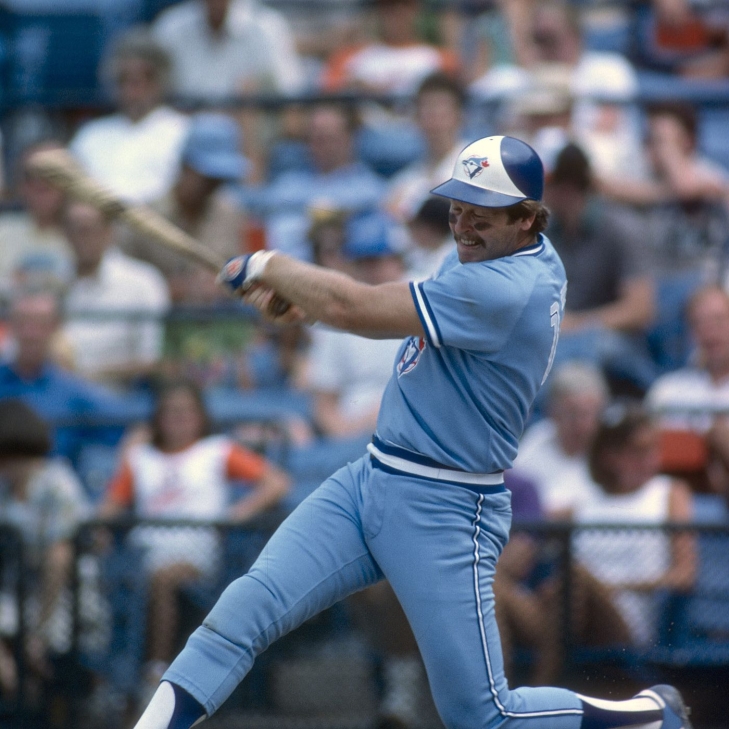
When the Toronto Blue Jays played their first game on a snowy April day in 1977, Ernie Whitt was a little-known 24-year-old expansion pick with only eight major league games on his record, all with the Boston Red Sox. Left unprotected because his position was blocked by Carlton Fisk, a future Hall of Famer, Whitt, a left-handed hitter, moved north with no promises. His rise was slow and difficult, but by the end of his 12 seasons in Toronto, he had become not only the starting catcher but also the emotional core of a developing team and the last remaining original Blue Jay.
Whitt spent the late 1970s largely overlooked in the minor leagues, managing only 25 appearances for the major league team in 1977 and 1978, and missing the entire 1979 season in Triple-A. His career took a significant turn before the 1980 season when Bobby Mattick became manager. Mattick saw the potential in Whitt's left-handed batting and consistent presence, promoting him to a regular role. Over the next ten years, Whitt became known for his effective platoon partnership with Buck Martinez, skillfully handling the more challenging matches against right-handed pitchers.
He swiftly became the primary defensive anchor and trusted confidant of Blue Jays ace Dave Stieb, providing a calming, composed presence that contributed to one of the most formidable young pitching staffs of the decade. As his defensive skills behind the plate improved, his left-handed batting became a reliable element in Toronto's deep lineup. Beginning in 1982, Whitt completely reinvented his offensive game, embarking on a nine-year streak of double-digit home runs.
His peak performance came during the historic 1985 season, when Whitt surpassed 100 hits for the first time, hitting 19 home runs and driving in 64 RBIs. This achievement earned him his only All-Star selection, where he had the chance to face Stieb on a national stage. More significantly, his consistent leadership behind the plate helped the Blue Jays reach 99 wins and secured the franchise’s first-ever postseason appearance. Two years later, in 1987, he delivered his best personal achievement, posting a career-high .269 batting average with 19 home runs and 75 RBIs.
Following the 1989 season, with the organization ready to hand the keys over to younger homegrown catchers like Pat Borders and Greg Myers, the front office traded the veteran icon to the Atlanta Braves. Whitt appeared in 1,218 games for Toronto and accumulated 888 hits, 164 doubles, 131 home runs, and 516 RBIs while generating a steady .253/.329/.418 slash line (104 OPS+).
Whitt was proudly inducted into the Canadian Baseball Hall of Fame in 2009.
6. Vladimir Guerrero Jr.
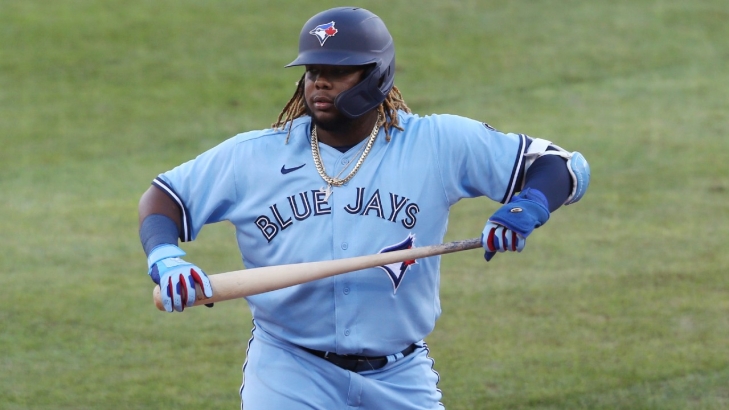
Vladimir Guerrero Jr., the son of Hall of Famer Vladimir Guerrero, embarked on his professional baseball career bearing the significant generational expectations that could easily undermine a less promising prospect. Signed from the Dominican Republic as an international free agent in 2015, his formidable batting ability accelerated his progression through the minor leagues, culminating in a highly anticipated Major League debut in 2019. He met these expectations by demonstrating the raw bat speed and considerable power reflective of his father’s legacy, finishing sixth in the American League Rookie of the Year voting and establishing himself as a key figure for the franchise's future.
Following his demonstration of capability during the abbreviated 2020 season, Guerrero delivered a historic, MVP-caliber performance in 2021 that would have likely earned him the award in nearly any other year, had it not been for an exceptional two-way season from Shohei Ohtani. By securing the esteemed Hank Aaron Award and his inaugural All-Star selection, the young first baseman dominated American League pitching by leading the league in runs (123), home runs (48), on-base percentage (.401), slugging percentage (.601), and achieving an impressive 1.002 OPS. This season served as a definitive statement of his elite status as a tier-one superstar, fully capable of dominating a game.
The ensuing two seasons brought a period of offensive recalibration, proving that even generational talents have to adjust to the league's counterpunches. While his power numbers dipped in 2022 and his OPS slid below .800 in a frustrating 2023, Guerrero adjusted by shoring up his defensive profile, capturing a Gold Glove at first base to show his value wasn’t strictly tied to the batter's box. The true roaring return to form arrived in 2024; shaking off a sluggish spring, he exploded down the stretch to hit a blistering .323 with 30 home runs, a surge that secured his fourth consecutive All-Star appearance and a sixth-place finish in the MVP voting.
Any anxiety regarding his long-term future in Canada was permanently erased in April 2025, when the Blue Jays front office orchestrated one of the most monumental moments in franchise history. Rather than letting their homegrown superstar walk into a high-stakes free-agent market, Toronto locked him up with a staggering 14-year, $500 million contract extension. The megadeal, featuring a full no-trade clause and no opt-outs, completely reset the organizational clock, ensuring that the face of the franchise would carry on his legacy north of the border as a lifelong Blue Jay.
With his financial future secured, Guerrero went out and validated every single penny during a thrilling 2025 campaign that culminated in a deep, magical postseason push. He put the entire team on his back in October, capturing ALCS MVP honors and absolutely tearing through the playoff brackets with a scorching 1.289 OPS and 8 postseason home runs. Though the Blue Jays ultimately fell just one victory short of a title, losing a heartbreaking 11-inning thriller in Game 7 of the World Series to the Los Angeles Dodgers, Guerrero’s absolute supremacy under the highest stakes solidified his reputation as a big-game destroyer.
Entering the 2026 season, Vladdy has the goods to enter the top five of this list by year’s end. Could he make it all the way to the top?
23. Tom Henke
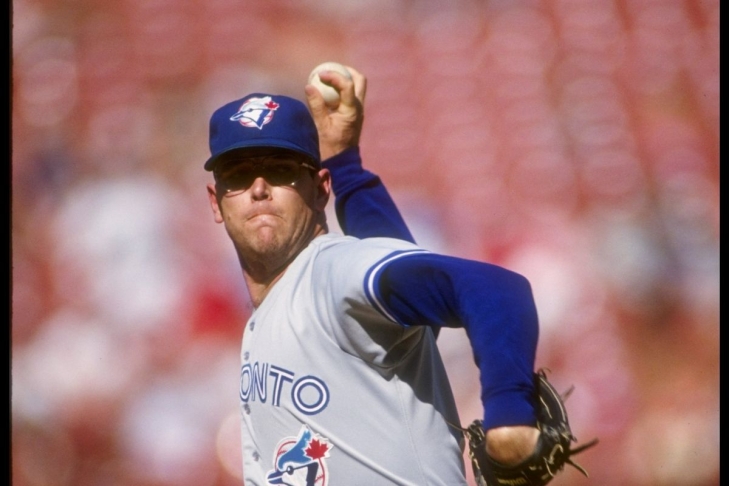
With his large, thick-rimmed wire glasses and gentle demeanor, Tom Henke initially appeared more like a reserved corporate accountant than a formidable major league closer. However, as soon as he took the mound, that misleading impression disappeared. Towering at 6-foot-5, this imposing right-hander utilized a blazing mid-90s fastball and a deadly diving forkball, earning him the nickname "The Terminator”—becoming one of the most formidable and dominant ninth-inning pitchers of his era.
His journey to Toronto truly showcases the cleverness of front-office decision-making. Initially drafted by Texas, Henke had incredible speed but often struggled with control, which led the Rangers to leave him unprotected in the 1985 free-agent compensation draft. The Blue Jays saw great potential in him and quickly took a chance. After Henke made a significant mechanical breakthrough at Triple-A Syracuse and earned the International League MVP award, Toronto called him up to the big leagues in mid-summer. He instantly made a big impact, providing a reliable and intimidating presence in the bullpen during the team's 1985 pennant race—saving 13 games down the stretch and helping secure the franchise's first division title.
By 1986, Henke took on the closer role permanently, recording 27 saves and giving a young team the reliable late-inning presence it had long sought. His performance peaked in 1987 when he was selected as an All-Star for the first time and led the American League with 52 games finished and 34 saves.
As Toronto steadily solidified its status as an elite American League powerhouse into the early 1990s, Henke became an ironclad guarantee in the back of the bullpen, rattling off five consecutive seasons with at least 20 saves. That ninth-innings security guard took on an even more terrifying dimension when the hard-throwing Duane Ward emerged as the team's primary eighth-innings setup man. The lethal Ward-to-Henke combination effectively shrunk games to seven innings, culminating in the historic 1992 championship run, when Henke logged five saves in the postseason to help deliver Canada its first-ever World Series title.
That global triumph doubled as his final act as a Blue Jay. Following the 1992 victory, Henke entered the open market as a free agent and elected to return to his original organization by signing a lucrative contract with the Texas Rangers.
Henke made 446 appearances (all in relief) for Toronto and compiled a stellar 29–29 record with a microscopic 2.48 ERA and an exceptional 1.02 WHIP. He collected a franchise-record 217 saves while logging 563 innings of work and striking out 644 batters. In 2011, he was inducted into the Canadian Baseball Hall of Fame.
24. Fred McGriff
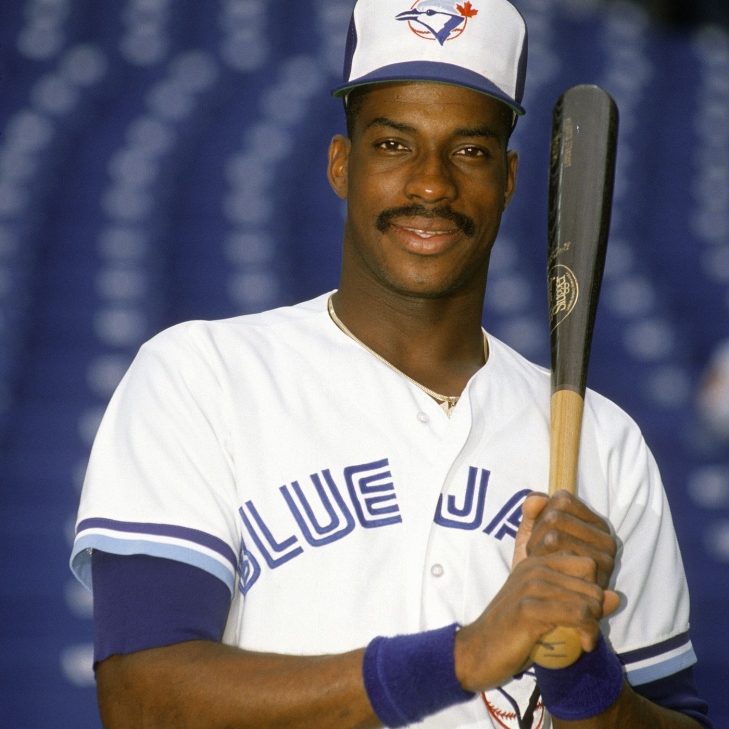
Before he became a well-known figure on the field, whether as a nomadic player in both leagues or as a Hall of Fame immortal, Fred McGriff was actually the rising star among Toronto's young baseball talent. Originally picked up by the New York Yankees, he was later traded to the Blue Jays in a 1982 minor-league deal that turned out to be very favorable for Canada. After steadily beating the best minor league pitchers, this tall, left-handed first baseman made his major league debut in 1986 for a brief stint, but it was the following summer that really put him on the map—hitting 20 home runs in just 107 games and making an unforgettable mark.
Armed with a textbook, high-quality swing that produced effortless opposite-field power, "The Crime Dog" swiftly became one of the most formidable middle-of-the-order hitters in the American League. He made a significant improvement in 1988, taking on most of the first base responsibilities while hitting 34 home runs and driving in 82 runs.
That consistent progression culminated in a remarkable 1989 season. After a summer of dominating junior circuit pitching, McGriff delivered a powerful offensive performance, leading the majors with 36 home runs, a .924 OPS, and a 165 OPS+. His impressive power earned him his first Silver Slugger Award and a sixth-place finish in the AL MVP race, serving as the key statistical factor that helped Toronto win the AL East division. In 1990, he maintained his elite run-producing level, hitting 35 home runs and setting a personal best with 94 walks, maintaining a strong .400 on-base percentage.
His run as a Jay abruptly ended in December 1990. Desiring to improve the clubhouse dynamic and acquire a top-tier defensive second baseman, the front office made a franchise-changing trade, sending McGriff and Tony Fernández to the San Diego Padres for Roberto Alomar and Joe Carter. This move directly contributed to Toronto’s consecutive World Series titles in 1992 and 1993, although McGriff continued his power hitting elsewhere, eventually earning a World Series ring as the cleanup hitter for the 1995 Atlanta Braves.
He accumulated 532 hits, 130 home runs, and 301 RBIs while generating a stellar .278/.389/.530 slash line (153 OPS+) for the squad. McGriff finally got the call from the Baseball Hall of Fame when he was chosen on his first Veterans Committee Ballot.
