


Committee Chairman
33. Paul Molitor
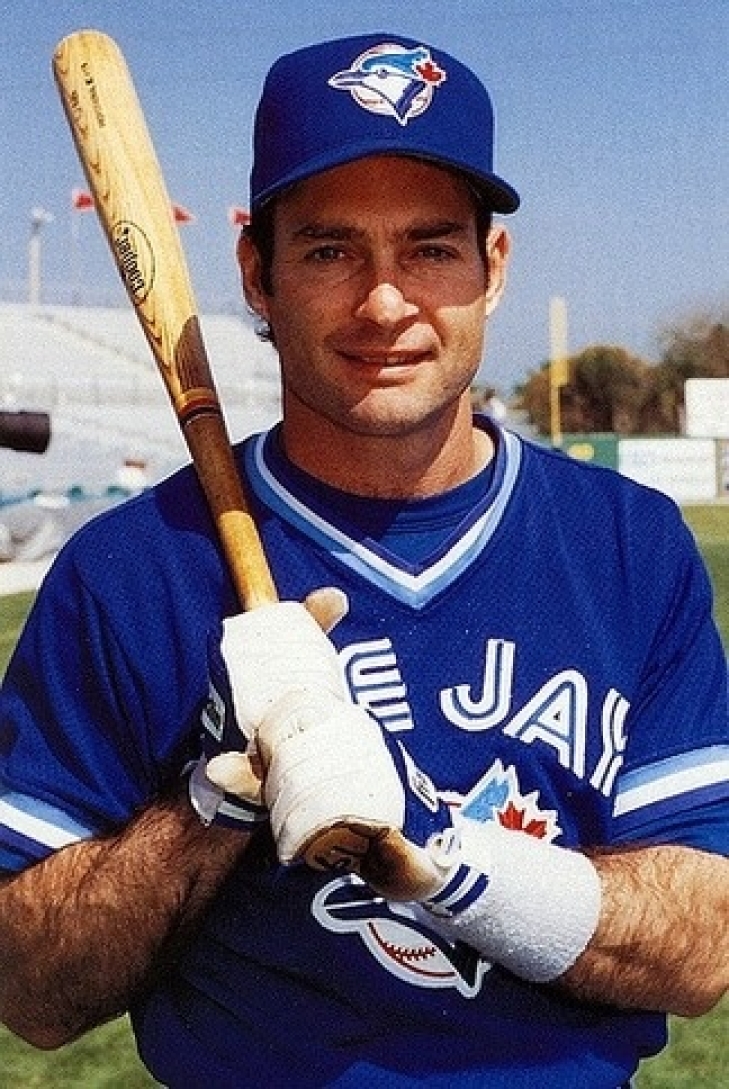
In 1992, the Toronto Blue Jays won their first world championship with Hall of Famer Dave Winfield as the designated hitter. After Winfield left in free agency, the team achieved a remarkable upgrade by signing Paul Molitor to a multi-year deal in December 1992. Molitor, affectionately called "The Ignitor,” brought exceptional contact hitting skills and a powerful, high-energy style. The intelligent right-handed hitter quickly made a significant impact, elevating the team's offense and solidifying his reputation as a hitting master.
Molitor’s debut in 1993 was truly historic. As a key part of the legendary "WAMCO" lineup, he dominated American League pitching. Using a compact, swift swing, he led the majors with 211 hits and achieved an impressive .332 batting average. More than just a singles hitter, Molitor showed added power, hitting a career-high 22 home runs and driving in 111 runs. This performance earned him the AL Silver Slugger Award and a close second in AL MVP voting.
That regular-season dominance beautifully set the stage for an immortal postseason showcase. As Toronto marched back to the Fall Classic, Molitor turned the 1993 World Series into his own personal playground. He shredded the Philadelphia Phillies' pitching staff, batting a staggering .458 with two home runs, two triples, and seven RBIs. Whether he was turning around fastballs or hitting line drives into the gaps, his clinical performance earned him the undisputed World Series MVP Award, capped by scoring the winning run on Joe Carter's historic walk-off three-run homer in Game 6, securing back-to-back world titles for Toronto.
Despite the 1994 strike-shortened season impacting the Blue Jays’ overall performance, Molitor stayed unaffected by decline. He delivered another outstanding offensive season, hitting .341 with 141 hits in only 115 games, earning his seventh All-Star appearance. Although his efficiency declined slightly in his final Toronto year in 1995, with a batting average of .270, his veteran leadership and excellent bat-to-ball skills kept him among the top designated hitters in baseball.
Prior to the 1996 schedule, the proud St. Paul native opted to return home, signing with the Minnesota Twins to beautifully chase his 3,000th career hit and close out his playing ledger where his roots began. Across three seasons in Toronto, Molitor appeared in 405 games and accumulated 508 hits, 87 doubles, 41 home runs, and 241 RBIs while generating a stellar .315/.388/.467 slash line (126 OPS+). He was inducted into the Baseball Hall of Fame in 2004.
32. Rance Mulliniks
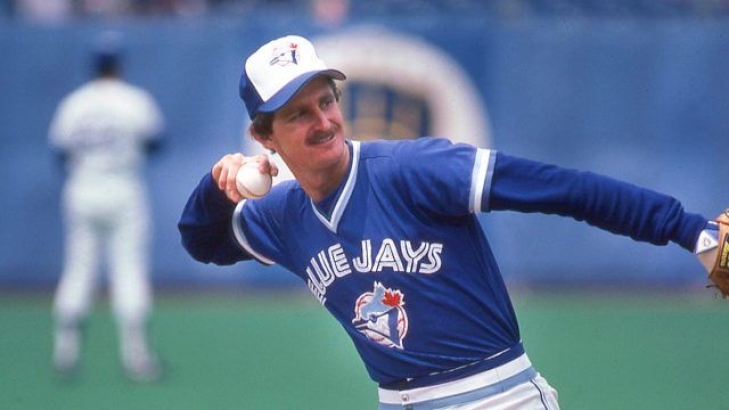
In his first five years in the Majors, Rance Mulliniks saw limited action, three with California and two with Kansas City. A trade to Toronto was just what Mulliniks needed, and for most of the 1980s, he was the main Third Baseman, often in platoons against right-handed pitching.
With the Blue Jays, the versatile Mulliniks had at least five years where he accrued 100 Hits and 10 Home Runs, batting over .300 in three of those years. He was a competent defensive player, and though he would never be a megastar, he would not be a liability either.
As Third Baseman Kelly Gruber emerged, Mulliniks’ time decreased, though his injuries and age grew. Although he barely played that year, he was a member of Toronto's 1992 World Series-winning team. Mulliniks retired after, totaling 843 Hits with a .280 Batting Average.
29. Kelly Gruber
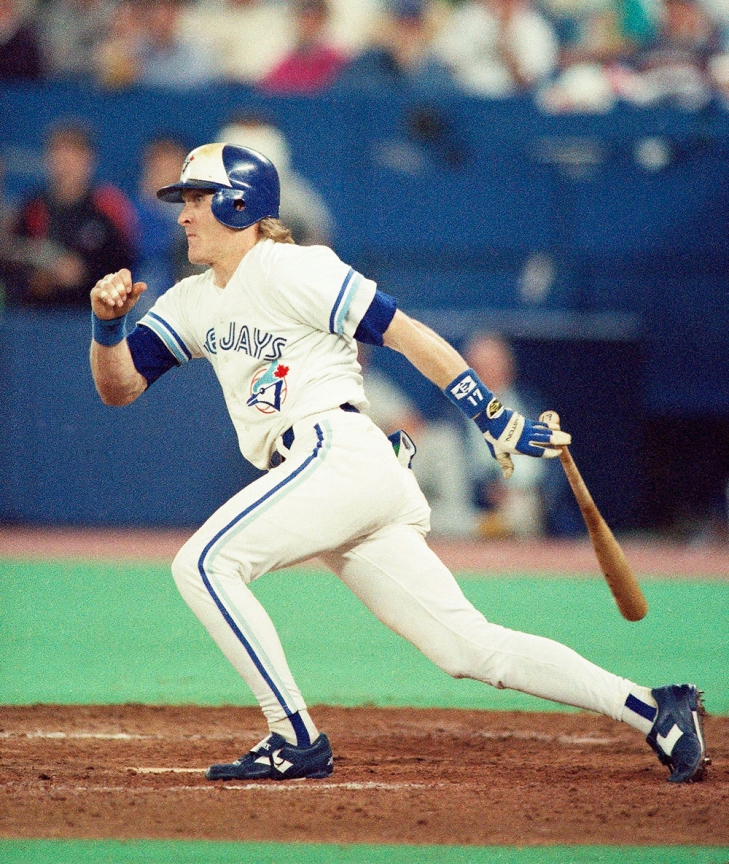
Kelly Gruber’s time in Toronto reads like a classic rock-and-roll arc: a slow build in the wings, a sudden explosion into white-hot stardom, and a quick, injury-forced exit just as the band reached the mountaintop. Plucked from the Cleveland organization as an unheralded pick in the 1983 Rule 5 draft, the athletic, right-handed infielder spent years grinding as a reserve utility man. With his signature flowing blonde hair and high-octane playing style, he gradually won over the fans at Exhibition Stadium, officially claiming the everyday third-base job by 1987.
Once established at the critical defensive position, Mr. Gruber combined unwavering, aggressive fielding with a progressively powerful batting approach. His significant breakthrough occurred during a robust 1988 season, wherein he exceeded 150 hits for the first time, while also recording 16 home runs and 23 stolen bases. He advanced further in 1989, achieving the inaugural cycle in Blue Jays history on April 16, and elevating his batting average to .290, thereby earning his first selection to the American League All-Star team.
That steady upward climb culminated in a magnificent 1990 individual masterpiece that set the entire league on notice. Gruber was a force of nature, weaponizing his right-handed stroke to blast a career-high 31 home runs and drive in a towering 118 runs. His explosive offense was matched by flawless technical execution on the diamond, as he captured both a Silver Slugger and a Gold Glove Award, along with a fourth-place finish in the AL MVP voting. At 28, he appeared to be on a clear path toward sustained superstardom.
Or so we thought.
Beginning in 1991, severe, nagging shoulder problems and a deeply painful spinal bone spur began to rob him of his quick-twitch reflexes and power base. Though his efficiency collapsed over his final two summers in Toronto, his veteran grit remained an indispensable asset. He gritted his way through 120 games as the starting third baseman for the historic 1992 squad, memorably launching a crucial, game-tying solo home run in the eighth inning of Game 3 of the World Series to help steer the Blue Jays to their first-ever world championship.
Recognizing his worsening health, the front office traded the veteran third baseman to the California Angels that winter for Luis Sojo. Gruber played only 18 final games on the West Coast before retiring at age 31. With the Blue Jays, he had 800 hits, 145 doubles, 114 home runs, and 434 RBIs with a .259/.307/431 line.
31. Aaron Hill
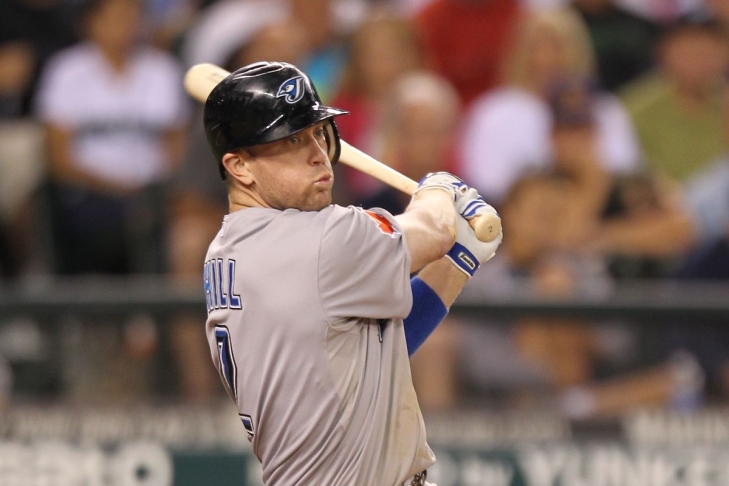
The Toronto Blue Jays used their 2003 First Round (13th Overall) to take LSU star Aaron Hill, who only needed two years to work his way through the Minors to make the parent club.
Hill played 104 Games in the infield as a rookie but only sat out seven Games over the next two seasons (2006 & 2007), batting .291 in both years. Showing skill offensively and defensively, Hill was injured for most of 2008 but had his most remarkable year in 2009. This was the year where he had career-highs in Home Runs (36), RBIs (108), and OPS (.829), and he was an All-Star and Silver Slugger. Hill also was 12th in MVP voting and won the AL Comeback Player of the Year.
2010 was inconsistent for Hill, who batted only .205 but belted 26 Home Runs. The Blue Jays, who declined his option the year before, traded the Infielder to the Diamondbacks during the 2011 Season, ending Hill’s stint in Toronto with 881 Hits and 96 Home Runs.
