


Committee Chairman
30. Alex Rios
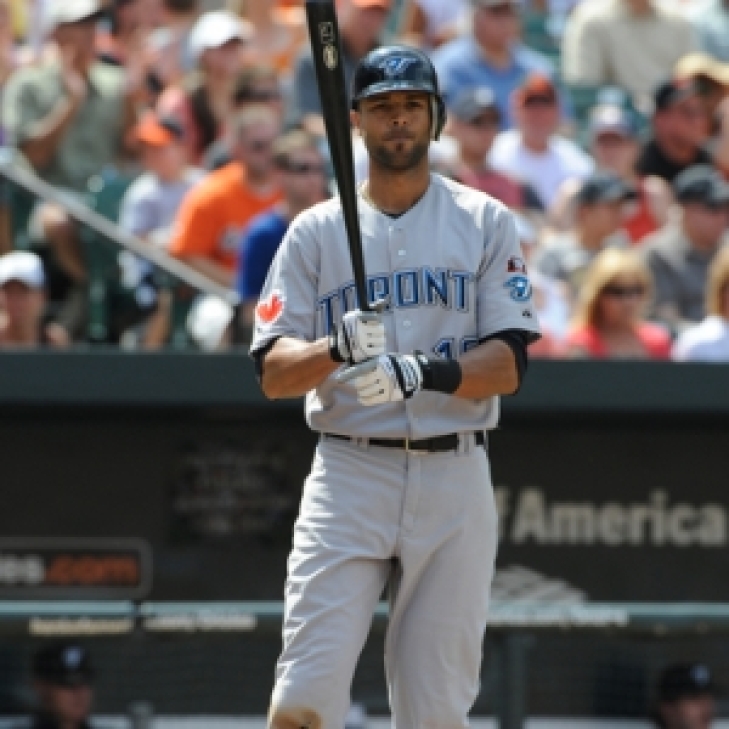
The story of Alex Ríos in Toronto is a stark reminder of how quickly a fanbase's adoration can transform into bitter resentment when immense potential curdles into frustration. Selected by the Blue Jays in the first round of the 1999 draft, the towering, athletic outfielder possessed an undeniably graceful, five-tool toolkit that made him the organization's consensus top prospect. When he finally claimed the everyday rightfield job in 2004, he looked every bit like the future face of the franchise, exhibiting a smooth right-handed stroke and elite defensive instincts that earned him a fifth-place finish in the American League Rookie of the Year race.
While that freshman campaign yielded 122 hits and a crisp .286 average, it featured a baffling lack of muscle, as Ríos managed just one solitary home run over 111 games. However, he gradually unlocked his physical power base over the next three summers, evolving into a truly dynamic, middle-of-the-order force. Ríos rattled off three consecutive seasons batting north of the .290 plateau from 2006 through 2008, combining his line-drive bat with elite high-velocity baserunning.
His individual production peaked during back-to-back All-Star campaigns. He hit a blistering .302 in 2006, then authored an individual masterpiece in 2007 by blasting a career-high 24 home runs, scoring 114 runs, and driving in 85 RBIs while securing a Fielding Bible Award for his exceptional defensive play in right field. By the time he swiped a career-high 32 bases in 2008, Ríos was widely viewed as a budding megastar entering his absolute prime.
Then came the sudden, catastrophic 2009 collapse. Almost overnight, his production plummeted into extreme inefficiency, highlighted by an ugly, demoralizing five-strikeout game against the Angels that became a focal point for disgruntled fans. As his intensity was openly questioned, the relationship between the outfielder and the Toronto faithful turned toxic. The boos amplified at Rogers Center, and Ríos visibly soured on the city. Desperate to shed the massive, multi-year contract extension they had handed him just a year prior, the front office placed the struggling star on waivers in August, allowing the Chicago White Sox to claim him and his remaining salary for nothing more than financial relief.
Ríos would go on to enjoy several strong, productive bounce-back seasons in Chicago and Texas, eventually securing an elusive World Series ring as a veteran contributor for the 2015 Kansas City Royals before walking away from the game. Rios accumulated 875 hits, 195 doubles, 81 home runs, 375 RBIs, and 112 stolen bases while posting a rock-solid .285/.335/.443 slash line in Toronto.
25. Duane Ward
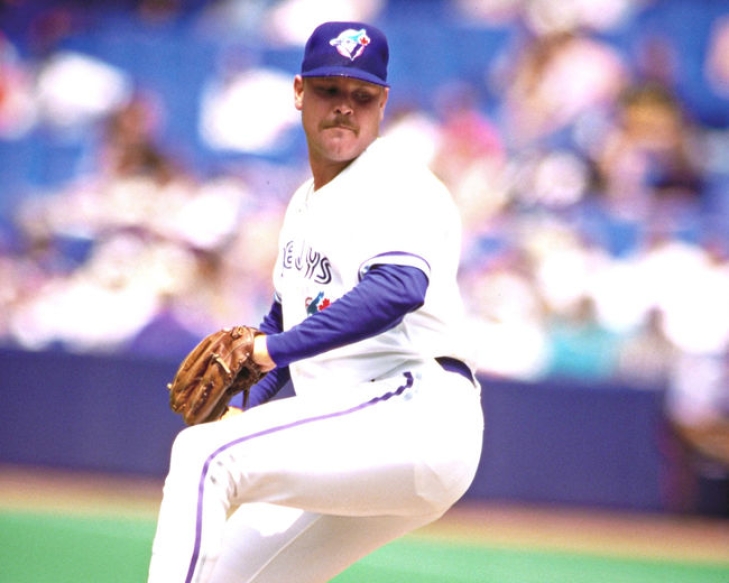
Before becoming the reliable late-inning pitcher helping lead his team to a championship, Duane Ward started as a young, energetic right-hander eager to find his place. Drafted in the first round by Atlanta, he initially made just 10 appearances in 1986 before being traded to Toronto in a straightforward challenge trade for seasoned starter Doyle Alexander. After spending the next couple of seasons honing his skills in the minors, Ward finally made a steady return to the majors in 1988. There, he quickly proved himself as a dependable and resilient pitcher in the middle innings, eventually securing the crucial eighth-inning setup role for good.
Ahead of closer Tom Henke, Ward established a formidable late-inning presence for the Blue Jays. At 6-foot-4, with a powerful, explosive fastball and a sharp slider, he handled a heavy workload, often entering games with runners on base to prevent rallies. In 1991, he led the American League with a career-high 81 appearances. By the 1992 World Series, as Toronto approached its historic championship, the "Ward-to-Henke" combo effectively shortened games to seven innings. Ward shone during that first title run, securing two relief wins in the Series.
When Henke departed for Texas in free agency that winter, Ward stepped out of the setup role’s shadow and seamlessly assumed the closer role for the 1993 repeat campaign. He responded with an absolute masterpiece of a season. Pacing the junior circuit with a franchise-record 45 saves and finishing 70 games, Ward secured his first career All-Star selection and finished fifth in the AL Cy Young Award voting, permanently cementing his big-game pedigree by striking out the final batter in Game 6 to seal back-to-back world titles.
After averaging more than 100 innings per year over a grueling five-season stretch out of the bullpen, Ward's arm finally gave out. He missed the entire 1994 season due to severe biceps tendinitis, and despite a grueling rehabilitation program, he managed only four ineffective, painful appearances in 1995 before his body forced him into early retirement.
As a Blue Jay, Ward made 462 appearances (all but two in relief), compiling a 43–35 record with a 3.18 ERA, a 1.21 WHIP, and 121 saves. He logged 662.2 innings, striking out 671 batters. The Canadian Baseball Hall of Fame inducted Ward in 2023.
27. David Wells
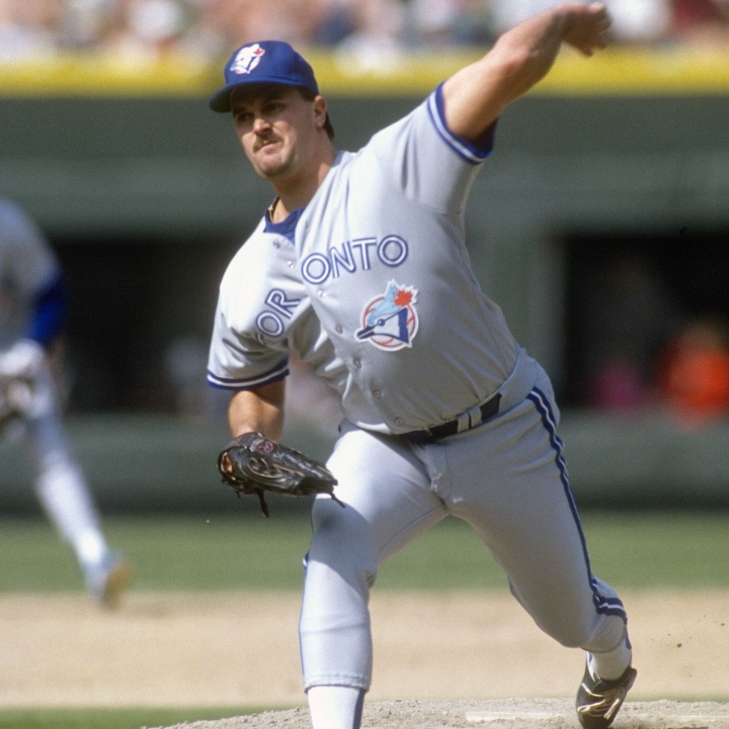
When David Wells first entered the big leagues with Toronto in 1987, no one could have imagined the incredible, high-stakes journey that was yet to come. Known affectionately as "Boomer," this lively and honest left-hander stood out in a sport that often values uniformity. Although he spent his early days exploring different roles, his experience in Canada turned into a remarkable story of growth, as he evolved from an unpredictable bullpen pitcher to one of the most resilient and commanding left-handed starters of his era.
During his initial six seasons with Toronto, Wells demonstrated great versatility as a pitcher. He started in 1987 as a rookie, mainly pitching out of the bullpen, and over the next three years, he skillfully alternated between spot starts and intense relief roles. In 1990, he secured a permanent spot in the rotation, achieving an 11-win season with a 3.14 ERA. By 1992, he was an important multi-purpose player for a strong team, appearing in 41 games and helping Toronto win its first American League pennant. Although his role in the Fall Classic was limited, Wells earned his first World Series ring before being unexpectedly released by the front office just before the 1993 season.
That abrupt departure triggered a significant mid-career transformation. Wells moved to Detroit, Cincinnati, and Baltimore, steadily refining his precise control and developing a powerful, heavy curveball. By 1998, he had become a star with the New York Yankees, achieving a historic perfect game and leading a championship rotation. Then, in February 1999, a surprising trade occurred: Roger Clemens requested a move to a contender, leading the Yankees to include Wells as the main part of the deal to Toronto.
His second stint in the Great White North showcased exceptional old-school durability. Boomer not only pitched many innings but also completely shut down the powerful, steroid-enhanced offenses of that era. In 1999, he secured 17 wins, and in 1999, he delivered a remarkable season. Despite a tough, high-scoring environment, Wells led the American League with a 20–8 record, pitching 229.2 demanding innings. While his 4.11 ERA reflected the era's hitter-friendly conditions, his command remained excellent, earning him an AL All-Star spot and a third-place finish in Cy Young voting.
With the franchise entering a rebuilding phase after the 2000 season, the front office traded the veteran left-hander to the Chicago White Sox in a multi-player deal. Wells would go on to pitch until he was 44, piling up 239 career victories across nine major-league stops.
With Toronto, Wells appeared in 302 games (130 starts) with an 84–55 record alongside a 4.06 ERA and a 1.28 WHIP. He threw 1,098.1 innings, recording 17 complete games, 6 shutouts, and 12 saves, and striking out 784 batters.
28. Shannon Stewart
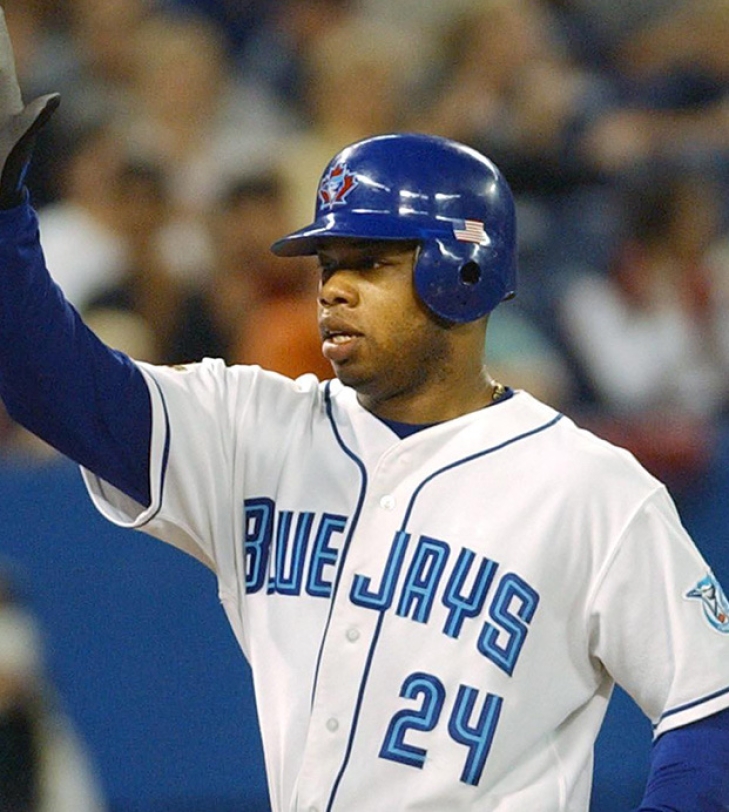
Shannon Stewart joined Toronto baseball during a transitional period after their back-to-back championships. Drafted in 1992, he debuted in late 1995 amid roster changes. Despite adjustments, SkyDome crowds remained lively, and Stewart became a key, energetic leadoff hitter.
His developmental trajectory spanned several seasons of alternating between Triple-A and the major leagues; however, by 1998, Stewart secured a permanent position as a starting player in the Toronto outfield. He promptly demonstrated his capabilities to the American League through an exceptional, high-velocity season. By leveraging his exceptional acceleration, he intimidated opposing catchers by stealing a career-high 51 bases and achieved a commendable batting average of .279.
While that 50-steal peak would stand as his personal high-water mark on the basepaths, his evolution into a pure, elite hitter was only just beginning. Over the next four-and-a-half seasons, Stewart became the ultimate model of line-drive consistency north of the border. He rattled off consecutive seasons batting north of the .300 plateau, showcasing a refined right-handed stroke that effortlessly exploited the turf gaps in Toronto. Far from merely a singles hitter, he also added a substantial layer of power to his game, launching at least 10 home runs in six consecutive seasons for the franchise—culminating in a career-high of 21 home runs during an impressive offensive performance in 2000.
By the early 2000s, the Blue Jays were stuck in a competitive lull, drifting out of the postseason picture despite Stewart's top-of-the-order brilliance. Recognizing his high-leverage value to a contender, the front office traded him to the Minnesota Twins midway through the 2003 season for Bobby Kielty. Stewart instantly sparked the Twins' offense, batting .322 down the stretch to help carry Minnesota into the playoffs and finish a spectacular fourth in the American League MVP balloting.
He accumulated 1,082 hits, 222 doubles, 74 home runs, and 359 RBIs while generating a stellar .298/.365/.431 slash line with Toronto.
