


Committee Chairman
44. Teoscar Hernandez
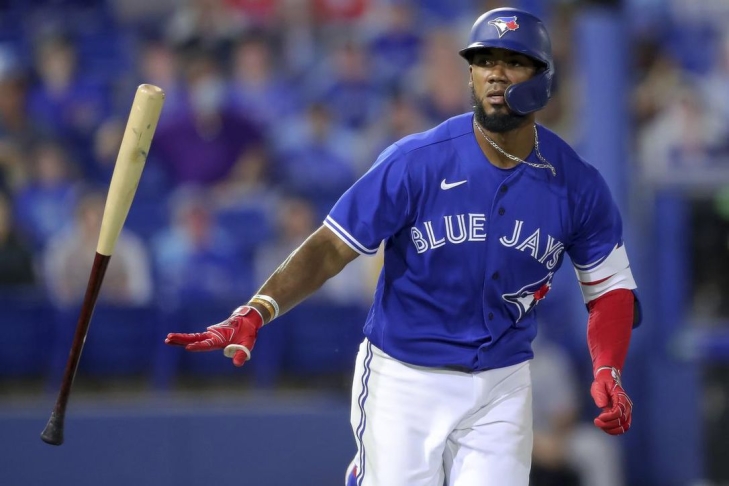
The acquisition of Teoscar Hernández at the 2017 trade deadline is truly one of the most impressive under-the-radar moves in recent Toronto Blue Jays history. The Houston Astros, in a thoughtful trade that included Nori Aoki, exchanged him for veteran pitcher Francisco Liriano. When Hernández first arrived, he was a young Dominican outfielder with raw, high-velocity power, but he had yet to find his footing in the big leagues. Over the next five-and-a-half seasons in Ontario, Hernández’s transformation has been remarkable—going from an inconsistent, strikeout-prone player to one of the most exciting, powerful middle-of-the-order run producers in the American League.
His initial full seasons in Toronto showcased a typical high-power, high-volatility profile. In 2018, he took on a regular outfield position, hitting 22 home runs with impressive strength, but struggled with consistency, posting a .239 batting average and a high strikeout rate in high-pressure situations. The 2019 season followed a similar pattern, with 26 home runs and a .230 batting average. Despite his exceptional exit velocity, defensive issues in the outfield and a tendency to chase outside pitches limited his overall value.
The 2020 schedule, shortened by the pandemic, marked Hernández's major breakout season. In only 50 games, he dominated opposing pitchers by hitting .289, with 16 home runs and 34 RBIs. His improved plate discipline and high barrel rate earned him his first American League Silver Slugger Award and an 11th-place ranking in the AL MVP voting, highlighting his elite offensive potential.
Instead of declining over a 162-game season, Hernández reached a historic peak during the outstanding 2021 season. Batting cleanup in a strong Toronto lineup, he created a remarkable personal achievement, hitting a career-high .296 with 32 homers. He utilized his gap power to drive in an impressive 116 runs—ranking among league leaders—earning a first-time starting spot in the All-Star Game, a second consecutive Silver Slugger award, a place on the All-MLB Second Team, and finishing 19th in MVP voting.
He had another highly productive summer in 2022, hitting 25 home runs with a .267 average to help the Blue Jays reach the postseason. However, as free agency approached and the front office aimed to rebalance the roster with left-handed hitters and top-tier outfield defense, Toronto traded the star outfielder to the Seattle Mariners in November 2022.
Hernández with the Blue Jays had 584 hits, 125 doubles, 129 home runs, and 369 RBIs, with a .263/.320/503 slash line and 121 OPS+.
41. Marcus Stroman
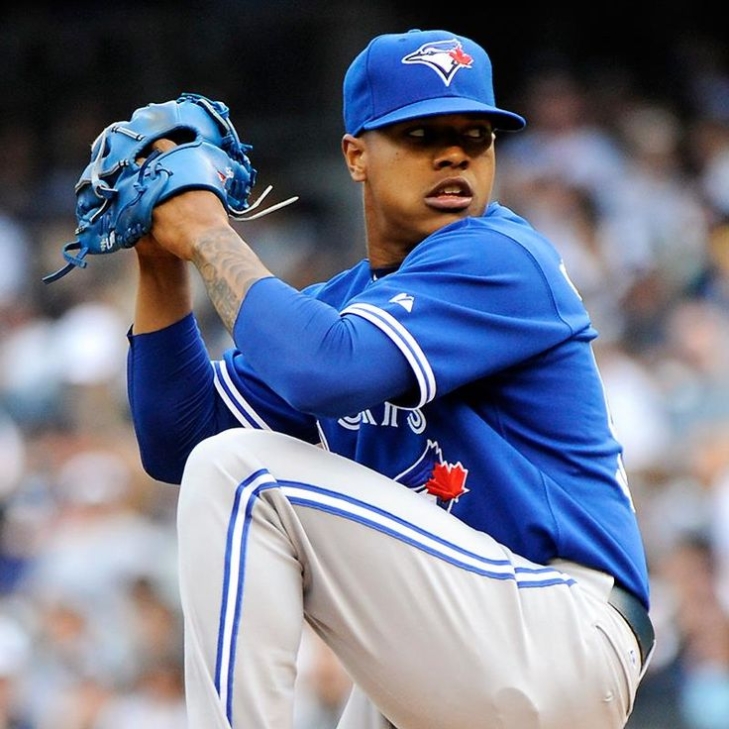
Marcus Stroman’s journey in Toronto was a high-velocity study in raw athletic resilience and big-stage swagger. Selected in the first round of the 2012 draft out of Duke University, the diminutive right-hander carried an oversized competitive engine that defied the traditional scouting cookie-cutter mold for frontline starters. He dispelled any concerns about his durability by tearing through the minor leagues in just two seasons, breaking into the Blue Jays' starting rotation in 2014 and orchestrating a stellar 11-win rookie introduction that immediately galvanized the fan base.
Just as he appeared ready for a major breakthrough, disaster struck during 2015 Spring Training when a severe torn ACL seemed to halt his second season. Demonstrating the fierce internal resilience that would shape his character, Stroman orchestrated an extraordinary, almost miraculous recovery. He avoided the usual recovery schedule to return by September, finishing with a perfect 4–0 record and delivering a vital emotional boost, which helped carry the strong Blue Jays team all the way to the ALCS.
His time in the north followed a captivating rise and fall in development. After a tough, inconsistent 2016 season, Stroman delivered a standout performance in a remarkable 2017 year. Using a heavy, sinking pitch that caused numerous weak contacts, he dominated American League hitters with a 13–9 record and a career-low 3.09 ERA over 201.0 innings. His impressive athleticism was highlighted when he earned an AL Gold Glove, confirming his place among the top young pitchers in the league.
Yet the performance volatility returned almost immediately, as severe shoulder fatigue and blisters cratered his efficiency during a painful 2018 slide. True to his resilient nature, Stroman flipped the script again in 2019. He rediscovered his elite form over his first 21 starts, posting a microscopic 2.96 ERA and earning his inaugural American League All-Star selection—even as a bleak run-support environment saddled him with a deceptive 6–11 record.
With the franchise pivoting into a complete youth movement and the outspoken starter entering the final phases of club control, the front office traded the emotional right-hander to the New York Mets midway through the 2019 season. With the Blue Jays, Stroman posted a 47–45 record, a 3.76 ERA, and a 1.28 WHIP over 789.2 regular-season innings, with 635 strikeouts.
22. Bo Bichette
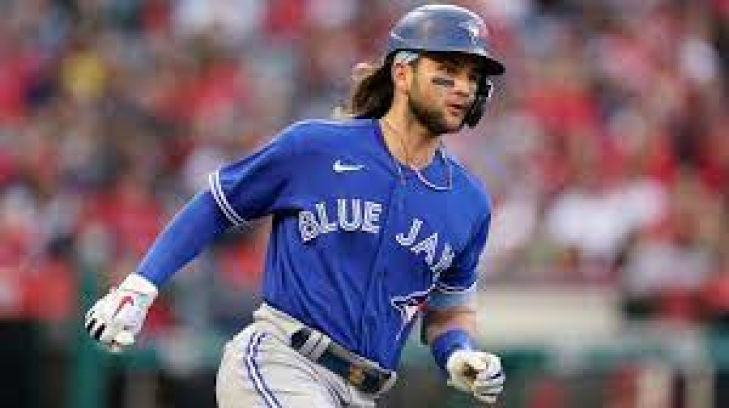
When Bo Bichette first arrived in Toronto in the summer of 2019, he brought along the impressive legacy of his father, former Colorado Rockies slugger Dante Bichette. However, he quickly crafted his own unique style — smooth and full of energy. Drafted by the Blue Jays in the second round of the 2016 amateur draft from Lakewood High School, this talented, flowing-haired shortstop needed just three seasons in the minors to prove that the team’s investment was well-placed. He made an immediate impact when he reached the majors, shining brightly in just 46 games that summer. Bichette impressed everyone with a .311 batting average, hitting 11 home runs, and even matching Ted Williams by hitting an extra-base in nine straight rookie games.
Following a brief, injury-interrupted 2020 campaign, Bichette exploded into absolute major league superstardom, engineering a phenomenal three-year run of offensive production that established him as the premier hit-maker in the American League.
His 2021 season marked his emergence as a key elite player. As the energetic heartbeat of a young Toronto team, Bichette appeared in 159 games, utilizing his rapid hands to lead the junior league with 191 hits and 121 runs. He combined this impressive volume with a powerful mix of speed and power, hitting 29 home runs, driving in 102 RBIs, and stealing 25 bases. This performance earned him his first All-Star selection and a 12th-place finish in the AL MVP race.
He proved it was no fluke by putting together a similar 2022 campaign. Despite experiencing some early-season cold stretches, Bichette caught absolute fire in September, finishing the summer as the American League's hit leader for the second consecutive season with 189 knocks. He cracked a career-high 43 doubles, swatted 24 home runs, and drove in 93 runs while lifting his OPS to .802, netting another top-11 finish in the MVP voting. By doing so, he became the first player in Blue Jays history to lead the league in hits across back-to-back summers.
By 2023, Bichette had established himself as the team's most well-rounded and disciplined hitter. Despite missing time due to two separate injuries that limited him to 135 games, he surpassed the .300 batting average mark for the first time in a full season, finishing third in the AL with a solid .306. Additionally, he became the fastest in franchise history to reach 500 career hits, accomplishing this in just 407 games—breaking Vernon Wells’ previous record—while also hitting 20 home runs and earning his second All-Star selection.
That steady escalation met a disastrous roadblock during a brutal, injury-riddled 2024 campaign. Battling nagging calf strains all summer, Bichette looked completely out of sync, watching his numbers plunge to a career-worst .225 average with a sub-.600 OPS.
Confronting a significant and high-stakes decision at a pivotal point in his final year under team control, Bichette responded with an outstanding and redemption-driven 2025 season. He addressed all concerns regarding his durability and methodology, anchoring the Toronto roster across 139 games. Mashing American League pitchers, he regained his elite form, achieving a remarkable, career-high batting average of .311, with 181 hits, 44 doubles, and 18 home runs, while driving in 94 runs. Although a minor injury in late September temporarily sidelined him, he returned in time for an extraordinary postseason, batting at an impressive .348 during the World Series—culminating in a legendary, go-ahead three-run home run off Shohei Ohtani in Game 7, securing his enduring legacy in Toronto.
The Jays would eventually lose that game and lose Bichette shortly after, as he departed for the New York Mets via free agency. He left behind 904 hits, 111 home runs, 437 RBIs, and 60 stolen bases while generating an outstanding .294/.336/.469 slash line (121 OPS+).
40. Willie Upshaw
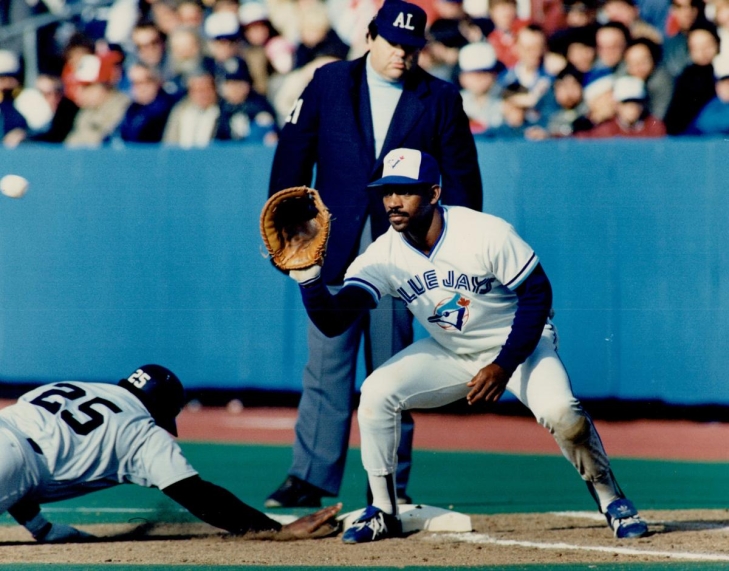
When the Toronto Blue Jays plucked Willie Upshaw from the New York Yankees organization in the 1977 Rule 5 draft, they were a fledgling expansion franchise seeking foundational building blocks. The raw, left-handed-hitting prospect needed a patient developmental runway, spending his first few summers in Canada in part-time roles and minor-league assignments. By 1982, however, that investment paid off as Upshaw firmly seized the everyday first-base job, anchoring the infield for a rising young squad that was rapidly learning how to win.
Once entrenched at first, Upshaw quickly blossomed into one of the American League's premier offensive catalysts. He rattled off three consecutive seasons crossing the 150-hit threshold, showcasing a beautiful, fluid left-handed stroke that perfectly manipulated the gaps at Exhibition Stadium. He combined that line-drive consistency with excellent over-the-fence muscle, blasting 21 home runs in 1982 to signal his arrival as a legitimate middle-of-the-order threat.
That steady upward climb culminated in a historic individual masterpiece during a magnificent 1983 campaign. Upshaw completely paralyzed junior-circuit pitching, putting together the finest season of his life. He became the first player in Blue Jays history to eclipse the 100-RBI barrier, launching a career-high 27 home runs and racking up 177 hits. His clinical approach at the plate was reflected in a sparkling .306/.373/515 slash line, a high-leverage performance that drew significant national attention and earned him an 11th-place finish in the AL MVP balloting.
While Upshaw would never quite replicate the blistering statistical peak of that 1983 showcase, his steady bat and veteran poise remained central to the franchise's golden era. He slugged 19 home runs in 1984 and was a major engine for the historic 1985 squad, which won 99 games to capture Toronto's first-ever American League East pennant. He would give the club two more productive years of iron-man durability before the Cleveland Indians purchased his contract ahead of the 1988 season.
With the Blue Jays, Upshaw had 778 hits, 142 doubles, 112 home runs, and 427 RBIs with a .265/.336/442 slash line (109 OPS+).
