

Site Admin
36. Joe Cronin
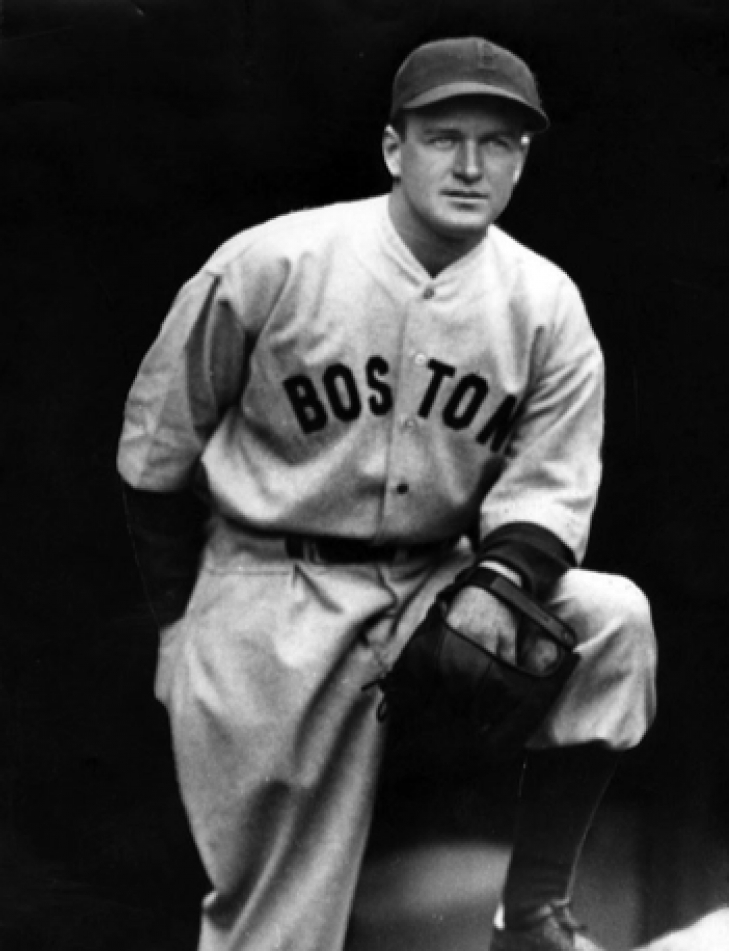
Joe Cronin arrived in Boston in 1935 not just as an elite shortstop, but as the "Field General" charged with transforming the franchise. After a runner-up MVP finish in Washington, the Red Sox traded for Cronin to lead both their defense and their dugout. Despite a leg injury that hampered his 1936 season, he authored a five-year peak (1937–1941) that redefined the offensive ceiling for his position. During this stretch, he was a metronome of productivity, never recording fewer than 155 hits, 16 home runs, or 94 RBIs in a full season.
Cronin was a five-time All-Star in Boston, consistently batting over .300 while posting a massive .394 On-Base Percentage. He also set a franchise record on July 9, 1939, by recording an RBI in twelve consecutive games. This ability to drive in runs at a historic clip while handling the mental rigors of managing made him the most valuable "double-threat" in the American League.
While his playing career effectively ended with a broken leg in 1945, his leadership propelled the Red Sox to the 1946 American League Pennant. Even in the later stages of his career, he remained a high-leverage weapon; in 1943, he set an AL record with five pinch-hit home runs, including two in a single doubleheader. This "clutch" gene ensured that his presence was felt in every critical inning, whether he was in the field or on the top step of the dugout.
Cronin’s legacy is woven into the very fabric of Fenway Park. He served the organization for decades as a player, manager, and eventually General Manager, before becoming the President of the American League. For his unparalleled contributions, he was inducted into the Baseball Hall of Fame in 1956. In a historic ceremony on May 29, 1984, the Red Sox retired his Number 4 alongside Ted Williams’ Number 9, the first two numbers ever retired by the franchise.
34. Dutch Leonard
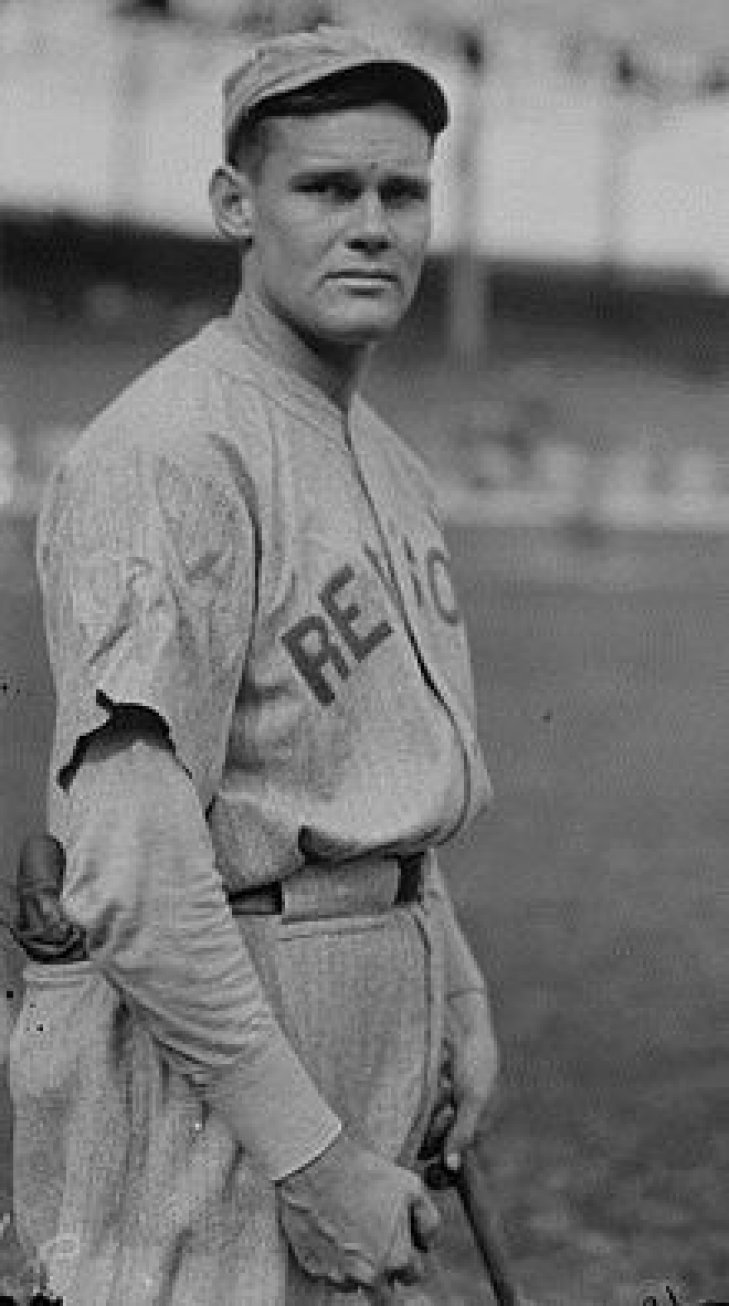
Hubert "Dutch" Leonard arrived in Boston in 1913 and immediately established himself as a left-handed force. Following a stellar rookie campaign, he authored a sophomore season in 1914 that defies modern comprehension. Leonard went 19–5 and set a Major League record with a 0.96 ERA—a mark that remains the lowest in the live-ball or deadball era for any pitcher with at least 200 innings paired that microscopic ERA with league-leading marks in FIP (1.95), WHIP (0.886), and Strikeouts per 9 (7.1).
Leonard was the engine behind the 1915 and 1916 World Series titles. While the Red Sox rotation was deep, Leonard was their postseason "Closer" before the role existed. He was a collective 2–0 with a 1.00 ERA in Fall Classic play, including a brilliant performance in 1915, where he helped dismantle the Phillies. His ability to maintain a 2.13 career ERA in Boston during a stretch when he faced some of the greatest contact hitters in history marks him as a premier talent.
His story is one of peak brilliance followed by the era's typical roster churn. Before his famous feud with Ty Cobb in Detroit or his move to the Yankees, Leonard was the left-handed anchor of Fenway Park. He threw two no-hitters in a Red Sox uniform, one in 1916 and another in 1918, joining an elite tier of "hurlers who possessed the ‘swing-and-miss' stuff necessary to dominate without the help of his defense.
Leonard left Boston with a 90–64 record and 771 strikeouts. Though his tenure was shorter than some of the "Lifers" in the Lab, his concentration of excellence was so high that he was finally inducted into the Red Sox Hall of Fame in 2012.
31. Jon Lester
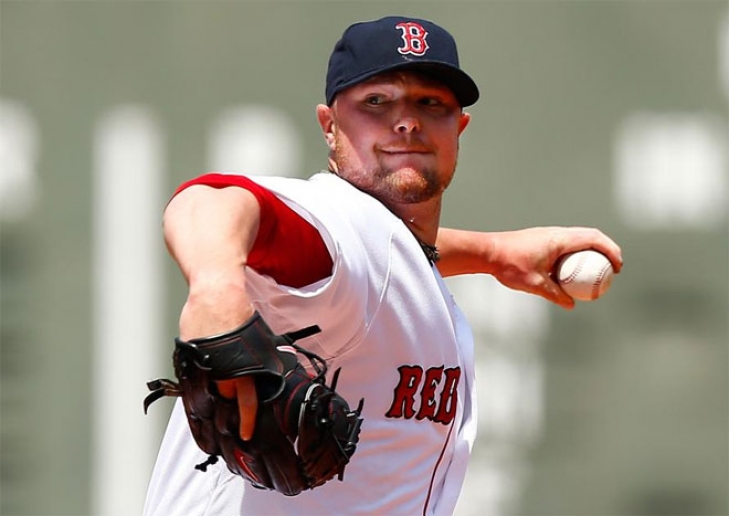
Jon Lester’s journey to Boston greatness is defined by a level of perseverance that transcends the box score. Drafted in 2002, he debuted in 2006 but soon faced a battle far greater than any hitter: a diagnosis of Anaplastic Large Cell Lymphoma. His return to the mound in 2007 was a movie-worthy story, culminating in a high-leverage start in Game 4 of the World Series. By clinching the title against Colorado, Lester didn't just win a game; he signaled the arrival of the next great Red Sox ace.
Lester’s peak arrived in 2008 when he went 16–6 and threw a legendary no-hitter against the Royals—the first by a Red Sox lefty in over 50 years. He was even more stellar in 2010, posting a 19–9 record with a 3.25 ERA and 225 strikeouts, finishing fourth in the Cy Young voting. He was a perennial workhorse, recording at least 200 innings and 200 strikeouts in three different seasons for Boston, earning the Hutch Award for his dedication to the game.
Where Lester became most alive was in October. He was the undisputed engine of the 2013 World Series championship, going 4–1 in the postseason with a staggering 1.56 ERA. In the Fall Classic against the Cardinals, he won both of his starts, allowing only one run over 15.1 innings. This performance cemented his reputation as one of the greatest big-game pitchers in franchise history—a lefty who thrived when the lights were brightest, and the stakes were highest.
Lester’s tenure in Boston ended abruptly in 2014 when he was traded to Oakland at the deadline, a move that left a permanent mark on the Fenway faithful. He departed with a 110–63 record and 1,386 strikeouts, ranking among the franchise leaders in nearly every major pitching category. Though he later won another title in Chicago, his legacy remains anchored in New England as the man who beat cancer and then beat the world’s best hitters to bring two trophies to Yawkey Way.
The Buck Stops Here -- African Americans Who Belong in Sports Halls of Fame