


Site Admin
41. Bob Stanley
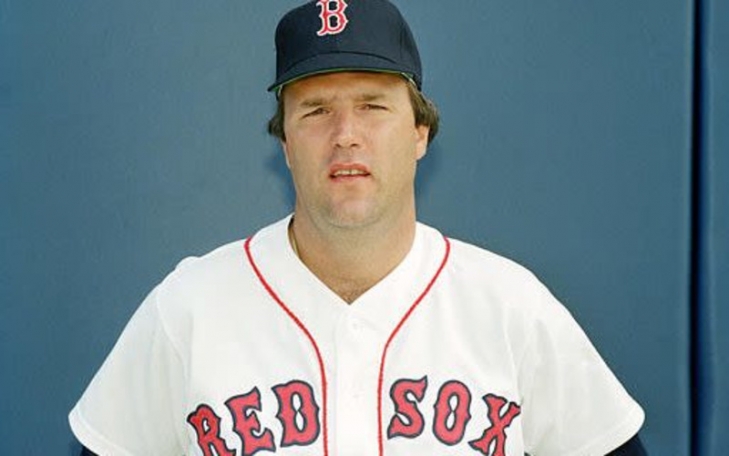
Bob Stanley’s story in Boston is one of relentless availability. Drafted as a first-round talent in 1974, he debuted in 1977 and immediately established a pattern of being whatever the Red Sox needed on a given afternoon. He didn't just play for 13 seasons; he lived in the game, eventually setting a franchise record with 637 appearances.
The late 70s and early 80s saw Stanley authoring efficiency peaks from every imaginable angle. In 1978, he produced a statistical anomaly, going 15–2 primarily out of the bullpen and finishing seventh in the Cy Young voting. He followed that in 1979 by moving into the rotation full-time, starting 30 games and earning his first All-Star nod. However, his most historic season came in 1982, when he set an American League record by throwing 168.1 innings in relief. To put that in perspective, that is the workload of a modern starter delivered entirely from the bullpen.
By 1983, the "Steamer" had pivoted again, this time becoming the premier closer in the American League. He saved a then-franchise record 33 games and earned his second All-Star selection, finishing near the top of the Cy Young and MVP ballots. This ability to lead the team in wins one year and saves the next is a rarity that few pitchers in history have replicated. Even during the high-leverage pressure of the 1986 postseason, Stanley remained the man the manager trusted most to bridge the gap to a title.
Though he retired in 1989 as a "Lifer" with 115 wins and 132 saves, Stanley’s impact was best summarized by his nickname. He was the engine that kept the Red Sox running through three different decades. He was a pioneer for the "Most Versatile Pitcher" role, a man who would throw ten innings of relief one night and start on three days' rest the next. Inducted into the Red Sox Hall of Fame in 2000, Bob Stanley remains the definitive proof that the most valuable ability in a long career is availability.
48. Jacoby Ellsbury
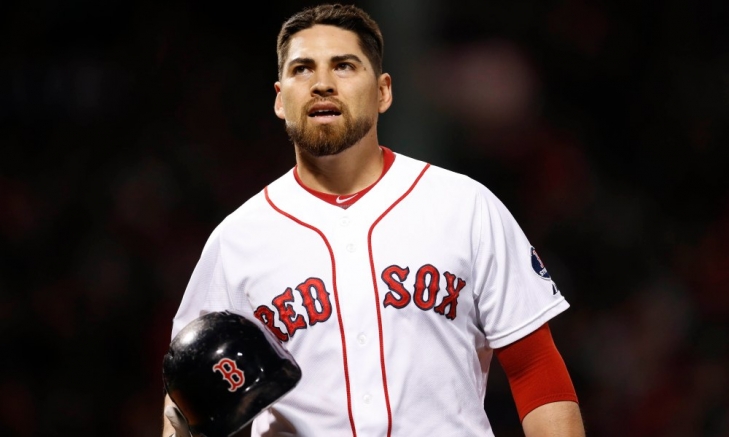
When Jacoby Ellsbury arrived as an August call-up in 2007, he didn't just join the Red Sox—he accelerated them. A late first-round pick with track-star speed, he played the role of the postseason's "X-factor" to perfection, batting a scorching .438 in the World Series to help hoist a trophy before his rookie eligibility had even expired. He arrived as a blur of potential, and for the next few years, he was the most disruptive force on the American League basepaths, with back-to-back stolen base titles in 2008 and 2009.
However, the defining chapter of Ellsbury’s Boston story isn't just about speed; it’s about one of the most unexpected offensive explosions in franchise history. After an injury-plagued 2010, he returned in 2011 to produce a season that defied logic. A player who had never hit more than nine home runs suddenly found a power stroke that stunned the league, launching 32 home runs with 105 RBIs. That year, he became the first member of the Red Sox 30-30 club, winning a Gold Glove and a Silver Slugger while finishing as the narrow runner-up for the AL MVP. It was an apex that felt like lightning in a bottle, a perfect fusion of his elite speed and a newfound, thumping authority at the plate.
The final act of his run saw him play the hero once more, leading the league in steals for a third time in 2013 and serving as the leadoff engine for another World Series championship team. When he departed for New York as a free agent in 2014, he left behind a legacy built on 241 stolen bases and a reputation as a player who could beat you in every facet of the game when the lights were brightest. He arrived as a rookie spark and left as a two-time champion, having authored a 2011 campaign that remains one of the greatest individual seasons ever seen at Fenway Park.
45. Jimmy Collins
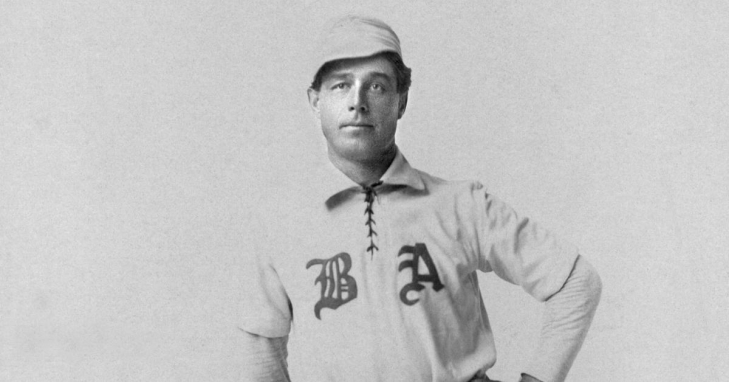
When the American League emerged as a "rebel" circuit in 1901, it needed a face to prove it was more than just an upstart hobby. They found it in Jimmy Collins. By walking away from the established Boston Beaneaters to join the brand-new Boston Americans, Collins didn't just switch uniforms; he shifted the power dynamic of baseball in New England.
He arrived not just as a player, but as a statement. Those first two years were a defensive and offensive masterclass, with Collins batting over .322 and proving that the "newer" Boston team was the one to watch. The climax of this first act came in 1903, when he led the Americans over the Pirates to claim the first-ever World Series title, cementing the American League's legitimacy forever.
While his bat was the engine, his glove was the foundation. In that inaugural 1901 season, Collins was the premier defensive force in the league, leading all players in Defensive bWAR. He remained a vacuum at third base for the next half-decade, consistently ranking among the game's elite even as the miles began to show on his legs.
By 1907, the "founding father" era of the Americans was beginning to fade. As his production dipped with age, the inevitable trade to Philadelphia signaled the end of the franchise's first great chapter. He left Boston with 881 hits and a .296 average, but his true legacy was far larger than a stat line. When the "Old Timers Committee" sent him to Cooperstown in 1945, it was a delayed acknowledgment of what Boston fans already knew: without Jimmy Collins jumping ship in 1901, the Red Sox Hall of Fame might not have a first class at all.
40. Jason Varitek
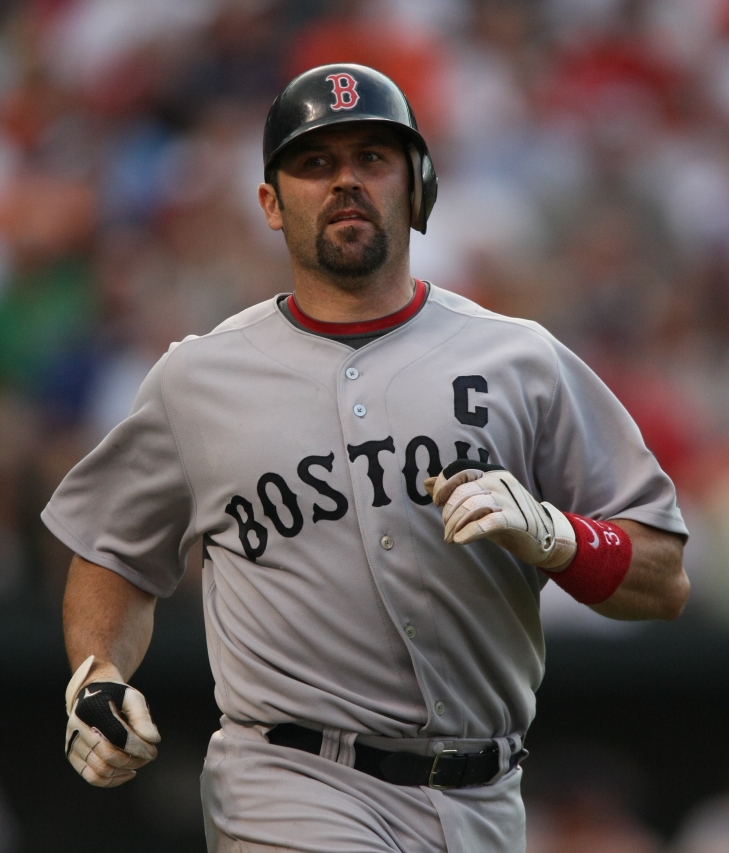
Jason Varitek’s journey to Boston began with a 1997 trade-deadline deal that is now viewed as one of the greatest heists in franchise history. Originally a 14th-round pick by Seattle, Varitek arrived in New England and quickly transformed from a promising prospect into the tactical brain of the Red Sox. By 1999, he was the starting catcher for a team hungry for a title, proving that while he wasn't always the loudest bat in the lineup, he was undoubtedly the smartest mind behind the plate.
His peak arrived in 2005, a "Career Year" that saw him earn both the Gold Glove and Silver Slugger awards. That season, he hit .281 with 22 home runs, earning his second of three All-Star nods. He was also a master of game-calling, famously leading the American League in catcher ERA four separate times. His ability to guide a staff was historic; he stands alone as the only catcher in MLB history to be behind the plate for four separate no-hitters (Nomo, Lowe, Buchholz, and Lester).
Varitek was named the fourth captain in Red Sox history, joining the immortal ranks of Carl Yastrzemski and Jim Rice. This wasn't a symbolic gesture; it was a recognition of the grit he displayed in high-leverage moments, perhaps most iconically during a July brawl with Alex Rodriguez that many credit as the turning point for the 2004 "Curse-Breaking" season. As a "Lifer" who spent all 15 seasons in Boston, he became the face of the franchise’s defensive soul.
Varitek retired in 2011 with two World Series rings and the respect of every pitcher who ever threw to him. He left the game with 193 home runs and 1,307 hits, ranking among the franchise leaders in nearly every major category for catchers. Inducted into the Red Sox Hall of Fame in 2016, he remains the yardstick for leadership in New England.