
gold star for USAHOF

Top 50 St. Louis Cardinals

In terms of the World Series, there is no team more successful than the St. Louis Cardinals.  This is an 11 time World Series winner who would compete for Baseball’s elite 19 times and it has resulted in one of the best baseball fan bases in the country.

It may have always been this way.

Professional Baseball began in 1875 with the St. Louis Brown Stockings in the National Association.  The league folded and they would join the National League as charter members but that too would be short-lived as they were expelled for a game-fixing scandal and they would barnstorm over the next few years until they were purchased by a German entrepreneur and would join the American Association.  This is where the history of the team becomes official as MLB does not recognize the previous accomplishments of the franchise.

Now named the Browns, the team would become one of the elite organizations of the AA where they won the pennant four times before the league folded in 1891 and they would join the National League, but they would not have the same level of success as they were relatively mediocre until the 1920s.

With one of the game’s most memorable stars in Rogers Hornsby won the 1926 World Series and in the 1930s they would field the famous “Gashouse Gang” that would win the 1931 and 1934 World Series.  The 1940s were even better as they won it all in 1942, 1944 & 1946 when they were led by the most consistent hitter in baseball history, Stan Musial. 

The Redbirds would continue their high level of success in the 1960s with expert pitching (led by Bob Gibson) and a combination of speed and defense, they won the title in 1964 and 1967, and in the Ozzie Smith era of the 80s, they won again in 1982.  With a power game led by Albert Pujols, they would win the World Series in 2006 and 2011.

This list is up to the end of the 2025 season.

Note: Baseball lists are based on an amalgamation of tenure, traditional statistics, advanced statistics, playoff statistics, and post-season accolades.
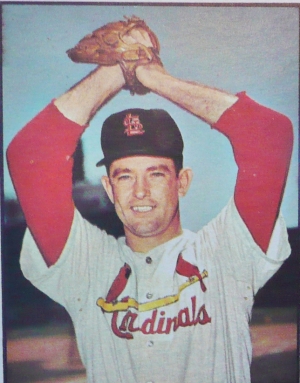
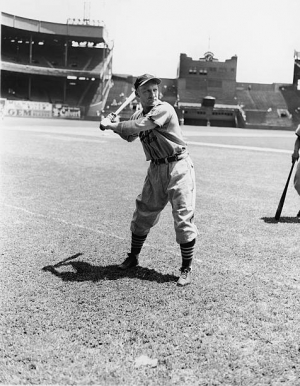
When Mr. Larry Jackson debuted in Major League Baseball with the St. Louis team in 1955, the organization was experiencing ongoing instability. Engulfed in a continual cycle of managerial and executive turnover, the team spent several years attempting to ascertain the true capabilities of this durable right-hander, fluctuating him between the starting rotation and high-leverage bullpen roles. Nonetheless, despite the organizational disorder surrounding him, Jackson maintained focus and established himself as a pillar of dependability for a franchise undergoing a transitional period. Once he permanently secured his place in the rotation in 1957, Jackson blossomed into the quiet workhorse of…
When Whitey Kurowski became the regular third baseman for St. Louis in 1942, he entered a lineup aimed at building a dynasty. Although many note his rise coincided with the talent loss during World War II, Kurowski was more than just a temporary substitute. He played a key role on three pennant-winning teams and was selected as an All-Star five years in a row from 1943 to 1947, thanks to his consistent defense and unexpected power at the plate. His rise paralleled the swift progression of the "St. Louis Swifties" under Billy Southworth's leadership. Kurowski was not a top-ranked prospect…
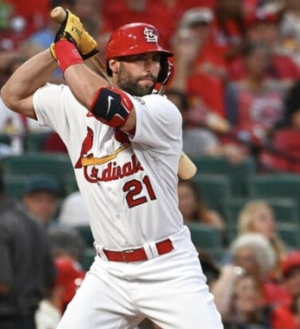
When Paul Goldschmidt joined the Cardinals before the 2019 season, he came with a strong reputation from his time with the Diamondbacks. Since the Diamondbacks knew they probably wouldn't keep their star first baseman once he hit free agency, they traded the multi-time All-Star and MVP runner-up to the Cardinals. The Cardinals quickly secured his place in their infield by signing him to a significant long-term contract extension. His early years in St. Louis were productive, though not quite matching fans’ sky-high expectations. He hit 34 home runs with an .821 OPS in his 2019 debut and remained consistent through…
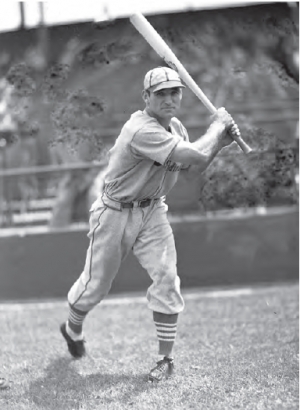
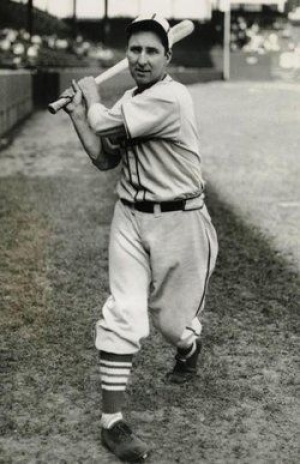
Johnny Leonard Roosevelt Martin went by "Pepper," but the name that captured his essence best was "The Wild Horse of the Osage." When you trace the DNA of the legendary, mud-splattered "Gashouse Gang" teams of the 1930s, it was Martin's unhinged, headfirst style that powered them. He didn't just play baseball; he attacked it, tearing up the basepaths with a reckless abandon that mirrored the gritty, hardscrabble spirit of a Depression-era fan base that absolutely adored him. A career-long Cardinal, Martin made a couple of fleeting cameos in 1928 and 1930 before permanently kicking the door down in 1931. While…
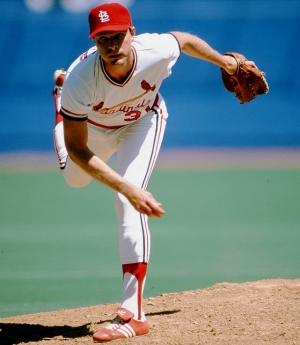
Bob Forsch is the only Pitcher in Cardinals history to pitch two no-hitters for the team and he is one of the most tenured hurlers for the team with nearly 20 years of service since he was drafted.  Forsch was a late round pick in 1968 and would finally crack the roster in 1974 and in 1977 he had his best season with a 20 and 7 record and his 163 Wins are third all-time in St. Louis history..  He would lead the NL in BB/9 the next season and was a member of the Cardinals 1982 World Series win,…
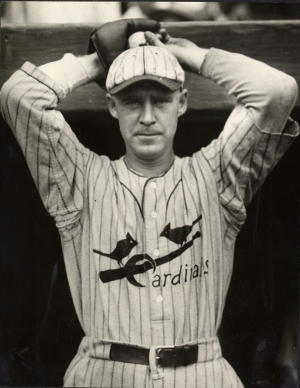
Before the modern bullpen car or specialized late-inning relievers became common, Bill Sherdel was redefining pitching strategies in St. Louis. Joining in 1918, this small left-hander, known as "Wee Willie," had a fourteen-year career characterized by remarkable resilience and adaptability. Although he didn't throw as fast as the league’s top pitchers, his effective slowball and quick delivery allowed him to serve as a versatile pitcher capable of calming rallies in the seventh inning or pitching a complete game just two days later. Sherdel spent nearly his entire career with the Cardinals, accumulating an impressive statistical record. As a consistent and…
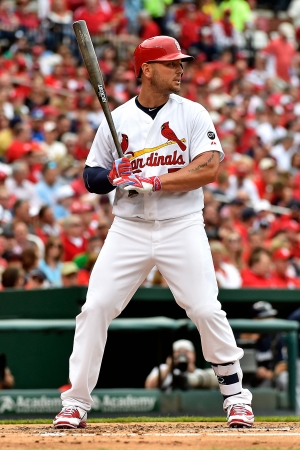
During the zenith of his abilities with the Colorado Rockies, Matt Holliday accomplished a historic 2007 season, securing a batting title and finishing as the close runner-up for the National League Most Valuable Player award. Since this remarkable individual peak occurred in Denver, casual observers often perceive his subsequent transfer to Missouri as a secondary phase. Nonetheless, the reality presents a markedly different narrative. Although he may have concluded his highest single-season MVP performance at Coors Field's altitude, Holliday's career was significantly extended with the St. Louis Cardinals, where he developed a considerably more substantial and statistically dense body of…
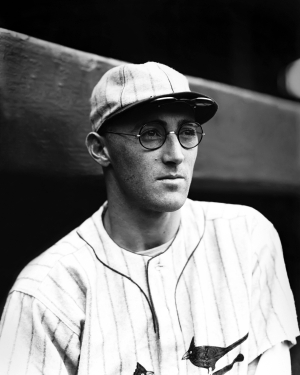
Chick Hafey's story stands out as one of the most distinctive and hard-won tales of the 1920s and 30s. A natural, line-drive hitter, he had an offensive potential rivaling anyone in the National League. Yet, his career was marred by chronic sinus problems and deteriorating eyesight. To adapt, Hafey became one of the earliest major league players to wear glasses while on the field. This change did not hinder his batting; instead, it sparked a period of dominance that struck fear into opposing pitchers for over five years. Arriving in St. Louis full-time in the mid-1920s, Hafey transformed into an…
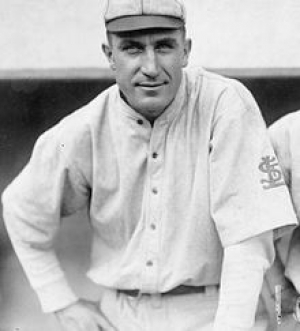
Long before the Cardinals became a regular force in the National League, they struggled to find their identity during the Deadball Era. Amid this challenging period, Edward Joseph "Big Ed" Konetchy arrived to serve as the franchise’s first significant cornerstone. When he became a full-time player in 1908, the strong first baseman rapidly gained admiration from renowned managers like John McGraw, who once said that Konetchy alone was almost worth the entire St. Louis team. Although the Cardinals often finished near the bottom during his seven seasons, Konetchy quietly established himself as one of the most underrated stars of his…
Ripper Collins gained his intimidating nickname as a minor leaguer when a line drive from his bat tore the cover off a baseball. However, when he stepped into the major leagues full-time, fans were taken aback to learn that the powerful hitter was actually a modest 5-foot-9, 165-pound player. Despite his average size, this switch-hitting first baseman compensated with lightning-quick wrist movements and a fierce style of play that perfectly suited the rough and unpolished culture of the 1930s "Gashouse Gang." His journey to the big leagues officially started with a supporting role, as he appeared in 89 games as…
A Cardinal for the entirety of his playing career, Terry Moore was a n excellent defensive Outfielder, who likely would have been a multi-time Gold Glove winner, had that been an accolade at the time. Moore, who was named to four straight All-Stars (1939-42), was also a decent hitter with a lifetime Batting Average of .280 with 1,318 career Hits.  He also helped the Cards win the World Series in 1942 and 1946.
Long before specialized relief pitching became a core part of modern baseball, Harry "Slim" Sallee was a key multi-purpose pitcher for the Deadball Era St. Louis Cardinals. The tall southpaw, who arrived in 1908, quickly became essential, often pitching multiple roles. Since the Cardinals often ranked low in the National League, Sallee had to handle various duties, sometimes as a starting ace and other times as a late-inning reliever. Sallee relied on precise control and an elegant, deceptive delivery rather than raw power, masterfully confounding hitters to anchor the St. Louis pitching staff for nearly a decade. He surpassed the…