

42. Pepper Martin
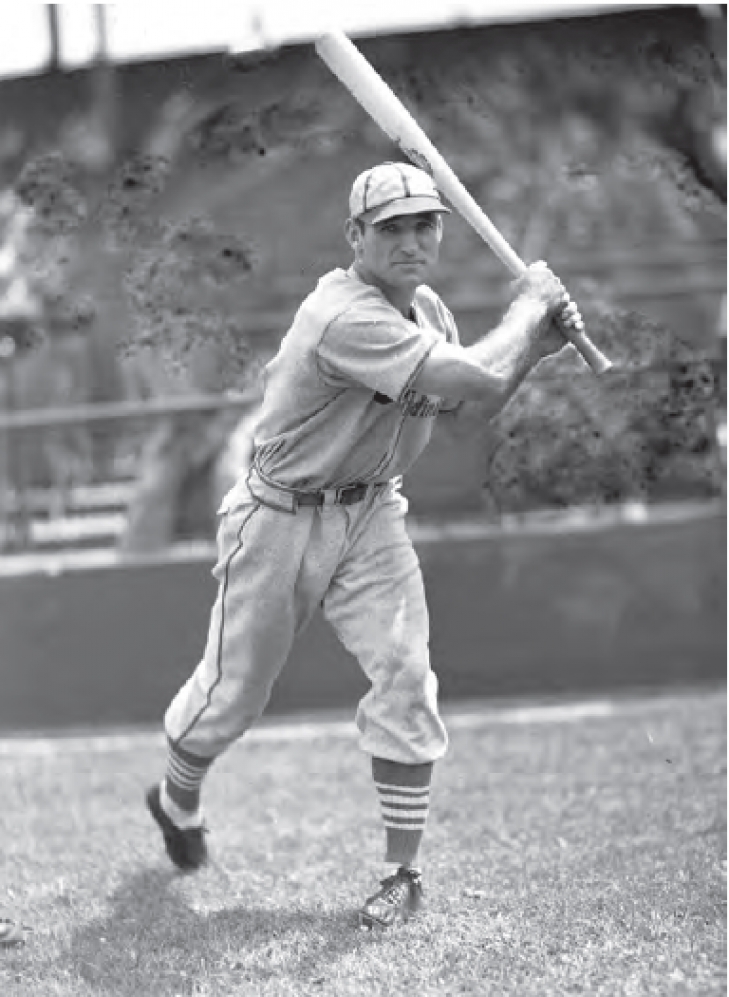
Johnny Leonard Roosevelt Martin went by "Pepper," but the name that captured his essence best was "The Wild Horse of the Osage." When you trace the DNA of the legendary, mud-splattered "Gashouse Gang" teams of the 1930s, it was Martin's unhinged, headfirst style that powered them. He didn't just play baseball; he attacked it, tearing up the basepaths with a reckless abandon that mirrored the gritty, hardscrabble spirit of a Depression-era fan base that absolutely adored him.
A career-long Cardinal, Martin made a couple of fleeting cameos in 1928 and 1930 before permanently kicking the door down in 1931. While he went on to earn four All-Star selections and topped the National League in stolen bases three separate times—pacing the circuit with modest but opportunistic totals of 26, 23, and 23 swipes—his true genius lay in his ability to weaponize his speed when the lights were brightest.
Nowhere was that more evident than in the 1931 World Series against a heavily favored Philadelphia Athletics squad. Martin turned the Fall Classic into a personal playground, torturing legendary catcher Mickey Cochrane by stealing five bases and punishing Philly pitching for a .500 batting average alongside a staggering 1.330 OPS. Reporters covering the series noted that his relentless energy single-handedly shifted the momentum, dragging the Cardinals to a world title. He repeated the October magic in 1934, hitting .355 to help St. Louis capture another championship banner.
While those early October runs made him a legend, 1933 stood out as the absolute peak of his regular-season powers. Rebounding from an injury-plagued sophomore slump, Martin shifted to third base and put together a monster campaign that earned him a starting nod in the inaugural MLB All-Star Game. He terrorized the National League from the leadoff spot, hitting a stellar .316 and pounding out 189 hits—including a May afternoon against the Phillies when he hit for the cycle. He used his lightning speed to lead the league with 122 runs scored and a career-high 26 stolen bases, fueling a top-five finish in the National League MVP race.
Yet, as magnetic as Martin was on the basepaths and at the plate, where he authored a lifetime .298 average, his placement in historical rankings faces a distinct hurdle. This evaluation framework places an uncompromising premium on defense, and that is where Martin’s ledger runs into trouble. He split his career between the outfield and third base, and frankly, he was a liability at both. His hands were rigid, his internal clock was erratic, and his aggressive nature frequently betrayed him, leading to ugly fielding percentages and a persistent defensive deficit that caps his overall value.
The relentless physical toll of his headfirst playing style eventually caught up to him. By 1941, injuries had entirely sapped his mobility, forcing him to step away from the major leagues to transition into a minor league player-manager role. However, the manpower shortage of World War II gave his Cardinals story one final, unexpected chapter. St. Louis called the 40-year-old veteran back up for a 40-game cameo in 1944.
Martin played in 1,189 games, racking up 1,227 hits, 756 runs scored, 59 home runs, and 501 RBIs. He authored a .298/.358/.443 slash line with a 113 OPS+, stole 146 bases
The Cardinals chose Martin for their franchise Hall of Fame in 2017.
