
gold star for USAHOF

Top 50 St. Louis Cardinals

In terms of the World Series, there is no team more successful than the St. Louis Cardinals.  This is an 11 time World Series winner who would compete for Baseball’s elite 19 times and it has resulted in one of the best baseball fan bases in the country.

It may have always been this way.

Professional Baseball began in 1875 with the St. Louis Brown Stockings in the National Association.  The league folded and they would join the National League as charter members but that too would be short-lived as they were expelled for a game-fixing scandal and they would barnstorm over the next few years until they were purchased by a German entrepreneur and would join the American Association.  This is where the history of the team becomes official as MLB does not recognize the previous accomplishments of the franchise.

Now named the Browns, the team would become one of the elite organizations of the AA where they won the pennant four times before the league folded in 1891 and they would join the National League, but they would not have the same level of success as they were relatively mediocre until the 1920s.

With one of the game’s most memorable stars in Rogers Hornsby won the 1926 World Series and in the 1930s they would field the famous “Gashouse Gang” that would win the 1931 and 1934 World Series.  The 1940s were even better as they won it all in 1942, 1944 & 1946 when they were led by the most consistent hitter in baseball history, Stan Musial. 

The Redbirds would continue their high level of success in the 1960s with expert pitching (led by Bob Gibson) and a combination of speed and defense, they won the title in 1964 and 1967, and in the Ozzie Smith era of the 80s, they won again in 1982.  With a power game led by Albert Pujols, they would win the World Series in 2006 and 2011.

This list is up to the end of the 2025 season.

Note: Baseball lists are based on an amalgamation of tenure, traditional statistics, advanced statistics, playoff statistics, and post-season accolades.
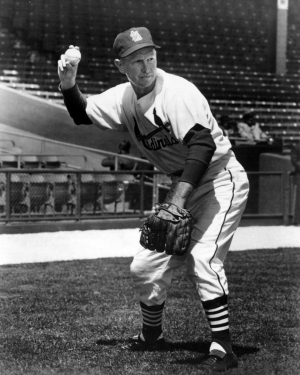
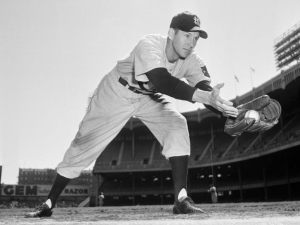
Few players in the long, storied history of the St. Louis Cardinals have ever matched the enduring, cross-generational longevity of Albert Fred "Red" Schoendienst. Originating from the rural farmlands of Illinois, the passionate, red-haired switch-hitter overcame a significant teenage eye injury to make his debut in the Major Leagues in 1945. He directly took the field at Sportsman's Park to fill a roster vacancy caused by wartime enlistments, leading the National League with 26 stolen bases during his rookie season. This marked the beginning of a legendary, multi-decade affiliation with the city of St. Louis, where his consistent performance and…
To grasp the extent of the St. Louis Cardinals' dominance in the 1940s, one needs to focus on the heart of their defense—shortstop Marty Marion. Standing at 6-foot-2 and Lanky, Marion redefined defensive play. Unlike most middle infielders of his time, who were stocky, his unusually long arms, broad wingspan, and extensive lateral coverage made him seem more like an inescapable defensive force on the field. It wasn't long before both opposing managers and teammates gave him a fitting nickname: "The Octopus." While his peers boasted powerful bats, Marion primarily built the St. Louis dynasty through his exceptional glove work.…
When evaluating the early architecture of professional baseball in St. Louis, it is easy for modern analysts to overlook the 1880s American Association era. However, digging into the historical record reveals that Bob Caruthers was not just a valuable contributor; he was arguably the game's premier two-way superstar long before Shohei Ohtani or Babe Ruth made it a cultural phenomenon. Nicknamed "Parisian Bob" due to his refined tastes and offseason travels, Caruthers provided the St. Louis Browns (who would later evolve into the Cardinals) with an unprecedented competitive advantage, serving as both their undisputed pitching ace and one of the…
When the St. Louis Cardinals acquired Jim Edmonds from the Anaheim Angels in March 2000, they anticipated receiving a highly dynamic, gold-standard defensive center fielder. What they ultimately obtained was an exceptional, middle-of-the-order force of nature who demonstrated the peak of his professional career, ultimately securing a title. From the instant he took the field at Busch Stadium, "Jimmy Baseball" engaged the local fan base with his remarkable outfield prowess and complemented it with a formidable, left-handed batting stroke, establishing himself as one of the most formidable and analytically esteemed players of the modern era. Edmonds’ eight-season tenure in St.…
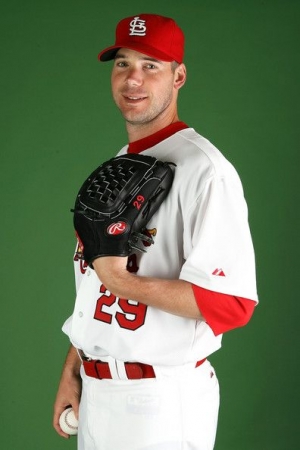
When the Toronto Blue Jays released Chris Carpenter after his 2002 season was cut short by a shoulder injury, they saw him as a typical example of potential unfulfilled due to injuries. They offered him a minor league contract, but he chose to decline and signed with the St. Louis Cardinals instead. He spent all of 2003 in intensive rehab under pitching coach Dave Duncan's supervision. In 2004, the tall right-hander finally took the mound at Busch Stadium. His return was more than just a career comeback; it marked the rise of a fiercely competitive pitcher, one of the most…
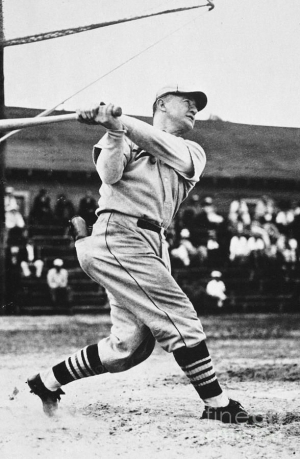
The fiery, dirt-kicking catalyst truly found its shining expression in a lively switch-hitter from the Bronx. Frankie Frisch arrived in St. Louis not just as a star but as a major turning point in the franchise’s history. A versatile athlete at Fordham University whose incredible speed earned him the nickname "The Fordham Flash," Frisch made the jump straight into the majors with the New York Giants in 1919. He quickly became the heart of John McGraw’s successful teams in the early 1920s, helping secure four straight pennants. Yet, a well-known clash of willpower between the talented infielder and his tough-minded…
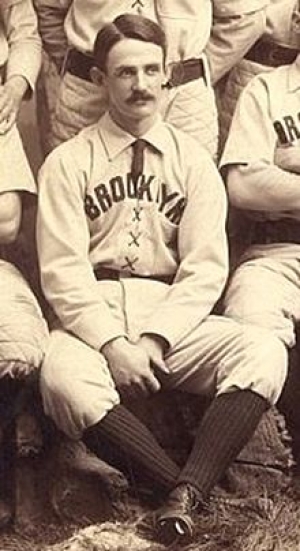
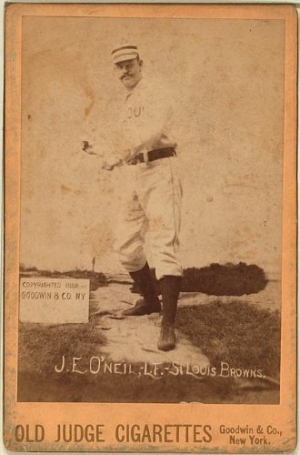
Arguably the first really good player to come from Canada, Tip O’Neill was a star for the St. Louis Browns (renamed the Cardinals) in the mid 1880’s and was a large factor in the team winning four American Association Pennants and the 1886 World Series.
The foundation of the 1980s "Whiteyball" era in St. Louis was built on a fierce commitment to speed, turf coverage, and putting the ball in play. No one embodied this identity more than Willie McGee. Originally a first-round pick by the New York Yankees in the 1977 January draft, the slim, soft-spoken center fielder faced obstacles in reaching the Bronx due to a crowded roster of veteran stars. Sensing an opening, St. Louis general manager Whitey Herzog executed a discreet, seemingly minor trade in October 1981, sending left-handed pitcher Bob Sykes to New York in exchange for an unproven minor…
Following a revered world-championship icon is one of the most challenging tasks in professional sports. Yet, Ray Lankford filled the enormous gap left by Willie McGee and established his own unique, dynamic legacy. Drafted in the third round of the 1987 MLB draft by the St. Louis Cardinals, this physically strong outfielder introduced a different build to center field at Busch Memorial Stadium. Unlike his predecessor, who focused on a low-power, high-contact style, Lankford utilized a powerful, left-handed swing combined with exceptional athleticism. His arrival marked the end of the "Whiteyball" era and the beginning of a decade distinguished by…
Before the St. Louis Cardinals became a consistent Powerhouse of the National League, they needed a strong, determined leader to elevate their pitching staff from obscurity. Jesse "Pop" Haines offered exactly that endurance as a foundation. Acquired from Kansas City of the American Association in 1920 for $10,000—almost draining the young franchise's funds—the durable right-hander joined the starting rotation. Over 18 seasons, Haines was the organization's reliable workhorse, helping them rise from a struggling second-division team to World Series champions. Haines’ rise to historical prominence was largely due to his elite, powerful knuckleball, which he threw with much higher velocity…
The story of Max Lanier is one of the more interesting ones on this list, which certainly says something considering the colorful characters that have populated the St. Louis Cardinals!
Some of the most meaningful legacies in baseball history are created by men who didn't originally see the sport as their lifelong passion, but rather as an unexpected turn in their journeys. Bill White was a talented pre-med student at Hiram College, aiming for medical school when a simple tryout suddenly changed everything. Leo Durocher, known for knocking down giants, was so captivated by White’s natural athletic skill that he signed him immediately. As one of the first Black players to navigate the highly segregated Carolina League in the early 1950s, White faced significant racial challenges but handled them with…
The iconic 1940s baseball timeline is often interrupted by the significant impact of World War II, forcing historians to reconstruct legendary stories from scattered sources. Howie Pollet exemplifies a top-tier frontline pitcher whose career was deeply affected by military service, yet he still achieved some of the era's most efficient peak seasons. Recruited from New Orleans as a valuable talent from Branch Rickey’s renowned St. Louis Cardinals farm system, this slender, analytical southpaw had a lethal sweeping curveball and exceptional control, positioning him as the likely successor to the organization's left-handed pitching tradition. Pollet was nearing top-tier status in 1943,…
Few trajectories in contemporary baseball history can compare to the compelling self-reinvention of Matt Carpenter. Drafted in the 13th round of the 2009 Major League Baseball draft from Texas Christian University, he was not distinguished by a prestigious prospect pedigree. Rather, he depended on an unwavering, highly efficient plate approach and an indefatigable work ethic to secure a position within the long-term plans of the St. Louis Cardinals. Having made his full-time debut in the major leagues by 2012, Carpenter dedicated the first eleven years of his career to establishing himself as one of the most exceptionally versatile and high-leverage…
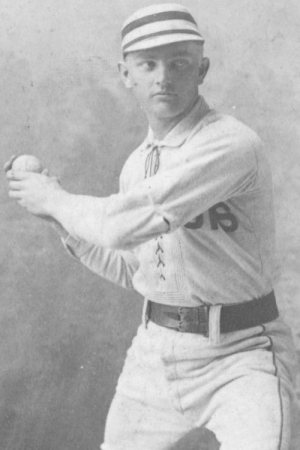
The 19th-century American Association was a highly experimental and turbulent era of professional baseball, and few players took full advantage of its unique opportunities like Charles Frederick Koenig. Known by the theatrical nickname "Silver King," this strong right-hander had an unconventional pitching style that baffled hitters of his time. He threw the ball with a sweeping sidearm motion, skipping the windup, creating a fast, deceptive delivery that helped him dominate the league. Although he only played three summers with the St. Louis Browns, his intense pitching style and peak performance are remembered as some of the most remarkable in early…
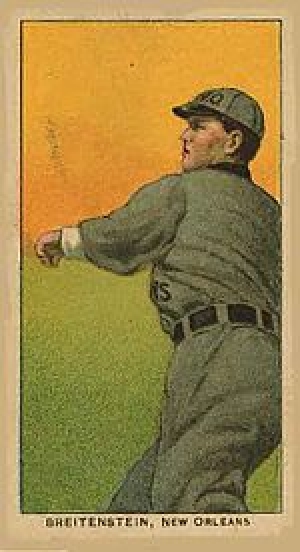
Judging a pitcher from the pre-modern era solely by wins and losses can be misleading, a mistake modern analysts now avoid. Theodore Breitenstein exemplifies this shift in perspective. A native of St. Louis who initially made stoves before debuting for his hometown Browns in 1891, Breitenstein delivered a remarkable performance by throwing a 27-men-up, 27-men-down no-hitter in his very first major-league start. Throughout the 1890s, he pitched for a poorly performing, low-scoring franchise. While his record of 94–125 might seem problematic to the casual observer, it obscures the reality that he was an exceptionally efficient pitcher, often dominating opponents and…
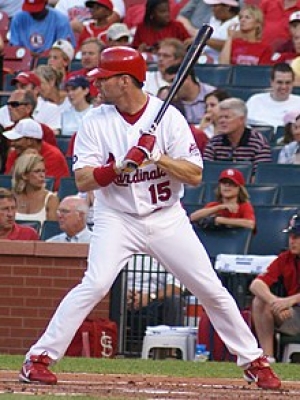
Scott Rolen arrived in St. Louis partway through the 2002 season through a major trade with the Philadelphia Phillies. He quickly took a key spot in the Redbirds' lineup and immediately showcased his exceptional athleticism, elevating his reputation to a new level in baseball history. Rolen had already earned an All-Star nod while with the Phillies in July, but his move to Missouri sparked a multi-year period of exceptional, well-rounded play that forever changed the third base position in the Gateway to the West. He achieved four straight All-Star selections during his first four full summers with the Cardinals, blending…
Joe Torre's legacy is forever tied to his role as the calm, stoic manager of the late 1990s Bronx dynasty, leading the Yankees to four world titles from the dugout. However, this iconic chapter often clouds just how formidable he was when wielding a bat himself. Long before he crafted lineups, Torre was a top-tier threat in the National League. As a five-time All-Star catcher with the Braves, a significant March 1969 trade sent him to the St. Louis Cardinals in exchange for Orlando Cepeda. In St. Louis, his exceptional versatility became a key asset for the team. To keep…
The arrival of Mark McGwire in downtown St. Louis midway through the 1997 season completely shifted the franchise's gravity. Coming over in a trade from Oakland, he brought a cartoonish brand of power that instantly made Busch Stadium a nightly destination. For baseball fans who didn't live through the era, it is difficult to overstate the monoculture McGwire created. In a sport still recovering from the wounds of the 1994 strike, he forced everyone—from diehards to casual evening news viewers—to tune in every time he stepped into the batter's box. He single-handedly made baseball central to the cultural conversation again.…