

29. Tim Lincecum
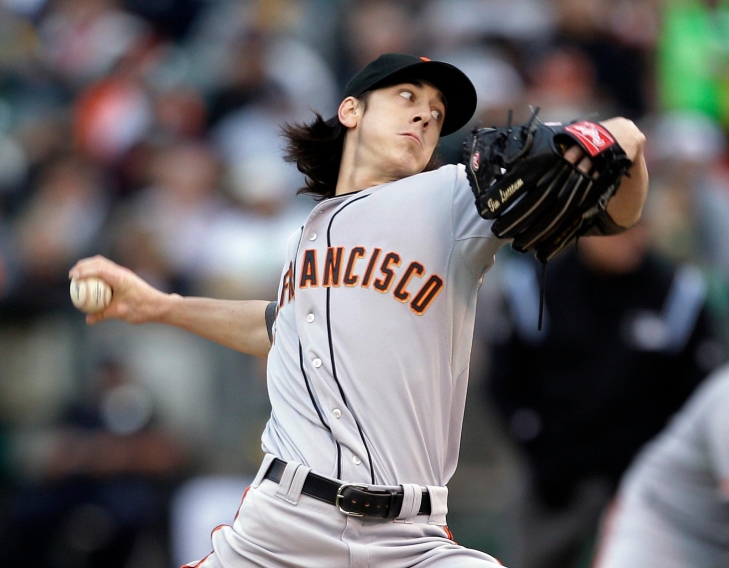
Standing at just 5'11" and weighing 170 pounds, Tim Lincecum appeared more like a finesse pitcher with light throws than a dominant power arm. However, the San Francisco Giants saw exceptional talent, choosing him with the tenth overall pick in the 2006 draft, recognizing him as a Golden Spikes Award winner. His delivery was explosive and high-leverage, with a large stride and vigorous hip rotation. After only one summer in the minors, he burst into the major leagues, earning the nickname "The Freak.” His rise sparked a peak of dominance that reshaped the franchise's identity.
Debuting in 2007, Lincecum emerged prominently the subsequent year. He established a routine of overpowering elite batters with 98 mph fastballs and executing a formidable, tumbling split-changeup. He methodically dismantled National League lineups, concluding the season with an impressive 18–5 record and a 2.62 ERA. That summer, he captured his very first career National League Cy Young Award while pacing the senior circuit in strikeouts (265), FIP (2.62), hits per nine innings (7.2), and strikeouts per nine innings (10.5).
Far from a transient anomaly within a single season, he advanced into an exceptionally exclusive neighborhood by securing a consecutive Cy Young Award in 2009. He demonstrated an exemplary performance in run prevention, concluding the season with a record of 15–7 and a career-best 2.48 ERA, while also leading Major League Baseball with an exceptional 2.34 FIP and accumulating a league-high total of 261 strikeouts over 225.1 innings.
His collective peak reached its absolute emotional pinnacle during the remarkable autumn of 2010. Following his attainment of a third consecutive All-Star selection and a third consecutive strikeout title during the regular season, Lincecum served as the primary postseason ace. He notably outperformed Roy Halladay in the National League Championship Series before decisively defeating the Texas Rangers in the World Series, securing two victories—including an outstanding performance with eight strikeouts in the decisive Game 5—and thereby capturing the franchise's first World Series championship since relocating to San Francisco.
To provide an equitable assessment, it is necessary to acknowledge the abrupt physical deterioration that ultimately disrupted his journey to Cooperstown. His distinctive, torque-intensive mechanics exerted considerable strain on his lower extremities, causing his exceptional physical leverage to vanish with startling rapidity. After a final All-Star appearance in 2011, his statistics commenced a decline over successive summers, attributable to persistent hip and shoulder problems.
Although his days as a frontline starter were over, his competitive drive remained essential to the ongoing dynasty; he seamlessly transitioned to a high-leverage relief role during the 2012 postseason, pitching 13.0 exemplary innings out of the bullpen to assist in securing a second championship ring.
Though his active participation was minimal during the 2014 world title run and his career officially fizzled out following a brief cameo with the Los Angeles Angels in 2016, his short-term peak remains completely unassailable.
Lincecum walked away from the Bay Area mound, leaving behind a highly concentrated statistical foundation that tells the story of a shooting star. Across his nine seasons strictly representing San Francisco, he compiled a 108–89 record alongside 1,704 strikeouts and a 3.61 ERA over 1,643.2 innings of work. He remains the only two-time Cy Young winner in franchise history.
19. Travis Jackson
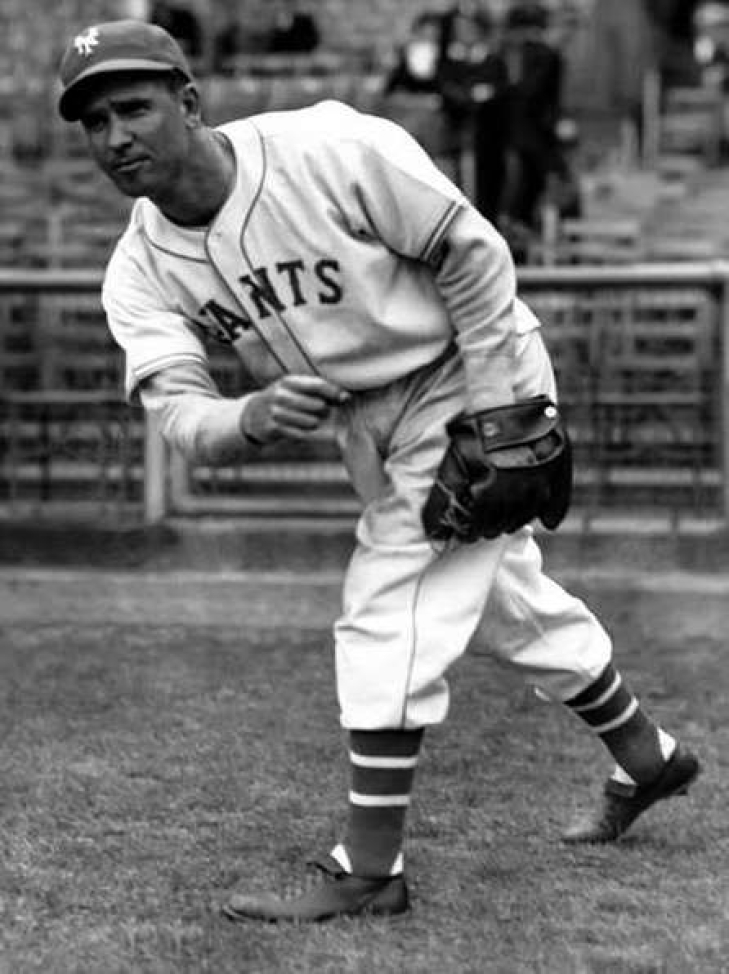
Evaluating the dynamic defensive architecture of the early 20th-century New York Giants necessitates immersing oneself in a historical context akin to a sensory time capsule. During this period, infielders played on rocky and unpredictable dirt surfaces, utilizing gloves that were no thicker than winter mittens. Travis Calvin Jackson not only endured this challenging environment but also excelled within it, displaying a predatory athletic instinct that fundamentally redefined the shortstop position of his era. Selected by manager John McGraw to succeed the legendary Dave Bancroft in 1924, this graceful and highly reliable native of Arkansas commenced a distinguished 15-season career, exclusively representing a single uniform. He transformed the left side of the Manhattan infield into a formidable stronghold, where opposing offensive rallies consistently proved futile.
His introduction to the everyday lineup was a real eye-opener in visual precision and formidable defense. Blessed with an incredible arm that could easily gun down runners from deep left-field, Jackson made defensive steals a regular part of his game. He patrolled the diamond with such confidence that local sports writers and opposing baserunners often called him "Stonewall"—a fitting nickname that highlights his amazing ability to completely stop and control fast ground balls. His detailed stats tell a remarkable story: he led all National League position players in defensive bWAR in three different years (1926, 1928, and 1929) and was just behind the leaders in three more, proving he was truly one of the best defenders of his time.
However, while many modern defensive specialists were known for being easier at the plate, Jackson truly changed the game by becoming a powerful offensive force in the middle of the lineup. He consistently dominated Senior Circuit pitching, shining through six seasons with a batting average well above .300.
The peak of his physical development was exemplified during an outstanding performance in the 1929 regular season. Jackson exerted complete control over the pitcher, achieving a career-high of 21 home runs, delivering 162 hits, and driving in 94 runs, all while maintaining a respectable batting average of .294. Five summers later, in the 1934 season, he demonstrated his offensive prowess by hitting 16 home runs and recording a career-high 101 runs batted in, earning a well-deserved selection to the All-Star Game.
His exceptional combination of defensive skill and offensive power earned him widespread national admiration, securing four top-ten finishes in the National League MVP voting. More crucially, his consistent performance directly contributed to historic team achievements, guiding the Giants to four National League pennants in three decades (1923, 1924, 1933, and 1936). His finest hour under the bright lights erupted during the 1933 World Series against Washington; battling through a late-career wave of knee injuries, the veteran captain hit a highly clutch .250, handled 24 errorless chances in the field, and masterfully directed the infield defense to capture the ultimate world-championship crown.
The toll of throwing himself onto hard dirt led to injury, causing a decline in performance. Illnesses like influenza, appendicitis, and knee issues reduced his range, making him slide to third base late in his career to let younger players shine. After a defense-focused role in the 1936 pennant run, he retired at age 32, ending his active career.
Jackson left a monumental career in Upper Manhattan with 1,768 hits, 291 doubles, 135 homers, 929 RBIs, and a .291 average over 1,656 games. The Veterans Committee inducted Travis "Stonewall" Jackson into the Hall of Fame in 1982.
23. Matt Williams
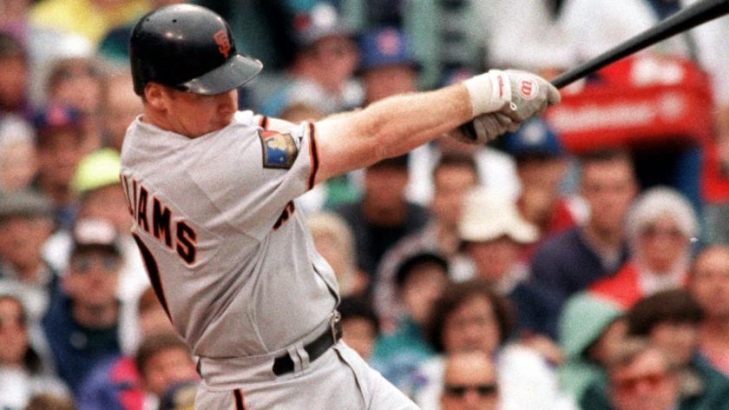
Before establishing himself as a top middle-of-the-order power hitter, Matt Williams was a highly regarded amateur talent from UNLV, so sought after that the front office used the third overall pick in the 1986 draft to acquire his rights. While his defensive skills at shortstop and third base immediately stood out when he quickly moved up to the majors in 1987, his early at-bats were quite rough. In his first three partial summers at Candlestick Park, he struggled with contact issues, batting below .200 despite hitting 34 home runs in 747 plate appearances. Although his sudden muscular gains helped the team reach the 1989 National League pennant, he was in dire need of a technical overhaul—and before the 1990 season, he responded with an impressive, award-winning breakout.
Williams has been a dedicated presence at the hot corner, turning hitting against National League pitchers into a consistent part of his daily routine. His incredible 1990 season saw him demolish senior circuit pitchers, hitting 33 home runs and driving in a league-leading 122 RBIs, all while raising his batting average to a solid .277. This outstanding performance earned him his first career All-Star nod and a Silver Slugger Award, cementing his nickname as "Matt the Bat."
Williams consistently showcased his power over six summers, surpassing 20 home runs each year. His peak came during the strike-shortened 1994 season, where he hit an incredible 43 home runs in just 112 games, showing a historic pace to challenge the single-season record. These achievements earned him his second Silver Slugger, a second All-Star selection, and a close second in the NL MVP voting, behind teammate Barry Bonds.
Apart from his typical offensive power, Williams's exceptional spatial awareness on the field cemented his overall value. He showcased remarkable lateral range combined with a strong throwing arm, earning three National League Gold Glove Awards (1991, 1993, 1994) and establishing himself as a versatile, two-way superstar.
After a 1996 season interrupted by a fractured foot that limited his play, the front office underwent a significant organizational change. In November 1996, GM Brian Sabean made a surprise blockbuster trade, sending their legendary third baseman to the Cleveland Indians in a major multi-player deal involving Jeff Kent and Jose Vizcaino. Although initially met with strong local outrage, the trade ultimately improved the team's roster structure, laying the groundwork for the late-90s comeback, even as Williams continued his powerful hitting with Cleveland and Arizona.
In San Francisco, he accumulated exactly 1,092 hits, 205 doubles, 247 home runs, and 732 runs batted in.
17. Madison Bumgarner
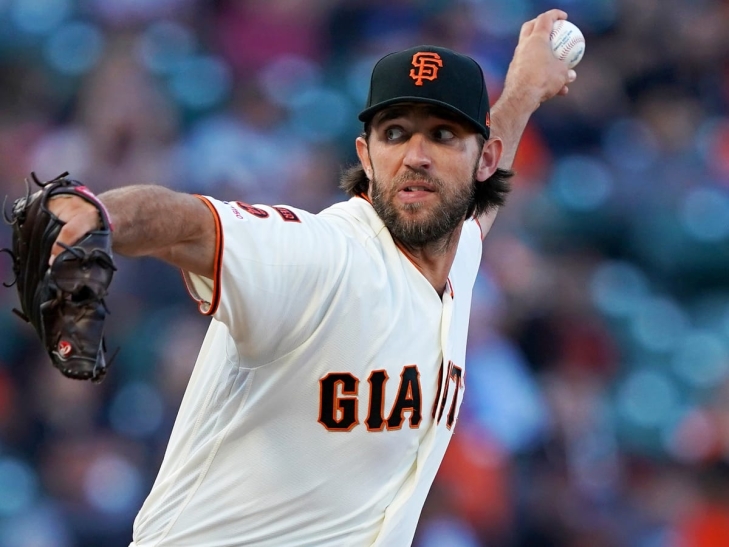
When a top-tier baseball organization aims to create a winning culture that wins multiple world championships, they often depend on a fierce, unwavering competitive spirit to lead the team. Madison Kyle Bumgarner not only played a key role on the San Francisco Giants’ starting lineup; he became the perfect symbol of October resilience—a true champion of big moments whose legendary performances have forever changed what it means to shine in the postseason. Drafted tenth overall in 2007 from North Carolina high school baseball, this sturdy, cross-throwing left-hander brought with him a clear sense of strength and durability. Over an impressive 11-season career, the man affectionately known as “MadBum” carved out a legacy as a ruthless, high-volume workhorse who historically saved his absolute finest masterpieces for the sport's grandest stage.
Madison Bumgarner's journey began with a brief intro in September 2009, but it was his big break in June 2010 that truly set the stage for greatness. His dedication to efficiency became a daily habit, helping him solidify his spot at the back of the rotation during the crucial stretch. The world saw his incredible talent unfold in Game 4 of the 2010 World Series, when, at just 21, he overcame rookie nerves to pitch eight flawless innings against the Texas Rangers, leading San Francisco to its first championship in over five decades.
He maintained a consistent and crucial role throughout the 2012 regular season and championship series, including pitching seven scoreless innings in the World Series against Detroit. His most outstanding contributions occurred during a remarkable four-year peak from 2013 to 2016. Bumgarner excelled on the National League leaderboards, setting a high standard of durability and performance by earning four consecutive All-Star selections. He consistently subdued opposing lineups, recording identical sub-three ERAs of 2.77, 2.98, 2.93, and 2.74, while regularly surpassing 200 innings pitched annually. His efficiency metrics were unmatched; he achieved 199, 219, 234, and a career-high 251 strikeouts during these four seasons, culminating in top-ten finishes in the National League Cy Young Award voting.
Bumgarner, primarily a pitcher, also became a powerful hitter, showcasing a violent right-handed swing. He hit 19 career home runs with the Giants, including five in 2015, earning consecutive Silver Slugger Awards in 2014 and 2015. His offensive skills forced managers to abandon traditional intentional walk tactics at the bottom of the order.
Nevertheless, what conclusively establishes "MadBum" as an enduring figure within the eternal zeitgeist of the sport is his extraordinary and historic individual performance during the 2014 October postseason. Following his attainment of the National League Championship Series Most Valuable Player award, he executed the most exceptional pitching display in contemporary World Series history against the Kansas City Royals. He delivered a dominant, complete-game shutout in Game 1, a remarkable victory in Game 5, and subsequently—after only two days of rest—emerged from the bullpen in Game 7 to deliver five exemplary, scoreless relief innings that secured the championship. Over the course of twenty-one innings in the World Series that autumn, he conceded a nearly unthinkable single run, thereby establishing a permanent standard for world championship performance that may remain unmatched indefinitely.
After the 2019 season, Bumgarner left San Francisco as a Free Agent for the Diamondbacks, leaving the Bay Area with a 119–92 record, maintaining a sharp 3.13 ERA, a 1.112 WHIP, and exactly 1,794 strikeouts.
16. Mike Tiernan
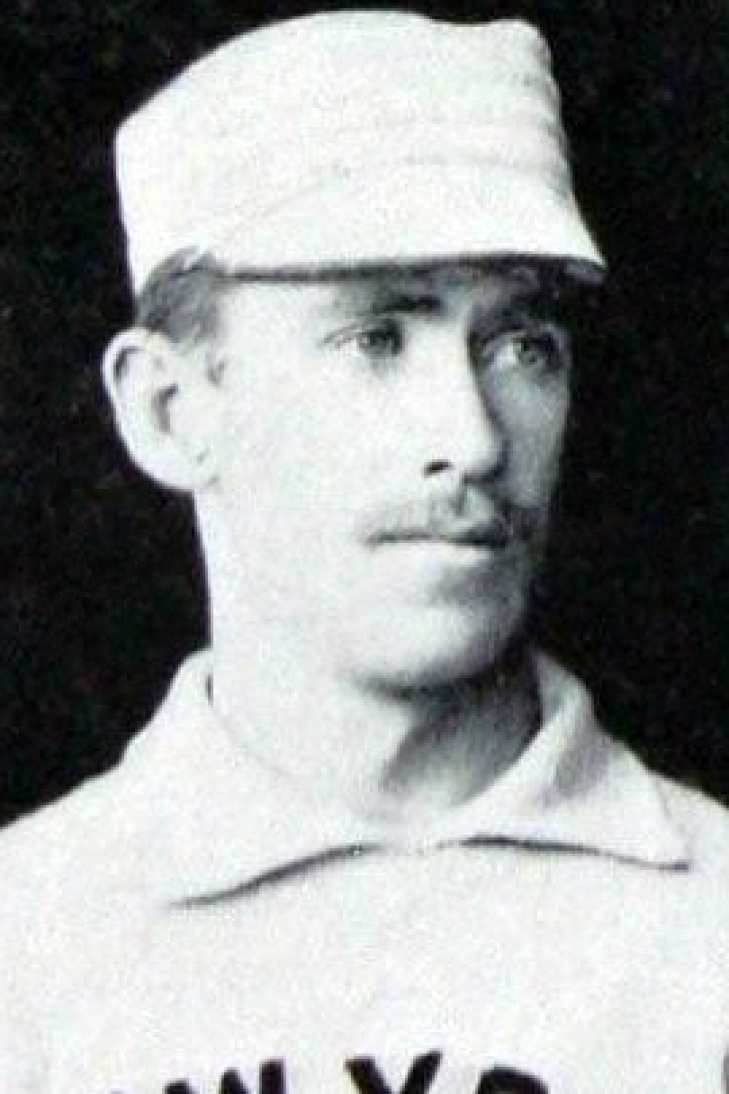
Mike Tiernan did not have the flamboyant, attention-grabbing style of his Hall of Fame peers, such as Buck Ewing or King Kelly. Known as "Silent Mike" because he avoided the press, seldom argued strikes, and quietly focused on his game, this left-handed slugger played right field at the Polo Grounds with remarkable accuracy. Throughout his 13-year major-league career, all with a single team in New York, Tiernan was among the most efficient offensive players of the 1890s, establishing a record that ranks alongside those of the best hitters of his era.
His rookie season in 1887 was truly impressive, showcasing remarkable power right from the start, with 10 home runs—a notable achievement for an era when the game was often played with dead balls and large outfield spaces. He fit into a star-studded lineup effortlessly, making run production a daily habit that helped New York secure consecutive pre-modern World Series titles in 1888 and 1889. During that incredible 1889 championship run, Tiernan was on fire offensively, batting an impressive .335 and leading the entire National League with 147 runs scored and 96 walks.
This period marked the peak of his career on the diamond, shining brightly during the 1890 and 1891 seasons. As the new Players' League posed a challenge to the sport and pulled talented players away, Tiernan stayed truly loyal to the NL Giants. Instead of wavering, he used these changes as a chance to showcase his strength, winning the National League home run titles two years in a row, hitting 13 home runs in 1890 and reaching his personal best with 16 in 1891.
His impressive efficiency during this stretch really set him apart. He led the Senior Circuit with a strong .495 slugging percentage and an outstanding 158 OPS+ in 1890. The next summer, he matched that remarkable performance with another league-leading 159 OPS+. Throughout his peak years, he consistently surpassed the .490 slugging mark five times, making opposing managers rethink their defensive strategies completely.
Far from just a quick burst of strength, "Silent Mike" consistently delivered at an elite level over many seasons, achieving a batting average above .300 for seven different years. He was a versatile force on the bases, using his speed to steal at least 50 bases in three separate summers. Eventually, he retired as the franchise's all-time leader in triples with 162 and stolen bases with 428.
A natural decline in bat speed and ongoing injuries limited his 1899 season, leading to a reduced role and a quick career end at age 32. Across his 1,478 games representing New York, Tiernan accumulated 1,838 hits, 428 stolen bases, and 853 runs batted in, alongside a brilliant .311 batting average and a powerful .463 slugging percentage. Most historically significant, his 106 career home runs tied him with the immortal Dan Brouthers for the fourth-most blasted by any player across the entire 19th century.
13. Tim Keefe
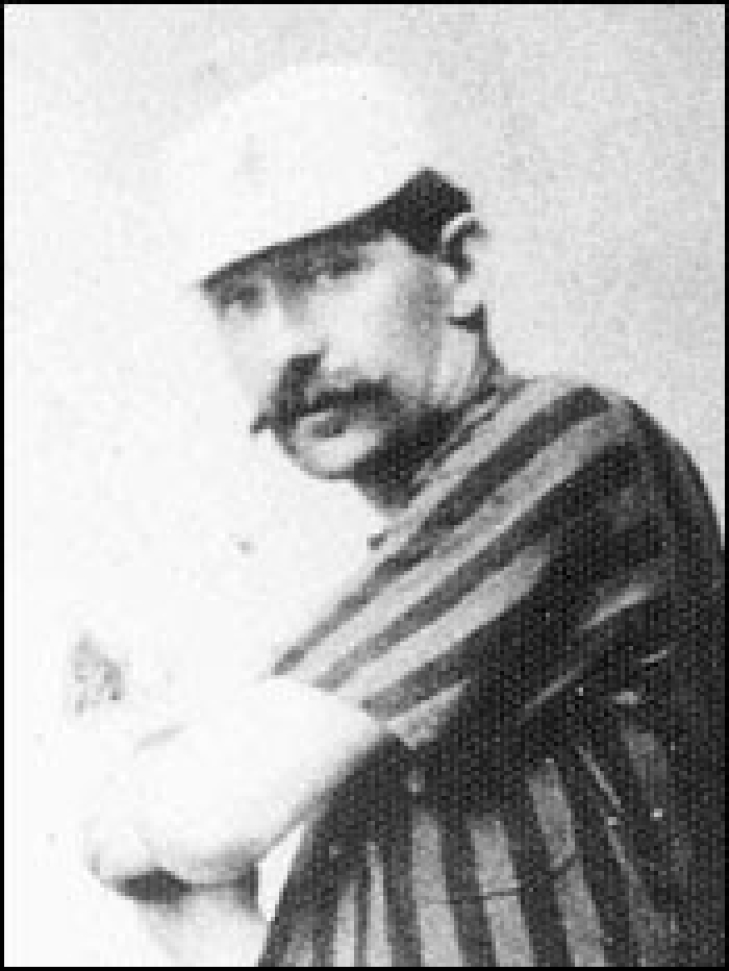
The development of professional pitching in the late 19th century was primarily shaped by significant rulebook changes. Only a select few pitchers had the intellectual flexibility to excel across different eras. Timothy John Keefe not only thrived during this experimental period but also led as the foremost, scientifically-minded pitcher of his time. He started his major league career throwing from 45 feet and finished from the current standard of 60 feet, 6 inches, adapting to every rule change. After a successful stint with the Troy Trojans and later with the New York Metropolitans, Keefe permanently joined the New York Giants in 1885. His multi-era career cemented his reputation as a benchmark of Gilded Age baseball.
His introductory summer of 1885 with the Giants was truly impressive, showcasing his incredible skill at quickly shutting down opponents. Keefe delivered an outstanding performance against National League lineups, expertly using a tricky change of pace and a powerful drop-ball to achieve an impressive 32–13 record. His advanced efficiency metrics were unmatched; he earned the National League ERA title with a remarkable 1.58 and allowed just 6.8 hits per nine innings, leading the league with such low numbers.
He sustained that frontline dominance directly into the 1886 calendar, establishing a grueling routine of high-volume durability. Keefe hoisted the pitching staff onto his back to throw 543 innings, racking up an incredible, league-leading 42 victories against just 20 defeats.
The physical and psychological hardships of the era generated a profoundly concerning emotional obstacle during the 1887 campaign. Recognized as a highly sensitive and conscientious competitor who feared causing physical injury to the batter, Keefe unintentionally struck a batter directly in the head with a high-velocity pitch. This traumatic event precipitated a severe nervous breakdown, necessitating his withdrawal for several weeks and admission to a sanitarium over the winter period to recover his mental stability. Nonetheless, exemplifying the legendary resilience that characterized his entire career, he nonetheless succeeded in completing the summer with an impressive 35–19 win-loss record, leading the league with a tight 1.114 WHIP and allowing an average of 8.1 hits per nine innings.
After overcoming his psychological barriers, Keefe delivered the most outstanding single-season pitching performance in franchise history in 1888. He dominated National League hitters, finishing with a 35–12 record and winning the prestigious pitching Triple Crown. He led the league in wins (35), ERA (1.74), and strikeouts (335). His advanced statistics were unparalleled, including a 1.90 FIP, a 0.937 WHIP, and 5.6 strikeouts per nine innings, which topped all pitchers. During that remarkable summer, he set an enduring major-league record by winning 19 consecutive games—a feat of sustained excellence that remains unbroken. He concluded the season by helping the Giants secure their first world championship, winning four games in the pre-modern World Series against the St. Louis Browns.
Keefe stayed a key player in 1889 with a 28–13 record and 3.36 ERA, helping New York win its second straight world title over Brooklyn. However, as a strong labor rights advocate, he was frustrated by restrictive policies and the unfair reserve clause.
Before the 1890 season, Keefe was a founding member of the Players' League, a new player-owned league, and played for the New York Giants within that circuit. When the league collapsed after just one summer, he returned to the National League Giants in 1891, where he faced a hostile environment. Resentful of his union leadership, management made him feel unwelcome, and his performance declined, leading to a poor 2–5 start. This prompted his sudden release that summer. He finished his career with a short stint at the Philadelphia Phillies before retiring in 1893.
Keefe had a record of 174-82 with a 2.54 ERA with the Giants and entered the Baseball Hall of Fame in 1964 as a Veterans Committee Selection.
14. Larry Doyle
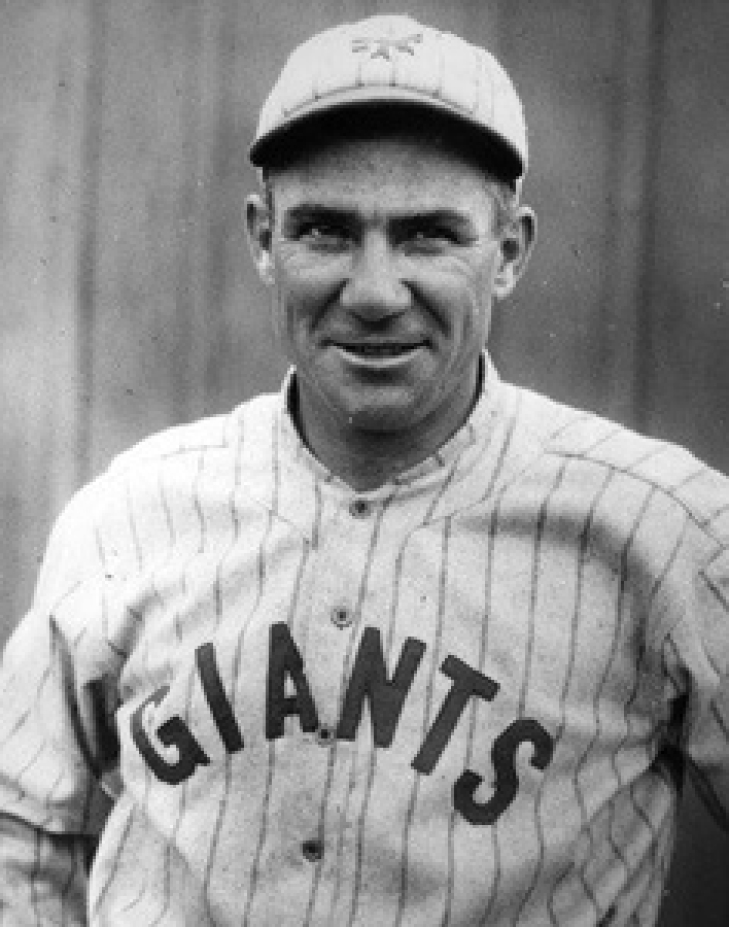
When John McGraw spends a record-breaking amount on an unproven minor leaguer, the baseball world pauses to see the risky move unfold. In June 1907, the legendary Giants manager made a then-unprecedented $4,500 purchase from the Springfield Senators to acquire a charismatic second baseman. This significant investment turned out to be a great deal. Known for his cheerful attitude, earning him the nickname "Laughing Larry," Doyle didn't just fill a vacant infield spot; he became a powerful offensive force for the Giants during the Deadball Era. His career spanned multiple eras, marked by his unwavering love for the game despite the pressures of playing in New York.
His introductory phase in Manhattan was significantly disrupted by a severe episode of pleurisy and a fractured clavicle, prompting many local writers to prematurely doubt the high valuation. The decisive breakthrough occurred during the 1909 season. Fully recovered and committed to his line-drive approach, Doyle established a rigorous daily routine that enabled him to lead the entire National League with 172 hits while maintaining an impressive .302 batting average.
He carried that upward trajectory into the 1911 campaign, setting a magnificent standard for extra-base power. He weaponized his elite speed and gap-to-gap power to lead the Senior Circuit with an astonishing 25 triples—a total that remains a modern franchise record—while driving the Giants to the first of three consecutive National League pennants.
The peak of his hardware-certified legacy reached its zenith during an extraordinarily exceptional 1912 regular-season performance. Serving as team captain and the indispensable driving force of the lineup, Doyle delivered an exemplary display of high-pressure productivity. He systematically dismantled opposing pitching staffs to achieve a remarkable .330 batting average, with 91 runs batted in and 36 stolen bases across 143 games. His advanced efficiency metrics were entirely unmatched; he led all second basemen in the Senior Circuit with a formidable .500 slugging percentage, and was awarded the distinguished Chalmers Award—the direct predecessor of the contemporary Most Valuable Player accolade—thereby definitively establishing his status as an elite frontline athlete.
Although his Most Valuable Player (MVP) campaign of 1912 garnered the most historic accolades, his unequivocal peak in individual statistics as a pure hitter occurred three summers later during the 1915 season. Doyle unequivocally dominated the National League leaderboards, transforming the summer into a personal exhibition. He led the league in hits (189), doubles (40), and total bases (268), while securing the National League batting championship with an impressive .320 average. He complemented this contact ability with 26 stolen bases and a career-high 11 home runs, demonstrating that even as the Deadball Era began to evolve, his compact left-handed swing remained exceedingly formidable.
The grind of playing a high-volume, hyper-aggressive style of second base eventually invited a sudden performance dip. Mechanical regression and declining foot speed caught up to him during the 1916 calendar, prompting McGraw to make a shocking, mid-season trade that sent the veteran captain to the Chicago Cubs.
Yet, in 1918, a final homecoming materialized, demonstrating the profound organizational identity that defined his life. Doyle returned to Manhattan to close out his career, willingly accepting a reduced, part-time utility role over his final three summers before officially retiring from the sport following the 1920 campaign.
Doyle had 1,751 hits, 280 doubles, 114 triples, and 750 runs batted in alongside a robust .292 batting average and 291 stolen bases in 1,623 games as a Giant.
10. Roger Connor
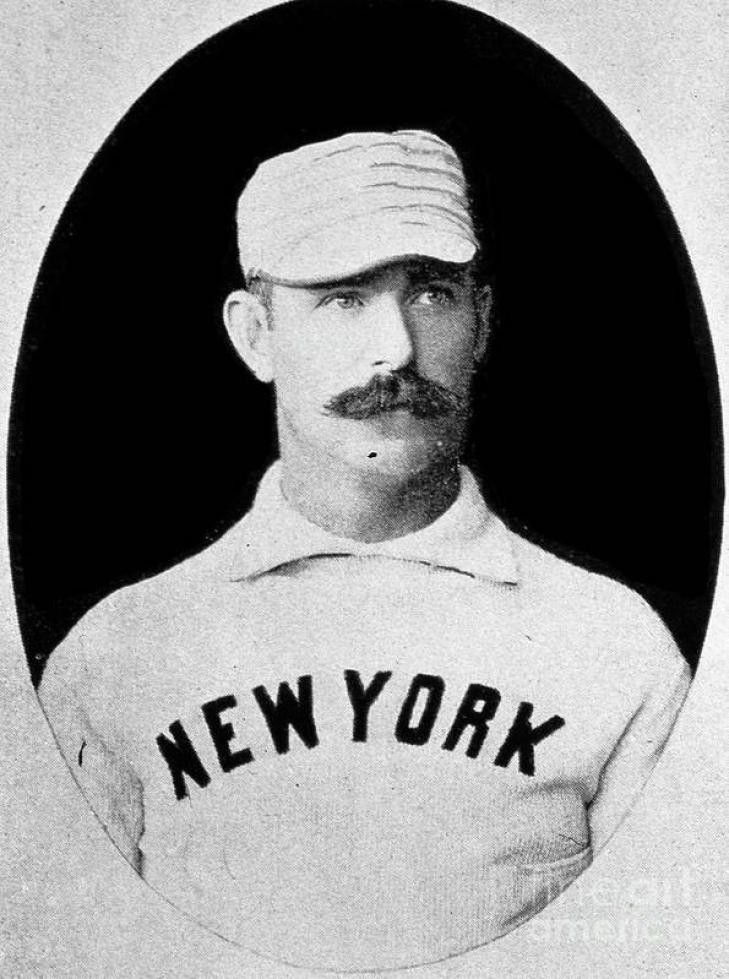
Roger Connor played three years with the Troy Trojans, establishing himself as a star on the rise before he signed with the New York Gothams in 1883. As the team changed its name to the Giants, Connor elevated himself as one of the best players in the game.
Connor batted over .300 in his first four years in New York and would have likely been named the league MVP in 1885. That year, Connor led the NL in Hits (169), Batting Average (.371), and OBP (.435). As the decade was coming to its end, the Giants were becoming one of the top teams in the NL.
Many people forget that there was a variation of the World Series in the 1880s, and Conner took the Giants to two of them, winning both (1888 & 1889). He jumped to New York of the Players League in 1890, but when the league folded, he was returned to the Giants. He left again for the first version of the Philadelphia Athletics in 1892 before he was traded back in 1893. The Giants dealt him to the Browns during the 1894 Season, which would be it for Connor as a Giant, who had 1,388 Hits with a .319 Batting Average.
Connor was inducted into the Baseball Hall of Fame in 1976 via the Veteran’s Committee.
2. Barry Bonds
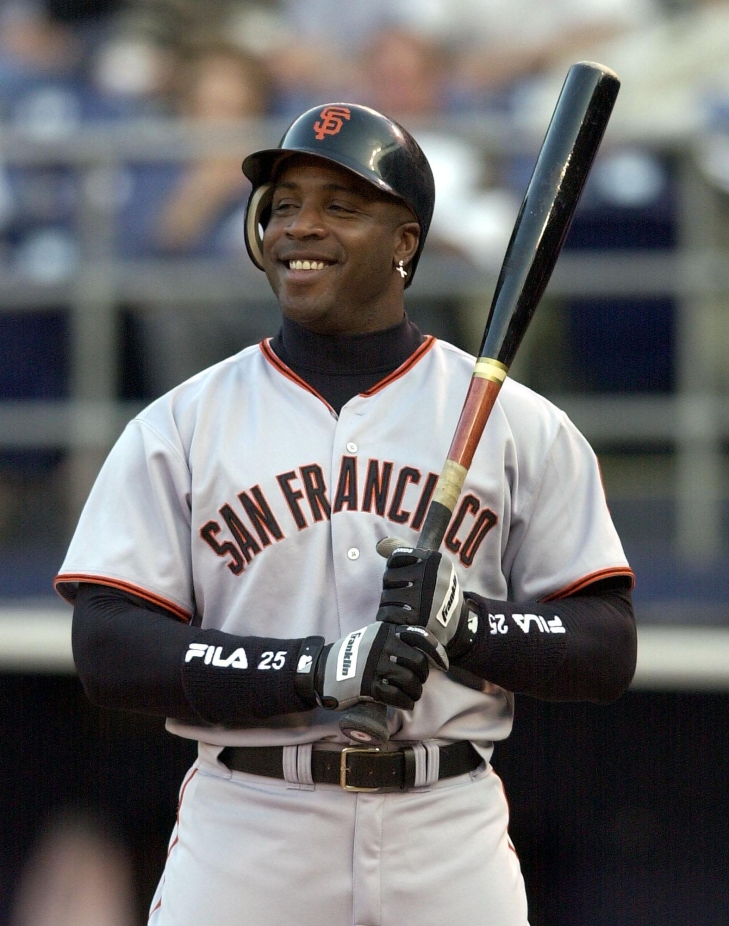
Creating a historical hierarchy for a Major League franchise involves delicately separating pure individual performance from the often polarizing public opinion. This is particularly challenging when evaluating Barry Bonds. When he arrived in Northern California before the 1993 season, he was already a two-time National League MVP and a superstar with the Pittsburgh Pirates. However, what he achieved over the next 15 years under the bay winds goes beyond typical statistics. With an incredibly compact, high-velocity swing and a nearly telepathic sense of the strike zone, Bonds transformed the batter's box into a laboratory of offensive mastery, reaching a peak that redefined the sport’s physics.
The subsequent stretch from 1994 through 1999 cemented his standing as the premier five-tool weapon in professional baseball, even as external forces began shifting the sport's landscape. During the strike-shortened 1994 calendar, Bonds refused to let the labor stoppage halt his elite consistency, batting .312 with 37 home runs and a league-leading 74 walks in just 112 games to secure a fourth-place finish in the MVP voting. He backed that up in 1995 by crossing the century mark in runs batted in once again, lashing 33 home runs and driving home 104 runs despite a down year for the club's overall offense.
His absolute physical peak of the decade erupted during a magnificent 1996 showcase. Bonds put on an unadulterated display of historical, multi-dimensional artistry, exploding for 42 home runs while drawing a spectacular, league-leading 151 walks to fuel a massive .461 on-base percentage. Showing he was still a lethal, high-velocity engine on the basepaths, he swiped 40 bases to become only the second player in major league history to register a 40-home run, 40-stolen base season—joining Jose Canseco and matching the deep, versatile athletic bloodline of his father, Bobby Bonds.
He maintained that hardware-certified authority through the late 1990s, capturing consecutive Gold Gloves and Silver Sluggers across the 1997 and 1998 campaigns. The 1997 season saw him crush 40 homers and drive in 101 runs to carry the Giants back to the postseason, while his 1998 run secured his place in the record books as the founding, lone member of the mythical 400-home run, 400-stolen base club. Yet, despite his relentless excellence, the sport was rapidly fracturing around him; the game was evolving into a high-scoring, muscle-bound era where rival sluggers were visibly altering their physiques and dominating national headlines with astronomical home run totals.
Following an injury-shortened 1999 campaign where a bone spur in his elbow limited him to 102 games—though he still managed a robust 34 home runs—Bonds returned to the rubber with a transformed frame and a fierce competitive chip on his shoulder. At age 35, his body appeared to be changing, and any remaining doubts that his game had entered a completely detached, supernatural dimension were permanently shattered during a historic 2001 regular-season masterpiece.
The 2001 campaign stands as the absolute structural zenith of individual dominance in baseball history. Bonds put on an unbelievable display of offensive violence, shattering Mark McGwire’s single-season record by launching a breathtaking 73 home runs. He walked away with his fourth career MVP, and regardless of the growing skepticism from national writers or the vitriol directed at him from opposing fans, he established himself as the most feared offensive entity to ever look at a baseball. Opposing managers completely abandoned traditional tactical logic, treating him with an unprecedented level of caution that frequently resulted in him being intentionally walked even with the bases loaded.
What followed from 2001 through 2004 was a four-year run of hitting success that will likely never be replicated as long as the sport exists. Bonds turned run production into a strict, everyday routine, sweeping four consecutive National League Most Valuable Player Awards while leading the major leagues in on-base percentage, slugging percentage, and OPS every single summer. His advanced efficiency filters reached a comical peak during the 2004 schedule, where he batted a blistering .362 and drew an astronomical, record-shattering 232 walks—including 120 intentional free passes—to post a mind-bending .609 on-base percentage.
As natural physical wear and tear and severe knee issues mounted in the post-2004 twilight of his career, Bonds became increasingly injured, yet his internal efficiency filters remained completely unstoppable whenever he could hobble up to the plate. He continued to pass historic milestones on a regular basis, ultimately surpassing Hank Aaron on August 7, 2007, to secure the sport’s ultimate career crown. Following the expiration of his contract at the conclusion of that 2007 schedule, the front office officially signaled a structural transition, and with a cloud of legal scrutiny and corporate blackballing hovering over his name, no other major league club offered him an opportunity to extend his journey.
Following his contract's expiry, neither the Giants nor any other club offered him an opportunity. He would retire, belting 586 Home Runs, 1,440 RBI, and recording a Slash Line of .312/.477/.666 for San Francisco.
Controversy or not, there will never be another hitter like Barry Bonds again.
The Baseball Hall of Fame may never call his name, but the Giants inducted him into their Wall of Fame in 2017.
11. Buster Posey

When assessing the top modern figures who led the sport's most competitive era in the 2010s, true greatness goes beyond individual stats; it encompasses the complete transformation of a franchise's winning culture. Buster Posey wasn’t just a catcher for the San Francisco Giants—he was the strategic linchpin, the clubhouse's heartbeat, and the operational genius behind one of the greatest dynasties in Bay Area history. Coming out of Florida State University as a celebrated amateur star, the highly skilled backstop entered the majors with a composed attitude and an advanced baseball IQ that dramatically changed the team’s path, beginning a 12-season run that permanently established him as a legendary figure.
After a brief seven-game stint in late September 2009, his full-time role as the primary team leader in May 2010 sparked a historic competitive surge. Posey established a rigorous routine of elite contact, achieving 124 hits, 18 home runs, and a .305 batting average, which earned him the National League Rookie of the Year award. He concluded that remarkable rookie summer by flawlessly managing postseason pitching, guiding a talented rotation through the intense October challenges and helping the Giants win their first World Series since relocating to San Francisco in 1958.
Tragically, his frontline career hit a major obstacle in May 2011 when a collision at home plate resulted in a fractured fibula and torn ankle ligaments, ending his summer early. However, showcasing his legendary grit, Posey crafted a remarkable physical redemption during the 2012 season.
He impressively dominated National League pitching, earning the batting crown with a fantastic .336 average—making him the first catcher to lead the league in batting since Ernie Lombardi in 1942. He hit a career-high 24 home runs and drove in 104 runs over 148 games, achieving a rare sweep of the National League Comeback Player of the Year, a Silver Slugger Award, and the esteemed National League Most Valuable Player trophy. His achievements clearly contributed to a memorable team victory that fall, as he helped lead the Giants to their second World Series title in three years.
Far from a temporary peak, Posey maintained a metronomic baseline of elite multi-dimensional excellence over the next half-decade. He functioned as a dangerous, high-efficiency threat in the middle of the order while serving as a premier, defensive hand behind the dish. He successfully navigated the pitching staff to another Fall Classic crown in 2014—securing a historic "Even Year" dynasty of three rings in five seasons—and routinely posted batting averages hovering north of the .300 threshold.
His exceptional spatial awareness and framing metrics earned him a Gold Glove Award in 2016, along with two Wilson Defensive Player of the Year honors and five Silver Sluggers, affirming his status as the definitive exemplar at his position. After electing to abstain from the pandemic-shortened 2020 season to safeguard his newly adopted twin daughters, the veteran catcher returned to play for one final, poetic chapter in 2021. At the age of 34, demonstrating remarkable zone discipline, Posey experienced a remarkable late-career resurgence. He achieved a commendable batting average of .304 with 18 home runs over 113 games, leading a record-breaking 107-win season. He received his second career Comeback Player of the Year award, was selected as an All-Star, and earned a spot on the All-MLB Second Team, thereby confirming that he continued to perform at the highest level of the sport.
Instead of lingering past his prime, Posey retired in November, shocking baseball by leaving on top. He ended with 1,500 hits, 293 doubles, 158 home runs, 729 RBIs, and a .302/.372/460 slash line in 1,371 games, all in one uniform.
9. Bill Terry
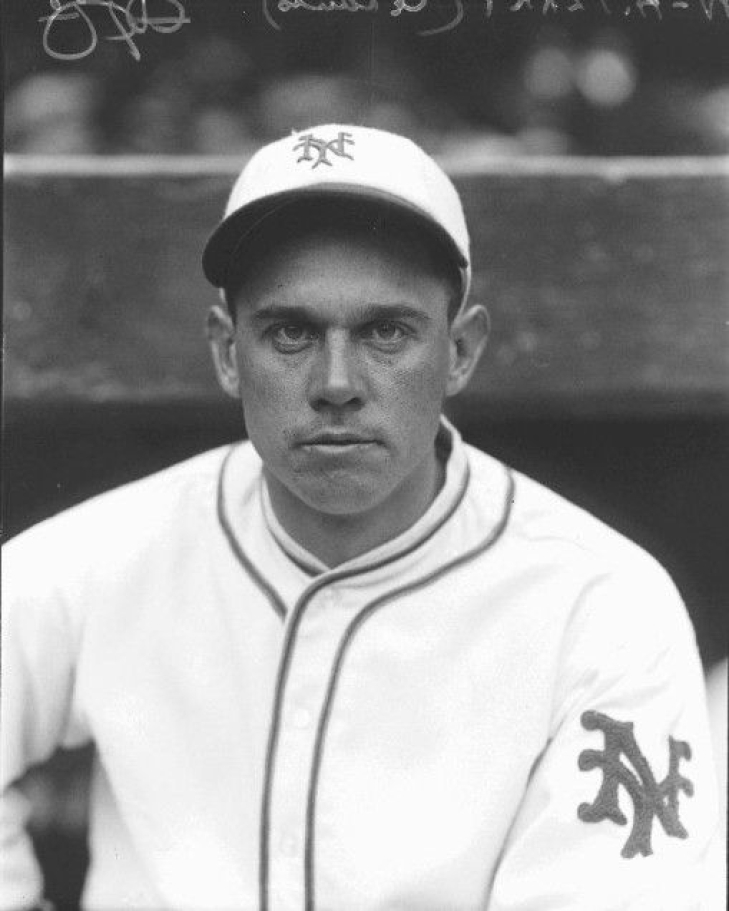
To get a full handle on the rich tapestry of the Giants franchise, you have to look back at the master contact hitters who dictated the tempo of the early 20th century. Bill Terry did not just occupy first base for the New York Giants; he defined the very upper limit of high-average hitting for an entire generation. Joining the flagship club in 1923, "Memphis Bill" emerged as the ultimate homegrown anchor under the legendary leadership of John McGraw. By the time he claimed the position entirely as his own, the smooth, left-handed swinging star began spinning a narrative of elite bat control that culminated in a historic, permanent reservation in the baseball record books.
Terry's legacy is often summarized by a single, remarkable achievement, but his career exemplifies consistent year-over-year performance. After a significant improvement in 1925, he made a disciplined daily practice of hitting line drives. He surpassed the 200-hit mark in six different seasons, maintaining a rapid pace that boosted his career batting average to an impressive .341 across fourteen active seasons.
His top offensive achievement occurred during a remarkable 1930 regular season. Terry delivered an outstanding performance against National League pitchers, amassing 254 hits and achieving a remarkable .401 batting average. This record remains a historic and unmatched standard, marking him as the last National League player to surpass the 400 batting threshold.
While a highly political and often combative baseball environment somehow denied him a regular-season Most Valuable Player award, the league's efficiency metrics heavily recognized his standing, as he anchored a top-ten finish in the MVP balloting six times. Far from a one-dimensional slap hitter, Terry generated respectable, high-leverage power, amassing 154 home runs and driving in 1,078 runs.
His profound baseball knowledge ultimately positioned him as the ideal successor to McGraw, leading to his appointment as player-manager halfway through the 1932 season. He quickly confirmed his leadership abilities in both roles by steering the Giants to a commanding World Series victory in 1933, demonstrating he could manage the team as effectively as he could control the strike zone.
Terry retired after the 1936 season, leaving behind a monumental, volume-dense statistical fortress that commands total reverence in the club archives: 2,193 hits, 373 doubles, 112 triples, and an exceptional .393 lifetime on-base percentage over 1,721 games in a New York uniform. The Baseball Hall of Fame called his name in 1954, and in 1980, the team retired his number 3.
8. Willie McCovey
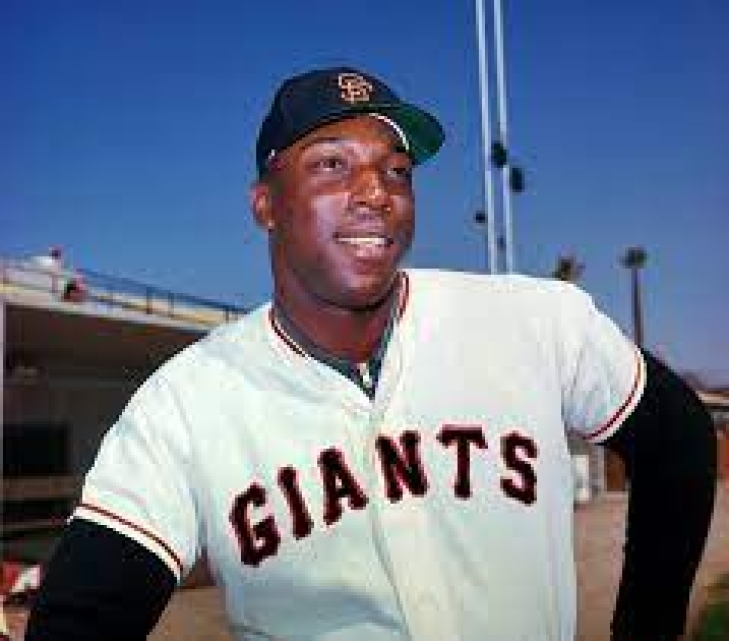
Having a marquee figure like Willie Mays at the center field might be enough for many teams, but the San Francisco Giants proved that a truly legendary lineup can include two Willies. Signed as an amateur free agent in 1955, Willie McCovey spent four years in the minors before making a spectacular debut. When he arrived in San Francisco on July 30, 1959, the tall left-handed first baseman dominated National League pitchers in the last two months of the season, hitting .354 with 13 home runs in just 52 games. Despite only 219 plate appearances in a relatively weak rookie class, his impressive 1.085 OPS earned him unanimous National League Rookie of the Year honors.
To be fair, McCovey's quick rise to fame was soon followed by a tough sophomore year. Opponents’ scouting reports adapted in 1960, dropping his batting average below .240 and leading to a temporary demotion to the minors to refine his mechanics. During the early 1960s, he showed enormous raw power but struggled with consistent performance, sometimes appearing as a mere platoon player rather than an elite middle-of-the-order hitter.
The major evolutionary breakthrough occurred in 1963 when McCovey unlocked his full potential, hitting a league-high 44 home runs and earning his first All-Star selection. After a short decline due to injury in 1964, he bounced back strongly, dominating the National League by hitting at least 30 home runs for six straight summers.
He secured consecutive home run titles, hitting 36 in 1968 and a personal best of 45 in 1969. During those dominant seasons, McCovey consistently led the Senior Circuit in RBIs, slugging percentage, and OPS. His exceptional 1969 performance earned him the National League Most Valuable Player Award, confirming his status as one of the top hitters globally. He kept his elite form into 1970, winning his third consecutive titles in slugging and OPS.
While his heavy, thunderous bat remained a dangerous weapon into the early 1970s, the franchise’s financial and competitive fortunes began to sour. Seeking to shed payroll and pivot toward a youthful roster, the front office engineered an emotional trade, shipping their veteran icon south to the San Diego Padres after the 1973 season.
Yet, true legends often find their way back home. McCovey executed a poetic final arc by returning to the Bay Area as a free agent in 1977.
Though his physical tools were facing a natural, age-related decline, the beloved first baseman provided four final summers of crucial veteran leadership and occasional power before officially walking away from the diamond in 1980.
The slugger blasted 521 Home Runs, 469 with the Giants, while also collecting 1,974 Hits and 1,388 RBI for the team. The Baseball Hall of Fame inducted McCovey in his first year on the ballot in 1986. The Giants also retired his number 44 in 1980, and he was chosen for the inaugural class of the Giants Wall of Fame in 2008.
5. Carl Hubbell
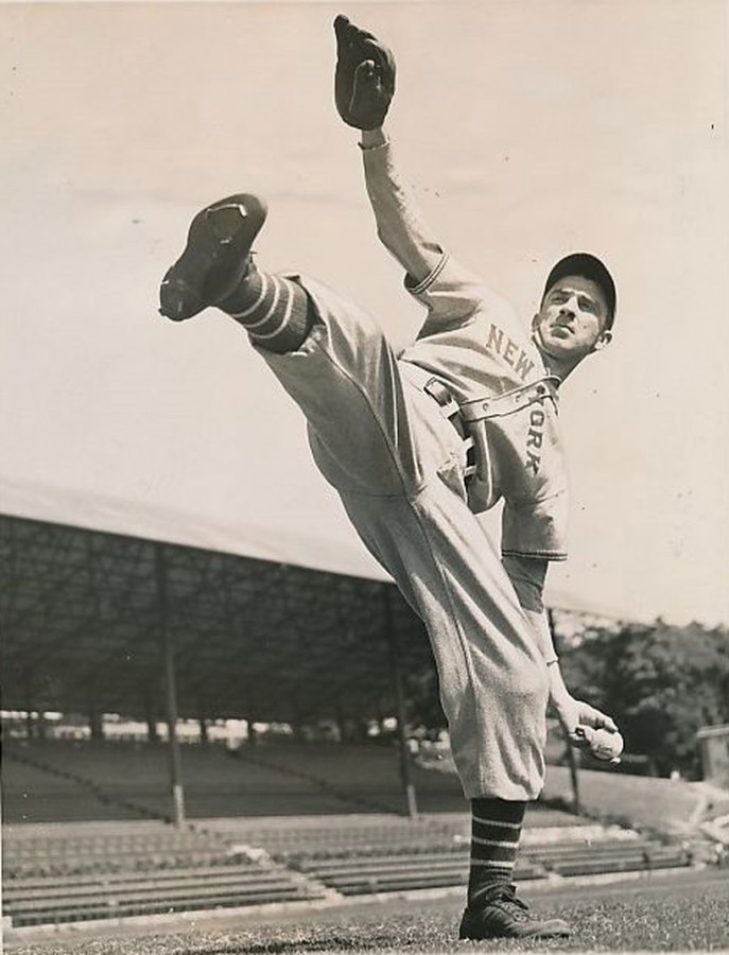
While the blueprint of a major league developmental system aims to cultivate top talent, the Detroit Tigers made a highly shortsighted decision by severing ties with Carl Owen Hubbell. Concerned that the young left-hander relied too much on an unusual, high-stress pitch called the screwball, Detroit's farm directors explicitly ordered him to stop throwing it, fearing the mechanical torque could break his arm. This was a significant mistake. After being acquired by the New York Giants from Beaumont of the Texas League in mid-1928, Hubbell didn’t abandon the pitch; instead, he perfected it with precise, low-variability execution. This transformed him into a masterful pitcher known for his durability in late innings and as a starter, using the devastating reverse-breaking action to confound many top hitters.
His integration into the Manhattan rotation yielded immediate dividends, but Hubbell truly established his national profile as a premier control wizard at the dawn of the 1930s. He turned baseline efficiency into a strict, daily regular-season routine, launching a spectacular four-year streak atop the National League WHIP leaderboards in 1931 and a concurrent four-year run as the league leader in strikeout-to-walk ratio starting in 1932.
His rapid ascension to the top of the sport reached its absolute evolutionary zenith during a breathtaking 1933 regular-season masterpiece. Hubbell systematically paralyzed National League batters, pacing the league with 23 victories and a microscopic career-best 1.66 ERA. Advanced efficiency filters heavily validated his dominant peak, as he led the league in FIP (2.63) and posted a mind-bending 0.98 WHIP—the only time in his career he dipped below the coveted 1.00 threshold. Naturally, his elite playmaking earned him the National League Most Valuable Player Award while anchoring a postseason run that culminated in a World Series championship.
Despite his many awards during the regular season, Hubbell achieved lasting fame during a single exhibition on July 10, 1934. During the second annual All-Star Game at the Polo Grounds, he faced an early jam with two runners on base. This event is celebrated as one of the greatest defensive moments in All-Star history. Using his signature screwball, he struck out five future Hall of Famers in a row: Babe Ruth, Lou Gehrig, Jimmie Foxx, Al Simmons, and Joe Cronin. This remarkable performance demonstrated his dominance and secured his legacy as the ultimate big-game pitcher.
"The Meal Ticket" maintained his elite run-prevention skills through the mid-1930s. In 1934, he earned his second National League ERA title with a .230 average, and in 1936, he claimed a third with an impressive 2.31 ERA. His 1936 season was another remarkable outlier, as he won his second Most Valuable Player Award with a 26–6 record. That summer, Hubbell started a historic, high-velocity winning streak that extended into the following year, achieving an extraordinary 24 straight decisions without a loss, a Major League record that remains unbroken today.
His unyielding arm carried the Giants to back-to-back National League championship pennants in 1936 and 1937, though the club would ultimately finish as frustrated casualties both times against a powerhouse cross-town New York Yankees juggernaut.
Sadly, the intense physical strain from twisting his elbow to deliver thousands of screwballs took a toll on his body, visibly deforming his arm and reducing his speed. After the 1937 pennant race, his dominance declined, but his keen spatial awareness and pitching intelligence kept him a reliable, above-average starter for four more seasons.
When his overall output finally fell off a cliff during an injury-hampered 1943 campaign, the organization officially signaled a structural transition, drawing the curtain on his legendary playing residency.
He walked away from the mound having compiled a monumental, volume-dense baseline that reads like fiction today: a 253–154 record, a brilliant 2.98 lifetime ERA, 3,590.1 grueling innings pitched, and 1,677 strikeouts across 535 games.
Hubbell was inducted into the Baseball Hall of Fame in 1947. San Francisco also retired his number 44, having done so in 1941.
4. Mel Ott
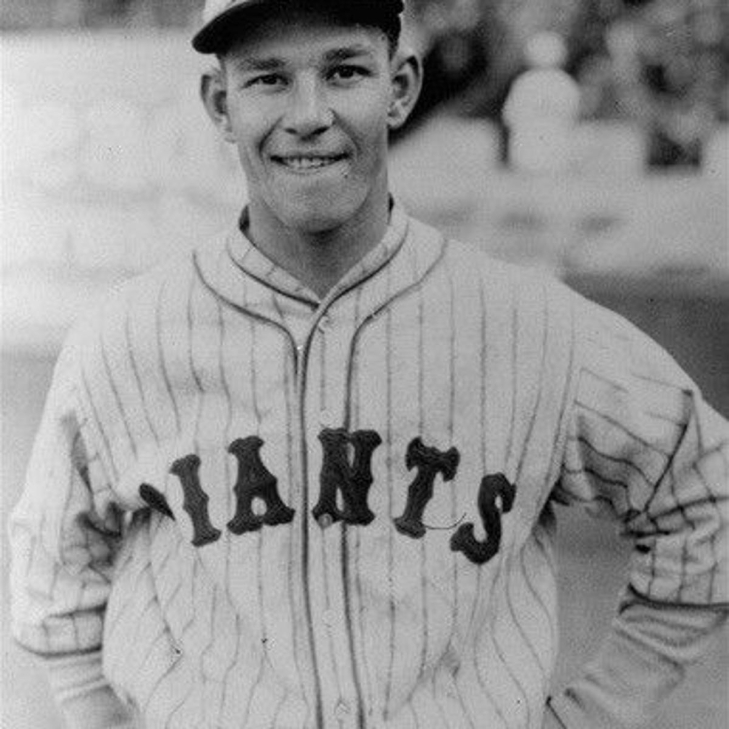
The typical scouting profile for a top-tier major league power hitter in the 1920s called for a large, muscular physique. However, Melvin Thomas Ott, standing only 5 feet 9 inches with a modest build, was overlooked by many talent evaluators. The New York Giants, defying common standards, saw his potential. Legendary manager John McGraw noticed Ott's powerful hip rotation and signed him as a raw 17-year-old in 1926. McGraw kept Ott close, skipping the minor leagues to protect his unique left-handed swing from being altered by farm directors. Ott’s unconventional front-foot lift and perfect timing allowed him to break all age records, earning a full-time starting spot by 1928 and making organizations that passed on him regret their hesitation.
Although he lacked the typical size of a slugger, he optimized his mechanics to produce extraordinary raw power. In 1929, Ott delivered a remarkable season, setting a career high with 42 home runs and 151 RBIs at age 20, a standout achievement largely benefiting from the short right-field porch at the Polo Grounds.
He never surpassed the 40-homer mark again in a single season, but his steady performance kept the lineup strong for almost twenty years. He hit at least 30 home runs in seven consecutive seasons, six of which were impressive enough to lead the National League.
During the 1930s, no Senior Circuit baseball player hit more home runs than "Master Melvin," turning right field into his personal playground. His offensive prowess was a key driver of a successful Giants era, as New York won the National League pennant three times in that decade, with Ott leading the team to a world championship in 1933. In that five-game World Series victory over Washington, he put on a clinical hitting showcase, batting a brilliant .389 and launching the series-clinching home run deep into the center-field bleachers in the top of the 10th inning of Game 5.
Ott was not just a typical three-outcome slugger; he had a perfect, intuitive eye at the plate. Over his career, he finished ten seasons with a batting average above .300. He consistently compelled pitchers to pitch carefully, leading the National League in walks six times and earning four titles for highest on-base percentage.
When Major League Baseball introduced the All-Star Game in 1933, Ott quickly became a prominent figure nationally, receiving an invitation to the second annual midsummer classic in 1934. This marked the beginning of an impressive streak of 11 straight All-Star selections. As a two-time league leader in slugging percentage and total OPS, his sustained excellence at the top of the sport was further demonstrated during the later years of his career.
During World War II, as major league rosters shrank due to the draft, Ott was not called to active duty. Instead, he stayed in Manhattan, becoming a steady, low-variance anchor and taking on extra responsibilities when named player-manager in 1942. Even while managing the club's daily tactical execution, his bat remained a potent threat; he captured his final National League home run title at age 33 by mashing 30 long balls in 1942.
Age caught up to Ott, whose playing career ended after the 1947 season. Over his career, Ott blasted 511 Home Runs and had 1,860 RBI, 2,876 hits, and a 3/4/5 career Slash Line.
In 1951, Ott entered Cooperstown in his third year on the ballot, three years after the Giants retired his #4.
12. Mickey Welch
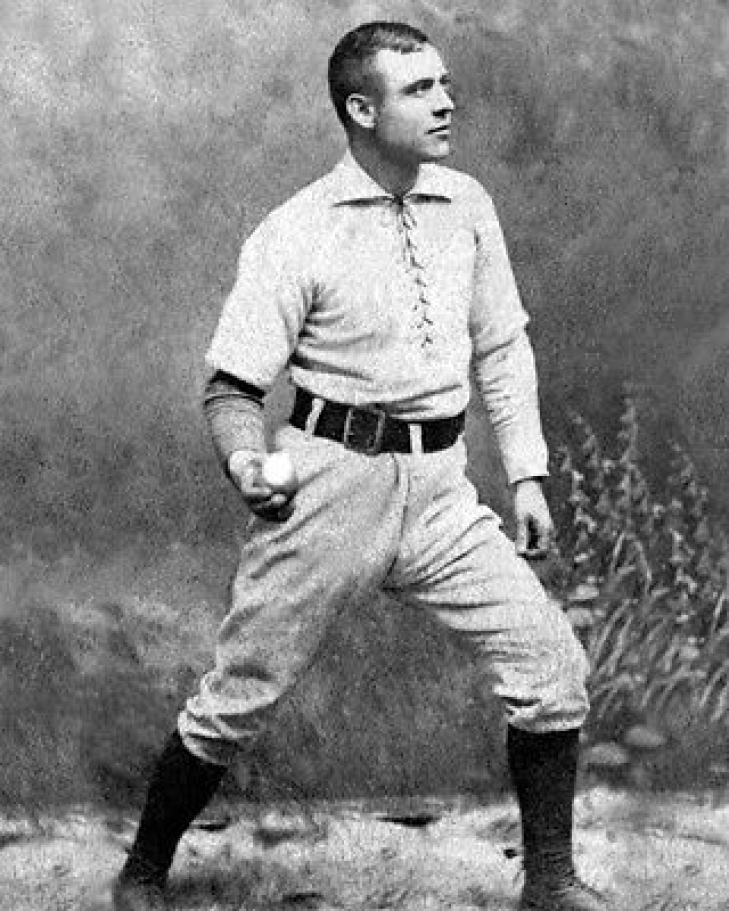
To truly understand what happened on Manhattan's baseball diamonds during the Gilded Age, we need to look beyond the basic 19th-century box scores. Mickey Welch was not just a part of the rotation; he was a consistent, strong presence that served as the foundation of the entire New York baseball franchise. He first gained fame with the short-lived Troy Trojans, alongside future stars Buck Ewing and Roger Connor, before moving south when the Troy team folded after the 1882 season. He then joined the newly formed New York Gothams (later known as the Giants), where he, affectionately called "Smiling Mickey,” began a legendary career that set the benchmark for long-term success in the majors.
His debut performance in New York demonstrated remarkable durability. On May 1, 1883, Welch pitched the first game ever for the franchise at the original Polo Grounds and won. He made logging extensive innings a daily routine, pitching 426 innings that season.
The breakthrough came in the summer of 1884, when he completed 62 of 65 starts, posting an impressive 39–21 record and achieving a career-high 345 strikeouts. On August 28, 1884, Welch made history by striking out the first nine Cleveland batters he faced, setting a major-league record for the most strikeouts at the start of a game that remains unbroken over the century that followed.
In 1885, Welch experienced his most successful year in baseball. Partnering with future Hall of Fame teammate Tim Keefe, they formed the most formidable two-man pitching duo in the country, emphasizing strong defensive play. Welch systematically shut down National League lineups by using a deceptive change of pace and developing an early version of the screwball, which he called a "reverse curve.” He achieved an impressive franchise-record of 44 wins and only 11 losses, completing all 55 games he pitched. His remarkable efficiency that summer was unmatched; he led the staff with an exceptional 1.66 ERA and a 1.022 WHIP, highlighted by a historic 17-game winning streak.
Welch consistently demonstrated high-volume authority throughout the decade, achieving an impressive seven straight 20-win seasons for New York. His recognized authority through awards directly contributed to historic team achievements when the Giants won back-to-back National League pennants in 1888 and 1889. As a co-ace of the pitching staff, Welch led a perfect performance in the early, pre-modern World Series against American Association champions, helping New York secure consecutive world titles over St. Louis and Brooklyn.
The brutal physical toll of throwing thousands of high-intensity innings under the era's rules eventually led to his career's end. By the 1890s, arm fatigue and declining velocity reduced his effectiveness. Although loyal to the club and refusing a lucrative move to the Players' League in 1890 for a guaranteed contract from owner John B. Day, his era as the dominant figure had ended. Following a brief, highly limited relief role and a minor-league stint in 1891, he made one final start in May 1892 before stepping away from the rubber for good.
Across his 10 seasons representing New York, he compiled a spectacular 238–146 record, maintaining a sharp 2.73 ERA while logging 3,472 innings and throwing 381 complete games. Welch entered the Baseball Hall of Fame in 1973 when the Veterans Committee chose him.
6. Juan Marichal
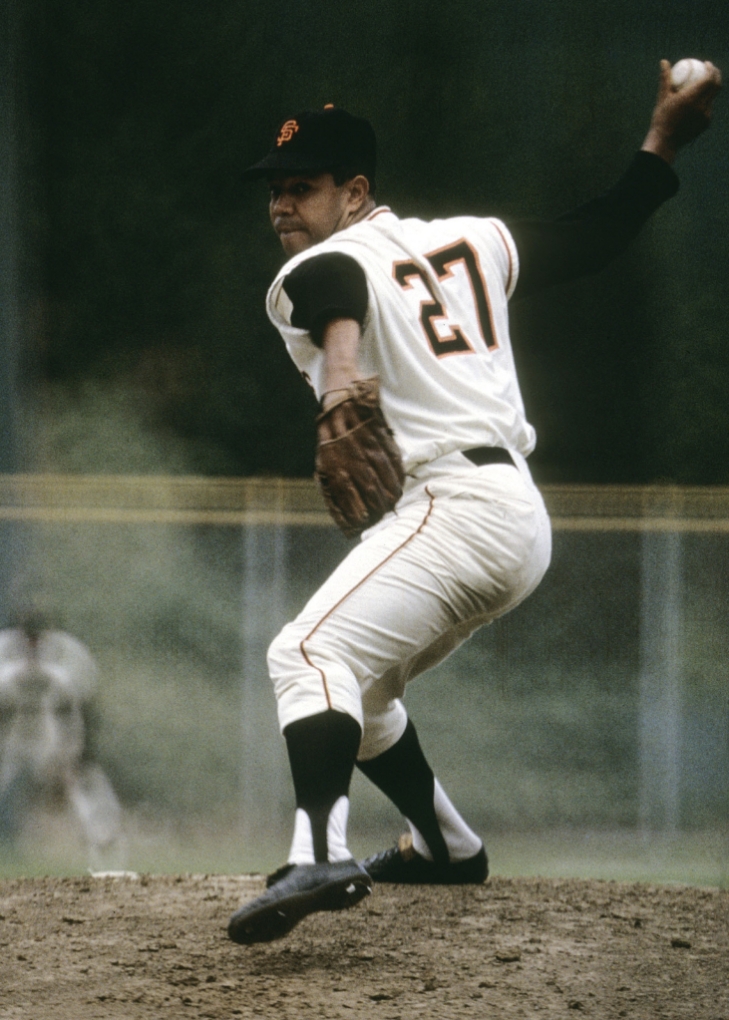
The mid-20th century marked a turning point in professional baseball's geopolitical scene, as the sport gained widespread popularity throughout the Caribbean. This surge in interest made it inevitable that a top-tier ace would emerge from the region. That trailblazer was Juan Marichal, who was scouted in the Dominican Republic and signed by the organization in 1957. The right-hander brought an electrifying, high-velocity style that transformed the aesthetics of pitching in the United States. Marichal’s unique delivery, characterized by a towering leg kick with his left shoe pointed toward the sky before each pitch, obscured his release point and created an intimidating sight for batters. Making his debut for San Francisco by summer 1960, he quickly secured a spot in the starting rotation and went on to a decade of reliable late-inning performance.
His early seasons provided a consistent glimpse of his immense potential, but Marichal truly became a frontline star in 1962 during a remarkable pennant race. He achieved 18 wins, helping San Francisco clinch the National League pennant, which earned him his first All-Star selection. This marked the beginning of an impressive streak of eight straight All-Star appearances and cemented his status as the leading pitcher on a talented staff.
The period from 1963 to 1969 exemplifies exceptional durability and consistently low-variance performance in preventing losses. Marichal systematically neutralized the batting lineups of the N.L., achieving four consecutive 20-win seasons from 1963 to 1966, and securing two additional back-to-back 20-win seasons in 1968 and 1969.
He led the National League in victories twice, with 25 wins in 1963 and a career-best 26 in 1968. Though he earned his only National League ERA title in 1969 with an impressive 2.10, his consistent performance was remarkable; he kept an ERA below 2.80 for seven straight summers. Marichal was also a three-time league leader in strikeout-to-walk ratio, a four-time leader in fewest walks per nine innings, and twice topped the National League in WHIP, proving that his high-effort mechanics could deliver pinpoint accuracy.
Beyond the gaudy statistical density, Marichal’s legacy is deeply defined by a series of legendary, high-leverage moments that remain frozen in time. In June of 1963, he spun a brilliant, hardware-certified no-hitter against Houston. Just one month later, on July 2, 1963, he engaged in quite possibly the most dramatic, grueling pitching duel in baseball history at Candlestick Park. Facing off against 42-year-old future Hall of Famer Warren Spahn of the Milwaukee Braves, Marichal refused to give an inch, matching the veteran frame for frame until Willie Mays launched a game-winning home run in the bottom of the 16th inning to secure a historic, 1–0 complete-game shutout.
While a World Series championship ring ultimately eluded him during his tenure in San Francisco, his unyielding arm was the primary competitive engine that carried the Giants to the postseason twice, featuring a division title run in 1971. After the 1973 campaign, the team sold the veteran icon's contract to the Boston Red Sox before he took his final brief walks away from the rubber with the Los Angeles Dodgers.
With the Giants, Marichal won 238 Games against 140 Losses with a 2.84 ERA and 2,281 Strikeouts.
Marichal was chosen for the Baseball Hall of Fame in 1983 on his third year on the ballot. His number 27 was retired by the team in 1975, and in 2008, Marichal was inducted into the first San Francisco Giants Wall of Fame Class.
7. Amos Rusie
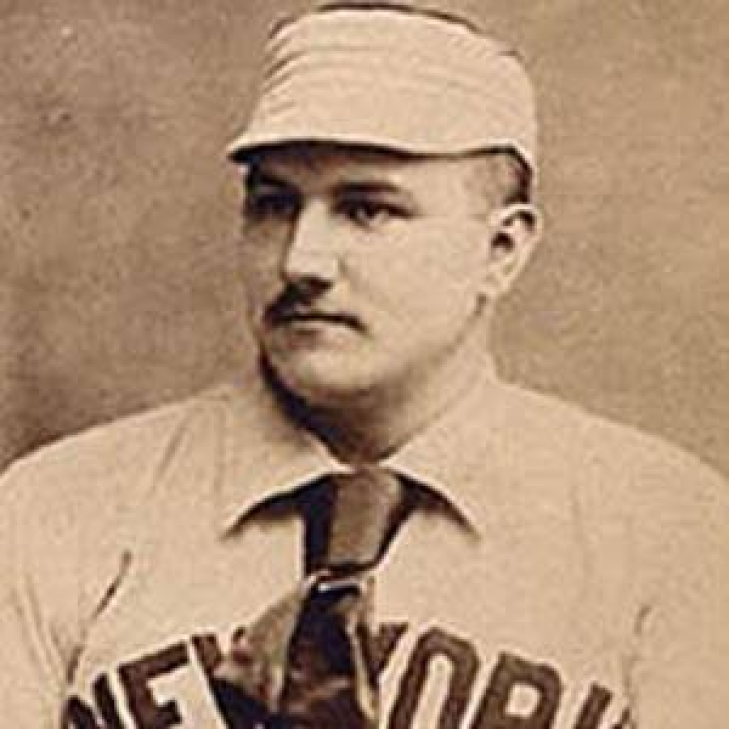
Before the pitching mound was set at its standard sixty feet and six inches, baseball was profoundly impacted by Amos Wilson Rusie's overwhelming raw velocity. Emerging in the major leagues as a teenager with the short-lived Indianapolis Hoosiers in 1889, this muscular right-hander quickly gained fame as the nineteenth century's quintessential "Wild Thing." After the Indianapolis team folded following his rookie year, its assets were transferred to the New York Giants to bolster the National League's leading team. In Manhattan, Rusie would spend a decade unleashing blazing fastballs, creating a paradoxical pitching style characterized by unprecedented dominance coupled with historic unpredictability that left batters completely helpless.
During an era when pitchers threw from just fifty feet away, Rusie's velocity was so overwhelming that it often bypassed opposing batters’ reflexes—and sometimes even his own catchers’. He walked an astonishing number of hitters, leading the National League in bases on balls for five straight seasons from 1890 to 1894. Despite this wildness, he managed to excel by dominating the league's miss-rate metrics. Rusie earned five strikeout titles during those same five years and kept contact to a minimum, leading the league in fewest hits per nine innings four times.
His aggressive throwing style caused significant concern among executives, leading to the league's 1893 decision to increase the pitching distance by ten feet and six inches to the current measurement. The added space did little to reduce his danger; in 1897, Rusie famously hit Baltimore star Hughie Jennings so hard that Jennings was in a coma for four days.
His formidable right arm created a remarkable chapter in New York's baseball history. On July 31, 1891, he threw the first no-hitter in Giants franchise history, defeating the Brooklyn Grooms. His career reached its zenith in 1894 with an outstanding season, during which he won the National League Pitching Triple Crown. Rusie systematically decimated the league by winning a staggering 36 games, posting a microscopic 2.78 ERA, and fanning 208 batters over a grueling, volume-dense 444 innings pitched.
Beyond the field, Rusie's competitive nature also shaped his dealings with team management. After a typical 1895 season, he clashed openly with the Giants'volatile owner, Andrew Freedman. When Freedman fined him $200 for perceived indifference, Rusie refused to accept it, leading him to sit out the entire 1896 season in a bold protest. Worrying about setting a dangerous legal precedent that could threaten the reserve clause, other National League owners chipped in to pay Rusie's fine. He returned to pitching in 1947 and earned his second ERA title with an impressive 2.54 ERA.
Recognizing that his physical tools were exhausted, the Giants’ front office executed what would become the premier heist of the century. In December of 1900, they traded the inactive veteran to the Cincinnati Reds straight up for a young, unproven prospect named Christy Mathewson. Rusie would pitch just three final games in Cincinnati before retiring, while Mathewson blossomed into one of the most transcendent legends the sport would ever know.
Even with that lopsided final trade, Rusie left behind a monumental, multi-dimensional legacy. Over his nine active seasons in New York, he compiled a fantastic 234–163 record with a 2.89 ERA and 1,835 strikeouts, while adding real value with his bat by hitting a robust .253 with 410 hits.
He entered the Baseball Hall of Fame in 1977 via the Veterans Committee.
3. Christy Mathewson
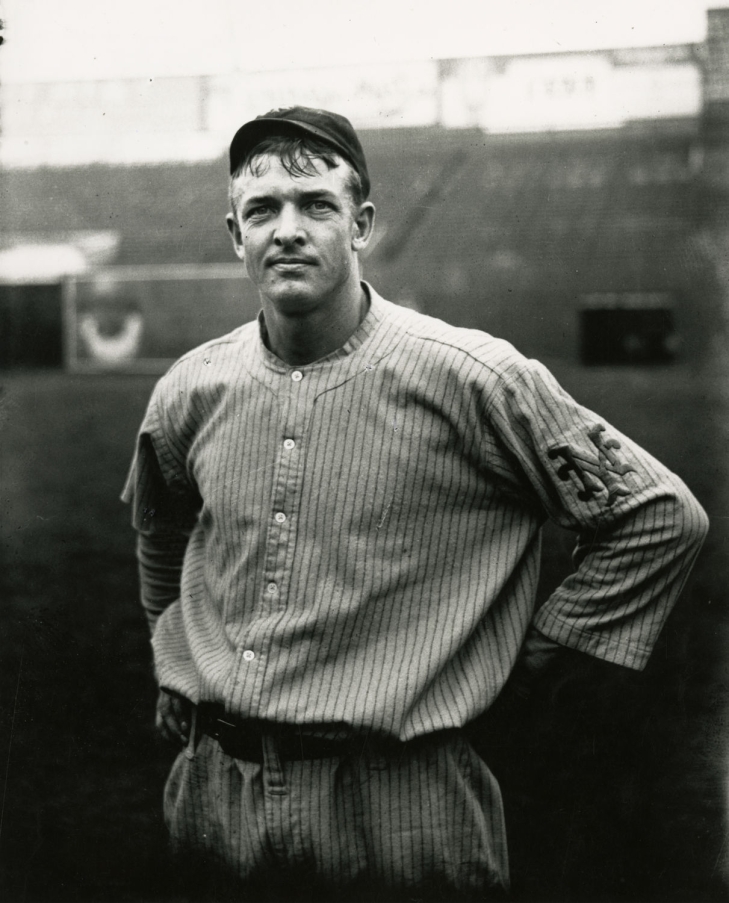
Mastery over a single era is rare in professional sports, but the early 20th-century baseball scene was dominated by Christopher Mathewson's elegant style. As the quintessential modern pitching staff anchor, this right-hander had a legendary, mysterious repertoire centered around his “fadeaway”, a screwball that sharply broke inward against right-handed batters. However, his journey to legendary status nearly faltered before it really began. The New York Giants signed him from the minor leagues in 1900, but a poor initial showing led management to send him back to Norfolk. The Cincinnati Reds quickly claimed him that winter, but the Giants quickly corrected their error by executing a dramatic trade to bring him back to Manhattan. This remains one of the most remarkable organizational turnaround stories in sports history.
Mathewson quickly responded to the team's sudden shift in stance by refining his early stats and then delivered a remarkable 1903 season, finishing with a 30–13 record and leading the National League with 267 strikeouts. He followed this with an even more impressive 33-win season in 1904, earning another strikeout title and leading a strong pitching staff that won the National League pennant. Sadly, ongoing political conflicts between Giants owner John T.. Brush and the management of the American League's Boston Americans led to New York boycotting the postseason, depriving Mathewson of a chance at a world championship.
That injustice was brief, as the 1905 season became his definitive hardware-certified masterpiece. Mathewson achieved the rare Pitcher’s Triple Crown by leading the Senior Circuit in wins (31), ERA (1.28), and strikeouts (206), guiding the Giants back to the ultimate stage. This time, they did not fall short; in the 1905 World Series against the Philadelphia Athletics, Mathewson delivered one of the most remarkable postseason performances ever, pitching three complete-game shutouts within six days to win the franchise's first world championship.
Far from a short-lived peak, he turned run prevention into a strict, daily regular-season routine for the remainder of the decade. Mathewson secured a second Pitcher's Triple Crown during a staggering 1908 showcase, racking up a modern franchise-record 37 victories alongside a microscopic 1.43 ERA and 259 punchouts. He followed that up by capturing the 1909 National League ERA efficiency title with a sparkling 1.14 mark, systematically paralyzing opposing batting orders through an elite mix of movement and unshakeable poise.
As the 1910s approached and natural wear affected his speed, Mathewson shifted to a more controlled style. He compensated for the loss of his top velocity by enhancing his spatial awareness and strike-zone judgment, winning two more National League ERA titles in 1911 and 1913.
His accuracy reached an almost mythical baseline, as he led the Senior Circuit in fewest walks per nine innings for five consecutive summers from 1911 through 1915, anchoring his legacy as the ultimate mound maestro. He propelled New York to three consecutive National League pennants from 1911 to 1913, but despite throwing his heart out across all three Fall Classics, a lack of defensive support and anemic run-production from his teammates left the Giants frustrated casualties in all three series.
By the 1916 campaign, the heavy structural toll of his massive career workload finally caught up to him, leaving his legendary arm a shell of its former self. Recognizing that the organizational relationship had reached its definitive career exit, the front office traded the veteran icon back to the Cincinnati Reds, where he immediately transitioned into a player-manager role, making just one final sentimental pitching appearance before walking away from the rubber for good.
He is the all-time franchise leader in bWAR for Pitchers (100.6), ERA (2.12), Wins (372), Innings Pitched (4,779.2), and Strikeouts (2,504). Mathewson was elected into the Baseball Hall of Fame in 1936 as part of the first Hall of Fame Class. The Giants honored Mathewson by naming the stadium after him and placing his name and an "NY" alongside the other retired numbers.
1. Willie Mays
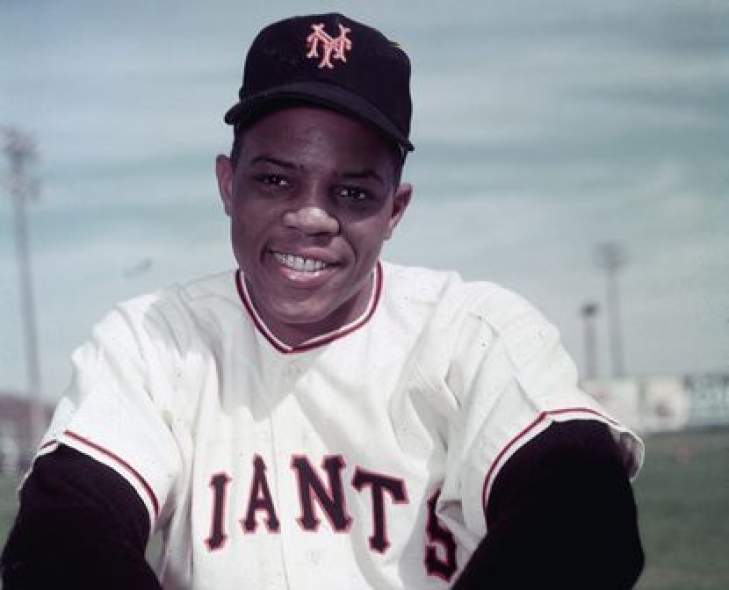
In discussions concerning the highest attainable level of human athletic achievement, baseball analysts often categorize performance into five distinct tools: batting for average, power hitting, speed on the bases, defensive glove work, and arm strength. While numerous distinguished players excel in two or three of these areas, Willie Mays not only possessed all five attributes but also demonstrated them with transcendent, high-velocity artistry that permanently expanded the boundaries of what is considered possible in the sport. Prior to donning the renowned black-and-orange uniform, the young prodigy from Alabama spent two foundational seasons with the Birmingham Black Barons of the Negro American League, showcasing a remarkable raw skill set that compelled Major League scouts to contact their offices urgently. When the New York Giants ultimately secured his contract, they did more than acquire an elite center fielder; they gained the
From the moment he made his major league debut in 1951, Mays served as a pivotal catalyst for team success. Entering the major leagues as a charismatic twenty-year-old, he transformed simple batting performance into an extraordinary display, inspiring a legendary team spirit that notably rallied from a significant 13.5-game deficit in August to secure the National League pennant. While his batting average was a modest .274 with 20 home runs, his remarkable defensive range and relentless energy earned him the National League Rookie of the Year accolade. Just as his career was ascending rapidly, he was called to serve; military obligations in the U.S. Army caused him to miss nearly the entire 1952 and 1953 seasons. Nevertheless, rather than allowing this enforced hiatus to impede his progress, his return to active duty in 1954 marked a vigorous and multifaceted resurgence in the sport.
The 1954 campaign exemplifies a definitive mastery in individual performance and postseason execution. Leading the lineup with substantial authority, Mays secured the National League batting title with an impressive .345 average and hit 41 home runs, earning his first career Most Valuable Player Award. In Game 1 of the 1954 World Series against the Cleveland Indians, he achieved a moment of lasting significance by sprinting into the expansive center field of the Polo Grounds to make "The Catch"—a remarkable over-the-shoulder basket catch of a Vic Wertz drive that remains one of the most iconic defensive plays in the history of baseball.
His exceptional playmaking abilities contributed significantly to the Giants' historic sweep and their subsequent triumph in the World Series. Although this remained his solitary championship ring, his absolute peak was only just beginning.
That spectacular 1954 showcase launched an unyielding, 20-year run of dominance that made him a regular-season routine at the midsummer classic, earning an astonishing 24 All-Star selections through the 1971 season. At the plate, Mays possessed a telepathic eye for the strike zone and a thunderous right-handed swing, batting north of the .300 threshold nine separate times.
He declined to relinquish at-bats, utilizing his exceptional perception to draw walks at an extraordinary rate and surpassing the esteemed .400 on-base percentage threshold five times, while also securing two National League OBP efficiency titles.
As a pure power threat, he stood shoulder-to-shoulder with the greatest sluggers of all time. Mays captured four National League home run titles, blasting an unbelievable 646 of his 660 career home runs while with the Giants.
While a highly volatile RBI crown somehow eluded him due to situational lineup context, he remained the ultimate, high-leverage run producer, eclipsing the 100-RBI plateau ten separate times on his way to driving home 1,909 runs in a Giants uniform.
He brought home his second National League Most Valuable Player Award after a stellar 1965 season in which he hit a career-high 52 home runs. His consistent performance also earned him six more top-five finishes in the MVP voting.
Focusing solely on his offensive leaderboards provides only a partial view. Mays transformed the center field defensive position with a combination of exceptional closing speed, impeccable tracking, and a powerful throwing arm that intimidated opposing third-base coaches. In his extraordinary 1954 season, he led all National League position players in defensive bWAR and ranked in the top ten in seven other seasons, while leading the Senior Circuit in Total Zone Runs three times. Once the Gold Glove Award was introduced in 1957, Mays quickly amassed a record 12 consecutive Gold Gloves through 1968.
Additionally, his rapid and intense acceleration made him a dangerous threat on the basepaths well before the modern emphasis on speed in running games. From 1956 to 1959, he led the National League in stolen bases for four straight seasons, amassing 336 steals while playing for the Giants. He often executed double-steals, which frequently left opposing pitchers and catchers completely shaken.
Whether he was making a barehanded catch, sliding into third base with his cap flying off, or launching a 450-foot rocket into the seats, Mays infused the sport with a joyful, unadulterated passion that made him a beloved icon across two coasts. He served as the franchise’s ultimate structural bridge, guiding the organization through its seismic, landscape-shifting relocation from New York to San Francisco in 1958. As the club adjusted to the brutal, swirling winds of Candlestick Park, Mays remained the unshakable anchor, proving that his elite mechanics could overcome any environment.
Mays was traded to the New York Mets during the 1972 Season, where he unceremoniously ended his career, though he did help them win the 1973 Pennant. He is still the all-time Giants leader in bWAR (154.5), Offensive bWAR (134.8), Runs Scored (2,011), Hits (3,187), and Home Runs (646).
Mays was inducted into the Baseball Hall of Fame in 1979, his first year on the ballot. San Francisco retired his number 24 in 1972 while he was still an active player, and he was later an inaugural member of the Giants’ Wall of Fame in 2008.
Buster Posey to retire tomorrow.
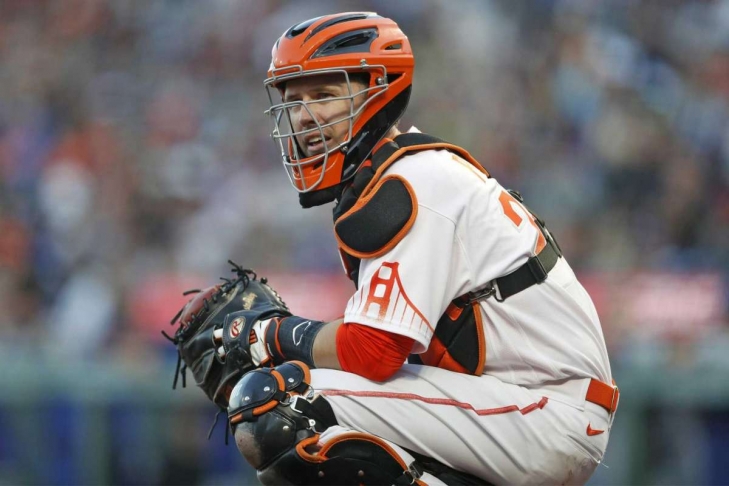
This was a little surprising.
One of the top Catchers of the last decade, Buster Posey, is expected to announce his retirement tomorrow.
A former fifth overall pick, Posey debited in 2009 and was the National League Rookie of the Year in 2010 and helped lead the Giants to a World Series win. Two years later, he won the MVP, and again took San Francisco to a World Series title. A seven-time All-Star and four-time Silver Slugger, Posey won a third World Series ring in 2014.
After opting out of 2020, he had a comeback year in 2021, leading fans to feel that there was plenty left in Posey’s tank, making this retirement an unexpected one.
Posey will be eligible for the Baseball Hall of Fame in 2027, and with a career bWAR of 44.9, he is lower than the average HOF Catcher, but he does have the MVP and multiple World Series Rings. He is also retiring on his own terms, and probably could have compiled the advanced metrics, as well as traditional stats that would make him a likely Hall of Famer, but as of now, he feels like an on-the-fence candidate. He also retires with a lifetime Batting Average of .302 with 1,500 Hits and 158 Home Runs.
We here at Notinhalloffame.com would like to wish Buster Posey the best in his post-playing career.
