

Top 50 New York Mets
There was a time when New York City had three teams, the Giants, the Dodgers and the Yankees but they were left with one when California baseball claimed the first two. The Big Apple is certainly large enough to handle a second team and the Mets came to fruition in 1962.The Mets were dreadful through the 60’s but the “Miracle Mets” shocked the world and won the World Series in 1969. They would return in 1973, though in a losing effort and another long period where they were not competitive, but by the late 80’s they enjoyed a resurgence and would win their second World Series in 1986.
This would be the last World Series that New York would win but they did win the NL Pennant in 2000 and 2015.
Note: Baseball lists are based on an amalgamation of tenure, traditional statistics, advanced statistics, playoff statistics and post-season accolades. This is a list up to the end of the 2025 Season.
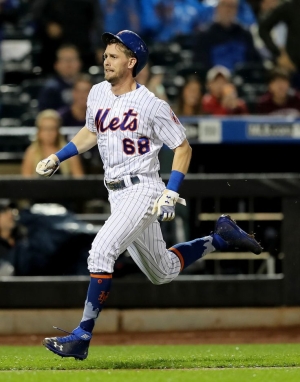
Jeff McNeil first appeared at Citi Field in 2018, making it clear he was intentionally challenging the modern focus on three true outcomes. Using a traditional, knobless bat and emphasizing contact over power, he played as a classic style hitter who prioritized making contact and putting the ball in play rather than hitting for home runs. After a quick ascent that saw him hit 23 home runs during an All-Star season in 2019 and post an impressive .311 batting average in the shortened 2020 season, McNeil recovered from a challenging, injury-filled 2021 to produce a remarkable display of contact hitting.…
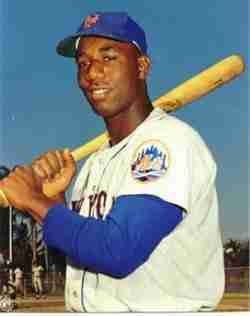
Cleon Jones entered Shea Stadium's grass in 1963 as a talented, multi-sport athlete from Alabama, who would become the key offensive force during the franchise’s initial golden era. Although history often remembers his famous kneeling catch on the outfield dirt, Jones was the driving competitive spirit of the team well before their success was celebrated. Jones’ New York highlight peaked in 1969 when he made contact hitting, earning his first All-Star and battling for the National League batting crown. He hit .340 with a .422 on-base percentage, setting a franchise record for nearly 30 years. He was a key player…
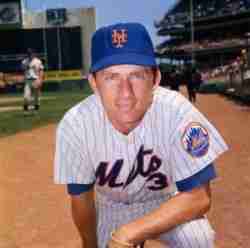
Bud Harrelson made his debut with the New York major league team in 1965. He was a small, wiry shortstop who became the key defensive player for over a decade. Though he often joked about his limited hitting ability, Harrelson was a hardworking and reliable presence for the franchise during its most celebrated victories. Harrelson had his peak seasons in 1970 and 1971, earning consecutive All-Star titles primarily for his exceptional defense. In 1971, he demonstrated remarkable efficiency, leading Major League fielders in Defensive bWAR and winning the National League Gold Glove Award. As a consistent professional, he often made…
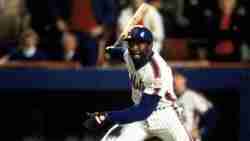
How can you not love a guy named Mookie? You have to love him, and even if Mookie Wilson was actually named “Sour Bastard”, you would still love the guy because he had one of the most positive and infectious attitudes in Baseball and is easily one of the most popular players in Mets history. Debuting in 1980, Wilson established himself as a key player by consistently leading the team with his speed, recording at least 20 stolen bases for seven straight seasons. His most exceptional period was between 1982 and 1984, when he became one of the top baserunners,…
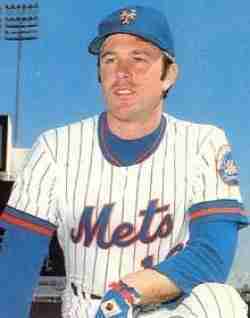
John Stearns joined the organization in December 1974 via a massive six-player blockbuster trade that sent beloved relief ace Tug McGraw to the Philadelphia Phillies. Stearns, a former standout gridiron defensive back at the University of Colorado who was also drafted into the NFL, brought a raw, contact-sport intensity to the diamond. Stearns was a remarkable athlete, combining a strong defensive arm with impressive, speedy base-running skills. During the 1978 season, he made history by stealing 25 bases, setting a modern National League single-season record for catchers that lasted for more than twenty years. He complemented his speed with a…
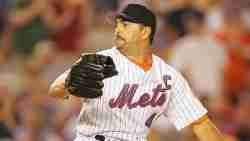
John Franco reached Flushing in December 1989 via a blockbuster trade with the Cincinnati Reds, which exchanged top bullpen pitchers and brought the Brooklyn native back home in exchange for Randy Myers. A proud Brooklynite who excelled at St. John's University in Queens, Franco took on a significant high-pressure role as the team's closer and worked out of the pen for 14 years. Franco quickly gained the loyalty of local fans by delivering an impressive debut in the 1990 season, during which he led the National League with 33 saves and was awarded the Rolaids Relief Man of the Year.…
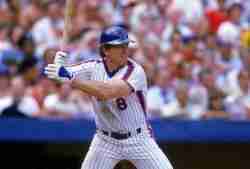
In December 1984, Gary Carter joined the Mets through a major trade with the Montreal Expos, which sent Hubie Brooks, Mike Fitzgerald, Herm Winningham, and Floyd Youmans to Canada. The Mets, an ascending team, lacked an experienced veteran behind the plate, and "The Kid”, considered the best catcher in baseball, came to New York to bring immediate championship experience. Carter wasted no time, delivering an impressive debut in 1985 by matching his career high with 32 home runs and 100 RBIs, earning a sixth-place spot in the NL MVP voting. He built on this momentum in 1986 with a remarkable…
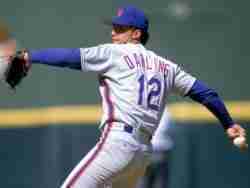
In April 1982, Ron Darling joined the majors as a minor league prospect through a valuable trade with the Texas Rangers, where he was exchanged along with pitcher Walt Terrell for infielder Lee Mazzilli. An Ivy League graduate from Yale with an outstanding athletic background, the right-hander rapidly established himself as a key member of the starting rotation. Although Dwight Gooden dominated the national headlines with his spectacular performances, Darling proved to be a reliable and steady frontline pitcher for the team. Darling consistently delivered at least 12 wins over six consecutive seasons, leveraging a wide array of pitches and…
2026 SEATTLE MARINERS FLEX MEMBERSHIPS
Jan 01, 1970
Buy your Tickets to see 2026 Seattle Mariners Flex Memberships HERE!
NEW YORK YANKEES V. ST LOUIS CARDINALS * PREMIUM SEATING *
Aug 03, 2026
Buy your Tickets to see New York Yankees v. St Louis Cardinals * Premium Seating * HERE!
NEW YORK YANKEES VS. ST. LOUIS CARDINALS
Aug 03, 2026
Buy your Tickets to see New York Yankees vs. St. Louis Cardinals HERE!
PINSTRIPE PASS * NEW YORK YANKEES V. ST LOUIS CARDINALS
Aug 03, 2026
Buy your Tickets to see Pinstripe Pass * New York Yankees v. St Louis Cardinals HERE!
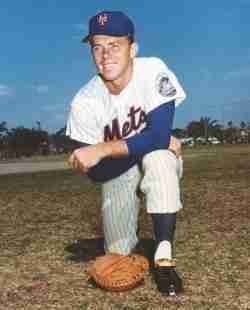
Jerry Grote secured the starting catcher position in Flushing in 1966 after an off-season trade from Houston for pitcher Tom Parsons. A tough, short-tempered Texan, Grote quickly brought a fierce, competitive spirit to an organization used to struggling at the bottom of the National League. Although his batting rarely attracted attention, he was the unchallenged defensive leader during the franchise's initial era of success. With a strong arm and a sharp baseball intellect, he dictated the game’s pace from behind the plate. In 1969, Grote served as the defensive anchor and pitch caller for the “Miracle Mets”. That summer, he…
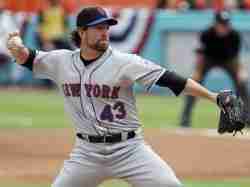
In December 2009, R.A. Dickey joined Flushing on a modest minor league deal, as a 35-year-old journeyman fighting to stay in baseball. For years, he had been a fringe major leaguer struggling to master his pitching, especially after learning he entirely lacked an ulnar collateral ligament in his throwing elbow. Dickey was highly effective right from the start, posting a remarkable 2.84 ERA in 2010 and pitching over 200 innings in 2011. He utilized what analysts described as a "hard knuckleball," delivering the pitch at an unprecedented 78-to-80 mph with sharp, late movement. That solid foundation led to an extraordinary…
Rick Reed became a Met before the 1996 season on a minor league deal. At 31, he was a journeyman whose career seemed stalled. His journey to New York was mired in controversy; during the 1994–95 MLB strike, Reed crossed the picket line to play as a replacement for the Cincinnati Reds. This decision made him a pariah in his own clubhouse when the regular players returned. Signed by the Mets as a backup, the control-focused right-hander proved the critics wrong with one of the most surprising and outstanding career comebacks of his time. Reed's 1997 debut was solid, with…
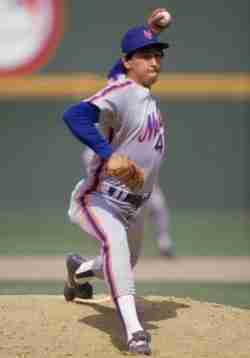
Jesse Orosco joined the Mets as a prospect in February 1979 via a trade with the Minnesota Twins, primarily to acquire veteran starter Jerry Koosman. Initially seen as a minor part of the deal, the young left-handed reliever made it onto the major league roster by April. Over his seven full seasons with the Mets, he became the quintessential example of a modern high-leverage bullpen pitcher. By 1982, Orosco had secured a permanent place on the main roster, but his standout season came the following year. In 1983, he pitched 110 innings over 62 games, posting an impressive 13-7 record…
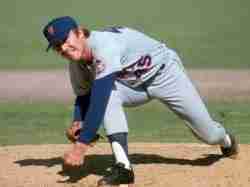
Tug McGraw debuted for the New York Mets in 1965, but it was not until 1969 that he put himself on the baseball map. Of course, many of the Mets in 1969 did the same thing! During the 1969 season, McGraw delivered a remarkable performance, finishing with a 9-3 record, 12 saves, and a 2.24 ERA. He was exceptional in the final stretch, allowing only two earned runs in his last 34 innings to help the New York Mets catch the Chicago Cubs. While pitchers like Tom Seaver and Jerry Koosman took the spotlight in October, McGraw’s dependable left arm…
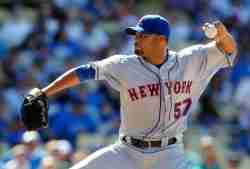
In February 2008, the Mets made a historic, franchise-changing trade with the Minnesota Twins, who sent their star left-hander Johan Santana east in exchange for Carlos Gómez, Philip Humber, Deolis Guerra, and Kevin Mulvey. The Mets quickly signed Santana to a groundbreaking six-year, $137.5 million deal, making him the highest-paid pitcher in baseball at that time. Although many historians associate his peak dominance mainly with his years in Minnesota, it's a significant oversight to ignore the incredible, impactful performances he delivered for New York before his arm injuries. Santana delivered an outstanding debut in 2008, pitching on short rest at…
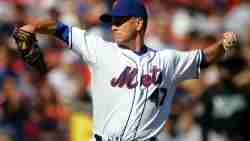
In December 2002, Tom Glavine surprised baseball fans by switching teams, signing a four-year, $42.5 million deal to leave the Atlanta Braves and shake up the National League East. Glavine will always be thought of as a Brave, but his work in the Big Apple is worth celebrating. Throughout his five seasons in Queens, Glavine consistently started at least 32 games each season. His standout years were 2004 and 2006, when he earned two National League All-Star selections as a Met. In 2006, he delivered a masterful performance, going 15-7 with a 3.82 ERA, serving as a key veteran and…
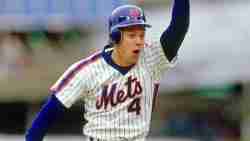
Lenny Dykstra made his Major League debut with the New York team in May 1985. He's a tough, gritty center fielder from Southern California, known for playing recklessly and putting his body on the line. His nickname reflects his iron-willed toughness, and he brought a driven, energetic presence to the top of the batting order. Known as “Nails,” Dykstra was a fearless, dirt-stained player who set the tone for the legendary 1986 championship season. He earned a significant role in the outfield, becoming the team’s undisputed "spark plug" and leadoff hitter for a squad that finished with 108 regular-season wins.…
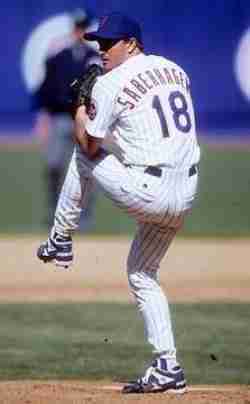
Bret Saberhagen joined the Mets in December 1991 through a blockbuster trade with the Kansas City Royals, trading Bill Pecota for Kevin McReynolds, Gregg Jefferies, and Keith Miller. With two American League Cy Young awards and a World Series MVP, he was brought in to be a co-ace with Dwight Gooden. During the shortened 1994 strike season, Saberhagen delivered a remarkable display of pitching efficiency. Despite a hitter-friendly environment, he posted an impressive 14-4 record with a stellar 2.74 ERA. His control was nearly unmatched; he led the National League by walking only 1.04 batters per nine innings and established…
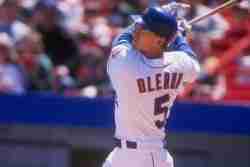
John Olerud was only with the New York Mets for three seasons, but the already two time World Series Champion subtly racked up a lot of hits, including a 1998 season where he batted .354 and finished 12th in MVP voting. Overall, Olerud had an excellent Slash Line as a Met of .315/.425/.501, which is an incredible number that propelled him to this rank.
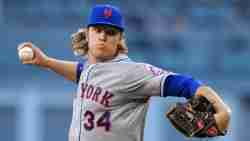
With the flowing blonde hair and tall frame, Noah Syndergaard, has the nickname of "Thor". Many days, he pitched just like it.
