

Top 50 New York Mets
There was a time when New York City had three teams, the Giants, the Dodgers and the Yankees but they were left with one when California baseball claimed the first two. The Big Apple is certainly large enough to handle a second team and the Mets came to fruition in 1962.The Mets were dreadful through the 60’s but the “Miracle Mets” shocked the world and won the World Series in 1969. They would return in 1973, though in a losing effort and another long period where they were not competitive, but by the late 80’s they enjoyed a resurgence and would win their second World Series in 1986.
This would be the last World Series that New York would win but they did win the NL Pennant in 2000 and 2015.
Note: Baseball lists are based on an amalgamation of tenure, traditional statistics, advanced statistics, playoff statistics and post-season accolades. This is a list up to the end of the 2025 Season.
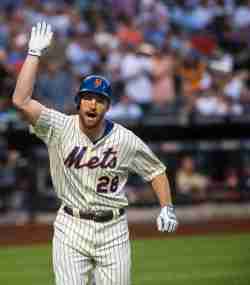
Daniel Murphy first broke into the Major Leagues with the New York Mets in August 2008 as a focused contact hitter drafted from Jacksonville University. Initially, without a fixed defensive position, he moved between first base, third base, and outfield corners before settling at second base. Though his defense often drew media criticism, Murphy was a relentless line-drive hitter in the middle of the order. Murphy was a mainstay for the Mets, hitting .286 in 2012 and a career-high 181 hits in 2013, leading with 38 doubles. In 2014, he hit .289 with 37 doubles, earning his first NL All-Star.…
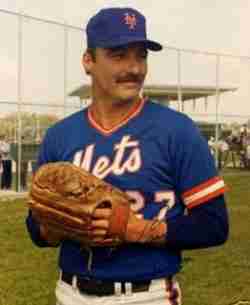
Craig Swan first broke into the major leagues with New York in September 1973, a third-round draft pick out of Arizona State University who possessed a heavy, low-90s fastball and a sharp slider. Arriving just as the "Ya Gotta Believe" pennant race reached its boiling point, the young right-hander was largely a spectator during the team's World Series run, spending the next two seasons waiting for a permanent opening while refining his craft in Triple-A. Swan secured a permanent spot in the starting rotation during the 1976 season, delivering a strong debut as a regular starter with a 6-9 record…
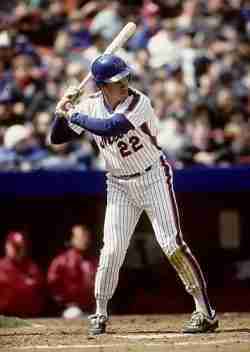
Kevin McReynolds joined the Mets in Flushing before the 1987 season, offering a calm, understated contrast to their often loud clubhouse. Traded from San Diego in a major eight-player deal that sent Kevin Mitchell to the Padres, the quiet outfielder was signed by manager Davey Johnson to support Darryl Strawberry and the defending World Series Champions in the lineup. Unlike many teammates who attracted tabloid attention, McReynolds was a steady presence in left field, providing the Mets with a reliable power threat. His initial campaign in pinstriped blue and orange validated the trade. McReynolds adapted quickly to Shea Stadium pressure,…
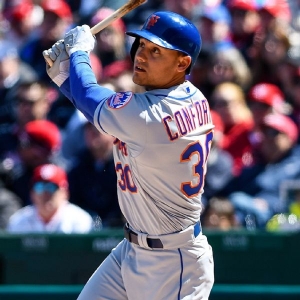
When Michael Conforto debuted in July 2015, just thirteen months after the Mets drafted him tenth overall from Oregon State, he instantly ignited a youthful spark in a rising team. The 22-year-old outfielder skipped Triple-A, bringing a polished left-handed swing as the team aimed for a division title. He finished his quick rise by hitting two home runs in Game 4 of the World Series, becoming only the third rookie in history to do so on baseball's biggest stage. By 2017, his journey evolved from a talented rookie to a vital member of the team. Taking on a full-time starting…
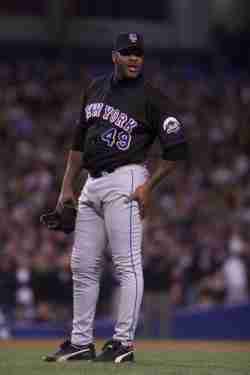
Armando Benítez's arrival in Flushing before the 1999 season introduced a fearsome mix of high-velocity pitches and unpredictable volatility to the Mets' bullpen. Traded from Baltimore in a three-team deal, the tall right-hander was initially assigned to a setup role behind John Franco. Nevertheless, Benítez's dominant arsenal, centered on a blazing fastball and a deadly split-finger, rapidly led to a change in leadership, making him the go-to closer for the final three outs. His first full season as the closer in 2000 marked a career-high moment that contributed to the Mets reaching the Subway Series. Benítez recorded 41 saves with…
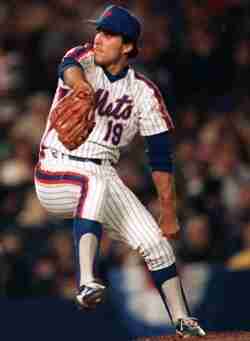
Bob Ojeda's arrival in Flushing before the 1986 season completed the roster that was on the verge of winning a championship. Traded from the Boston Red Sox in a major eight-player deal the previous December, the experienced left-hander joined a star-studded rotation that included Dwight Gooden, Ron Darling, and Sid Fernandez. Although those pitchers had higher velocity, Ojeda contributed a smart, competitive approach and a lethal changeup, providing the perfect complement to the staff. His first summer in New York became a defining moment in his career. As the 1986 Mets dominated the National League, Ojeda stood out as the…
New York’s trade for Frank Viola in Queens in late July 1989 was a clear signal that the front office was pushing all its chips into the center of the table. Fresh off an AL Cy Young campaign in Minnesota, the left-handed ace landed with the Mets in a blockbuster trade that sent five players to the Twins. Viola joined a rotation already featuring Dwight Gooden and Ron Darling, instantly giving New York one of the most formidable pitching staffs in the National League. His first complete season in Flushing in 1990 served as a distinguished exhibition of his signature…
When Dave Magadan first made the major league roster in September 1986, he entered a clubhouse full of star players. Drafted by the Mets in 1983 after winning the Golden Spikes Award at Alabama, he was a disciplined left-handed hitter. Although he earned a championship ring as a reserve in 1986, his early days with the team were an ongoing struggle to get regular playing time. In the following seasons, Magadan fought for every plate appearance. Despite a strong 1987 season batting .343 in limited play, the front office continually sought high-profile options at the corners. Magadan quietly accepted his…
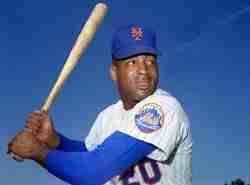
Tommie Agee arrived in New York before the 1968 season through a high-profile trade with the White Sox, bringing high expectations as a former American League Rookie of the Year. His first summer in Queens, however, was disastrous; he struggled with a severe hitting slump and was hit by a terrifying beanball from Bob Gibson, finishing with a poor .217 batting average. Despite this tough beginning, that difficult first year laid the groundwork for one of the most remarkable turnarounds in franchise history, reflecting the team's own dramatic evolution. The 1969 season made Agee a legendary figure in Mets history.…
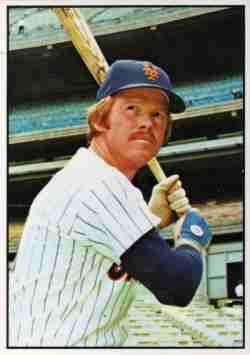
When Wayne Garrett joined the roster as a 21-year-old rookie in 1969, he entered a competitive infield on a team ready to make history. Picked by the Mets from the Braves organization during the 1968 Rule 5 draft, this left-handed infielder quickly became a key part of the legendary "Miracle Mets." Sharing third base with Ed Charles, Garrett offered dependable defense and a disciplined batting approach, walking 53 times in limited appearances, crucial in guiding the young team to its first National League pennant and ultimately winning the World Series. Over several seasons, Garrett established himself as the dependable presence…

The New York Mets selecting Lee Mazzilli in the first round of the 1973 draft was about more than just picking a promising prospect from Brooklyn; it was about welcoming a local legend. With his movie-star looks, flamboyant switch-hitting, and a signature "basket catch" at his waist while catching fly balls, the charismatic outfielder made his major league debut in 1976. He quickly became the team's main star and the literal heartbeat during one of its most challenging and low-leverage periods. By the late 1970s, “Maz" had become the face of a rebuilding franchise, carrying the heavy burden with ease.…
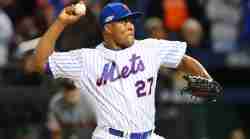
When Jeurys Familia was first handed the closer's role in 2015, he stepped into a high-pressure situation. Filled in for injured Jenrry Mejia, the Dominican right-hander used a powerful sinker touching 98 mph, transforming the New York bullpen's backend. He efficiently handled the pressure, with 43 saves and a 1.85 ERA, leading the relief corps and helping the Mets win an unexpected National League pennant. That dominant introduction set the stage for a record-breaking 2016 campaign. Familia became the leading late-inning reliever in the senior circuit, recording a franchise-record 51 saves to lead the major leagues. He was nearly unhittable…
