
gold star for USAHOF

Top 50 Miami Marlins

Along with the Colorado Rockies, the Florida Marlins came into existence in 1993, although they have been far more successful than their expansion counterparts.

The Marlins won the Pennant in only their fourth year of existence, but surely, they could not beat the New York Yankees for the World Series!  Florida did precisely that, shocking the world, and then they surprised everyone by conducting a fire sale, dismantling the team, and starting from scratch.

Florida again built a good team in 2003 and once again befuddled the baseball world by winning their second World Series.  True to form, they repeated what they did after 1997 by cost-cutting and getting rid of the parts that won it for them.

Since that time, the Marlins changed their team name to the Miami Marlins but have remained to operate as a small market team.

This list is up to the end of the 2024 regular season.

Note: Baseball lists are based on an amalgamation of tenure, traditional statistics, advanced statistics, playoff statistics, and post-season accolades.
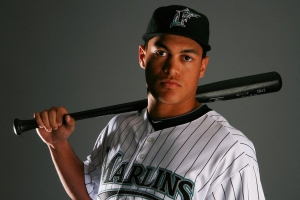
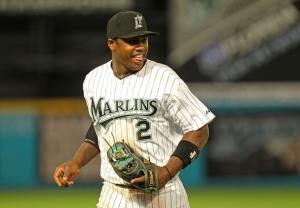
Giancarlo Stanton arrived in South Florida as a second-round pick in 2007, a physically imposing outfielder with a swing designed to launch baseballs into orbit. Debuting at just 20 years old in 2010, he immediately established himself as the premier power source in the organization's history. Stanton wasted no time showing off his raw strength, as he hammered 22 home runs in a partial rookie campaign. By 2012, his output exploded in a season that saw him capture his first slugging title (.608) and earn an All-Star selection, proving that his power was not merely a novelty but a high-quality…
Hanley Ramirez arrived in Florida in late 2005 as the centerpiece of a blockbuster deal with the Red Sox, a transaction that sent World Series heroes Josh Beckett and Mike Lowell to Boston. While he had only two big-league at-bats to his name at the time of the trade, he wasted no time validating his status as a five-tool phenom. In 2006, Ramirez batted .292 with 17 home runs and 51 stolen bases to secure the National League Rookie of the Year Award. He followed that up by avoiding the "sophomore slump" entirely, posting a .332 average and recording 212…
A fourth-round pick in 2002, Josh Johnson was a physically imposing right-hander who looked every bit the part of a future staff anchor. While he arrived just after the franchise's 2003 championship peak, he represented a localized shift toward a homegrown rotation. In 2006, he demonstrated a high-frequency ability to keep hitters off-balance, finishing fourth in the Rookie of the Year voting on the strength of a 12-7 record and a 3.10 ERA. However, the trajectory of his career hit a localized snag almost immediately; injuries and Tommy John surgery restricted him to just 18 games over the following two…
Miguel Cabrera arrived in South Florida as a teenager from Venezuela, a highly touted prospect whose bat speed and preternatural sense for the strike zone made him a legend before he even reached the big leagues. Debuting at just 20 years old in June 2003, he immediately sparked a veteran-heavy lineup with a walk-off home run in his first game. After finishing fifth in the 2003 Rookie of the Year voting, Cabrera demonstrated a remarkable composure on the game's biggest stage. During the World Series against the New York Yankees, he famously faced future Hall of Famer Roger Clemens; after…
Luis Castillo arrived in the infancy of the Marlins as an amateur free agent from the Dominican Republic in 1992, a product of the legendary San Pedro de Macorís baseball pipeline. While he debuted in 1996, his early years featured a specialized path between the minors and the parent club, including a 1997 season where he contributed to the team's first championship run before a late-July demotion. Though he wasn't on the active World Series roster, he secured the first of two rings that would bookend his time in South Florida. By 1999, Castillo had established himself as a professional…
While he was still a minor league prospect, Dontrelle Willis was traded by the Chicago Cubs to the Florida Marlins, bringing with him a high-leg kick and an infectious energy that immediately captivated the South Florida fanbase. Debuting in 2003, the southpaw became a phenomenon, his "D-Train" persona powering a clubhouse that was surging toward a historic October. In 2003, Willis made it to the Majors and recorded a 14-6 record with a 3.30 ERA to secure the National League Rookie of the Year Award. While he was a professional mainstay during the regular season, he truly solidified his legend…
Sandy Alcantara arrived in Miami following a 2017 trade with the Cardinals, a high-upside right-hander who had only eight major league games to his name. While he spent much of his early career proving that a pitcher’s win-loss record is an unreliable narrator, he eventually established himself as the most durable and dominant force in the National League, at least for one season anyway. After becoming a permanent starter in 2019, he demonstrated a high-frequency ability to pitch deep into games, yet famously led the National League with 14 losses despite showing the organization he was their best arm. He…
Kevin Brown arrived in South Florida in 1996 as a high-caliber free agent, a right-hander with a sinking fastball that induced broken bats and ground-ball outs with surgical precision. While his tenure in a Marlins uniform was a brief two-season residency, he provided a brand of top-tier pitching that stands as the most dominant individual peak in the organization's history, and you can easily argue that the franchise’s first World Series win does not happen without him. In his first season with the Fish, Brown was electric, recording a staggering 1.89 ERA and a 0.944 WHIP. He showcased technical efficiency…
Mike Lowell arrived in South Florida in early 1999 as a trade acquisition from the Yankees, a local product who had briefly tasted the Bronx spotlight before being moved to his hometown team. While he joined a club still finding its post-1997 identity, he quickly established himself as a professional mainstay at the hot corner. After securing the starting job in 1999, Lowell demonstrated a high-frequency ability to drive in runs, recording his first 20-home-run season in 2000, and earned three consecutive All-Star selections between 2002 and 2004.  The meat of his All-Star sandwich (2003) was Lowell’s best season in…
Dan Uggla’s arrival in South Florida in 2006 was as a Rule 5 Draft gamble from the Arizona Diamondbacks, a player whose previous organization didn't believe he was worth a spot on the 40-man roster. In 2006, Uggla had an immediate impact, putting forth a debut season that remains one of the best in franchise history. He batted .282 with 27 home runs and 172 hits, earning an All-Star selection and finishing third in the Rookie of the Year voting. This breakout set a high-quality baseline, indicating that the Marlins had unexpectedly identified a valuable cornerstone. From 2007 to 2010,…
The trade that brought Gary Sheffield from San Diego in June 1993 was a high-voltage acquisition during the franchise's inaugural season, signaling the Marlins were ready to compete with the established giants. Despite early injuries, he demonstrated a unique talent for controlling the strike zone, blending power with focus. By the mid-90s, he was a reliable force for the Marlins, anchoring the lineup with unmatched intensity.  In 1996, Sheffield had one of his best seasons in baseball, belting 42 home runs with 120 RBIs while leading the National League in On-Base Percentage (.465), OPS (1.090), and OPS+ (189). He earned…
In an earlier entry, we mentioned that Luis Castillo is one of three Marlins to have won both of the Marlins’ World Series titles, but only one of the three was a starter in both.  That man is Jeff Conine. Conine would become an original Marlin, taken in the Expansion Draft from Kansas City after appearing in 37 Games for the Royals.  In 1993, Conine demonstrated his high-frequency reliability by playing in all 162 games, finishing third in the Rookie of the Year voting after a standout 4-for-4 debut on Opening Day. He quickly became a professional mainstay, earning back-to-back All-Star selections…
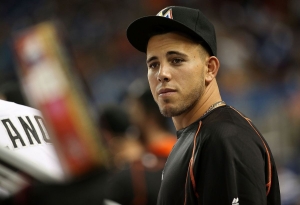
When Jose Fernandez was 15, he and his mother successfully defected from Cuba (on their fourth attempt) and settled in Florida.  A baseball prodigy, Fernandez would become a first-round pick in the Amateur Draft in 2011, and two years later, he was a Miami Marlin. At only 20 years old, Fernández showcased a unique talent for overpowering top Major League hitters. His debut in 2013 remains one of the most impressive in history. That season, he went 12-6 with a 2.19 ERA, led the league in hits allowed per nine innings (5.8), and earned the National League Rookie of the Year…
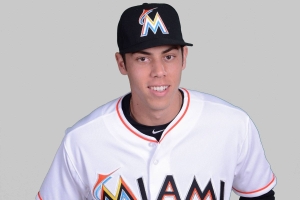
A first-round selection in 2010, Christian Yelich quickly developed into one of the most promising young talents in the National League, combining a technical mastery of the strike zone with an elite defensive range. Yelich’s second season in 2013 showcased his exceptional talent, as he won the National League Gold Glove Award in left field, making him the youngest in franchise history to receive this honor. He combined excellent defense with strong batting, recording 165 hits and a .284 average during his first complete season. Between 2016 and 2017, he had back-to-back seasons that marked his rise to league-wide stardom.…
A local standout from the University of Miami, Charles Johnson was the 28th overall selection in the 1992 draft and had a cup of coffee with the team that drafted him in 1994.  In 1995, Johnson became the team’s starting catcher and quickly showcased a strong ability to control the running game. He was only the fourth rookie in major league history to earn a Gold Glove Award. Johnson quickly set a high standard with a specialized arm and precise technique, proving he could neutralize even the fastest opponents. During this period, he caught Al Leiter’s no-hitter in 1996, further…
Cliff Floyd began his baseball career with the Montreal Expos, a team he played for four years before being traded to the Florida Marlins in 1997. The beginning of his tenure was characterized by a strategic role as a key contributor in high-pressure situations. In 1997, Floyd played in 61 games during the Marlins’ memorable postseason journey. While he wasn’t a regular starter, his consistent performance was essential during clutch pinch-hit moments. His ability to perform under pressure contributed significantly to the Marlins' first World Series victory, demonstrating that his experience and skills were vital for a team with many…
Marcell Ozuna came to the Marlins in 2013 as a high-voltage talent from the Dominican Republic, a player whose raw power and "cannon" for an arm made him an immediate tactical asset. After signing as an international free agent in 2008, he steadily climbed the ranks to become the high-caliber center fielder the organization had been searching for. After debuting promisingly in 2013, Ozuna showed strong batting in 2014, hitting 23 home runs with 85 RBIs. Following a slump, including a 1-for-36 stretch, the Marlins demoted him to Triple-A New Orleans in July. His agent, Scott Boras, accused the team…
J.T. Realmuto was a third-round selection by the Marlins in 2010, an athletic former quarterback who transitioned from shortstop to catcher with surprising speed. After a brief 11-game look in 2014, he seized the starting job behind the plate in 2015. The early days of his run were marked by a steep learning curve and a fierce commitment to defense. While his rookie season saw an on-base percentage stay under .300, Realmuto immediately turned heads with his pop time and mobility. He found his rhythm in 2016, posting a .303 average and proving that his athleticism was a massive asset…
Josh Beckett joined the Marlins organization as the second overall pick in 1999, carrying high expectations as a Texas fireballer often compared to legendary players from his home state. Though he initially faced minor injuries and took time to adjust to the speed of the major leagues, he ultimately became the key player in a postseason run that changed the franchise's course. After a brief debut in 2001 where he posted a 1.50 ERA in four starts, Beckett spent 2002 adjusting to the demands of a full major league season, finishing with a 6-7 record. By the next spring, he…