

48. Gary DiSarcina
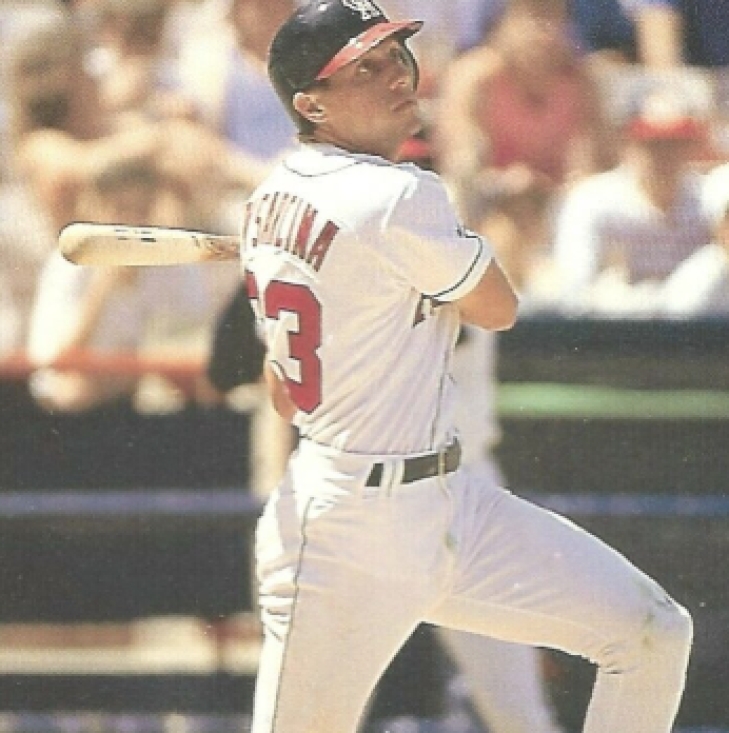
A sixth-round pick, Gary DiSarcina was labeled with a reputation for "grinding it out," a descriptor that followed him through every stage of his career. While he lacked the flashy offensive numbers of many modern shortstops, he provided the California Angels with a brand of defensive stability and quiet leadership that became the organization's heartbeat for over a decade.
Debuting for the club in 1989, DiSarcina seized the starting role in 1992. DiSarcina demonstrated a specialized ability to anchor the infield, quickly proving to be a reliable partner for the veteran staff. Although he had no discernible power game (only 28 career home runs), he was a technical master at making contact and executing situational plays.
DiSarcina had his best year in 1995, a season that earned him his only All-Star selection. That summer, he showcased a career-best .307 batting average and provided a high-caliber offensive spark that perfectly complemented his gold-standard defense. His value to the team was never more apparent than when he missed time late in the season with a thumb injury; the Angels, who had been leading the division by double digits, famously stumbled in his absence.
He had a career-high 158 hits in 1998, earning the Angels' Team MVP despite only three home runs that year, thanks to his 39 doubles and leadership. The final years of his journey were plagued by a series of "freak" injuries that prematurely slowed his high-frequency output. In 1999, he missed significant time after a coach accidentally hit him with a ball during a pre-game drill. Subsequent shoulder issues eventually cost him the entire 2001 season. Despite the physical setbacks, he remained a high-caliber mentor in the dugout, providing the veteran presence needed as a young core began to emerge. He retired following the 2002 season as a true "one-team man.”
DiSarcina compiled 966 hits, 355 RBIs, and was inducted into the Angels Hall of Fame in 2013.
17. Troy Percival
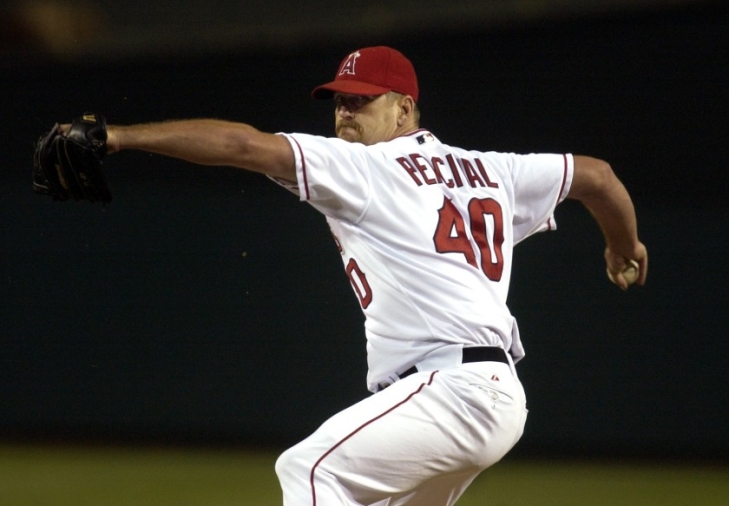
Troy Percival arrived in the California organization as a catcher before a historic transition during his minor league tenure. After coaches noticed his return throws to the pitcher were faster than the pitches he was receiving, he moved to the mound and quickly climbed the ranks. He debuted in 1995 as a primary setup man for Lee Smith, delivering a dominant 1.95 ERA and 94 strikeouts in 74 innings, which earned him a fourth-place finish in the American League Rookie of the Year voting.
Percival took over the closer role in 1996 and immediately established a standard of high-frequency success in high-pressure situations. He recorded 36 saves and struck out 100 batters in his first year as the stopper, earning the first of four All-Star selections. For nearly a decade, he served as a foundational piece of the bullpen, recording at least 30 saves in seven of his eight full seasons as the closer. He reached a statistical peak in 1998 with a career-high 42 saves, proving that his mid-90s fastball and aggressive approach were a tactical nightmare for opposing hitters.
The 2002 postseason represented the ultimate punctuation of Percival's career in Anaheim. During the club's run to its first championship, he demonstrated a focused intensity by going a perfect 7-for-7 in save opportunities, tying a then-Major League record for saves in a single postseason. He was on the mound for the final out of the World Series, inducing a flyout from Kenny Lofton to secure the title. While he continued to produce at a high level through 2004, a degenerative hip condition began to alter his delivery and slightly sap his velocity, signaling a transition point for the Angels' bullpen.
Percival departed for Detroit in free agency, leaving behind 316 saves in an Angels uniform.
22. Chone Figgins
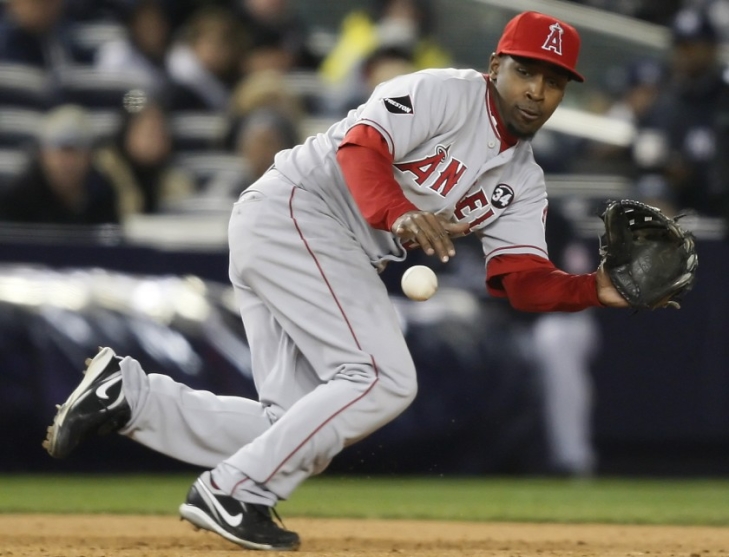
Chone Figgins arrived in the California organization via a July 2001 trade with the Colorado Rockies, a move that sent veteran outfielder Kimera Bartee to Denver. While he was drafted as a middle infielder, Figgins’ elite athleticism allowed him to become one of the most versatile weapons in franchise history.
Figgins first demonstrated his ability to impact winning as a high-speed specialist during the 2002 postseason. Called up as a late-season weapon, he appeared in 15 regular-season games before becoming an asset on the basepaths during the Angels' run to their first World Series title. Figgins transitioned to a full-time role in 2004, where he batted .296 and recorded a career-high 17 triples. This breakout served as the lead-in to 2005, where he evolved into the premier base-stealer in the sport, leading the major leagues with 62 stolen bases and finishing in the top 15 of the MVP voting.
In 2009, he demonstrated a specialized ability to manufacture runs by leading the American League with 101 walks and recording a career-high 183 hits. He showed the organization he was a foundational star by earning his lone All-Star selection and finishing tenth in the AL MVP race. Throughout this period, he maintained a reputation for defensive versatility, logging significant time at third base, second base, and all three outfield positions while recording 30 or more stolen bases for six consecutive seasons.
Figgins signed a four-year contract with the Seattle Mariners in 2009, leaving behind 1,045 hits, a franchise-record 280 stolen bases, and the 2002 World Series title.
13. Garret Anderson
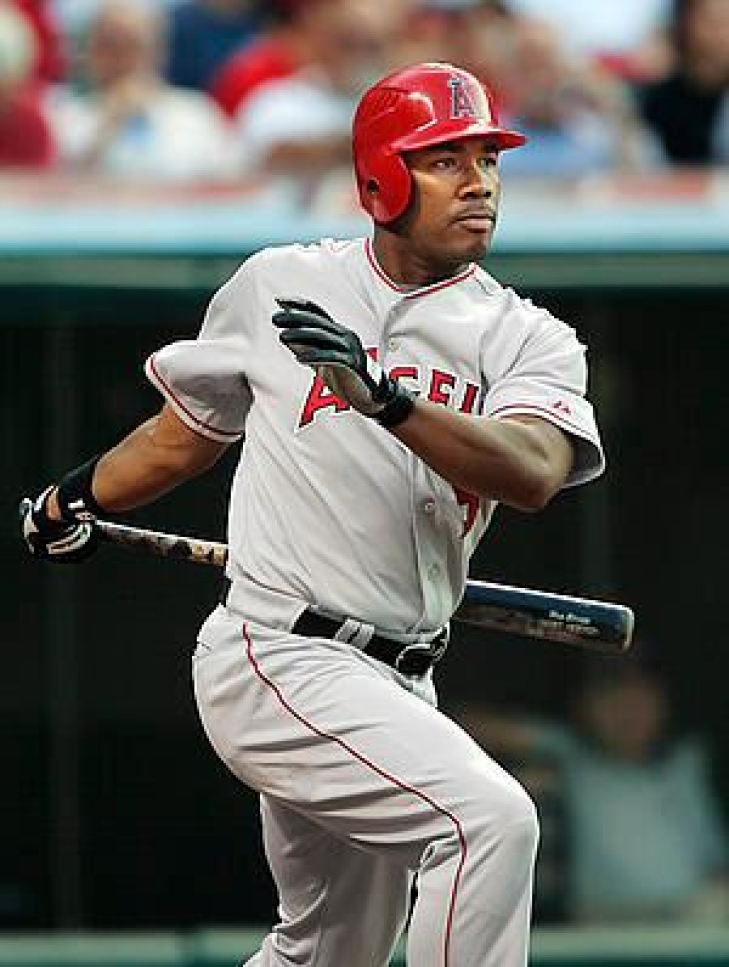
Garret Anderson emerged as the most durable fixture in the history of the Anaheim outfield, a 1990 draft pick who transformed from a quiet prospect into the franchise’s most prolific run-producer. After a brief introduction to the big leagues in 1994, he secured the starting role in left field and immediately proved his worth by finishing as the runner-up for the 1995 American League Rookie of the Year. For fifteen seasons, he anchored the lineup that thrived on his short, effortless left-handed stroke.
Anderson’s journey in a California uniform reached a historic peak during the 2002 and 2003 campaigns. As the club marched toward its first World Series title, he emerged as a premier American League standout, earning his first All-Star selection and a Silver Slugger Award in 2002. That summer, he demonstrated a specialized ability to drive the ball into the gaps, leading the league with 56 doubles while finishing fourth in the MVP voting. He showed the organization that he was a foundational piece of a championship core, providing the high-velocity production of 123 RBIs and 29 home runs in the heart of the "Thundersticks" order.
Between 2000 and 2003, Anderson was a constant presence at the top of the leaderboards, recording four straight seasons with at least 28 home runs and 116 RBIs. He possessed a focused intensity that allowed him to maintain a batting average over .300 for three consecutive years during that span, becoming a perennial fixture at the mid-summer classic. Despite a low-walk approach that impacted his overall efficiency, he remained a model of reliability, eventually setting franchise records for hits, runs, and RBIs.
In 2008, Anderson moved on to Atlanta as a free agent. He left behind a statistical footprint that remains unmatched in the team’s record books: 2,368 hits, 272 home runs, and 1,292 RBIs. In 2016, he was inducted into the Angels Hall of Fame.
12. Darin Erstad
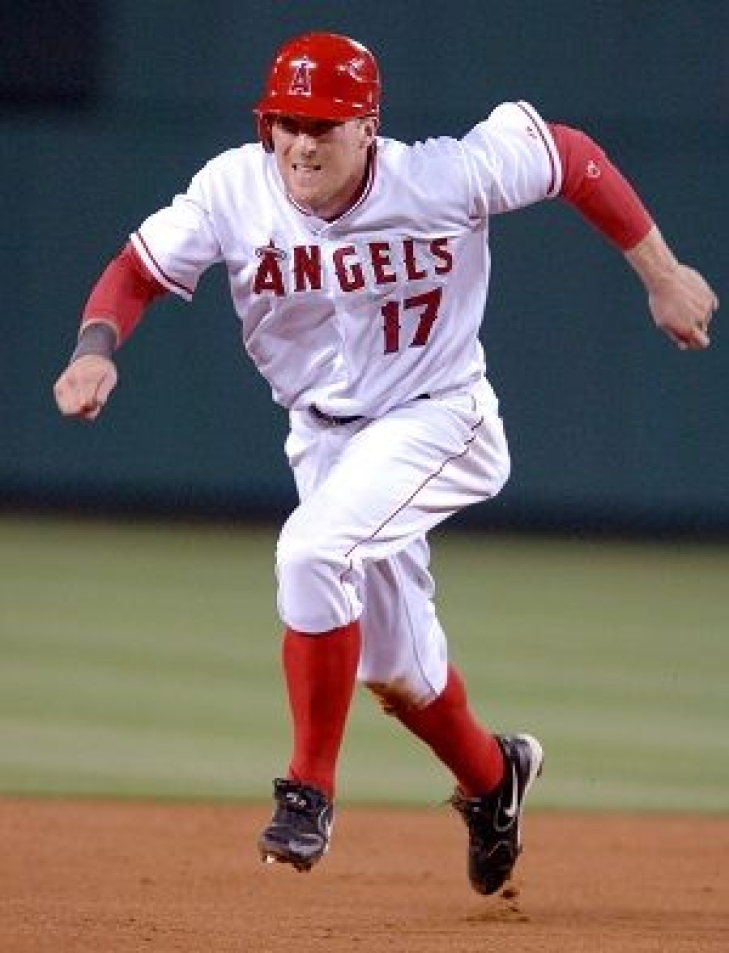
Darin Erstad joined the Anaheim organization as the first overall pick in 1995, a decorated athlete from Nebraska. Debuting just a year later, he functioned as the initial building block for a culture that would eventually define the team's greatest era. For eleven seasons, he covered the grass at Angel Stadium with a high-velocity, reckless style of play that made him the heartbeat of the roster.
Erstad’s impact in a California uniform reached a historic peak during the 2000 campaign, following an early taste of stardom with his first All-Star selection in 1998. That summer, he transitioned into a premier American League force by recording a staggering 240 hits, a franchise record and the highest total in the league that season. He demonstrated a specialized ability to handle any pitch, finishing with a .355 average, 25 home runs, and 100 RBIs. He showed the organization that he was a foundational piece of the lineup, earning his second All-Star nod and finishing eighth in the MVP voting by providing the production required of a modern leadoff threat.
The bulk of his Anaheim years were characterized by elite defensive versatility and a reputation for big-game production. Between 2000 and 2004, Erstad was a statistical force of reliability, becoming the first player in history to win Gold Gloves as both an outfielder and a first baseman. He reached a career peak for high-stakes value during the 2002 postseason, where he recorded 25 hits, including a crucial home run in Game 7 of the World Series, to help secure the first championship in team history. Despite the physical toll of his aggressive, dirt-stained style of play, he remained a model of resilience, recording 170 stolen bases and over 1,500 hits in a Halo uniform after departing for the Chicago White Sox in 2007.
15. Francisco Rodriguez
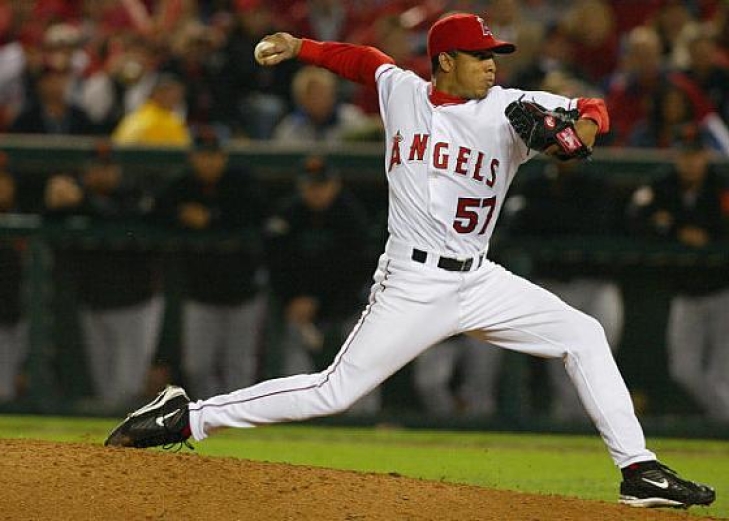
Francisco Rodriguez arrived in the California organization as an amateur free agent in 1998, a right-hander with a high-ceiling delivery that would soon alter the franchise's trajectory.
Debuting in September 2002, Rodriguez immediately established a reputation for elite strikeout capability. Despite having only five regular-season appearances to his name, he evolved into a tactical weapon in October, making 11 relief appearances and securing five wins throughout the playoffs. He showed the organization he was a foundational winner by maintaining a sub-1.000 WHIP across three rounds, providing the bullpen depth needed to secure the franchise's first World Series title. This breakout served as the lead-in to 2004, where he transitioned from a setup role to the full-time closer.
The period between 2005 and 2008 represented the peak of Rodriguez’s efficiency and individual recognition. During this stretch, he led the American League in saves three times and earned three consecutive All-Star selections. In 2008, he recorded a major-league record 62 saves, shattering the previous mark set by Bobby Thigpen. He showed the organization he was a foundational superstar by finishing in the top four of the Cy Young voting three times (2004, 2006, 2008) and winning the Rolaids Reliever of the Year Award twice.
Following the 2008 season, Rodriguez signed with the New York Mets, thus leaving the Halos. With the team, K-Rod recorded 208 saves, 587 strikeouts, and a 2.35 ERA.
19. Troy Glaus
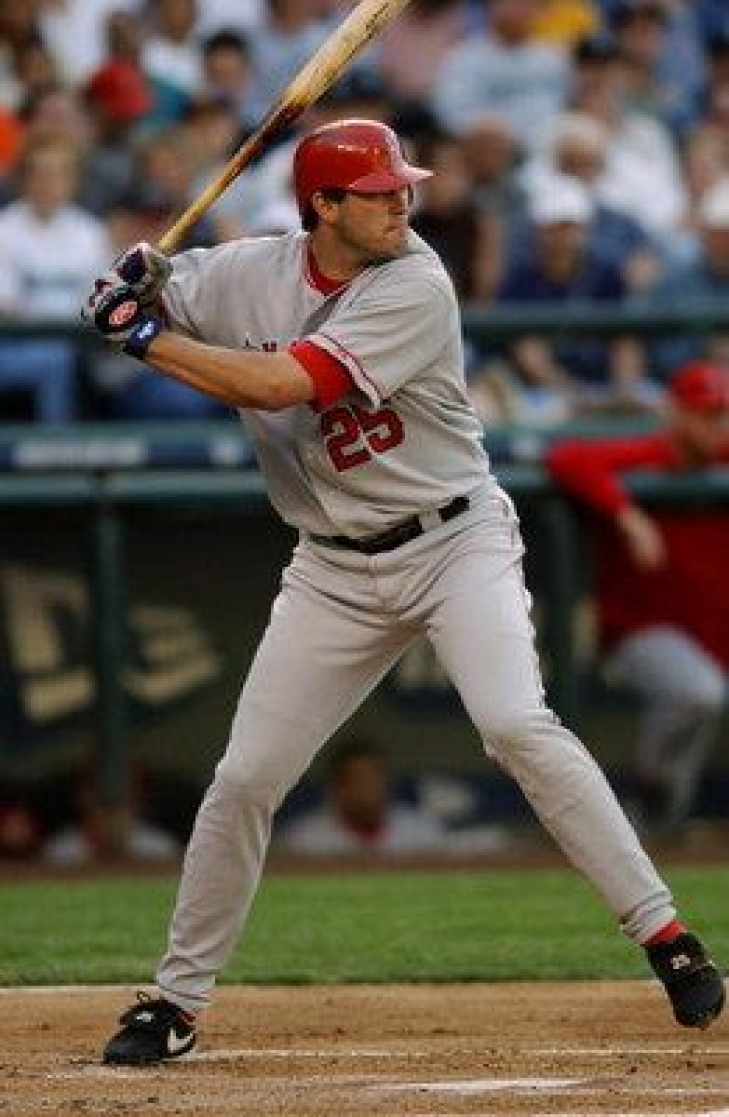
Troy Glaus arrived in the California organization as the third overall selection in the 1998 draft out of UCLA. Known for his immense physical stature and light-tower power, he was installed as the starting third baseman in 1999 and immediately demonstrated that his collegiate success would translate to the professional ranks. For seven seasons in an Angels uniform, Glaus served as the premier power threat in the lineup.
In 2000, he evolved into the most prolific power hitter in the American League, belting a franchise-record 47 home runs and leading the circuit in the category. He showed the organization he was a foundational superstar by pairing that power with a 1.008 OPS and earning the first of back-to-back Silver Slugger Awards. He followed that with 41 home runs in 2001, providing the high-frequency production required to maintain his status as a top-five finisher in the AL MVP voting.
The 2002 campaign saw Glaus transition into a legendary figure during the franchise's first championship run. After recording his third consecutive 30-home run regular season, he demonstrated a focused intensity throughout the postseason, belting seven home runs and batting over .300 in every series. He showed the organization he was a foundational winner by hitting .385 with three home runs in the World Series, earning the World Series MVP and the Babe Ruth Award. His tactical impact was never clearer than in Game 6, when his go-ahead double capped a historic five-run comeback to force a deciding Game 7.
After the 2004 season, Glaus signed a lucrative contract with the Arizona Diamondbacks. While injuries had limited him to just 58 games in his final year with the Angels, he left behind a statistical footprint that reflected his status as the greatest power-hitting third baseman in team history, departing with 182 home runs and 507 RBIs while wearing the Halo.
16. John Lackey
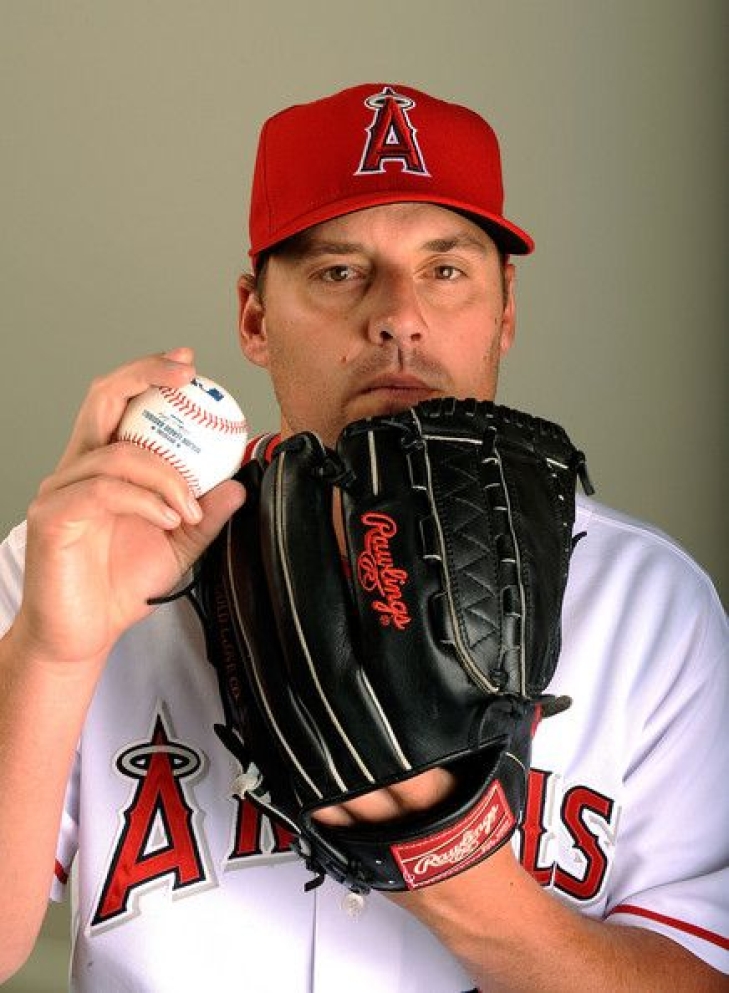
John Lackey joined the Angels organization as a second-round pick in 1999 out of Grayson County College, a big right-hander who would quickly become the backbone of the rotation. He reached the major leagues in 2002 and immediately made history as a rookie, where in a winner-take-all Game 7 against the Giants, he became the first rookie in 93 years to start and win a World Series clincher, tossing five innings of one-run ball.
Between 2003 and 2006, he bridged the gap to his elite 19-win peak by proving he could handle a heavy workload year after year. He recorded at least 14 wins in three of those four seasons and consistently sat near the top of the league leaderboard in starts.
In 2005, he reached the 199-strikeout mark, a career-best at the time, while posting a 3.44 ERA. He followed that with another 190 strikeouts in 2006, providing the steady production required to lead the staff through the transition following the departures of veteran arms like Jarrod Washburn. This stretch of reliable, high-volume pitching served as the essential lead-in to his 2007 ERA title and cemented his status as the unquestioned ace of the staff.
John Lackey’s departure from Anaheim following the 2009 season was primarily a matter of the organization’s hesitation to match the market’s valuation of his longevity. While Lackey had been the anchor of the staff for nearly a decade, the Angels management grew wary of his long-term durability after he missed the first six weeks of both the 2008 and 2009 seasons due to recurring elbow and forearm issues.
The tension began to surface during spring training in 2009 when the club offered Lackey a three-year extension worth approximately $40 million. Lackey, who had previously signed a team-friendly deal to help the club remain competitive, viewed the offer as a sign that the front office did not see him as a top-tier ace. He made it clear that he would not accept another hometown discount and entered free agency seeking a contract that reflected his status as a workhorse.
The Boston Red Sox eventually stepped in with a five-year, $82.5 million contract, an offer that included both more money and more guaranteed years than the Angels were willing to provide. With the Angels, Lackey compiled a 102-71 record, 1,201 strikeouts, and the 2002 World Series Game 7 victory.
14. Mark Langston
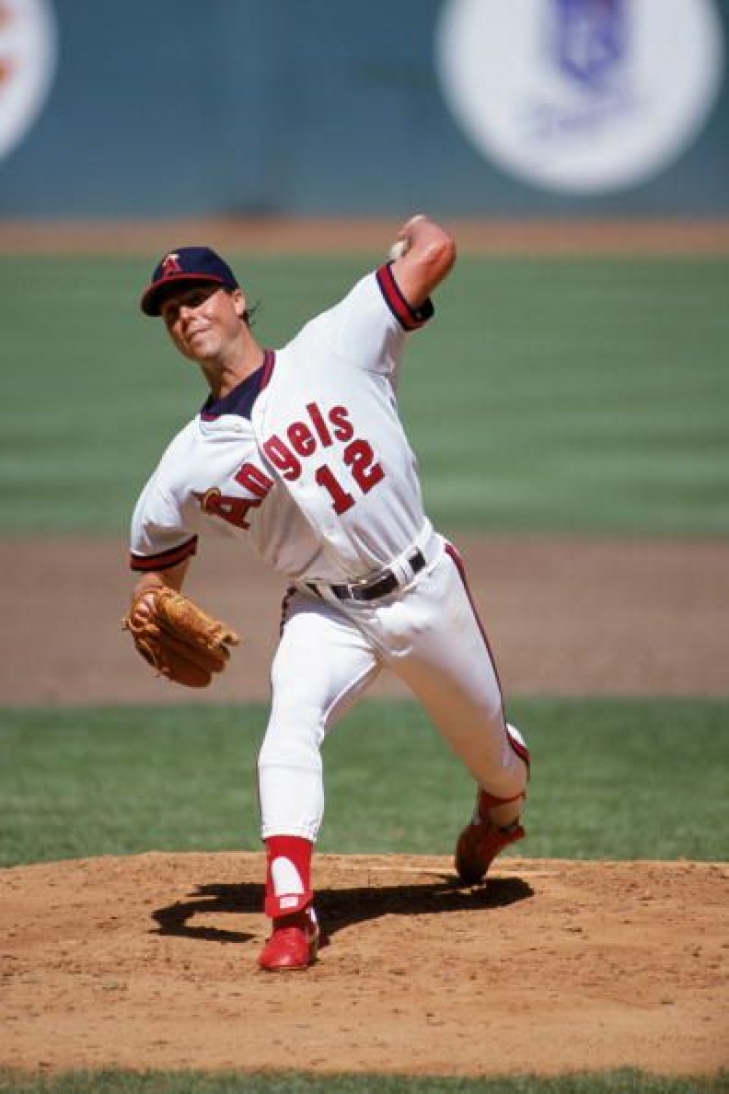
Mark Langston landed in Anaheim as a high-profile free agent in 1990, returning to the West Coast after a whirlwind season that saw him traded from Seattle to Montreal. Known for a blistering heater and a devastating pickoff move, the left-hander arrived with the heavy expectations of a franchise looking for a front-line starter to lead them back to contention. For eight seasons, he anchored the Angels' rotation, evolving from a raw power pitcher into a refined southpaw.
Langston’s tenure in a California uniform took a massive leap forward during the 1991 season. After a rocky debut year in Orange County, he found his groove with a 19-8 record and a 3.00 ERA, earning his first All-Star nod in four years. This resurgence proved he was more than just a high-priced rental; he was a workhorse capable of silencing the best lineups in the American League. His performance that summer garnered a sixth-place finish in the Cy Young race.
Langston was defined by a rare blend of pitching prowess and defensive mastery. Between 1991 and 1995, Langston was a vacuum on the mound, capturing five consecutive Gold Gloves for his ability to shut down the opposition's bunting and running game. He remained a perennial threat in the mid-summer classic, earning All-Star honors in 1992 and 1993 while consistently racking up high inning totals. Even as the league's offensive numbers began to skyrocket, he maintained a sharp edge, eventually fanning 1,112 batters during his stay with the Halos. He provided a veteran presence that gave the club a chance to win every fifth day, regardless of the shifting roster around him.
Following the 1997 season, the veteran hurler moved on to San Diego. He left the organization with 88 wins, 1,112 strikeouts, and five consecutive Gold Glove Awards.
3. Chuck Finley
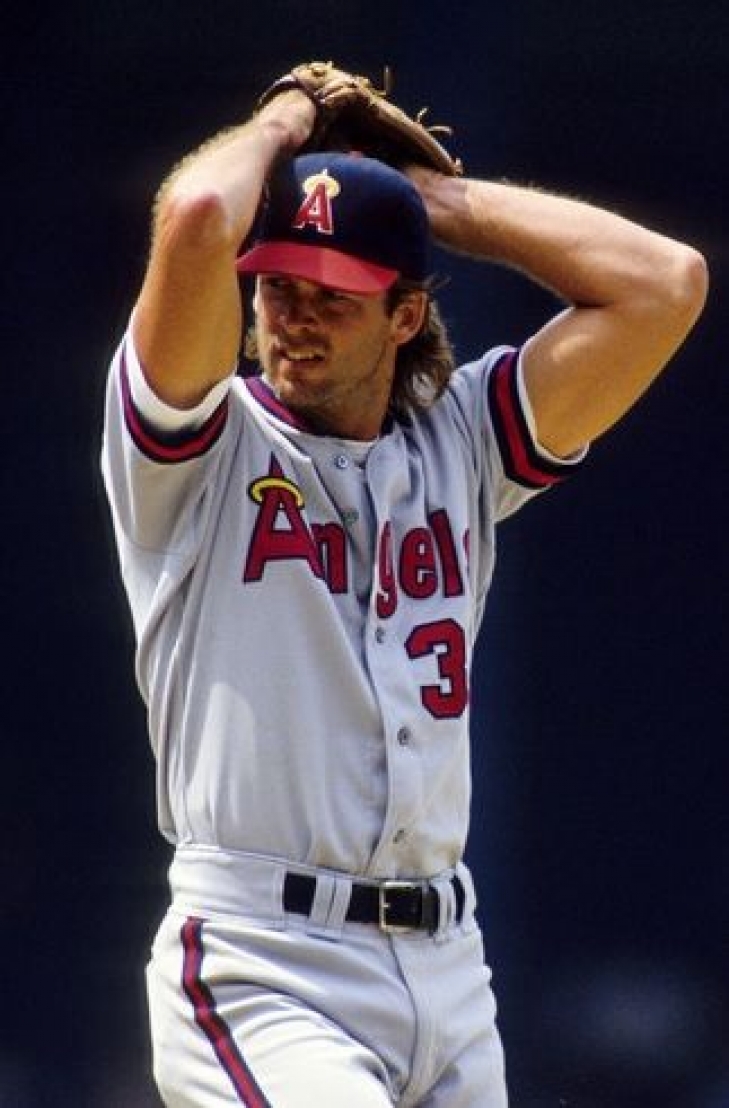
Chuck Finley arrived in Anaheim as a high-velocity southpaw with a localized storm of a split-finger fastball. While he began his journey in the bullpen, he quickly evolved into the most durable workhorse in the history of the franchise. For fourteen seasons, Finley was the left-handed anchor of the Angels' rotation, a player whose longevity and competitive fire allowed him to surpass the win totals of every legend who preceded him in a Halo uniform.
Finley’s ascent in California began with a transition from a relief prospect to a frontline starter in the late eighties. He reached a career-defining breakout in 1989, his first full season in the rotation, where he won 16 games with a 2.57 ERA and earned his first All-Star nod. He followed this with an even more dominant 1990 campaign, winning 18 games and proving that he could maintain elite efficiency over a heavy workload. He possessed a focused intensity and a sharp splitter that made him a nightmare for right-handed hitters, signaling his transition from a young arm into a true franchise pillar.
The core of his tenure was defined by a remarkable professional resilience. After navigating a difficult plateau in 1992, Finley returned to his status as the club's undisputed ace. He reached a new level of consistency between 1993 and 1999, recording at least 10 wins every single season and returning to the All-Star Game in 1995 and 1996. He was a model of physical resilience, routinely logging over 200 innings and leading the American League in starts during the 1996 season. He showed the organization that a pitcher could become a legend through sheer, unadulterated volume, eventually amassing a franchise-record 2,675 innings pitched.
Everything culminated in the late nineties as Finley rewrote the Angels' record books. He reached a career peak for strikeouts in 1998, fanning 212 batters and proving that his stuff hadn't lost its bite even as he entered his mid-thirties. However, the reality of the era’s shifting landscape led to a departure following the 1999 season, when he signed with Cleveland as a free agent. He left Anaheim as the all-time leader in wins (165) and innings, a statistical footprint that has stood the test of time against some of the greatest pitchers in the game’s history.
The story in Anaheim reached its final chapter in 2009 when the Angels inducted him into their Hall of Fame.
2. Nolan Ryan
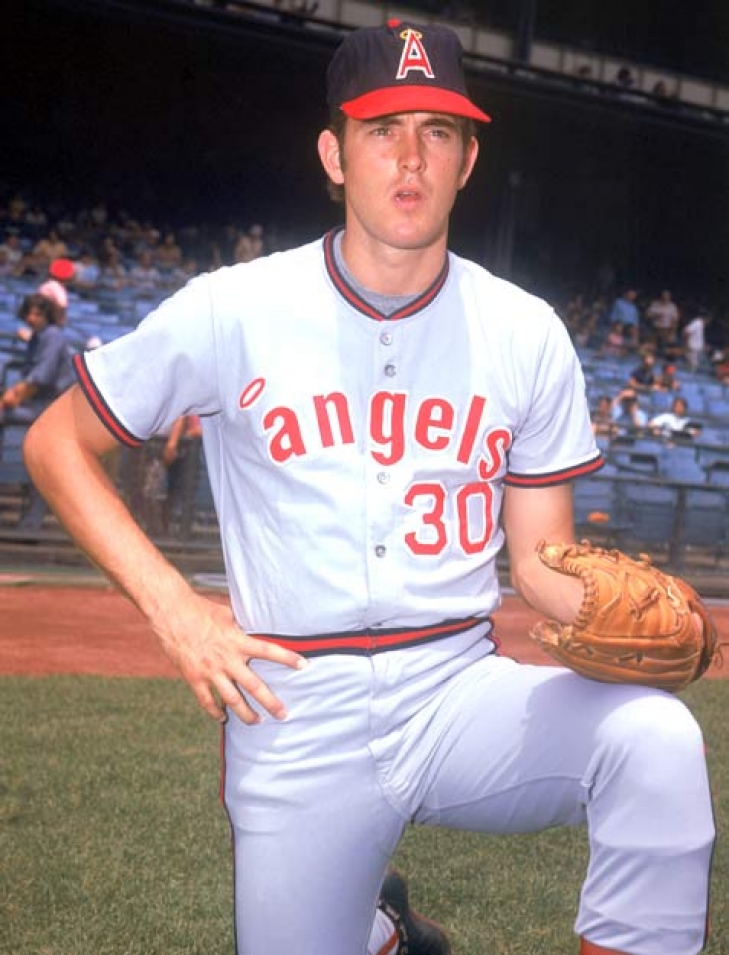
The arrival of Nolan Ryan in Anaheim in 1972 is often cited as the greatest trade heist in baseball history. While the Mets sought a veteran bat in Jim Fregosi, the Angels acquired a lightning bolt in a glove. Ryan didn't just find his footing in California; he transformed into the "Ryan Express," a high-velocity phenomenon that spent eight seasons redefining what was physically possible on a major league mound. While he is a legend in Texas, his years in an Angels uniform were his most explosive, marked by a relentless pursuit of strikeouts and a refusal to let anyone put the ball in play.
Ryan’s tenure in California began with an immediate major turning point for his career trajectory. After years of struggling with his control in New York, he landed in the American League and instantly became its most terrifying outlier. In his 1972 debut season with the club, he reached a new level of dominance, winning 19 games and leading the league with 329 strikeouts and a microscopic 5.3 hits per nine innings. He possessed a focused intensity that turned every start into a potential historical event, a style that reached a career peak just one year later. In 1973, Ryan fanned 383 batters, moving past Sandy Koufax to set the modern single-season strikeout record—a milestone that remains the gold standard of the live-ball era.
The middle of his run was defined by a steady-state of sheer power. Between 1972 and 1974, he averaged over 20 wins and 360 strikeouts per season, cementing his status as the premier flamethrower in the sport. He was a model of physical resilience, famously throwing 235 pitches in a single 13-inning start in 1974, only to return to the mound three days later. Even during a slight dip in his win totals in 1975, he remained a high-frequency threat, leading the American League in strikeouts nearly every year of the late seventies. He showed the organization that a pitcher could become a franchise pillar through intimidation and raw speed, eventually amassing 2,416 punchouts in just eight seasons with the club.
His time in Anaheim also saw him master the art of the no-hitter, tossing four of his record seven gems while wearing the Halo. He reached a crescendo of efficiency in 1977 and 1979, earning two more All-Star nods and proving his arm hadn't lost a tick of its specialized heat. Despite his status as a local icon and a five-time All-Star, the reality of the era’s burgeoning free agency led to his departure. Following the 1979 season, Ryan returned to his home state to sign with the Houston Astros, leaving California as the most prolific strikeout artist in the history of the franchise.
The story in Anaheim reached its closing punctuation in 1992. In a ceremony held while he was still an active player for the Rangers, the Angels retired his number 30 and inducted him into their Hall of Fame.
11. Vladimir Guerrero
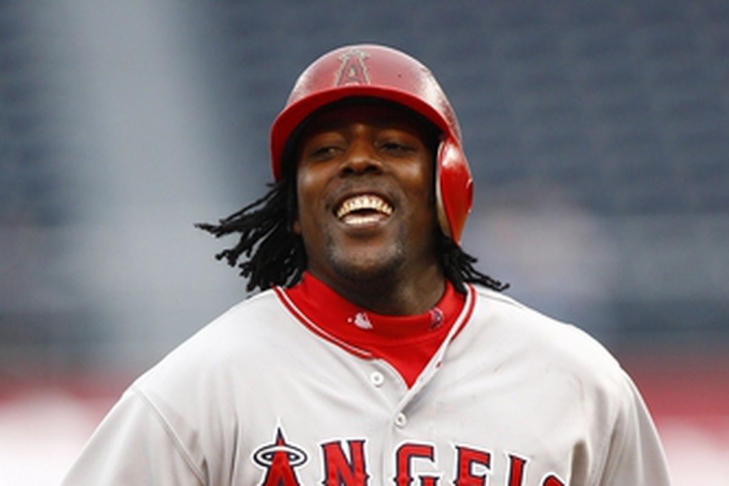
Vladimir Guerrero brought a rare, unbridled energy to Anaheim, joining the Angels in 2004 as the most coveted free agent in the game. His arrival was the result of a somber reality in Montreal, where a cash-strapped Expos franchise was tragically forced to watch its greatest superstar walk away because it simply could not afford to keep him. After establishing a Hall of Fame trajectory in Canada, the Dominican-born outfielder provided the Halos with a high-velocity offensive engine that redefined the organization's ceiling. For six seasons, he patrolled right field with a specialized ability to drive any pitch into the gaps of Angel Stadium, proving that a single superstar could transform a competitive roster into a perennial powerhouse.
Guerrero’s impact was immediate in his debut 2004 campaign. He secured the American League MVP award by batting .337 with 39 home runs and 126 RBIs, a high-frequency display of power and contact that carried the team to a division title. This initial splash signaled a transition from a National League star to the definitive face of the Angels' organization. He showed the front office that he was the foundational piece they had lacked, providing the veteran-like poise and game-breaking talent required to anchor the heart of the order.
The bulk of his Anaheim years were characterized by elite efficiency and a reputation for statistical dominance. Between 2004 and 2007, Guerrero was a statistical force of nature, earning four consecutive All-Star selections and finishing in the top ten of the MVP voting each year. He reached a career peak for reliability during this stretch, never falling below 27 home runs or 108 RBIs in a single season. Despite a free-swinging approach that defied traditional coaching, he remained a model of offensive precision, maintaining a .319 batting average in a Halo uniform. He possessed a focused intensity that made him a nightmare for opposing pitching staffs, famously hitting home runs on pitches that nearly bounced in the dirt.
Guerrero eventually signed with the Texas Rangers following the 2009 season. In 2017, when he was inducted into the Angels Hall of Fame, he was soon followed by his induction into the National Baseball Hall of Fame as the first player to represent the franchise.
8. Tim Salmon
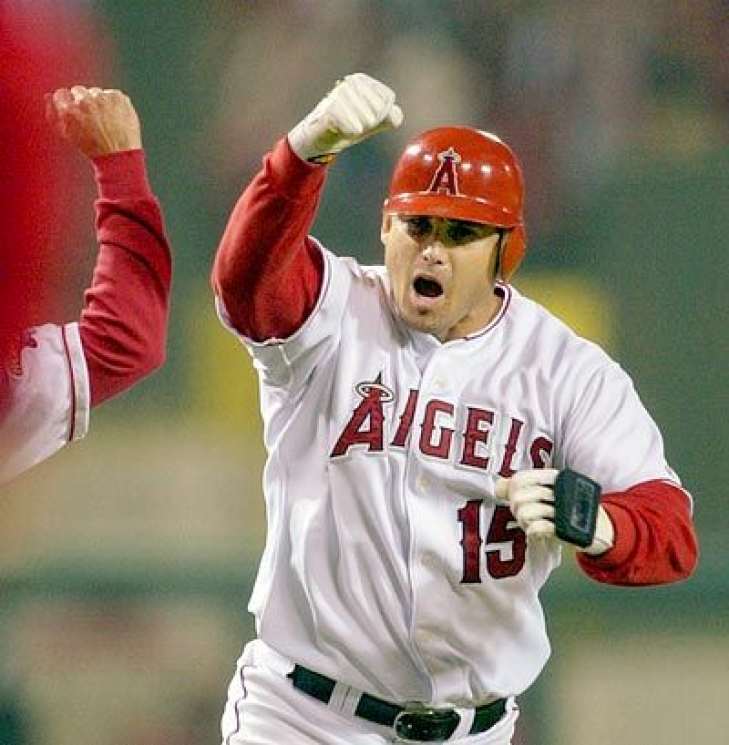
Tim Salmon arrived in Anaheim as a third-round pick who quickly proved he belonged in the heart of the order. For fourteen seasons, he anchored right field with a specialized blend of patience and power, becoming the most productive homegrown hitter in the first half-century of the franchise. While he often flew under the national radar, Salmon provided the Halo with dependability that made him the cornerstone of the lineup during the transition from the California to the Anaheim era.
Salmon’s emergence in Anaheim began with a historic 1993 campaign that set the standard for his entire career. After a brief look the previous September, he took over the starting role and responded with 31 home runs and 95 RBIs, earning the American League Rookie of the Year award in a unanimous vote. This performance signaled a transition from a promising prospect to a premier offensive threat, a style defined by his ability to pair a .283 batting average with a disciplined eye. He showed the organization that he was a foundational piece of the roster, providing a focused intensity that would define his decade-long peak as the most dangerous bat in the clubhouse.
In 1995, he reached a career peak for all-around production, batting .330 with 34 home runs and winning a Silver Slugger. He followed this with a run of consistency that saw him reach the 30-homer milestone five times and drive in at least 100 runs in two separate seasons. Even as the team cycled through different managers and rosters, Salmon remained a statistical force, finishing his career with eight seasons of a .500 slugging percentage or better. He possessed a specialized ability to drive the ball to all fields, maintaining a career on-base percentage of .385 that reflected his mastery of the strike zone.
Everything culminated in the historic 2002 postseason, where Salmon served as the emotional lead-off for the franchise’s first World Series title. In the twilight of his journey, he provided the veteran-like poise required for a championship run, famously hitting two home runs in a crucial Game 2 victory against San Francisco. He continued to contribute until his retirement following the 2006 season, leaving the game as a rare lifer who spent his entire professional life in one uniform. He exited with 299 home runs and 1,016 RBIs, a statistical footprint that made him the club's all-time leader in nearly every major offensive category at the time of his departure.
In 2015, he was inducted into the Angels Hall of Fame.
Vladimir Guerrero to the Angels HOF
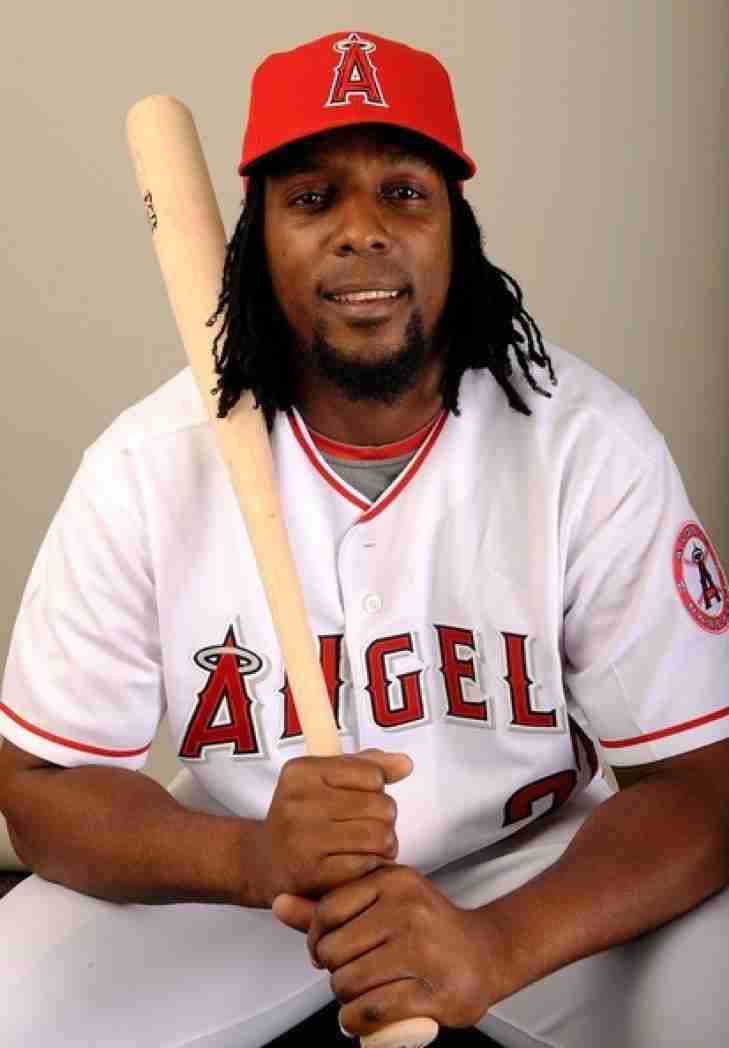
As such it is news to us that the Anaheim Angels have announced that Vladimir Guerrero will become the 15th member of the franchise’s Hall of Fame in a ceremony that will take place on August 26.
Guerrero was with the Angels for six seasons joining the Angels as a free agent prior to the 2004 season and Anaheim was rewarded immediately as “The Impaler” but forth the best season of his career winning the American League MVP Award with 206 Hits, 39 Home Runs, 126 RBI and a .337 Batting Average.
While this was the “only” MVP that Guerrero would win, he would finish third in voting twice more as an Angel. His overall tenure with Anaheim would see him collect 1,034 Hits with 173 Home Runs and a Slash Line of .319/.381/.546 and was an All Star and Silver Slugger four times.
We here at Notinhalloffame.com would like to congratulate Vladimir Guerrero for earning this honor.
