

Our All Time Top 50 Philadelphia Phillies have been revised to reflect the 2024 Season
Yes, we know that this is taking a while!
As many of you know, we at Notinhalloffame.com are slowly generating the top 50 of each major North American sports team. That being said, we have existing Top 50 lists and consistently look to update them when necessary and based on necessity. As such, we are delighted to present our post-2024 revision of our top 50 Philadelphia Phillies.
As for all of our top 50 players in baseball, we look at the following:
1. Advanced Statistics.
2. Traditional statistics and how they finished in the National League.
3. Playoff accomplishments.
4. Their overall impact on the team and other intangibles that are not reflected in a stat sheet.
Please note that our algorithm has changed, which yielded minor changes throughout the baseball lists.
Last year, the Phillies won their division (NL East), but lost in their first round to the New York Mets. The season saw a few elevations and one new entrant
As always, we present our top five, which saw no changes.
1. Mike Schmidt
4. Ed Delahanty
You can find the entire list https://www.notinhalloffame.com/baseball/top-50-baseball-players-by-franchise/top-50-philapdelphia-phillies">here.
Starting Pitcher Aaron Nola moved up one spot to #22.
Another starter, Zack Wheeler went from #38 to #31.
Bryce Harper shot up to #35 from #45.
The new entrant is Catcher J.T. Realmuto, who debuts at #48.
We thank you for your continued support of our lists on Notinhalloffame.com.
Our All-Time Top 50 Philadelphia Phillies have been revised to reflect the 2023 Season
Yes, we know that this is taking a while!
As many of you know, we here at Notinhalloffame.com are slowly generating the 50 of each major North American sports team. That being said, we have existing Top 50 lists out and we always consistently look to update them when we can and based on necessity. As such, we are very happy to present our post 2023 revision of our top 50 Philadelphia Phillies.
As for all of our top 50 players in baseball we look at the following:
1. Advanced Statistics.
2. Traditional statistics and how they finished in Major League Baseball.
3. Playoff accomplishments.
4. Their overall impact on the team and other intangibles not reflected in a stat sheet.
Last year, the Phillies had another great year, advancing to the NLCS. This good year by the team saw two new entrants in the Top 50.
As always, we present our top five, which saw no changes:
1. Mike Schmidt
4. Ed Delahanty
You can find the entire list here.
Pitcher, Aaron Nola, was unable to move up from #23, and remains in that spot.
The new entrants were Pitcher, Zack Wheeler and former MVP, Bryce Harper, who enter at #39 and #45 respectively.
We thank you for your continued support for our lists on Notinhalloffame.com.
Our All-Time Top 50 Philadelphia Phillies have been updated to reflect the 2022 Season
Yes, we know that this is taking a while!
As many of you know, we here at Notinhalloffame.com are slowly generating the 50 of each major North American sports team. That being said, we have existing Top 50 lists out and we always consistently look to update them when we can and based on necessity. As such, we are very happy to present our post 2022 revision of our top Philadelphia Phillies.
As for all of our top 50 players in baseball we look at the following:
1. Advanced Statistics.
2. Traditional statistics and how they finished in the National League.
3. Playoff accomplishments.
4. Their overall impact on the team and other intangibles not reflected in a stat sheet.
Last year, the Phillies had a great year, and won the National League Pennant, though they were defeated by the Houston Astros. Astoundingly, this did not yield any new entrants to the Top 50, though there were three that were very close.
As always, we present our top five, which was not affected by the last season:
1. Mike Schmidt
4. Ed Delahanty
You can find the entire list here.
The only elevation is Aaron Nola, who rocketed to #23 from #38.
As mentioned above, three current Phillies almost cracked the top 50, Zack Wheeler, Bryce Harper and J.T. Realmuto. We expect that all three will vault into the list after our post-2023 revision.
We welcome your input and comments and as always, we thank you for your support.
11. Grover Cleveland Alexander
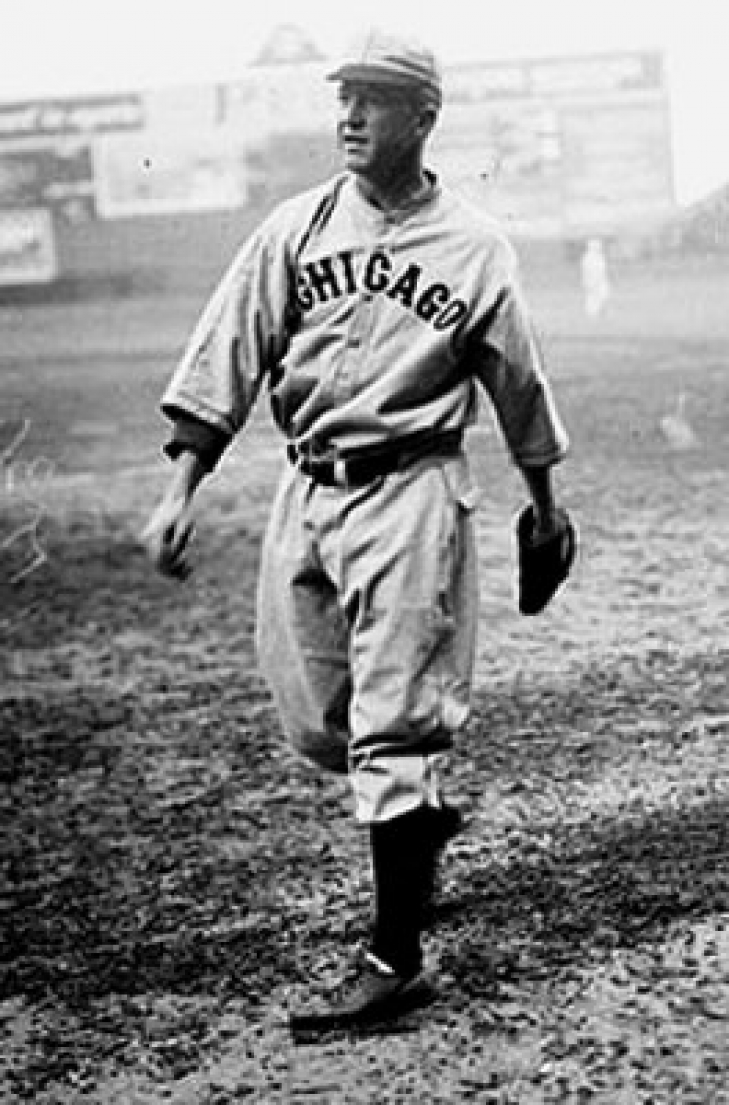
When Grover Cleveland Alexander arrived in Chicago in 1918, he didn't come by choice, and he didn't come whole. The Philadelphia Phillies, desperate for cash, had sold the greatest pitcher of the era to the Cubs just as the shadow of World War I loomed over the sport. Before he could throw a meaningful pitch for Chicago, Alexander was shipped to the front lines of France. He returned a year later, physically alive but mentally scarred—suffering from shell shock, partial deafness from the artillery fire, and a growing dependency on alcohol to quiet the ringing in his ears. It was a tragic transformation for a man who had already won two Triple Crowns.
But even a broken "Old Pete" was a marvel of the mound. His run with the Cubs from 1919 to 1920 remains one of the most improbable displays of pure, localized dominance in the history of the game. Despite the trauma and the seizures that began to plague him, he captured back-to-back ERA titles in his first two full seasons at Wrigley. In 1920, he authored a masterpiece: a 27-win season with a 1.91 ERA that secured his third career Triple Crown. It was a defiant statement from a veteran who was supposed to be washed up, a performance that proved his control and pinpoint accuracy were immune to the ghosts of the war.
The middle chapters of his Chicago story were defined by a steady, professional decline. While he never again touched the heights of 1920, he remained a formidable force for the next five years, anchoring a Cubs rotation that relied on his veteran savvy. However, his off-field struggles eventually wore thin with the front office. Midway through the 1926 season, he was unceremoniously waived and claimed by the St. Louis Cardinals, where, in a bit of poetic justice, he would go on to win the World Series that very autumn.
Alexander left Chicago with a sterling 128-83 record and a 2.84 ERA, marks that would be career-defining for any other pitcher but were merely a second act for him. His legacy was officially set in stone when he entered Cooperstown in 1938 as part of the Hall's third-ever class. Decades later, when the Cubs finally inaugurated their own Hall of Fame in 2021, "Old Pete" was an automatic selection for the first class. He arrived as a broken soldier and left as a testament to the enduring power of a master at work.
Our All-Time Top 50 Philadelphia Phillies are now up
Yes, this is taking a while!
As many of you know, we here at Notinhalloffame.com are slowly generating the 50 of each major North American sports team. We have a new one to unveil today, that of the Philadelphia Phillies, two time World Series Champions (1980 & 2008).
As for all of our top 50 players in basketball we look at the following:
- Advanced Statistics.
- Traditional statistics and how they finished in the American League.
- Playoff accomplishments.
- Their overall impact on the team and other intangibles not reflected in a stat sheet.
Remember, this is ONLY based on what a player does on that particular team and not what he accomplished elsewhere and also note that we have placed an increased importance on the first two categories.
This list is updated up until the end of the 2016-17 Season.
The complete list can be found here, but as always we announce our top five in this article. They are:
We will continue our adjustments on our existing lists and will continue developing our new lists.
As always we thank you for your support.
5. Pete Alexander
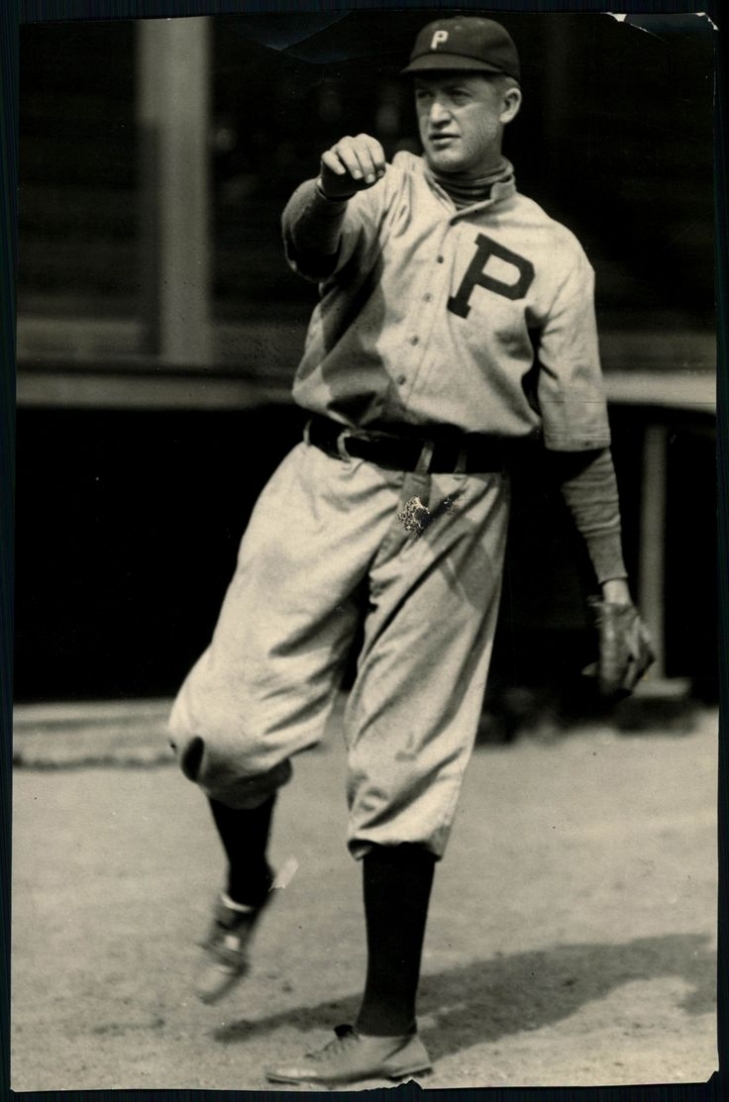
Inducted into the Baseball Hall of Fame in 1938, Grover Cleveland “Old Pete” Alexander might be surprising to see ranked so highly, considering he only played eight seasons for Philadelphia. In fact, we typically consider just the first seven seasons, as his eighth was his final at age 43, during which he was less effective. Still, examining Alexander’s first seven years of professional play reveals he’s a deserving top-five choice among the greatest Philadelphia Phillies of all time.
Hardly anything was expected of the tall, unassuming farm boy from Nebraska when he arrived in the spring of 1911. He went on to deliver a historic rookie masterpiece, capturing 28 victories and setting an enduring modern major-league rookie record. He paced the senior circuit in wins, shutouts (7), and innings pitched (367.0), instantly establishing himself as the primary horsepower of the Philadelphia staff.
After a series of highly successful follow-up seasons, Alexander reached an unmatched level of dominance between 1914 and 1917. He consecutively led the National League in wins for four seasons, with tallies of 27, 31, 33, and 27. Renowned for his efficiency and workload, he earned four straight strikeout titles, two ERA championships, and two WHIP titles. His peak value was crucial for the franchise, as he topped all NL pitchers in pitcher wins above replacement (bWAR) during these summers, including a remarkable 1915 season where he posted a minuscule 1.22 ERA, guiding the Phillies to their first-ever National League pennant.
The athlete's career sharply declined after 1917. Fearing the loss of their key player to the World War I draft without compensation, his team sold him to the Chicago Cubs in a quick cash-and-player deal. Alexander was drafted and served as a sergeant in France's artillery units. The intense shellfire damaged his physical health, causing partial deafness in his left ear and epilepsy, leading to a lifelong struggle with alcoholism. Despite his perseverance and winning 183 more games post-war, his peak performance was never fully realized, remaining hidden in Baker Bowl.
He concluded his primary tenure in Philadelphia with 190 victories, a stellar 2.18 ERA, and a franchise-record 61 shutouts. His status as an immortal pioneer was cemented by his induction into the National Baseball Hall of Fame in 1938.
Decades later, the organization carefully reconstructed his rightful legacy. In 1981, the team inducted Alexander into the Philadelphia Baseball Wall of Fame. Since he played before uniform numbers were standard, the Phillies devised a creative and lasting way to commemorate him: in 2001, they officially celebrated his memory by retiring a stylized, vintage 1915-style "P" logo alongside the team's other iconic numbers.
