
gold star for USAHOF

Top 50 Boston Red Sox

An inaugural team when the American League formed in 1901, the Boston Red Sox were first called the Boston Americans, the name they would keep until 1907 when they changed it for good to the Red Sox.

When the first World Series occurred in 1903 with Boston defeating the Pittsburgh Pirates.  They were denied a chance to defend it in 1904 when after winning the pennant, the New York Giants refused to play them, but they won their second World Series in 1912, and the Red Sox would dominate the decade with titles in 1912, 1915, 1916 and 1918.  Despite that success, the Red Sox would unravel quickly, triggered by one of the dumbest transactions in sports history.

Boston sold the contract of Babe Ruth to the New York Yankees for $100,000, and while that was a lot of money back then, it set off a chain of events where the Red Sox were the inferior team to the Yankees for decades.  With the exception of Ted Williams, Boston did not have much to cheer for.  They would win the pennant in 1946, 1967 & 1975 but lost in each of those World Series attempts.  They went back in 1986, but they had a heartbreaking loss to the New York Mets when Mookie Wilson’s ground ball went through the legs of Red Sox’ First Baseman, Bill Buckner.  That would have won them the World Series, and the Red Sox then proceeded to lose Game 7. 

The next century would prove to see the end of the "Curse of the Bambino," and in 2004, they would win the World Series.  Boston continued to have success with championships in 2007, 2013 & 2018.

This list is up to the end of the 2025 season.

Note: Baseball lists are based on an amalgamation of tenure, traditional statistics, advanced statistics, playoff statistics, and post-season accolades.
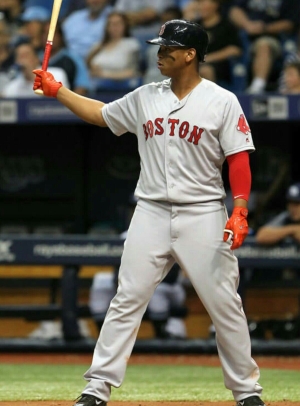
Rafael Devers’ ascent in Boston began as a spark for the 2018 World Series championship squad. While he was initially known for his youthful exuberance and occasional defensive growing pains, he quickly evolved into one of the most feared left-handed hitters in the game. In 2019, he batted .311 and led the American League with 54 doubles and 201 hits. This 90-extra-base-hit campaign signaled his arrival as the elite middle-of-the-order anchor the Red Sox had lacked since the retirement of David Ortiz. From 2021 to 2024, he maintained a remarkable floor of at least 27 home runs and a .500…
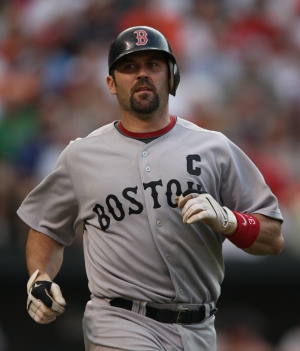
Jason Varitek’s journey to Boston began with a 1997 trade-deadline deal that is now viewed as one of the greatest heists in franchise history. Originally a 14th-round pick by Seattle, Varitek arrived in New England and quickly transformed from a promising prospect into the tactical brain of the Red Sox. By 1999, he was the starting catcher for a team hungry for a title, proving that while he wasn't always the loudest bat in the lineup, he was undoubtedly the smartest mind behind the plate. His peak arrived in 2005, a "Career Year" that saw him earn both the Gold…
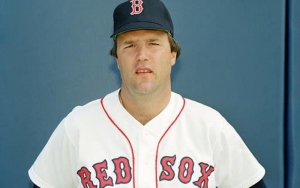
Bob Stanley’s story in Boston is one of relentless availability. Drafted as a first-round talent in 1974, he debuted in 1977 and immediately established a pattern of being whatever the Red Sox needed on a given afternoon. He didn't just play for 13 seasons; he lived in the game, eventually setting a franchise record with 637 appearances. The late 70s and early 80s saw Stanley authoring efficiency peaks from every imaginable angle. In 1978, he produced a statistical anomaly, going 15–2 primarily out of the bullpen and finishing seventh in the Cy Young voting. He followed that in 1979 by…
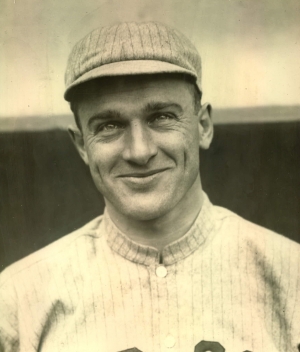
Larry Gardner arrived in Boston in 1908 as a lost kid from the green hills of Vermont, but he quickly became a foundational piece of a powerhouse. By 1910, he had earned his spot as the starting second baseman, but it was his move to the hot corner in 1911 that defined his legacy. Gardner wasn't just a third baseman; he was a tactical defender whose prowess in fielding bunts drew comparisons to the legendary Jimmy Collins. In an era where small ball was king, Gardner’s glove was a high-leverage weapon that protected thin leads and stifled rallies. The 1912…
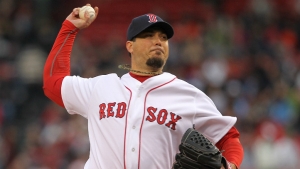
Josh Beckett arrived in Boston in 2006 with a reputation already carved in pinstriped stone. As a 23-year-old with the Marlins, he had famously walked into Yankee Stadium and shut out the Bronx Bombers to clinch a title, a moment of pure intimidation. When he joined the Red Sox as the centerpiece of a blockbuster trade, Boston didn't just get a pitcher; they got a firebrand who lived for the highest possible stakes. After a turbulent first year adjusting to the American League, Beckett found his rhythm in 2007, and the league had no answer for him. That 2007 season…
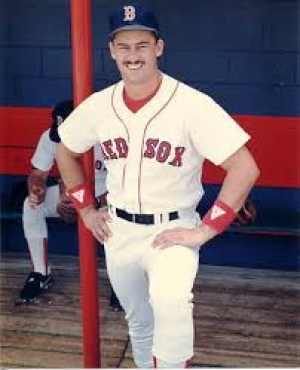
When Mike Greenwell took over left field in 1987, he didn't just inherit a position; he inherited a lineage of legends. Nicknamed "The Gator" for his Florida roots and fearless intensity, he quickly proved he belonged in the conversation. After finishing fourth in the Rookie of the Year voting, he had a career-year in 1988. That season, Greenwell hit for the cycle and posted a staggering slash line of .325/.416/.531, while setting an American League record with 23 game-winning RBIs. This earned him a Silver Slugger and a second-place finish in one of the most famous MVP races in history.…
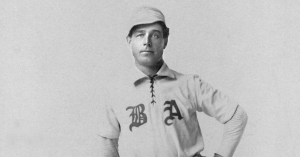
When the American League emerged as a "rebel" circuit in 1901, it needed a face to prove it was more than just an upstart hobby. They found it in Jimmy Collins. By walking away from the established Boston Beaneaters to join the brand-new Boston Americans, Collins didn't just switch uniforms; he shifted the power dynamic of baseball in New England. He arrived not just as a player, but as a statement. Those first two years were a defensive and offensive masterclass, with Collins batting over .322 and proving that the "newer" Boston team was the one to watch. The climax…
Before he ever stepped into the batter’s box at Fenway Park, Jackie Jensen was already a myth. He arrived in Boston in 1954 via trade from the Senators, carrying a resume that sounded like a tall tale: the first man to play in a Rose Bowl, a World Series, and an MLB All-Star Game. But while his athleticism was legendary, it was in a Red Sox uniform that he finally channeled that raw talent into sustained, elite dominance. From the moment he arrived, Jensen became the engine of the Boston offense. For six consecutive seasons, he was the model of…

2026 TORONTO BLUE JAYS FLEX PACKS

Mar 26, 2026

Buy your Tickets to see 2026 Toronto Blue Jays Flex Packs HERE!

2026 TD EXECUTIVE SUITES

Mar 26, 2026

Buy your Tickets to see 2026 TD Executive Suites HERE!

2026 SEATTLE MARINERS FLEX MEMBERSHIPS

Jan 01, 1970

Buy your Tickets to see 2026 Seattle Mariners Flex Memberships HERE!

COLORADO ROCKIES VS. SAN DIEGO PADRES

Apr 23, 2026

Buy your Tickets to see Colorado Rockies vs. San Diego Padres HERE!

 
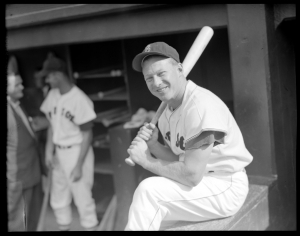
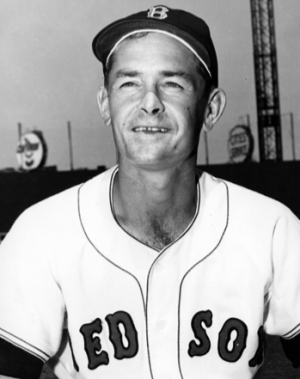
When we talk about the Red Sox of the 1950s, we usually talk about the towering power of Ted Williams. But standing right beside him was Billy Goodman, a player who redefined what it meant to be "valuable." Goodman arrived in Boston and immediately became the ultimate insurance policy. He didn't just play a position; he played every position, sliding between the infield and the outfield with a defensive grace that made him the most versatile weapon of his decade. While his glove was a masterpiece of utility, his true artistry was at the plate. In an era where power…
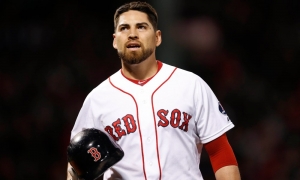
When Jacoby Ellsbury arrived as an August call-up in 2007, he didn't just join the Red Sox—he accelerated them. A late first-round pick with track-star speed, he played the role of the postseason's "X-factor" to perfection, batting a scorching .438 in the World Series to help hoist a trophy before his rookie eligibility had even expired. He arrived as a blur of potential, and for the next few years, he was the most disruptive force on the American League basepaths, with back-to-back stolen base titles in 2008 and 2009. However, the defining chapter of Ellsbury’s Boston story isn't just about…
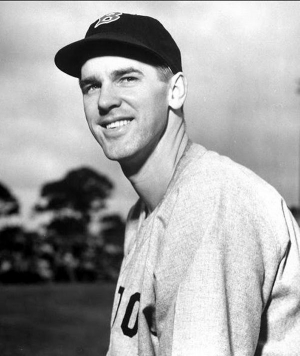
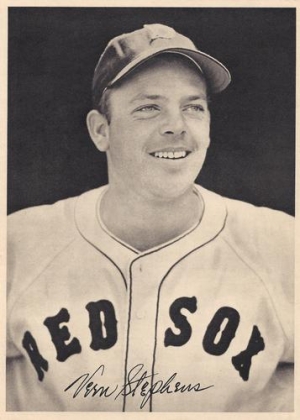
In the late 1940s, shortstop was a position reserved for defensive wizards and contact hitters—men who bunted and scratched out runs. Then came Vern Stephens. Already a home run champion with the St. Louis Browns, Stephens arrived in Boston in 1948 and immediately looked like a man born to play in front of the Green Monster. He didn't just join the Red Sox; he became the thunderous second half of a one-two punch with Ted Williams that remains one of the most terrifying middle-of-the-order combinations in the history of the game. His five-year run in Boston was a relentless assault…
When Pete Runnels arrived in Boston in 1958, he was a versatile infielder who had struggled to find his offensive ceiling in the cavernous Griffith Stadium in Washington. He brought a "swing at everything" mentality to the Fens, but his arrival coincided with a life-changing apprenticeship. Under the tutelage of Ted Williams, Runnels abandoned his pull-heavy approach and began treating the Green Monster like a magnet. He didn't just find his plate discipline; he found a home for his line drives. His five-year run in Boston was a clinic in pure hitting. Runnels didn't just flirt with the .300 mark—he…