


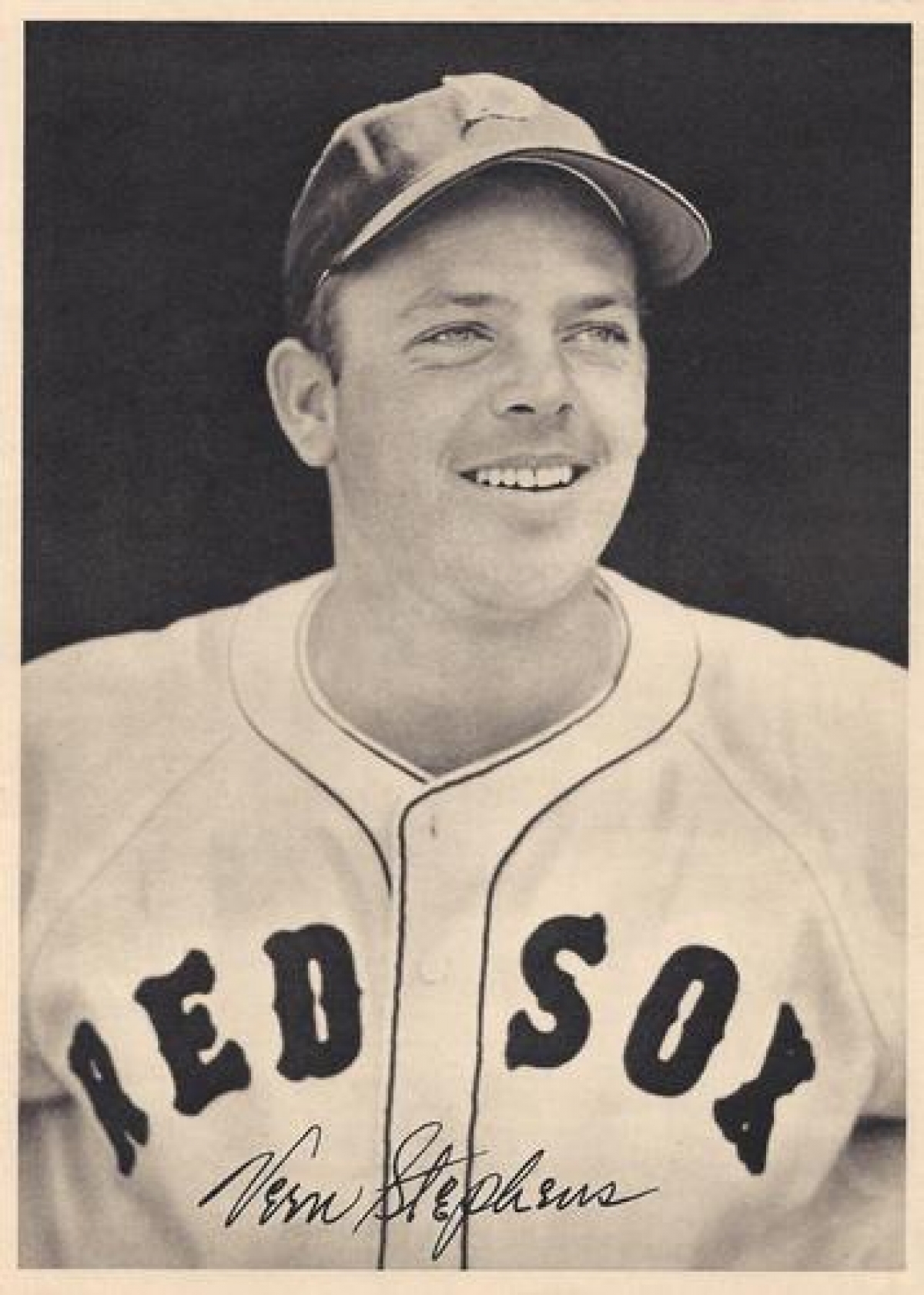


In the late 1940s, shortstop was a position reserved for defensive wizards and contact hitters—men who bunted and scratched out runs. Then came Vern Stephens. Already a home run champion with the St. Louis Browns, Stephens arrived in Boston in 1948 and immediately looked like a man born to play in front of the Green Monster. He didn't just join the Red Sox; he became the thunderous second half of a one-two punch with Ted Williams that remains one of the most terrifying middle-of-the-order combinations in the history of the game.
His five-year run in Boston was a relentless assault on the record books. From 1948 to 1950, Stephens produced a three-year peak that felt more like a glitch in the era's physics. He launched 98 home runs and drove in a staggering 440 runs in that window alone, capturing back-to-back RBI titles in 1949 and 1950. His 1949 season was his masterpiece: 39 home runs and a record-shattering 159 RBIs, a total that still stands as a benchmark for what a shortstop can achieve. To Ted Williams, Stephens wasn't just a teammate; he was the most effective protection he ever had in a lineup.
As the 1950s progressed, the heavy workload and the physical demands of the position began to take their toll. By 1952, injuries had sapped some of the lightning from his bat, and he was dealt to the White Sox before the 1953 season. He left the Fens with 122 home runs and a reputation as the man who proved a shortstop could be a cleanup hitter. While the baseball world occasionally forgets how dominant he was, the Red Sox never did, officially immortalizing him in the franchise Hall of Fame in 2006. He arrived as a trade-market gamble and left as the man who redefined his position, proving that power knows no defensive boundaries.

Comments powered by CComment