gold star for USAHOF

Top 50 Boston Red Sox

An inaugural team when the American League formed in 1901, the Boston Red Sox were first called the Boston Americans, the name they would keep until 1907 when they changed it for good to the Red Sox.

When the first World Series occurred in 1903 with Boston defeating the Pittsburgh Pirates.  They were denied a chance to defend it in 1904 when after winning the pennant, the New York Giants refused to play them, but they won their second World Series in 1912, and the Red Sox would dominate the decade with titles in 1912, 1915, 1916 and 1918.  Despite that success, the Red Sox would unravel quickly, triggered by one of the dumbest transactions in sports history.

Boston sold the contract of Babe Ruth to the New York Yankees for $100,000, and while that was a lot of money back then, it set off a chain of events where the Red Sox were the inferior team to the Yankees for decades.  With the exception of Ted Williams, Boston did not have much to cheer for.  They would win the pennant in 1946, 1967 & 1975 but lost in each of those World Series attempts.  They went back in 1986, but they had a heartbreaking loss to the New York Mets when Mookie Wilson’s ground ball went through the legs of Red Sox’ First Baseman, Bill Buckner.  That would have won them the World Series, and the Red Sox then proceeded to lose Game 7. 

The next century would prove to see the end of the "Curse of the Bambino," and in 2004, they would win the World Series.  Boston continued to have success with championships in 2007, 2013 & 2018.

This list is up to the end of the 2025 season.

Note: Baseball lists are based on an amalgamation of tenure, traditional statistics, advanced statistics, playoff statistics, and post-season accolades.

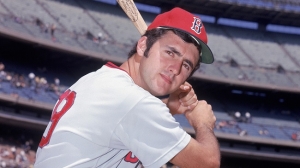
Fred Lynn arrived in Boston as a winner, having led USC to three consecutive College World Series titles before being drafted in 1973. After a brief 15-game cup of coffee in 1974, he entered 1975 ready to make history. In a feat that remained unmatched for decades, Lynn became the first player in Major League history to sweep the AL Rookie of the Year and MVP awards in the same season. As the defensive anchor in center field, he combined acrobatic catches with a bat that led the league in Runs (103), Doubles (47), Slugging (.566), and OPS (.967), propelling…

2026 TORONTO BLUE JAYS FLEX PACKS

Mar 26, 2026

Buy your Tickets to see 2026 Toronto Blue Jays Flex Packs HERE!

2026 TD EXECUTIVE SUITES

Mar 26, 2026

Buy your Tickets to see 2026 TD Executive Suites HERE!

2026 SEATTLE MARINERS FLEX MEMBERSHIPS

Jan 01, 1970

Buy your Tickets to see 2026 Seattle Mariners Flex Memberships HERE!

COLORADO ROCKIES VS. SAN DIEGO PADRES

Apr 23, 2026

Buy your Tickets to see Colorado Rockies vs. San Diego Padres HERE!

 
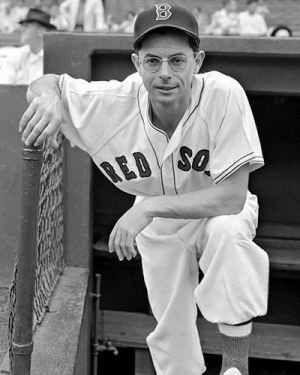
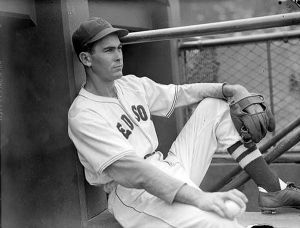
Though often introduced as the brother of Joe, Dom DiMaggio carved out a legacy in Boston that was entirely his own. Nicknamed "The Little Professor" for his spectacles and scholarly demeanor, he proved to be a clinical technician at the top of the lineup from the moment he debuted in 1940. A natural lead-off man, DiMaggio combined elite plate discipline with a high-contact bat, securing All-Star selections in each of his first two full seasons while consistently pacing the Red Sox offense with 165+ hits a year. Like many of his teammates, DiMaggio’s career was interrupted by three years of…
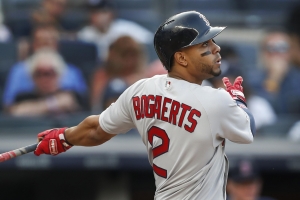
Xander Bogaerts didn't just emerge from Aruba; he became the island’s greatest baseball ambassador. Signed in 2009, he ascended rapidly through the system, reaching Boston in 2013 just in time to provide high-leverage hits during the Red Sox's improbable World Series run. By 2014, he was the everyday shortstop, embarking on a decade-long stretch where he combined a smooth right-handed stroke with a steady defensive presence that anchored the Fenway infield. A four-time All-Star and five-time Silver Slugger in Boston, Bogaerts proved to be one of the most consistent offensive threats at his position. His 2019 campaign stands as his…
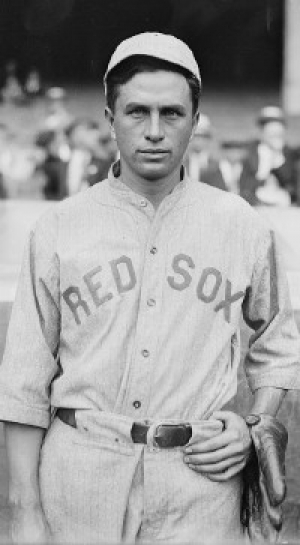
Harry Hooper debuted for the Red Sox in 1909 and quickly became the defensive heartbeat of the most legendary outfield in baseball history. Alongside Tris Speaker and Duffy Lewis, Hooper formed the "Million-Dollar Outfield," a trio whose collective range and intelligence redefined how the game was played in the early 20th century. While he was a model of consistency at the plate, it was his legendary glove and his revolutionary "rump-slide" catch that made him a centerpiece of the Red Sox dynasty. Hooper’s value to the Red Sox was rooted in his dominance as a leadoff man and defensive specialist.…
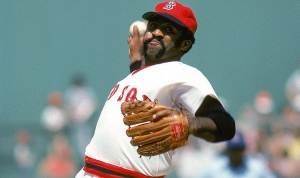
Luis Tiant’s journey to Boston began in 1971 on a humble minor league contract. After a dominant early career in Cleveland, injury and inconsistency had seemingly derailed the Cuban right-hander. His first year in Boston (1-7, 4.85 ERA) suggested he was finished. However, what followed in 1972 was one of the most spectacular career resurrections in baseball history. Tiant didn't just return; he reinvented himself, debuting a dizzying, corkscrew windup that left American League hitters completely baffled. The 1972 season was a masterpiece of efficiency. Tiant secured the AL ERA Title with a 1.91 mark, going 15–6 and winning the…
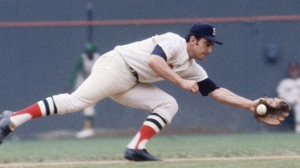
After a brief debut in 1963 and a final polish in Triple-A, he became the bedrock of the Boston infield in 1965. While he was initially known for his steady glove, Petrocelli evolved into the most dangerous offensive shortstop of his era. By the "Impossible Dream" season of 1967, he was an All-Star and a defensive wizard, finishing in the top six for defensive bWAR for four consecutive seasons (1966–1969). The 1969 campaign stands as one of the greatest individual seasons in franchise history. Petrocelli shattered the expectations for his position, launching 40 home runs—a record for American League shortstops…
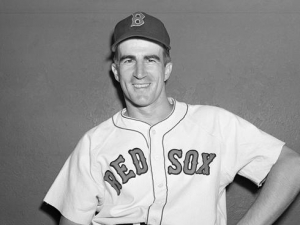
Johnny Pesky authored what many consider the greatest rookie season in Red Sox history. Debuting in 1942 as the starting shortstop, he immediately dismantled American League pitching, leading the league with 205 hits and batting a blistering .331. He finished third in the MVP voting, a peer comparison marker that signaled the arrival of a generational table-setter. However, like so many of his era, Pesky sacrificed his physical prime to military service, missing the next three seasons (1943–1945) due to World War II. When Pesky returned in 1946, he picked up exactly where he left off, leading the AL in…
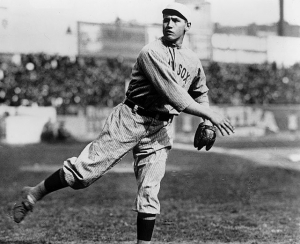
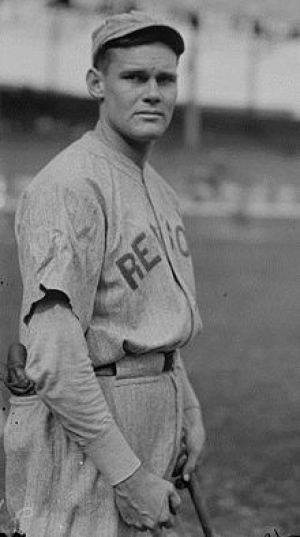
Howard Ellsworth Wood didn't just pitch; he threw "smoke." Debuting as a teenager in 1908, he quickly established himself as the hardest thrower of the Deadball Era. By 1910, he was already an "Efficiency Outlier," posting a 1.69 ERA. In 1911, he led the American League in FIP (2.13) and Strikeouts per 9 innings (7.5), a metric that proved his dominance was no fluke of defense; he was simply missing bats at a rate his peers couldn't match. The 1912 campaign remains a statistical monument in the Red Sox wing of the Lab. Wood authored a season for the ages,…
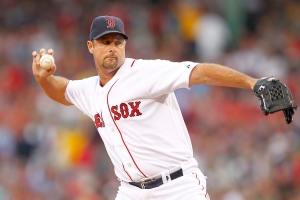
After two forgettable seasons with the Pittsburgh Pirates, Tim Wakefield will always be remembered for his knuckleball and 17 seasons as a member of the Boston Red Sox.
Cecil "Tex" Hughson arrived in Boston in 1941 and quickly established himself as the workhorse of the Red Sox rotation. By 1942, he authored a strong finish via traditional means, leading the American League in Wins (22), Complete Games (22), Innings Pitched (281), and Strikeouts (113). This rare "quadruple crown" of volume and performance earned him an All-Star nod and a sixth-place finish in the MVP voting, which confirmed his status as an elite arm. While 1942 was his most famous year, his 1944 campaign was statistically his most efficient. Hughson posted a career-low 2.26 ERA and led the league…
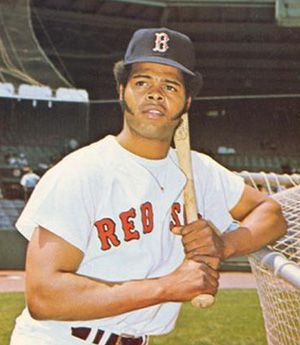
Reggie Smith was acquired by the Red Sox in what remains one of the shrewdest moves in franchise history. Originally signed by Minnesota, Smith debuted in Boston in 1966 and quickly became a cornerstone of the youth movement. By 1967, he was the everyday center fielder and the runner-up for the AL Rookie of the Year, serving as a vital spark for the pennant-winning squad. His ability to impact the game from both sides of the plate and all three outfield positions made him a tactical nightmare for opposing managers. Smith’s run in Boston is noted for his five-year peak…
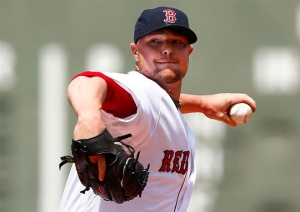
Jon Lester’s journey to Boston greatness is defined by a level of perseverance that transcends the box score. Drafted in 2002, he debuted in 2006 but soon faced a battle far greater than any hitter: a diagnosis of Anaplastic Large Cell Lymphoma. His return to the mound in 2007 was a movie-worthy story, culminating in a high-leverage start in Game 4 of the World Series. By clinching the title against Colorado, Lester didn't just win a game; he signaled the arrival of the next great Red Sox ace. Lester’s peak arrived in 2008 when he went 16–6 and threw a…
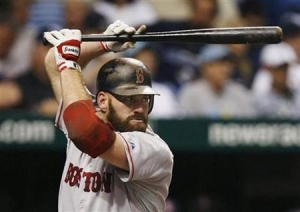
Kevin Youkilis debuted in 2004, providing a spark for the team that finally "reversed the curse." Though he spent 2005 navigating Triple-A and injuries, he became the everyday first baseman in 2006, immediately proving why he was nicknamed the "Greek God of Walks." Youkilis combined a gritty, dirt-stained style of play with a clinical approach at the plate, forcing pitchers into deep counts and punishing mistakes. By 2007, he was the heartbeat of a second championship run, proving that a high-OBP specialist could also be a Gold Glove-caliber defender. The 2008 and 2009 seasons represent Youkilis’s peak.  In 2008, he…
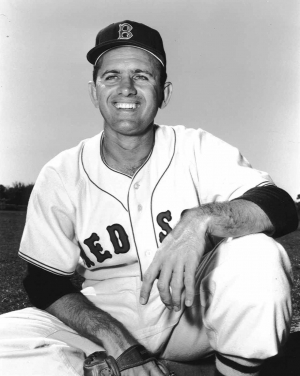
Mel Parnell debuted in 1947 and quickly proved that a left-hander could not only survive Fenway Park but dominate it.  A career Red Sox who spent his entire 10-year career in Boston, Parnell combined impeccable control with a hard-breaking slider that stifled right-handed hitters. His legacy is built on his status as the "Yankee Killer," a pitcher who consistently rose to the occasion against Boston's fiercest rival during the height of the post-war era. The 1949 season stands as Parnell’s best year. In a year where he finished fourth in the MVP voting, he led the American League in Wins…
Hubert "Dutch" Leonard arrived in Boston in 1913 and immediately established himself as a left-handed force. Following a stellar rookie campaign, he authored a sophomore season in 1914 that defies modern comprehension. Leonard went 19–5 and set a Major League record with a 0.96 ERA—a mark that remains the lowest in the live-ball or deadball era for any pitcher with at least 200 innings paired that microscopic ERA with league-leading marks in FIP (1.95), WHIP (0.886), and Strikeouts per 9 (7.1). Leonard was the engine behind the 1915 and 1916 World Series titles. While the Red Sox rotation was deep,…
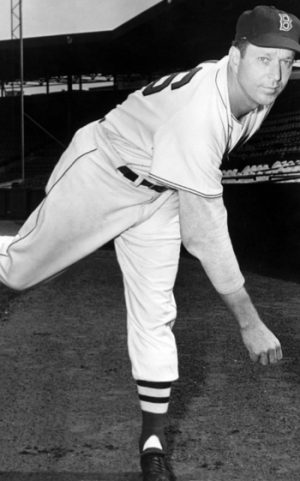
Ellis Kinder’s path to Boston was anything but conventional. Debuting as a 31-year-old rookie for the St. Louis Browns, "Old Folks" arrived at Fenway in 1948 with little fanfare. However, he quickly shattered every expectation (which wasn’t much). In 1949, Kinder led the American League with 23 Wins and a league-best 6 Shutouts. He was the league's most effective workhorse, finishing fifth in the MVP voting and earning the prestigious Sporting News Pitcher of the Year award, a hardware proxy that effectively serves as a pre-Cy Young era 10.0. In 1951, as injuries began to mount, the Red Sox moved…
Joe Cronin arrived in Boston in 1935 not just as an elite shortstop, but as the "Field General" charged with transforming the franchise. After a runner-up MVP finish in Washington, the Red Sox traded for Cronin to lead both their defense and their dugout. Despite a leg injury that hampered his 1936 season, he authored a five-year peak (1937–1941) that redefined the offensive ceiling for his position. During this stretch, he was a metronome of productivity, never recording fewer than 155 hits, 16 home runs, or 94 RBIs in a full season. Cronin was a five-time All-Star in Boston, consistently…
John Valentin spent a decade in Boston (1992–2001) as the stabilizing force of the Red Sox infield. While he famously lacked a Gold Glove on his mantle, the advanced metrics tell a different story. Valentin was a defensive savant, leading the American League in Total Zone Runs twice (1993 and 1995) and topping his position in that category three times across two different spots on the diamond. His 12.3 Defensive bWAR in Boston proves that he was the most efficient run-saver in the league during his prime. Valentin’s peak arrived in the mid-90s, where he evolved into one of the…
Mo Vaughn arrived in Boston in 1991 and quickly became the "Hit Dog," a nickname that defined his aggressive, lunging presence at the plate. While his power was his calling card, Vaughnwas fueled by a surprising level of contact and plate discipline. From 1994 to 1998, he reeled off five consecutive .300 seasons, peaking with a career-best .337 in his final year in Boston. However, this peak was a masterclass in "playing through it"; despite the elite average, the agility and health that fueled his early 90s rise were already beginning to wane before he ever left New England. The…