

4. Felix Hernandez
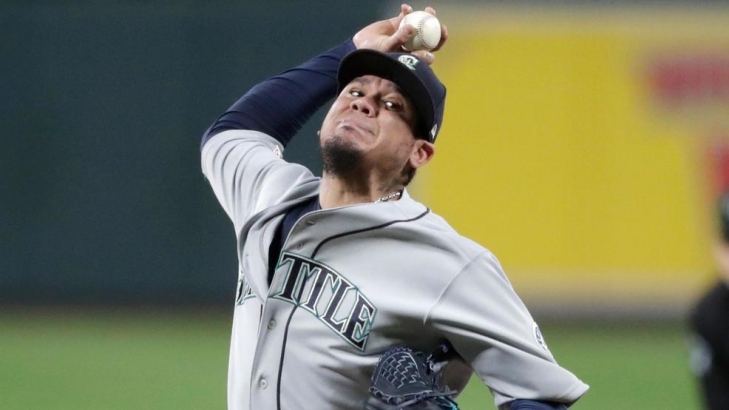
The lineage of elite pitchers in the Pacific Northwest includes many remarkable, high-velocity stars, but the undisputed leader is a once-in-a-generation right-hander from Valencia, Venezuela. Signed as a highly sought-after 16-year-old amateur free agent in 2002, Félix Abraham Hernández García came to the U.S. with the goal of emulating his childhood idol, former Mariners star Freddy García. He surpassed those expectations dramatically. Equipped with a powerful mid-90s fastball and a lethal, high-speed changeup that was unhittable at the plate, this young phenom quickly rose through the minor leagues to debut in the majors at just 19 in 2005. He struck out 77 batters in 12 electrifying starts, igniting immediate local buzz and steadily climbing toward the sport’s highest peak.
His initial campaigns offered a compelling showcase of raw, frontline potential, but Hernández engineered his national breakout as a star during a magnificent 2009 regular-season masterpiece. He systematically dismantled American League batting orders, pacing the major leagues with 19 victories and securing his first career All-Star selection alongside a brilliant runner-up finish in the Cy Young balloting. That stellar showcase ignited an unyielding six-year run of pure dominance in which "King Felix" reigned supreme over the baseball world.
Hernandez turned the 200-strikeout milestone into a strict, everyday routine, rattling off six consecutive summers with at least 200 punchouts from 2009 through 2014, while anchoring a defense that routinely leaned on his right arm to carry them through low-scoring duels.
Hernández reached the pinnacle of his career during the groundbreaking 2010 season. Back then, many voters still focused on traditional stats like pitcher wins, but he broke the mold by winning the American League Cy Young Award with a modest 13–12 record. This surprising achievement was largely due to a lack of run support from his team, Seattle, which struggled offensively. Advanced efficiency filters heavily validated his hardware-certified authority, as he led the major leagues with a microscopic 2.27 ERA and 249.2 grueling innings pitched while racking up 232 strikeouts.
Hernández remained a fixed star in the Cy Young conversation for years, rattling off four consecutive top-eight finishes from 2012 through 2015. He secured another runner-up finish in 2014, orchestrating a magnificent showcase in which he led the American League with a career-best 2.14 ERA and a sparkling personal-best 0.915 WHIP.
Beyond the hardware, he created a moment of immortality on August 15, 2012, against the Tampa Bay Athletics at Safeco Field. Using his sharp spatial awareness and a deadly pitch mix, he retired all 27 batters in order, pitching the 23rd perfect game in Major League history—and the first in Mariners franchise lore. His incredible achievement inspired the formation of "The King’s Court," a lively, yellow-shirted cheering section in the left-field line that turned his starting days into a joyful and festive cultural event.
The King would hold on until he retired after the 2019 season. Hernandez would overall post a record of 169-136 with a 3.42 ERA and 2,524 Strikeouts. He is the Mariners all-time franchise leader in Wins, Strikeouts, and Innings Pitched (2,729.2). The Mariners inducted Hernandez into their franchise Hall of Fame in 2013. We have no problem saying that King Felix is the best Seattle Mariners Pitcher of all-time.
14. Mark Langston
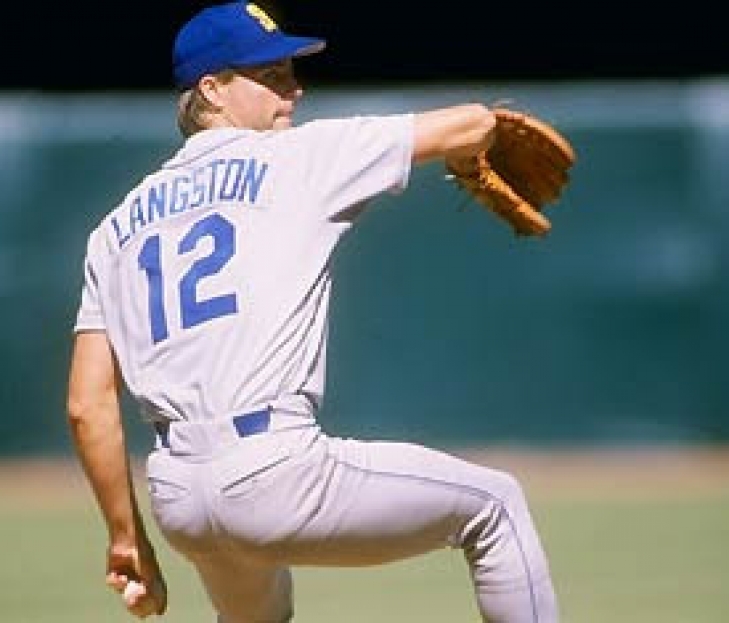
Selected in the second round of the 1981 amateur draft from San Jose State University, Mark Edward Langston did not simply ease his way onto the major league stage; he emerged prominently with a formidable, looping curveball and an exceptionally fast fastball that immediately transformed the competitive expectations of a young franchise. Throughout a concentrated, highly athletic five-and-a-half-season tenure, the dynamic southpaw served as the club's foremost strikeout artist, establishing a legacy as a formidable, reliable ace who consistently pushed his physical boundaries under the gray skies of Seattle.
His rookie debut in 1984 was truly impressive, showing right from the start that he could command the front of the card. Langston loved striking out batters and carried a strong 17–10 record with a sharp 3.40 ERA in 33 starts, impressively rallying a 74-win team behind him. Over 225 innings, he consistently challenged American League lineups, leading the circuit with 204 strikeouts and setting a modern rookie record for his franchise. Although his blazing fast pitches also led to 118 walks, his skill in working deep counts earned him a well-deserved second place for the American League Rookie of the Year award, surprisingly just behind his close teammate and roommate, Alvin Davis.
In 1985, Hampered by a minor elbow ailment, Langston struggled a bit with consistency, finishing with a 7–14 record and an ERA of 5.47. But he quickly bounced back and shined in the following years, leading the American League in strikeouts for two straight summers in 1986 and 1987. In 1986, he racked up an impressive 245 punchouts, and in 1987, he truly reached a career peak during an incredible regular season. That year, Langston demonstrated incredible stamina and durability, showcasing his hard work and resilience. He finished with a fantastic 19 wins and 13 losses, setting a franchise record by pitching 272 innings and throwing 14 complete games. His efficiency was remarkable, leading all of Major League Baseball with a career-high 262 strikeouts. This outstanding season earned him his first All-Star spot and a fifth-place finish in the American League Cy Young Award voting.
Langston was an elite, hyper-agile defender with a thunderous Arm, known for a lethal pickoff move to first base. He won consecutive American League Gold Glove Awards in 1987 and 1988 and added 235 strikeouts in 1988.
Langston leveraged his elite status for a big contract with the California Angels, earning three consecutive All-Star selections from 1991 to 1993 and building a decorated career. He left the Pacific Northwest with a strong record: 74–67, 51 complete games, and 1,078 strikeouts in 1,198.1 innings over 176 starts.
13. Freddy Garcia
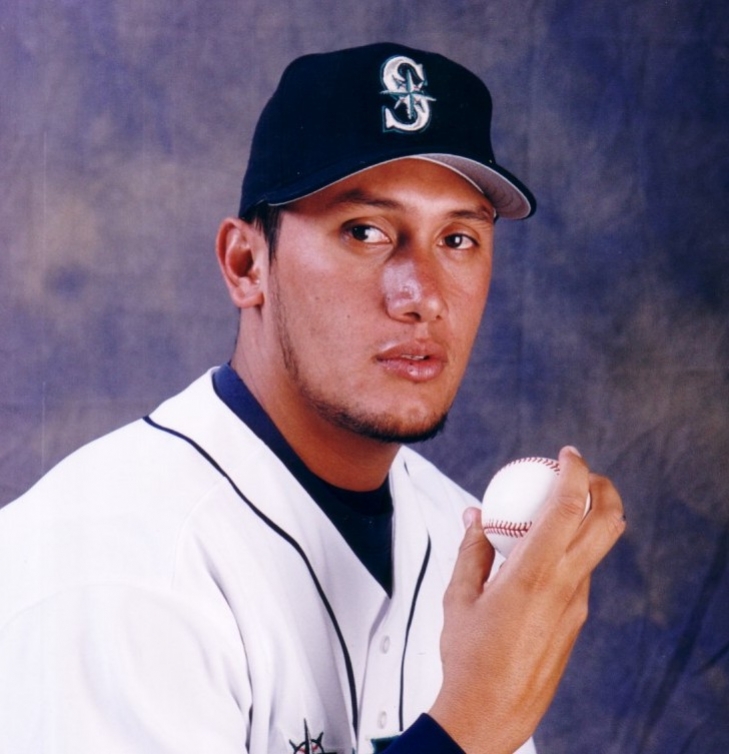
When an organization determines it is appropriate to part ways with a legendary, once-in-a-generation left-handed icon, the obligation to extract maximum premium value from the market becomes paramount. The Seattle Mariners encountered precisely such a franchise-changing decision in July 1998, when they traded a discontented Randy Johnson to the Houston Astros. While the immediate concern centered on the regrettable departure of "The Big Unit," the most valuable component of the return package quickly arrived in Upper Manhattan via the Astros' minor league system. Equipped with an imposing 6-foot-4 stature and a powerful, high-velocity sinker, Freddy Antonio García did not merely fill the significant void left by a legend; the Venezuelan right-hander, universally recognized as "The Chief," evolved into the resilient, high-performance engine of the most successful regular-season team in the modern history of the sport.
His inaugural 1999 rookie season was a remarkable demonstration of immediate, frontline dominance that caused considerable and enduring seller's remorse among the Houston front office. García established a disciplined daily routine of logging significant innings, elevating the pitching staff and compiling an impressive 17–8 record over 33 starts. He systematically dismantled American League lineups over 201.1 innings, amassing 170 strikeouts and achieving a noteworthy second-place finish to Carlos Beltrán for the American League Rookie of the Year award, while also securing a prominent ninth-place position in the AL Cy Young Award voting.
The 2000 schedule was tough; he suffered a severe stress fracture in his throwing elbow, restricting him to only 21 games. Despite this setback, he displayed the legendary grit that characterized his career, finishing with a 9–5 record in the final stretch, helping the Mariners reach the October postseason.
Garcia had an unforgettable 2001 season. As the Mariners celebrated a record-breaking 116 wins, Garcia proudly stood out as the team's top pitcher, gaining well-deserved recognition everywhere. He showed incredible defensive skill and worked tirelessly, pitching an impressive 238.2 innings. Garcia regularly challenged opposing batters, winning 18 games with only six losses. He also earned the prestigious American League ERA title with a tiny 3.05 and kept a solid 1.123 WHIP, highlighting his talent and dedication. This outstanding performance earned him his first career All-Star selection, presented to him in front of his passionate home fans at Safeco Field, culminating in a fantastic third-place finish in the American League Cy Young Award voting.
García sustained that frontline authority into the 2002 campaign, using his devastating split-finger fastballs to secure a second consecutive All-Star nod. He systematically neutralized lineups across 34 assignments, forging a strong 16–10 record with a career-best 181 strikeouts over 223.2 frames, confirming his status as one of the premier right-handed workhorses in the game.
However, as the organization commenced navigating a prominent and comprehensive competitive decline over the following two summers, the unavoidable exit from the business transpired. With his contractual obligations approaching their conclusion, the front office orchestrated a significant trade in June 2004, exchanging their longstanding ace to the Chicago White Sox for a package predominantly comprising Michael Morse and Miguel Olivo. This transaction marked the definitive conclusion of his historic tenure in Seattle.
García accumulated exactly 76 victories against 50 defeats, maintaining a sharp 3.89 ERA and a 1.314 WHIP while fanning 819 batters in 1,091.2 innings of work.
12. Robinson Cano

When a brave and ambitious front office team is eager to show that their franchise is ready to move past rebuilding and start competing with the top teams, they make a bold statement in the open market. In December 2013, the Seattle Mariners did just that, surprising the baseball world by signing star second baseman Robinson José Canó with a huge 10-year, $240 million deal. Coming to the Pacific Northwest with five All-Star appearances and a 2009 World Series ring from his time with the New York Yankees, this talented player, already over 30 years old, still had plenty of top-level skills to share with the fans in Emerald City. Over five intense seasons, he became the smooth, highly effective heartbeat of the Mariners' lineup, showing off his amazing hitting skills and graceful defense.
His first season in 2014 with the Mariners was truly impressive, showcasing his immediate impact and skill. Canó turned hitting into an art, smoothly adapting to Safeco Field’s big dimensions by collecting 187 hits and 37 doubles. He skillfully dismantled American League pitchers, achieving a fantastic .314 batting average, driving in 82 runs, and using his keen zone awareness to draw 61 walks. His efficient play powered the team’s offense, earning him his sixth straight All-Star nod and a proud fifth-place finish in the American League Most Valuable Player voting.
Despite dealing with serious gastrointestinal issues and a sports hernia that affected his power during a transitional summer in 2015, Canó truly reached his peak in an unforgettable 2016 season. Fully healthy and confidently swinging his signature, effortless left-handed bat, he showcased impressive power in the middle of the lineup. Over 161 games, he consistently worked deep counts and demonstrated his strength by setting a career high with 39 home runs, along with 195 hits, 33 doubles, and 103 RBIs. His excellent slash line of .298/.350/533 resulted in a strong .883 OPS and a 138 OPS+, proving that even as an experienced second baseman, his powerful bat speed remained highly dangerous. He continued this form with another remarkable season in 2017, hitting 23 home runs and driving in 97 RBIs, highlighted by a memorable All-Star Game MVP performance where he hit a game-winning, 10th-inning home run in Miami.
The final chapter of his time in Seattle reached a highly turbulent, legacy-altering crossroads in 2018. Just as he was putting together a stellar campaign, a fractured bone in his right hand from a hit-by-pitch was immediately followed by a shocking, 80-game suspension for violating Major League Baseball's Joint Drug Prevention and Treatment Program. Though he returned later that summer to finish with a robust .303 average and 10 home runs in 80 games, the organizational fallout prompted a sudden, blockbuster roster reconstruction.
Seeking to clear future financial obligations, the front office packaged the veteran star with closer Edwin Díaz in a large trade to the Mets that December, ending his residency. Canó left Seattle with a remarkable stats record, including 821 hits, 159 doubles, 107 home runs, and 411 RBIs over 704 games, with a .296/.353/472 slash line.
8. Kyle Seager
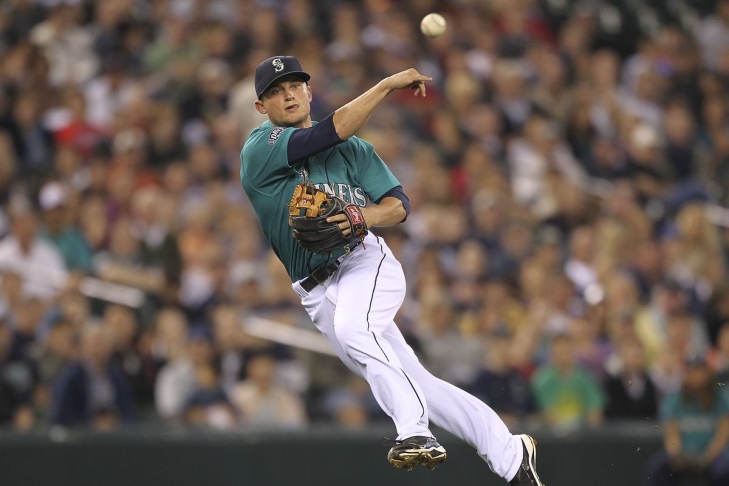
In an organization once known for legendary icons that mesmerized the baseball world, a quiet and remarkably consistent infielder from North Carolina demonstrated that a franchise can thrive with a humble, workmanlike mindset. Picked by the Seattle Mariners in the third round of the 2009 amateur draft, Kyle Seager spent his entire 11-season MLB career quietly fulfilling his role, avoiding the spotlight. After making his debut in summer 2011, the left-handed hitter secured the starting third baseman position the following spring, beginning a decade of reliable performance that offered vital stability during a highly transitional period in Pacific Northwest baseball history.
Seager was seldom considered a flashy, transcendent superstar, but he made offensive reliability a consistent daily habit. When he took over the starting role in 2012, he instantly hit 20 home runs, starting a remarkable streak of hitting at least 20 homers in nine of his ten full major league seasons.
His career's greatest evolutionary breakthrough occurred during an outstanding 2014 regular season. Seager dominated the middle of the Seattle lineup, hitting 25 home runs, 27 doubles, and a personal best of 96 RBIs. This impressive performance earned him his first All-Star selection, a top-20 spot in the American League MVP voting, and a seven-year, $100 million contract extension, securing his future as a Mariner.
Nevertheless, an exclusive focus on his consistent batting performance provides only a partial account of his multifaceted impact. At the hot corner, Seager established an outstanding defensive reputation through exceptional reflexes, strategic positioning, and a powerful throwing arm. He earned an American League Gold Glove Award during his remarkable summer of 2014, leading all AL third baseman in Total Zone Runs.
He was a key figure on the infield grass, leading all junior circuit third basemen in assists and double plays three times, providing a reliable presence for the entire defense. Seager carried that dependable performance into 2016, delivering his best all-around season with a career-high .278 batting average, 30 home runs, and 99 RBIs, contributing to a strong 6.9 position-player bWAR.
The final chapter of his career in 2021 provided an emotional, power-packed finale beneath the T-Mobile Park rafters. While his contact metrics experienced a natural, age-related regression, resulting in a modest .212 batting average, Seager compensated entirely by maximizing run production. He unleashed an unadulterated display of muscle during his age-33 season, hammering a career-high 35 home runs and driving in 101 runs.
Seager left baseball with 1,395 hits and 242 home runs.
4. Alex Rodriguez
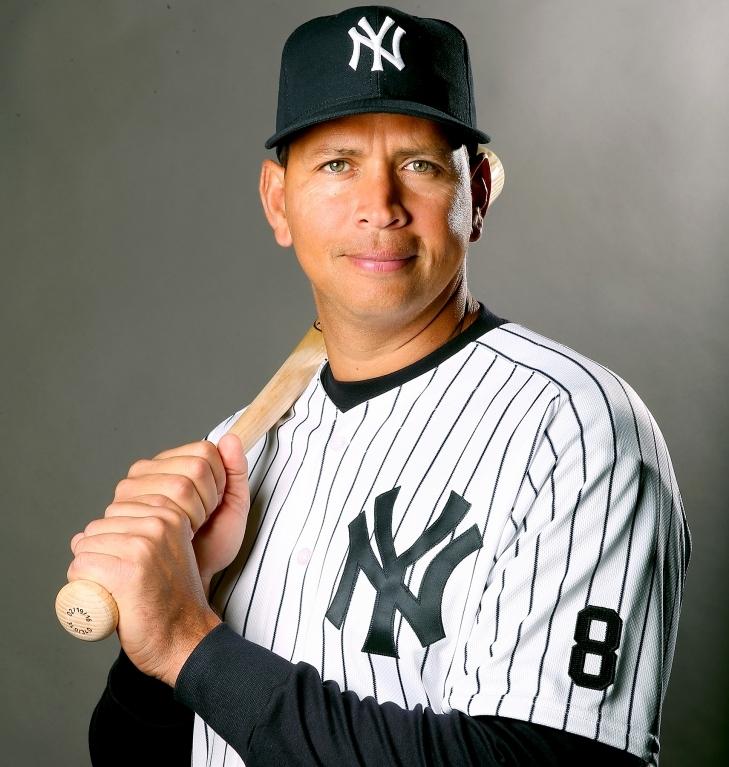
Let's get all the derogatory stuff out of the way…and we know there is a lot.
While we talked about PED use a lot with Mark McGwire, Roger Clemens, Barry Bonds, et all., they were baseball superstars who took enhancements (allegedly) when the players' union and Major League Baseball had not yet agreed that they were banned substances. That is important to note, as Alex Rodriguez was caught while penalties were in place, leaving no doubt that he cheated and was suspended for the entire 2014 season.
There is more, of course.
The Yankees famously tried everything to get out of the lavish contract they signed him to. A-Rod folded in many postseasons and clutch situations. He was also not known to be the most cohesive figure in the clubhouse.
That is a lot of negative, and yet…
Alex Rodriguez is still one of the best players that ever played the game.
Touted as a superstar, Alex Rodriguez was the first overall choice of the 1993 Draft. In the year he turned 20, he won the American League Batting Title with a 36-homer season and an OPS of 1.045. A-Rod was the cornerstone of a young, dynamic Seattle Mariners team that was a strong World Series contender in the late '90s. He was considered the best offensive infielder in baseball and one of the game's most complete players.
When he achieved free agency, Rodriguez signed what was at the time by far the richest contract in baseball history with the Texas Rangers. While he couldn't make Texas a contender, Rodrigues did not disappoint, winning three straight Home Run titles and his first MVP (2003). Texas, however, could no longer afford him, and after a deal to Boston was voided, A-Rod moved to New York, where the most controversial yet productive period began.
While many remember the bad times with New York, it should never be forgotten that this was where he won two more MVP Awards, two more Home Run Titles, and three more Slugging Titles. He went yard 351 times as a New York Yankee alone! As mentioned, his postseason performance (.259/.365/.457 over 330 Plate Appearances) is well below his regular season numbers. His 2009 postseason was excellent, and it was a part of why the Yankees won the 2009 World Series. If he does get into the Hall of Fame, shouldn't it be as a New York Yankee?
Love him or hate him, we are talking about a player who is a statistical juggernaut. He has a career bWAR over 117, is a member of the 3,000 Hit Club and smashed 696 Home Runs. His career Slash Line of .295/.380/.550 is also excellent considering the longevity of his career. These digits are impossible to ignore, no matter what lens you use.
For the record, if we here at Notinhalloffame.com had a Baseball Hall of Fame vote, we would vote for him (we think). Maybe we would not.
The issue that we deal with regarding Rodriguez is that his PED use took place AFTER the MLBPA agreed to the parameters of what would happen if you used them. Not only that, but he was suspended twice. A-Rod might be welcomed back into the fold as a broadcaster, but the voters are rejecting him, and we understand why.
The Seattle Mariners to retire Edgar Martinez' Number
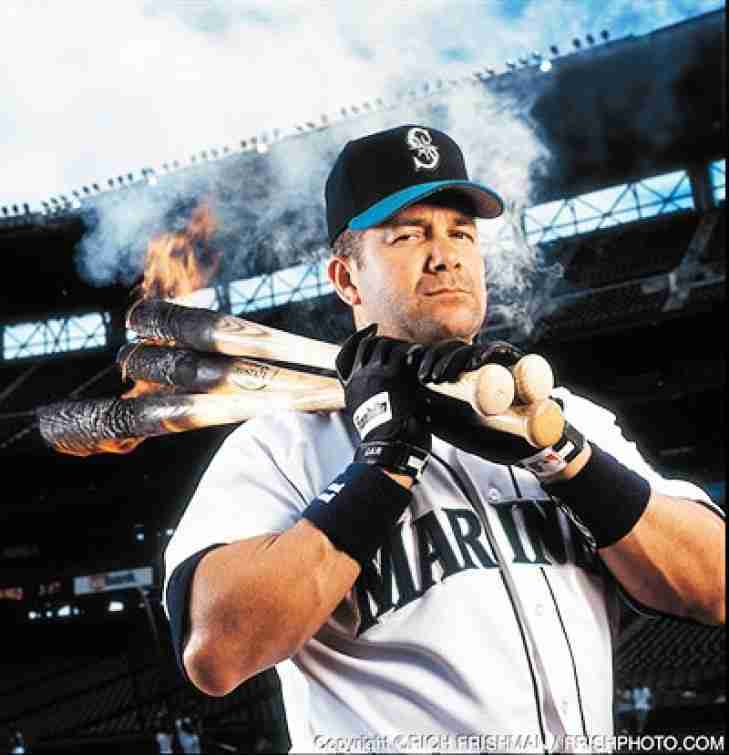
This is no small honor, as the Mariners have been stingy with their retired numbers. To date, only the league mandate #42 of Jackie Robinson and that of recently elected Hall of Famer, Ken Griffey Jr.
While it remains to be seen whether or not Martinez will join Griffey Jr. in Cooperstown, his chances grew as he made it to 58.6% on the ballot, his highest ever, and by quite a substantial margin. For years, it appeared that the former Designated Hitter was not going to be selected, but the man who played his entire career in Seattle seems to have a real shot at the ultimate individual trophy in all of Baseball.
Martinez career numbers include 2,247 Hits, 309 Home Runs, two Batting Titles, a career Slash Line of .312/.418/.515 and a bWAR of 66.4. He went to seven All Star Games and won five Silver Slugger Awards.
The ceremony will take place on August 12.
We here at Notinhalloffame.com would like congratulate Edgar Martinez on earning this huge honor.
The Seattle Mariners to retire Ken Griffey Jr.s number
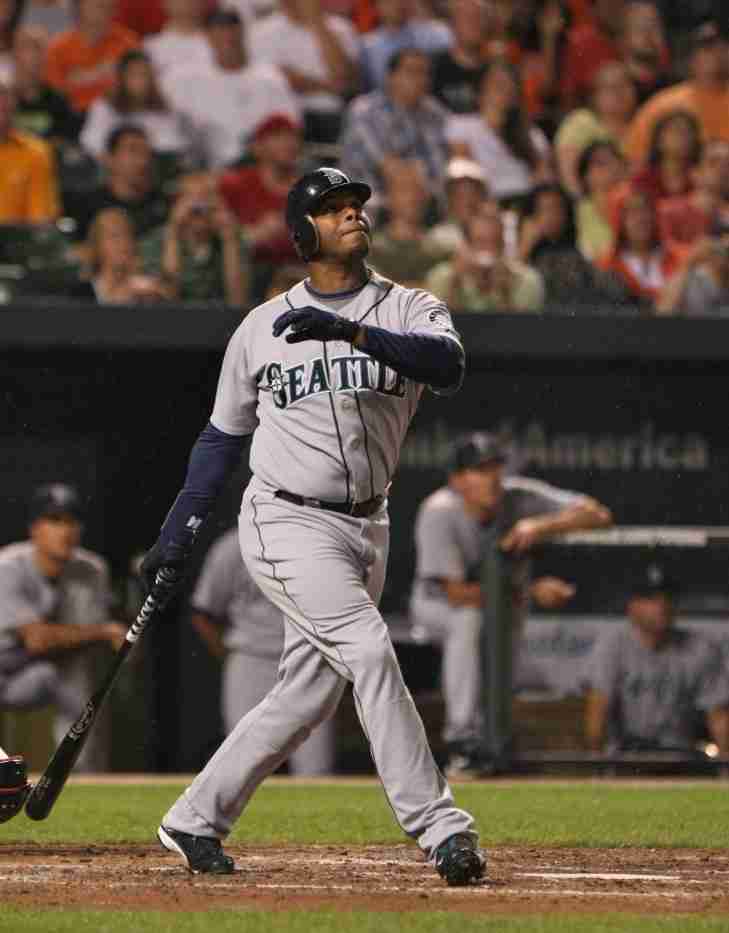
The Seattle Mariners will be retiring the number 24 that Griffey Jr. wore. This is no small honor as with the exception of the league wide mandatory retirement of Jackie Robinson’s #42 this is the first number retired by the organization.
Ken Griffey Jr. played for Seattle from 1989 to 1999 and finished his career there in 2009 to 2010. In the 13 seasons he was a Mariner, he accumulated 417 Home Runs, 1,216 RBI, 167 Stolen Bases with a Slash Line of .284/.370/.538 and a bWAR of 63.5. This included four Home Run Titles, ten All Star Games, seven Silver Sluggers, ten Gold Gloves and one Most Valuable Player Award.
Griffey Jr. will also become the first to enter Cooprstown wearing a Seattle Mariners hat.
We would like to congratulate Ken Griffey Jr. for his latest and deserved accolade.
140. Jamie Moyer