

 Not in Hall of Fame News
Yes, we know that this is taking a while! As many of…
 Not in Hall of Fame News
Yes, we know that this is taking a while! As many of…
 Not in Hall of Fame News
2002 SEMI-FINAL RESULTS: Thank you for your participation in the Pro Football…
 Not in Hall of Fame News
Yes, we know that this is taking a while! As many of…
 Not in Hall of Fame News
We are diligently working away at Notinhalloffame on revising our Football lists…
 Not in Hall of Fame News
We are diligently working away at Notinhalloffame on revising our Football lists…
 From the Desk of the Chairman
October baseball often turns individual pitching performances into lasting postseason memories. Strikeout…
 From the Desk of the Chairman
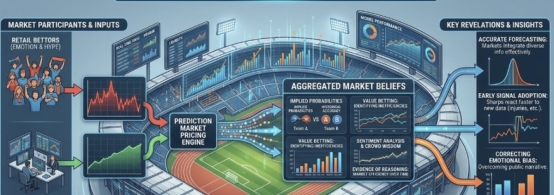
For decades, the sports debate ran on gut feeling. Barstool arguments, call-in…
 From the Desk of the Chairman
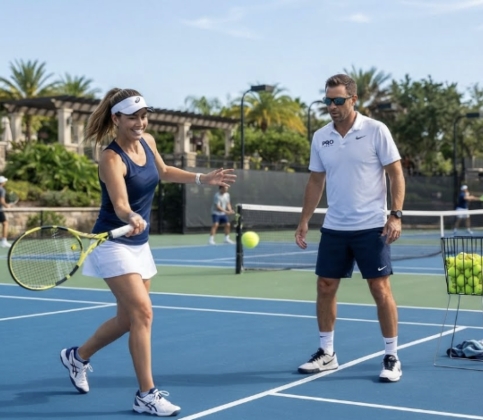
Introduction to Private Adult Tennis Camps in Prague Adult club players increasingly…
 From the Desk of the Chairman
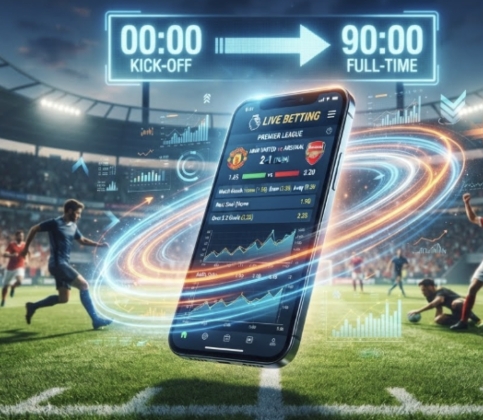
Unlike in the case of pre-match betting, where you have to pick…
 From the Desk of the Chairman
Kupu178 builds trust with people by using top-end end-to-end encryption. It checks…
 From the Desk of the Chairman
Sports fans thrive on calculating strategy, reading momentum, and maximizing every tactical…
100 Active Potential Football Hall of Famers
-
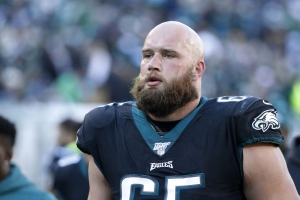 #34 Overall, Lane Johnson, Philadelphia Eagles, Right Tackle, #3 Offensive LinemanPre-Season Rank #27, 2024 Pre-Season Rank #40, 2023 Pre-Season Rank #57, 2022 Pre-Season Rank #107, 2021 Pre-Season Rank #143. Peak Period 2017-18/2022-24 When…
 -
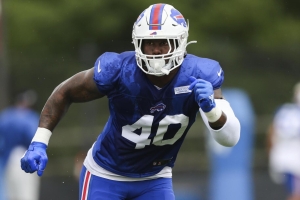 #8 Overall, Von Miller, Dallas Cowboys, #3 Defensive Lineman/Linebackers: Pass Rushers2025 Pre-Season Rank #6, 2024 Pre-Season Rank #7, 2023 Pre-Season Rank #4, 2022 Pre-Season Rank #7, 2021 Pre-Season Rank #8, 2020 Pre-Season Rank…
 -
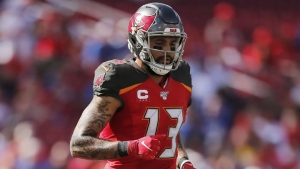 #18 Overall, Mike Evans, San Francisco 49ers, #1 Wide Receiver2025 Pre-Season Rank #13, 2024 Pre-Season Rank #18, 2023 Pre-Season Rank #35, 2022 Pre-Season Rank #58, 2021 Pre-Season Rank #73. Peak 2020-24 How…
 -
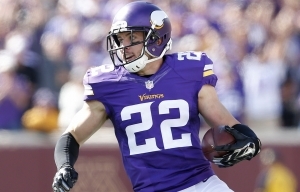 #28 Overall, Harrison Smith, Minnesota Vikings, Strong Safety, #2 Safety2025 Pre-Season Rank #38, 2024 Pre-Season Rank #50, 2023 Pre-Season Rank #72, 2022 Pre-Season Rank #79, 2021 Pre-Season Rank #90, 2020 Pre-Season Rank…in Safeties
Visit the Fictitious Halls of Fame!


You May Also Like...
EDITOR’S CHOICE
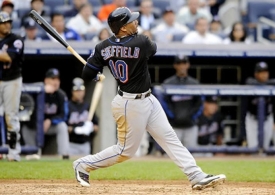 DDT's Pop Flies
When the veterans committee (VC), officially convening as the Contemporary Baseball Era…
 Live Music Head
Project/Objectan interview with André Cholmondeleyby Live Music HeadOriginally published at timessquare.com on…

LATEST RANKINGS
MOST POPULAR RANKINGS



Committee Chairman
50. Mark Fitzpatrick
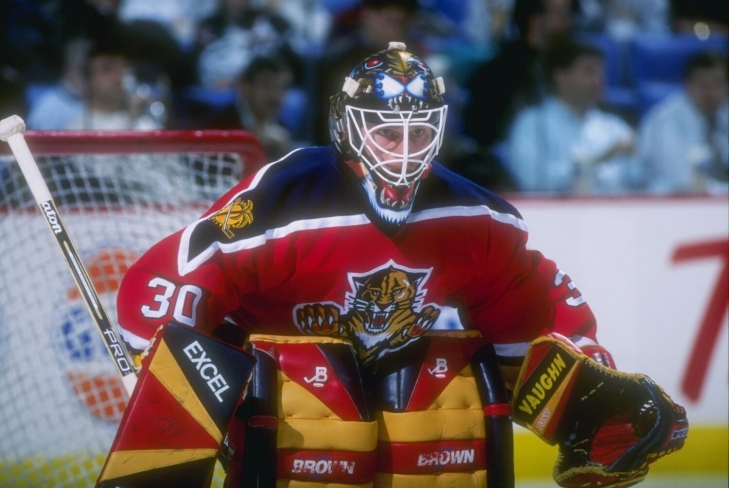
Mark Fitzpatrick had gone through a lot before he became a Florida Panther. When he was playing with the Islanders, he contracted Eosinophilia-myalgia syndrome, a neurological disease that held him out of most of the 1990-91 Season and a large part of the 1991-92 campaign. He came back and was rightfully the recipient of the Bill Masterton Memorial Trophy.
Fitzpatrick, who was traded to Quebec in 1993, was promptly chosen by the Florida Panthers in the Expansion Draft, and he played for Florida for five seasons, serving as John Vanbiesbrouck’s backup. In this period, Fitzpatrick had a respectable 43042-22 record with a 2.71 GAA, and while he only had 60 logged minutes in Florida’s shocking run to the 1996 Finals, he was part of the reason that they got there in the first place.
44. Mike Hoffman
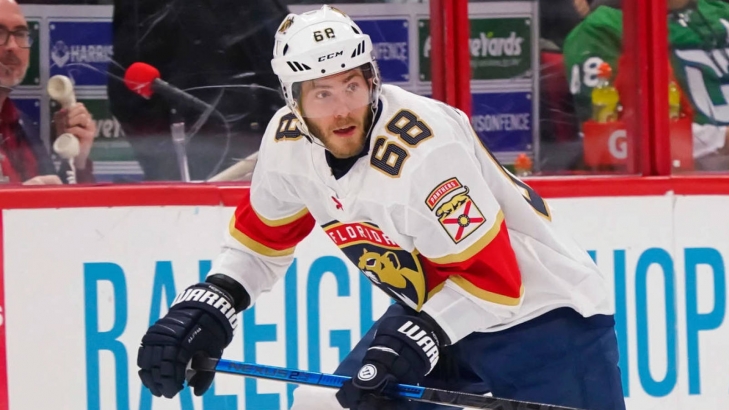
Due to serious issues that led to an order of protection against his fiancée, from his teammate’s (Erik Karlsson) wife, the Ottawa Senators needed to trade Mike Hoffman, and his landing place was San Jose – for two hours. Hoffman was then traded to Florida.
Hoffman responded well to the change of scenery, breaking Pavel Bure’s team record for consecutive games with a Point (17). He finished his first season (2018-19) with 70 Points, a personal best, and he followed that with a strong 59 Point season. This would be the end of Hoffman’s stay as a Panther, as he signed with St. Louis as a Free Agent.
With Florida, Hoffman scored 129 Points, 65 of which were Goals.
41. Mike Matheson
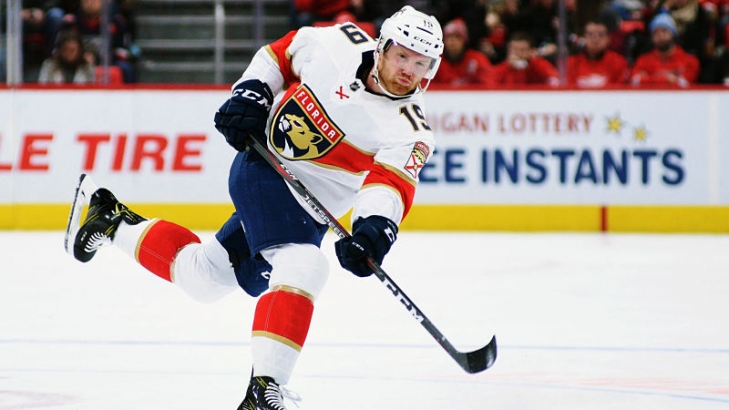
Mike Matheson was a First Round Pick (23rd Overall) from Boston College, and after appearing in three Games in 2015-16, the Defenseman was in a permanent pairing as a Florida Panther.
Matheson emerged as a prototypical defender, focusing on his side of the ice. While he would be mistake prone on occasion, he did have back-to-back 27 Point years (2017-18 & 2018-19), the former year seeing him score 10 Goals. Traded to Pittsburgh before the 2020-21 Season, Matheson had 94 Points as a Panther.
While it can be argued that Matheson’s accomplishment as a Panther did not live up to the potential, on an expansion team with no Stanley Cups, Matheson belongs on this list.
26. MacKenzie Weeger
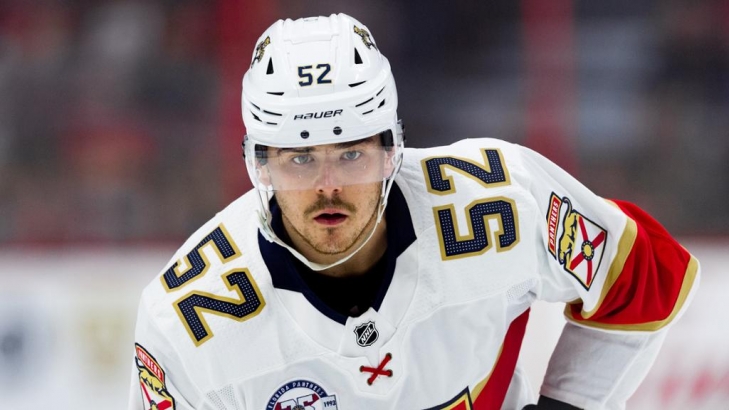
Drafted late in the Seventh Round in 2013, Defenseman MacKenzie Weeger plied his trade in the minors for three years before he appeared in three Games for the Panthers in 2016-17. Just doing that was an accomplishment considering where Weegar was selected, but he had bigger things in mind.
Weegar made the Panthers roster going into 2017, and for three seasons, he provided steady blueline work on a deep defensive pairing. In 2020-21, Weegar had a breakout year, showing full offensive skills with 30 Assists and 36 Points in only 54 Games, and was eighth in Norris voting and second in Plus/Minus. Weegar had 44 Points in his follow-up with a fourteenth-place in Norris voting, and he was a large part of Florida's huge success in the regular season. As good as Weegar was, the Panthers sent him, along with Jonathan Huberdeau, to the Calgary Flames in the off-season.
