

 Not in Hall of Fame News
Yes, we know that this is taking a while! As many of…
 Not in Hall of Fame News
Yes, we know that this is taking a while! As many of…
 Not in Hall of Fame News
2002 SEMI-FINAL RESULTS: Thank you for your participation in the Pro Football…
 Not in Hall of Fame News
Yes, we know that this is taking a while! As many of…
 Not in Hall of Fame News
We are diligently working away at Notinhalloffame on revising our Football lists…
 Not in Hall of Fame News
We are diligently working away at Notinhalloffame on revising our Football lists…
 From the Desk of the Chairman
October baseball often turns individual pitching performances into lasting postseason memories. Strikeout…
 From the Desk of the Chairman
For decades, the sports debate ran on gut feeling. Barstool arguments, call-in…
 From the Desk of the Chairman
Introduction to Private Adult Tennis Camps in Prague Adult club players increasingly…
 From the Desk of the Chairman
Unlike in the case of pre-match betting, where you have to pick…
 From the Desk of the Chairman
Kupu178 builds trust with people by using top-end end-to-end encryption. It checks…
 From the Desk of the Chairman
Sports fans thrive on calculating strategy, reading momentum, and maximizing every tactical…






100 Active Potential Football Hall of Famers
-
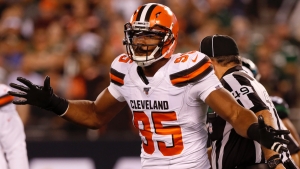 #7 Overall, Myles Garrett, Los Angeles Rams, Defensive End, #2 Defensive Lineman/Linebackers: Pass Rushers2025 Pre-Season Rank #9, 2024 Pre-Season Rank #17, 2023 Pre-Season Rank #34, 2022 Pre-Season Rank #53, 2021 Pre-Season Rank #99, 2020 Pre-Season Rank…
 -
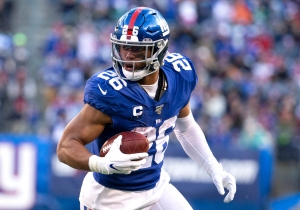 #45 Overall, Saquon Barkley, Philadelphia Eagles, #3 Running Back2025 Pre-Season Rank ##51, 2024 Pre-Season Rank #117, 2023 Pre-Season Rank #122, 2022 Pre-Season Rank #132 2021 Pre-Season Rank #101, 2020 Pre-Season Rank…
 -
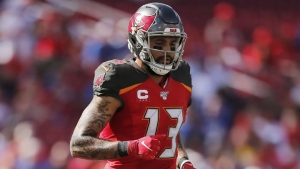 #18 Overall, Mike Evans, San Francisco 49ers, #1 Wide Receiver2025 Pre-Season Rank #13, 2024 Pre-Season Rank #18, 2023 Pre-Season Rank #35, 2022 Pre-Season Rank #58, 2021 Pre-Season Rank #73. Peak 2020-24 How…
 -
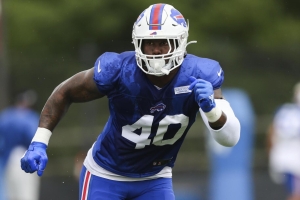 #8 Overall, Von Miller, Dallas Cowboys, #3 Defensive Lineman/Linebackers: Pass Rushers2025 Pre-Season Rank #6, 2024 Pre-Season Rank #7, 2023 Pre-Season Rank #4, 2022 Pre-Season Rank #7, 2021 Pre-Season Rank #8, 2020 Pre-Season Rank…
Visit the Fictitious Halls of Fame!


You May Also Like...
EDITOR’S CHOICE

 DDT's Pop Flies
When the veterans committee (VC), officially convening as the Contemporary Baseball Era…



 Live Music Head
Project/Objectan interview with André Cholmondeleyby Live Music HeadOriginally published at timessquare.com on…

LATEST RANKINGS





MOST POPULAR RANKINGS
















Committee Chairman
The National Soccer Hall of Fame announces the 22 Veteran Semi-Finalists
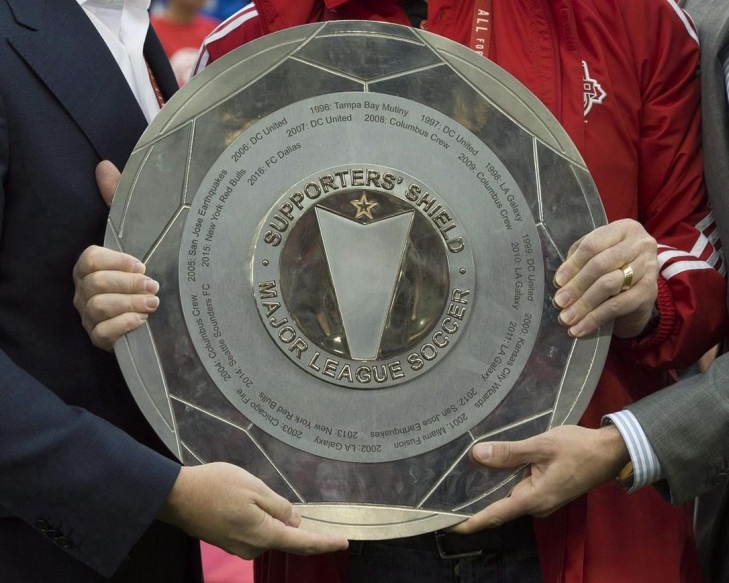
The National Soccer Hall of Fame has announced the 22 names who will comprise the list of Veterans Candidates who made their Semi-Final round.
To be eligible for the National Soccer Hall of Fame Veteran Ballot, an individual must have met No. 1 and either No. 2, No. 3 or No. 4:
- A player must have been retired for more than 10 full calendar years prior to the year of induction.
- A player must have played at least 20 full international games for the United States Men’s National Team, Women’s National Team or Extended National Team (Paralympic, Beach & Futsal). This 20-game requirement is reduced to 10 games if the games were prior to 1990 and 5 games if the games were prior to 1960.
- A player must have played at least five seasons in a United States first-division professional league* and been a postseason league all-star at least once. (Best XI)
- A player must have played at least five seasons in the Major Indoor Soccer League between the end of the NASL in 1984 and the end of the MISL in 1992 and been selected as a first-team postseason all-star in at least one of those seasons.
The 22 names are:
Chris Armas played for the L.A. Galaxy in his first two seasons, and played the rest of his career with the Chicago Fire (1998-07), after he was taken by the Fire in the Expansion Draft. He appeared in 66 Games for the United States.
Gregg Berhalter played most of his career in Europe, but the Defenseman did play his last three years as a pro with the Galaxy. He also appeared in 44 Games for the U.S., including the 2002 World Cup.
Chico Borja spent the early part of his career with the New York Cosmos of the NASL and again with the Cosmos of MISL. He also played indoor soccer for Las Vegas, Wichita and Albany, and for the U.S. in 11 Games.
Sean Bowers had a long career in indoor soccer, playing 20 years combined for San Diego, Detroit, Sacramento, Anaheim and Baltimore. He also was in the MLS for four years with Kansas City.
Marco Etcheverry played for D.C United from 1996 to 2003 and internationally represented Bolivia.
Linda Hamilton represented the U.S. in 82 Games, and was part of the team that won the first Women’s World Cup.
Mary Harvey played for the United States Women’s Team in 27 Games.
Frankie Hejduk began his pro career with Tampa Bay of theMLS before going to Germany for five years. He returned to MLS with Columbus in 2003, where the midfielder played for eight years. He was on the U.S. Men’s Team in 83 Games, and played on the 1996 and 2000 Olympics as well as the 1998 and 2002 World Cup.
Angela Hucles played for three Boston based teams in three different women’s leagues over a nine-year period. She represented the United States in 109 Games, including two Gold Medal winning teams in two different Olympics.
Eddie Lewis began his pro career with the San Jose Clash, where the Left Wing played four years before departing to England, where he stayed nine years. Lewis returned to MLS with the Galaxy for three years. Representing the United States, Lewis appeared in 82 Games and was in the 2002 and 2006 World Cup.
Clint Mathis played most of career in the MLS, with stints with the Galaxy, the MetroStars, Real Salt Lake and Colorado. He represented the U.S. in 46 Games, including the 2002 World Cup.
Shep Messing played for New York, Boston and Oakland in the NASL and the Goalie also played for the New York Arrows, New York Cosmos, Pittsburgh Spirit and New York Express in the Indoor League. He also played for the U.S. in the 1972 Olympics.
Victor Nogueira was a Goalie in the NASL for three years (Atlanta & Montreal), Chicago in the NASL, and the Goalie also played indoor soccer for 20 years with Chicago, Cleveland, Milwaukee and San Diego. He is already a member of the Indoor Soccer Hall of Fame.
John O’Brien played most of his career with Ajax in the Eredivisie and would appear in 32 Games representing the United States.
Steve Ralston competed for Tampa Bay and New England in MLS, with 36 Games played for the United States.
Tony Sanneh played most of his career in the MLS, serving time with D.C. United, Columbus, Chicago, Colorado and Los Angeles. He also played for the United States in 43 Games.
Kate Sobrero Markgraf played ten years in women’s pro soccer, and for the USWNT she played in three Olympics (two Gold and one Silver) and three World Cups (one Gold and two Bronze).
Lindsay Tarpley won two Olympic Gold Medals and a Bronze at the World Cup representing the United States Women’s Team.
Tatu, a Brazillian star who played for the Tampa Bay Rowdies in both the NASL and Indoor League. He also played 20 more years of indoor soccer with the Dallas Sidekicks.
Taylor Twellman, a nine-year veteran of the New England Revolution and 30-game player with the USMNT.
Tisha Venturini-Hoch represented the U.S. in 132 Games, and won Gold in the 1996 Olympics and 1999 World Cup.
Slavisa “Steve” Zungul earned the nickname of the “Lord of the Indoors”, after playing for New York, Golden Bay, San Diego and Tacoma.
We here at Notinhalloffame.com would like to congratulate the 22 candidates who made it this far.
5. Juuse Saros
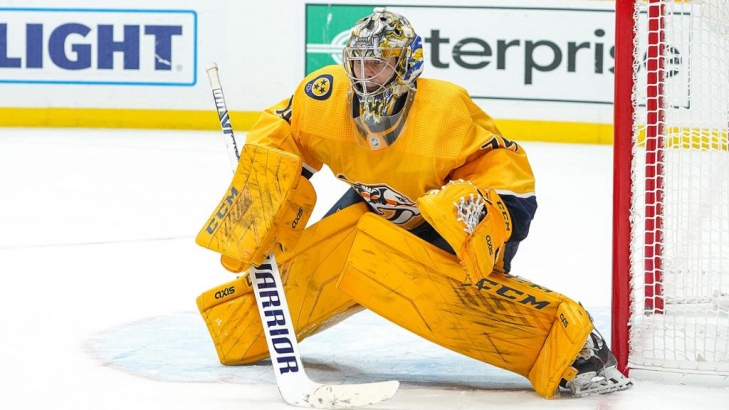
Juuse Soros is still a Predator as of this writing, and arguably, he is either on the cusp of greatness.
Drafted in 2013, Finland’s Saros arrived in North America two years later, bouncing back and forth between the AHL and NHL and earning All-Rookie honors in 2017-18, though he only played 26 Games that year. Saros became the lead Goalie in 2019, and two years ago, he had his breakout season, finishing sixth for the Vezina with a 2.28 GAA.
Saros built on his solid 2021-21 with an even better 2022-23, where he was third in Vexina voting with a 2.64 GAA and the league lead in Goalie Point Shares with 14.0. He again led the NHL in Goalie Point Shares in 2022/23 (14.9) and was fourth in Vezina voting, but the Predators struggled overall and failed to make the playoffs. In 2023-24, he backstopped Nashville back to the post-season and was fifth in Vezina voting. Notably, Saros has led the NHL in Shots Against and Saves, and has exceeded 3,600 Minutes in the last three campaigns.
The workhorse enters this year as a near-the-top Goalie and the most significant workhorse of the last four years.
21. Jason Arnott
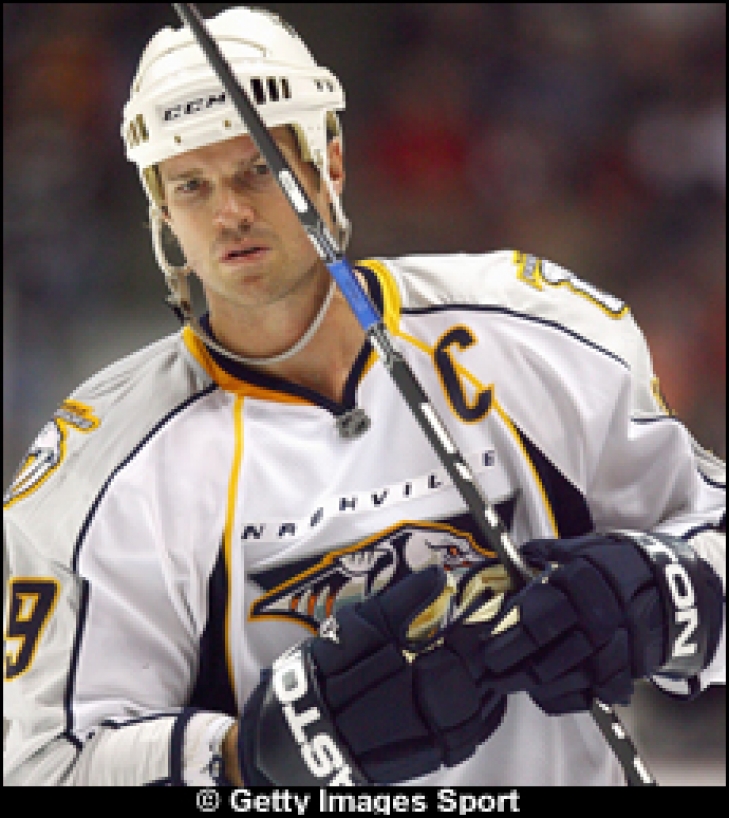
When Jason Arnott arrived in Nashville, he was many years removed from his Calder runner-up year. This is not to say that Arnott was not still a good player, as he most certainly was. In fact, Arnott had a .83 PPG in Nashville, a strong average in any era.
Arnott, a Stanley Cup Champion in 2000 with New Jersey, joined the Predators in 2006. Arnott scored 54 Points in his first year in Nashville and had 76 the year after, the second highest of his career. The Center would not reach that mark again in his career, but he had another 103 Points for Nashville in the next two years.
The Predators would trade Arnott to New Jersey after a solid four-year period of 229 Points in 275 Games.
20. J.P. Dumont
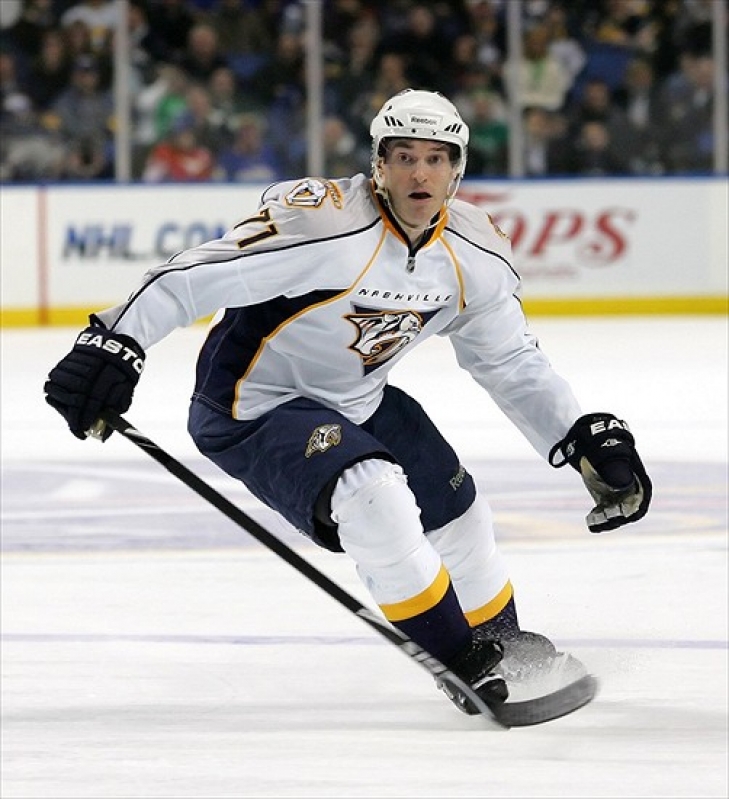
J.P. Dumont played his first two NHL years with Chicago, where he was a youngster and saw minimal ice time. Dumont was then traded to Buffalo, a team he was with for five years, but is arguably the organization he is most commonly associated with. After Buffalo, Dumont signed with Nashville, the team he played his last five years with, and the team, we will argue, was where he was at his NHL best.
Dumont’s first season in Nashville (2006-07) would see the Right Wing score 66 Points, a record for him at the time. He broke that with 72 Points the following year, followed by another impressive season with 65 Points.
His last season with the Predators was disappointing, a 19-Point year that yielded Nashville buying out his contract. Dupont never returned to the NHL, as he finished his career in Europe. He would score 267 Points with Nashville.
