

 Not in Hall of Fame News
Yes, we know that this is taking a while! As many of…
 Not in Hall of Fame News
We are diligently working away at Notinhalloffame on revising our Football lists…
 Not in Hall of Fame News
We are diligently working away at Notinhalloffame on revising our Football lists…
 Not in Hall of Fame News
We are diligently working away at Notinhalloffame on revising our Football lists…
 Not in Hall of Fame News
We are diligently working away at Notinhalloffame on revising our Football lists…
 Not in Hall of Fame News
We are diligently working away at Notinhalloffame on revising our Football lists…
 From the Desk of the Chairman
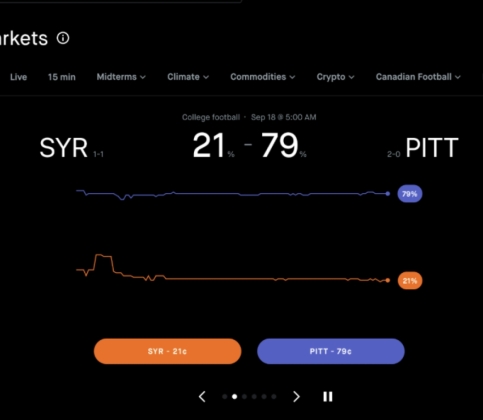
Sports fans thrive on calculating strategy, reading momentum, and maximizing every tactical…
 From the Desk of the Chairman
The 2026 NFL season is two weeks old and the division races…
 From the Desk of the Chairman
Sports communities are often built around things that have nothing to do…
 From the Desk of the Chairman
Every hall of fame eventually faces the same problem. The selection process…
 From the Desk of the Chairman
Pete Rose died in 2024. On May 13, 2025, Commissioner Rob Manfred…
 From the Desk of the Chairman
For NFL fans, game day offers much more than three hours of…
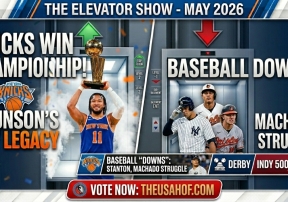




100 Active Potential Football Hall of Famers
-
 #19 Overall, Chris Jones, Kansas City Chiefs, Defensive Tackle, #8 Defensive Lineman/Linebacker: Pass Rusher2025 Pre-Season Rank #15, 2024 Pre-Season Rank #15, 2023 Pre-Season Rank #58, 2022 Pre-Season Rank #100. Peak Period 2020-24. When you think of…
 -
 #21 Overall, Davante Adams, Los Angeles Rams, #2 Wide Receiver2025 Pre-Season Rank #23, 2024 Pre-Season Rank #27, 2023 Pre-Season Rank #24, 2022 Pre-Season Rank #43, 2021 Pre-Season Rank #67, 2020 Pre-Season Rank…
 -
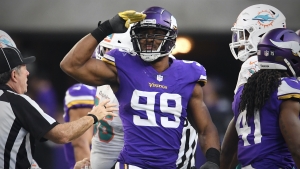 #36 Overall, Danielle Hunter, Houston Texans, #11 Defensive End: Defensive Linemen/Linebackers: Pass Rushers2025 Pre-Season Rank #44, 2024 Pre-Season Rank #57, 2023 Pre-Season Rank #87, 2022 Pre-Season Rank #102 2021 Pre-Season Rank #102, 2020 Pre-Season Rank…
 -
 #36 Overall, Justin Tucker: Free Agent, Place Kicker, #1 Kickers & Special Teams2025 Pre-Season Rank #29, 2024 Pre-Season Rank #26, 2023 Pre-Season Rank #22, 2022 Pre-Season Rank #28, 2021 Pre-Season Rank #42, 2020 Pre-Season Rank…
Visit the Fictitious Halls of Fame!


You May Also Like...
EDITOR’S CHOICE

 DDT's Pop Flies
When the veterans committee (VC), officially convening as the Contemporary Baseball Era…

 Live Music Head
Project/Objectan interview with André Cholmondeleyby Live Music HeadOriginally published at timessquare.com on…

LATEST RANKINGS

MOST POPULAR RANKINGS











Committee Chairman
56. Alicia Keys

Alicia Keys emerged in the early 2000s as a generational talent, blending classical piano mastery with a gritty, soul-infused R&B sensibility. Her 2001 debut, Songs in A Minor, was a cultural phenomenon that sold over 12 million copies and earned her five Grammy Awards, including Best New Artist. By refusing to be molded into a stereotypical pop star, Keys redefined the "singer-songwriter" archetype for the 21st century. Her career is marked by an extraordinary run of chart-topping albums and timeless anthems like "Fallin’," "No One," and the quintessential New York tribute "Empire State of Mind," solidifying her status as one of the best-selling and most respected artists in music history.
The impact of Keys' musicality lies in her ability to bridge the gap between old-school soul and contemporary hip-hop. Influenced by both Frederic Chopin and Marvin Gaye, she brought a sophisticated, musician-first approach back to the mainstream at a time when digital production was beginning to dominate. Her success paved the way for a new wave of artist-musicians who prioritize live instrumentation and technical prowess.
Considering that she is still a very well-known name and the artists already in, the path for Keys' entrance to the Rock Hall has already been carved.
Can Match Analysis and Predictions Shape the Next Tennis Hall of Famer?

The journey to tennis immortality is rarely defined by a single title or unforgettable match. Hall of Fame careers are built over time, shaped by consistency, adaptation, and the ability to evolve in response to the game itself. While talent and competitive drive remain essential, modern tennis increasingly rewards players who understand their own performance at a deeper level. In that context, the way players analyze matches—and even how they engage with predictive insights—can play a meaningful role in long-term development.
The question is no longer whether data belongs in tennis, but how it can be used responsibly and intelligently to support the kind of sustained excellence associated with Hall of Fame careers.
Hall of Fame greatness is built on patterns, not moments
When players are eventually evaluated for induction into the International Tennis Hall of Fame, the discussion rarely centers on isolated achievements. Instead, selectors look for enduring impact: longevity, adaptability across eras, and the ability to remain competitive as the sport changes.
These qualities are closely tied to a player’s capacity to recognize patterns in their own game. Hall of Fame–level athletes tend to understand why they win and why they lose. They identify recurring strengths, recurring weaknesses, and situations that demand adjustment. This type of self-awareness is increasingly supported by structured match analysis rather than intuition alone.
From instinct to informed preparation
For decades, preparation in tennis relied heavily on feel: how a player remembered previous matches, how training sessions were perceived, or how a coach interpreted performance from the sidelines. While these elements are still valuable, they are also subjective and incomplete.
Modern analysis allows players to review matches with greater clarity. Shot selection tendencies, success rates under pressure, performance against specific playing styles, and surface-based trends can all be examined objectively. Over time, this transforms preparation from reactive guesswork into informed decision-making.
This shift is especially important for players aspiring to elite longevity. The difference between a very good career and a historically great one often lies in how effectively a player adapts when initial advantages fade.
Learning from predicted outcomes without chasing them
Prediction models are often misunderstood as tools designed to forecast winners and losers. In reality, their deeper value lies in scenario-building. When a system highlights likely pressure points, tactical mismatches, or statistically fragile phases of play, it offers insights that players and coaches can study—regardless of the final score.
Used correctly, these insights do not dictate strategy but inform it. Reviewing why certain outcomes were considered more probable can help players identify vulnerabilities in their game or confirm areas of strength. Over time, this feedback loop encourages smarter training priorities.
In that sense, checking and using Tennis Predictions and Tips as part of a broader analytical process can help athletes understand what consistently separates elite-level performance from the rest of the field, rather than focusing solely on short-term results.
Preparing for opponents—and for the future version of the game
One hallmark of Hall of Fame players is their ability to remain relevant as playing styles evolve. From the serve-and-volley era to baseline dominance and now to hybrid athletic profiles, tennis has never stood still.
Analytical tools that track trends across tours and seasons help players prepare not only for their next opponent but for the direction the sport is heading. Understanding how successful players are winning points, defending break opportunities, or adjusting to faster or slower conditions allows ambitious athletes to future-proof their development.
This forward-looking approach is often what separates players who peak briefly from those who remain competitive for a decade or more.
Training smarter, not just harder
Elite tennis careers are limited as much by physical sustainability as by skill. One of the less visible advantages of structured analysis is its role in workload management. By identifying matches, patterns, or conditions that consistently produce declines in performance, players can adjust training intensity and recovery strategies accordingly.
Hall of Fame players are rarely those who trained the hardest at all times—but those who trained the smartest. Analysis-driven preparation supports this balance by highlighting where marginal gains matter most and where overexertion provides diminishing returns.
Can analysis help identify future Hall of Famers?
While no model can predict greatness with certainty, longitudinal performance data does reveal early indicators. Consistency against varied opposition, adaptability across surfaces, and steady improvement under pressure often appear years before a player reaches global recognition.
Observers, analysts, and even fans increasingly use these signals to speculate about who might one day earn Hall of Fame consideration. In this way, analytical frameworks are not just shaping preparation but also shaping how careers are evaluated and discussed long before they are complete.
Legacy is built through understanding
The modern tennis player has access to more information than ever before. The challenge lies not in collecting data, but in interpreting it wisely. Those who use analysis to deepen their understanding—rather than to chase guarantees—position themselves for sustainable success.
Hall of Fame careers are defined by resilience, evolution, and clarity of purpose. Analytical preparation, including thoughtful engagement with predictive insights, supports all three. Not by replacing talent or instinct, but by refining them over time.
As tennis continues to evolve, the next generation of Hall of Famers may be distinguished not only by what they achieved on court, but by how intelligently they prepared for every stage of their journey.
The Strokes are now on our Notinhalloffame Rock List

We have been working hard on our lists, updating our lists, and multiple projects, but we have a minor update on our initial core list, the Notinhalloffame Rock 600, where we rank the eligible acts who are not yet inducted into the Rock and Roll Hall of Fame.
Weeks before the Hall is likely to announce the finalists, we have finally reached the point where we can input the new artists who are eligible starting in 2026.
The first act that we have included is The Strokes, who debuted at #28.
Look for more throughout the week, and thank you for your support of Notinhalloffame.
22. The Strokes

From the powerful music scene of New York City, the Strokes ushered in a revival of the garage sound, yet did so with a musical precision far beyond that of their forefathers.
NYC gave the world the Velvet Underground, the Ramones, and Television, and the Strokes sounded like they were an early 2000’s band that could have only existed in that city. It didn’t hurt that, despite their thrift-store vibe, it was a group that formed in a prep school, with members coming from elite parentage; Lead Singer Julian Casablancas was the son of Elite Model Agency Group head John Casablancas, and guitarist Albert Hammond Jr was the son of the singer/songwriter of the same name.
With rapid-fire angular guitar attacks, the Strokes' sound was distorted, yet freakishly tight. Their debut album, “Is This It” was a much-needed return to the ethos of pure rock, and a departure from nu-metal that was the rage of the past half-decade. The album was the darling of 2001 and set the tone for American rock music for the first decade of the millennium. Later efforts by the Strokes saw them develop other elements to their brand, but they never veered too far away from what cemented their legacy.
This is the type of band that the Hall of Fame usually loves.
