

 Not in Hall of Fame News
Yes, we know that this is taking a while! As many of…
 Not in Hall of Fame News
Yes, we know that this is taking a while! As many of…
 Not in Hall of Fame News
2002 SEMI-FINAL RESULTS: Thank you for your participation in the Pro Football…
 Not in Hall of Fame News
Yes, we know that this is taking a while! As many of…
 Not in Hall of Fame News
We are diligently working away at Notinhalloffame on revising our Football lists…
 Not in Hall of Fame News
We are diligently working away at Notinhalloffame on revising our Football lists…
 From the Desk of the Chairman
Unlike in the case of pre-match betting, where you have to pick…
 From the Desk of the Chairman
Kupu178 builds trust with people by using top-end end-to-end encryption. It checks…
 From the Desk of the Chairman
Sports fans thrive on calculating strategy, reading momentum, and maximizing every tactical…
 From the Desk of the Chairman
The 2026 NFL season is two weeks old and the division races…
 From the Desk of the Chairman
Sports communities are often built around things that have nothing to do…
 From the Desk of the Chairman
Every hall of fame eventually faces the same problem. The selection process…
100 Active Potential Football Hall of Famers
-
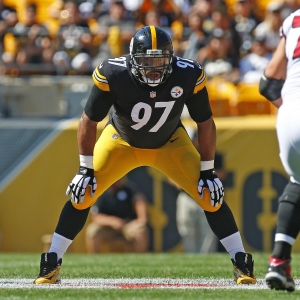 #20 Overall, Cameron Heyward, Pittsburgh Steelers, Defensive End, #9 Defensive Lineman/Linebackers: Pass Rushers2025 Pre-Season Rank #19, 2024 Pre-Season Rank #28, 2023 Pre-Season Rank #33, 2022 Pre-Season Rank #38, 2021 Pre-Season Rank #75, 2020 Pre-Season Rank…
 -
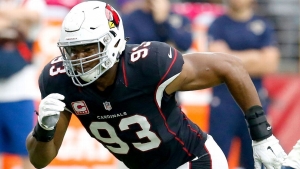 #14 Overall, Calais Campbell, Baltimore Ravens, Defensive End, #6 Defensive Lineman/Linebacker: Pass Rusher2025 Pre-Seasn Rank #14, 2024 Pre-Season Rank #19, 2023 Pre-Season Rank #19, 2022 Pre-Season Rank #26 2021 Pre-Season Rank #28, 2020 Pre-Season Rank…
 -
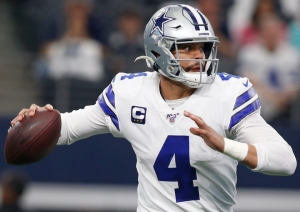 #37 Overall, Dak Prescott, Dallas Cowboys, #7 Quarterback2025 Pre-Season Rank #40, 2024 Pre-Season Rank #32, 2023 Pre-Season Rank #44, 2022 Pre-Season Rank #55, 2021 Pre-Season Rank #63, 2020 Pre-Season Rank…in Quarterbacks
 -
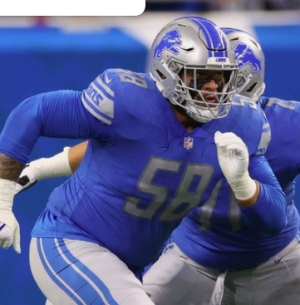 #38 Overall, Penei Sewell, Detroit Lions, Tackle, #4 Offensive Lineman2025 Pre-Season Rank #68, 2024: Pre-Season Rank: #121. Peak Period: 2021-25*Standing at 6'5” and 330 pounds, Penei Sewell can state that going into…
Visit the Fictitious Halls of Fame!
You May Also Like...
EDITOR’S CHOICE
 DDT's Pop Flies
When the veterans committee (VC), officially convening as the Contemporary Baseball Era…


 Live Music Head
Project/Objectan interview with André Cholmondeleyby Live Music HeadOriginally published at timessquare.com on…

LATEST RANKINGS

MOST POPULAR RANKINGS
Committee Chairman
Are the UK gambling laws more Permissive than other Western Countries?

Different countries have varying gambling laws. For some, gambling is totally prohibited, while in others, bettors have different levels of freedom. In countries where gambling is permitted, the sector has thrived, while in those with stringent regulations, it has lagged. Kate Richardson, a sports betting expert who has been providing insights and tips and exploring different gambling markets, observes that even in countries where wagering is allowed, some aspects are not permitted.
not collide with the authority. In her scrutiny of the gambling laws and the list of online UK bookmakers, Kate observes that UK betting laws are relatively permissive compared to most western countries. She concludes that operators and punters find it easy to engage in gambling activities in the UK than in any other country in the Western sphere. In this article, we focus on UK gambling laws and compare them with regulations in other western countries.
The UK Gambling Commission
Kate Richardson observes that different forms of gambling have enjoyed massive popularity over the years in the United Kingdom. Any person who is over 18 years is eligible for gambling. However, one must gamble on a platform licensed by the gambling authority. The body that is charged with regulating and licensing all gambling activities is the UK Gambling Commission. The regulatory body was founded in 2007. The commission offers licenses to operators and advises the authorities on gambling-related matters. It works together with the police department to curb illegal gambling in the country.
In her review of UK gambling, Kate Richardson states that the commission is not only about licensing and regulating; it also offers guidance to people and businesses interested in offering gambling in the country. It does this by providing the interested parties with information to help establish a successful establishment. She has been instrumental to the sports betting fraternity in the United Kingdom and other jurisdictions. Her insights and tips on sports betting have helped beginners and established bettors. To access her profile and some of the articles she has written on sports betting, click here.
Operators find the UK market easy to penetrate compared to other jurisdictions in Europe and the whole of the western sphere. Analysts observe that the licensing process in the UK is straightforward while also listing the transparency that characterizes the market and the policies and standards that guarantee the player protection.
Any company ready to adhere to the set rules and regulations in the United Kingdom will find it easy to establish its base in the market. For this reason, analysts view the United Kingdom gambling market as welcoming and its laws more permissive than other western countries such as Germany, Australia, Austria, France, Japan, the USA, and Canada, among others. For instance, compared with Austria, UK gambling laws are quite permissive.
Although gambling is allowed in Austria, authorities have stringent online and land-based gambling regulations. For a player looking to wager in such a market, it is advisable to familiarize themself with all the laws governing gambling in the country. Through this, a player can decide on what to venture into, as each gambling platform has its benefits.
France
Like most countries in the western sphere, all forms of gambling in France are highly regulated. For players looking to play in brick-and-mortar platforms, most forms of gambling are available. Online operators are also allowed to offer the same, with the exception of casino games. Generally, France is a gambling-friendly nation, but operators and players are burdened by taxes on their winnings.
- Spain has the Spanish Gambling Act, which regulates all gaming activities in the country. The law stipulates that only regional players can play on licensed platforms.
- Italy, which is home to Baccarat, has a gambling law that regulates sports betting, lotteries, and other games of chance.
- New Zealand does not allow any gambling and betting activities unless they are established in accordance with the NZ Gambling Act 2003. Gambling activities are classified into levels 1-4. Remote gambling remains prohibited in the country.
- The current laws in Canada prohibit all forms of gaming, with the exception of the provincial government, which is allowed to conduct and manage gambling in their jurisdictions.
- Germany only passed a law allowing for partial liberalization of gambling in 2021. The law allows private operators to offer gambling services but to the extent of the licensing and regulatory standards.
- In the United States of America, gambling largely remains legal per federal law, but each state has its own rules and standards.
Although the United Kingdom has similar laws where operators are guided on how to conduct their business, the country has the most permissive gambling regulations.
The Pro Football Hall of Fame announces the 2023 Finalists
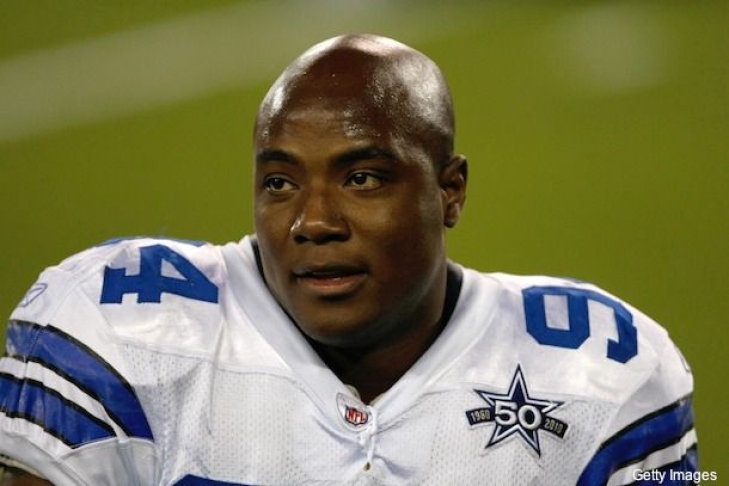
Some say that Christmas is the most wonderful time of the year. For us at Notinhalloffame.com, it is the month after, where “Hall of Fame Season” is in its apex, with the announcement of the Pro Football Hall of Fame Finalists.
We at Notinhalloffame.com, held our mock committee meeting last month, where we pushed through our 15, which differs from the actual Hall (as expected).
The 15 Pro Football Hall of Fame Finalists of 2023 are:
Jared Allen: Defensive End. 2004-07 KC, 2008-13 MIN, 2014-15 CHI, 2015 CAR. Allen advances for the third straight year, and has been a Finalist in all three of his eligible years. A two-time Sack leader with 136 career Sacks, Allen also has 171 Tackles for Loss. A five-time Pro Bowl and four-time First Team All-Pro, Allen is ranked #22 on Notinhalloffame.com.
Willie Anderson: Offensive Tackle. 1996-2007 CIN, 2008 BAL. Anderson was eligible for the first time in 2013, and eight years later, he was a Semi-Finalist for the first time. Big Willie is now on a two-year streak as a Finalist. Anderson went to four Pro Bowls, was a three-time First Team All-Pro and is ranked #137 on Notinhalloffame.com.
Ronde Barber: Cornerback & Safety. 1997-2002 TB. Barber has been on the ballot for six years and is now a three-time Finalist. A member of Tampa’s first Super Bowl Title, Barber has 47 Interceptions, 20 Sacks and went to five Pro Bowls as well as earning three First Team All-Pros. Barber is ranked #8 on Notinhalloffame.com.
Dwight Freeney: Defensive End. 2002-12 IND, 2013-14 SD, AZ 2015, 2016 ATL, 2017 SEA, 2017 DET. Freeney was one of the five first year eligible players to make the Semi-Finals, and he is now a first-year Finalist; a huge accomplishment for a Hall of Fame path. Freeney won a Super Bowl with the Colts, had 125.5 Sacks and went to seven Pro Bowls earning three First Team All-Pros. Freeney is ranked #61 on Notinhalloffame.com.
Devin Hester: Punt Returner, Kick Returner & Wide Receiver. 2006-13 CHI, 2014-15 ATL, 2016 BAL. Hester is a Finalist in his first two years of eligibility. A three-time First Team All-Pro and four-time Pro Bowler, Hester is a member of the 100th Anniversary Team. Hester is ranked #54 on Notinhalloffame.com, and was one of the 15 selected by our Mock Committee.
Torry Holt: Wide Receiver. 1999-08 STL, 2009 JAX. A nine-time Semi-Finalist, Holt is no a four-time Finalist. A Super Bowl Champion with the Rams, Holt went to seven Pro Bowls, and was a two-time Receiving Yards leader. Holt is ranked #7 on Notinhalloffame.com, and was one of the 15 selected by our Mock Committee.
Andre Johnson: Wide Receiver. 2003-14 HOU, 2015 IND, 2016 TEN. Johnson is a two-time Finalist, which is the same number of years he has been eligible. Named to seven Pro Bowls and two First Team All-Pros, Johnson had well over 14,000 Receiving Yards and twice led the league in that category. Johnson is ranked #23 on Notinhalloffame.com, and was one of the 15 selected by our Mock Committee.
Albert Lewis: Cornerback. 1983-93 KC, 1994-98 LA/OAK. Lewis makes the Finals on his last year of eligibility, and was only a Semi-Finalist once before, in 2013. He was a four-time Pro Bowl and two-time First Team All-Pro and is ranked #259 on Notinhalloffame.com, and was one of the 26 selected by our Mock Committee.
Darrelle Revis: Cornerback. 2007-12 NYJ, 2013 TB, 2014 NE, NYJ 2015-16, KC 2017. A Super Bowl Champion with the Patriots in the lone year he was there, Revis is best known for his time with the Jets. Revis went to seven Pro Bowls, had four First Team All-Pros and is the 2009 leader in Approximate Value. This is his first year on the ballot. Revis is ranked #5 on Notinhalloffame.com, and was one of the 15 selected by our Mock Committee.
Joe Thomas: Offensive Tackle. 2007-17 CLE. Thomas is without a doubt the best player in the second wave of the Cleveland Browns, but he did not have a lot of help. This is his first year on the ballot, and he was pegged to be a first-year Finalist by EVERYONE! The Lineman was a six-time First Team All-Pro, and went to ten Pro Bowls. Thomas is ranked #1on Notinhalloffame.com, and was one of the 15 selected by our Mock Committee.
Zach Thomas: Linebacker. 1997-2007 MIA, 2008 DAL. Thomas is now on a four-year streak of Finalist Selections. He went to seven Pro Bowls, earned five First Team All-Pros and was a two-time leader in Combined Tackles. Thomas is ranked #10 on Notinhalloffame.com, and was one of the 15 selected by our Mock Committee.
DeMarcus Ware: Linebacker & Defensive End. 2005-13 DAL, 2014-16 DEN. Ware is on his second year of eligibility has been a Finalist both years. A nine-time Pro Bowl and four-time First Team All-Pro, Ware twice led the NFL in Sacks, with 138.5 in total. Ware is ranked #4 on Notinhalloffame.com, and was one of the 15 selected by our Mock Committee.
Reggie Wayne: Wide Receiver. 2001-14 IND. Wayne won a Super Bowl with the Colts and this marks the fourth consecutive trip to the Finalist round. A former Receiving Yard leader and six-time Pro Bowler, Wayne is ranked #12 on Notinhalloffame.com.
Patrick Willis: Linebacker. 2007-14 SF. Willis adds a second straight Finalist to his resume, and with teammate, Bryant Young out of the way, there should be less obstruction. Willis only played eight years but was a Pro Bowl in seven and a First Team All-Pro in five of them. He is ranked #15 on Notinhalloffame.com, and was one of the 15 selected by our Mock Committee.
Darren Woodson: Safety. 1992-03 DAL. Woodson, who was a six-time Semi-Finalist, is finally a Finalist. He was a three-time Super Bowl winner, a three-time First Team All-Pro and is ranked #90 on Notinhalloffame.com.
The Semi-Finalists who did not advance are Anquan Boldin, Henry Ellard, Jahri Evans, London Fletcher, James Harrison, Rodney Harrison, Robert Mathis, Steve Smith, Fred Taylor, Hines Ward, Ricky Watters and Vince Wilfork.
It should be noted that we will be holding our Mock Committee meeting on January 17, 9:30 EST, and we will be combining the official Finalists with ours.
This means we will be adding Randall Cunningham, Henry Ellard, Tom Nalen, Leslie O’Neal, Pat Swilling, and Richmond Webb.
So, who is going to get in!!!
You know that we will be paying attention, and we are excited to see how this pans out.
28. Burleigh Grimes
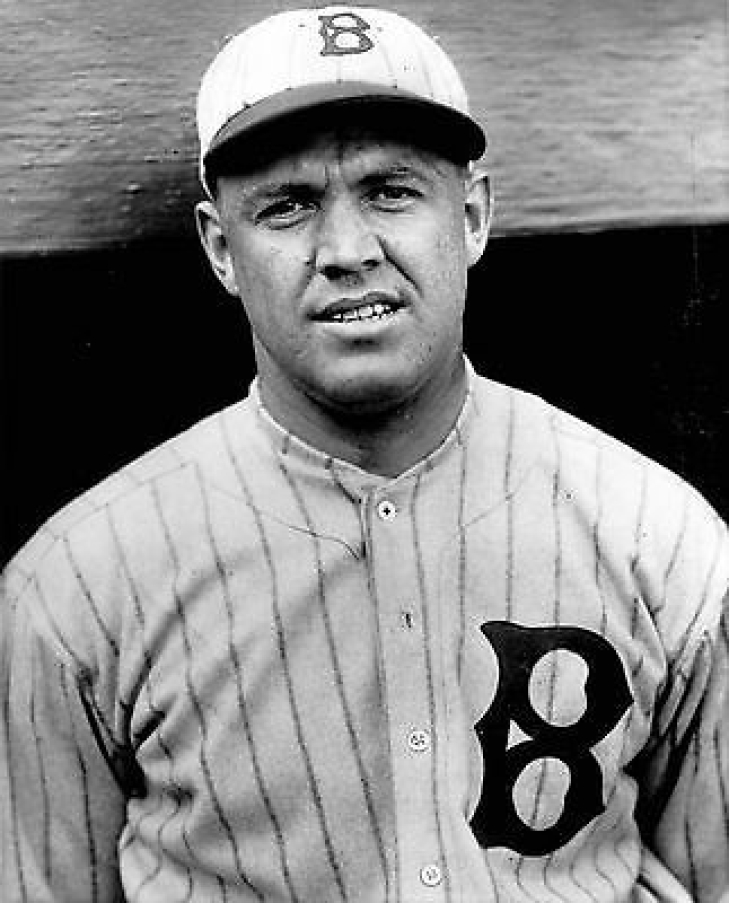
From Wisconsin, Grimes began his Major League career with Pittsburgh, where he noticeably lost 13 consecutive Games, so the Pirates fan base did not shed any tears when he was traded to Brooklyn after the 1917 Season. Perhaps, they should have.
Grimes made an immediate impact with the Robins, going 19-9 with a 2.13 ERA in his debut season, and once the spitball was outlawed in 1920, he was grandfathered in and allowed to use it throughout the rest of his career.
Between 1921 and 1924, Grimes reached his peak of durability, establishing himself as the leading "innings-eater" of his era. In 1921, he topped the National League with 22 wins and 136 strikeouts, delivering an exceptional season that included pitching over 300 innings, a milestone he achieved four times during his time with Brooklyn. Demonstrating complete control on the mound, he amassed 158 wins with the Robins and proved his prowess at the plate as well, with 227 hits and a solid .251 batting average.
In 1925 and 1926, his efficiency dipped, and his record was finalized at 12-19 and 12-13, respectively. Looking to revitalize the staff, the organization traded him to the New York Giants in 1927. While he continued to reach new summits elsewhere, including a World Series title with the Cardinals and another 25-win season in Pittsburgh, his statistical footprint remains anchored in his 158-121 mark in Brooklyn.
Grimes was chosen by the Veterans Committee in 1964 to enter the Baseball Hall of Fame.
14. Nap Rucker
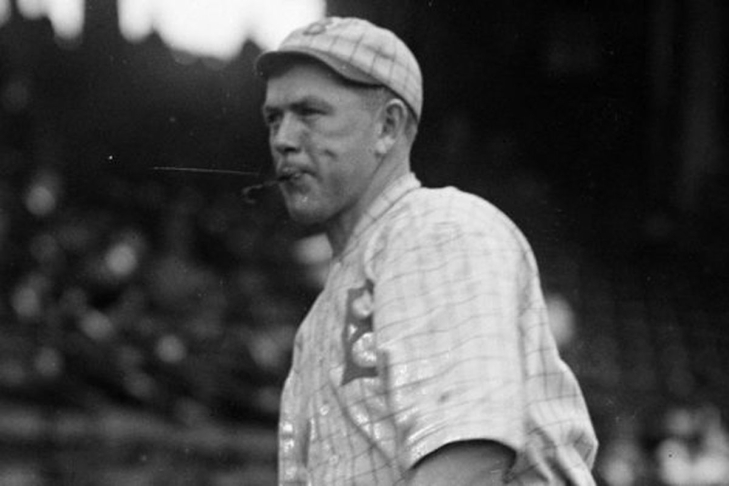
The MLB career of Nap Rucker began in 1907, a high-velocity southpaw who stepped onto the mound for a franchise still searching for its footing. Pitching for teams known as the Superbas and the Robins, Rucker operated as a specialized workhorse during the Deadball Era, frequently outclassing the struggling squads behind him. For a decade in Brooklyn, he provided a dominant arm that was often obscured by a lack of run support, standing as a high-quality pillar for a franchise that was nearly 180 games below .500 during his tenure, even when he wasn't involved in the decision.
In 1908, he displayed a masterclass in run prevention by tossing the first no-hitter in franchise history against the Boston Doves, a 14-strikeout masterpiece that recorded a 101 Game Score, a mark that went unequaled by a Dodger until Sandy Koufax’s perfect game in 1965. In 1910, he led the league in innings pitched (320.1), complete games (27), and shutouts (6). Despite this herculean effort, he finished with an 18-loss record, a testament to the specialized futility of the teams he fronted. He followed this with a career-high 22 wins in 1911, posting a season in which he led the league in bWAR among pitchers (8.7). Remarkably, despite being arguably the most valuable player in the league that year by modern metrics, he received zero votes for the inaugural Chalmers Award (the era's MVP), as the writers prioritized the bats of winning teams over a dominant lefty on a 64-win club.
Known as one of the fastest pitchers of his day, Rucker showed a specialized resilience by adopting a knuckleball later in his career after his velocity began to fade. Between 1907 and 1913, he was a tactical mainstay who consistently finished in the top ten for Pitcher bWAR, twice leading the entire league in that category.
His career was cut short by arm fatigue that led to his retirement at just 31. After pitching over 2,300 innings of intense play, his effectiveness declined, and he made his last appearance in 1916, the same year the "Robins" won the National League Pennant. He finished with a 134-134 record, but his impressive 2.42 ERA underscores his true dominance.
