

 Not in Hall of Fame News
Yes, we know that this is taking a while! As many of…
 Not in Hall of Fame News
Yes, we know that this is taking a while! As many of…
 Not in Hall of Fame News
2002 SEMI-FINAL RESULTS: Thank you for your participation in the Pro Football…
 Not in Hall of Fame News
Yes, we know that this is taking a while! As many of…
 Not in Hall of Fame News
We are diligently working away at Notinhalloffame on revising our Football lists…
 Not in Hall of Fame News
We are diligently working away at Notinhalloffame on revising our Football lists…
 From the Desk of the Chairman
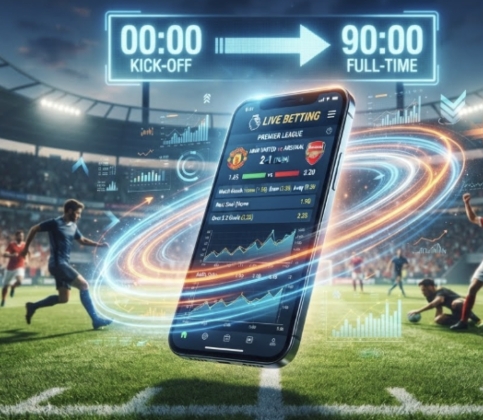
Unlike in the case of pre-match betting, where you have to pick…
 From the Desk of the Chairman
Kupu178 builds trust with people by using top-end end-to-end encryption. It checks…
 From the Desk of the Chairman
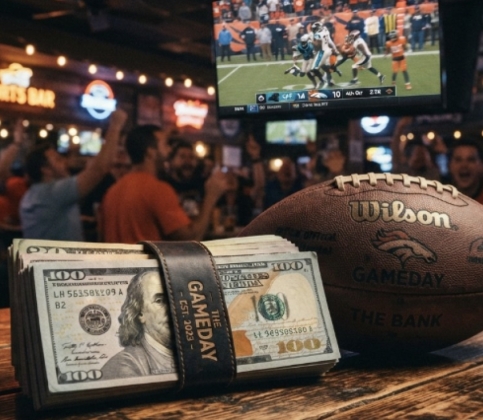
Sports fans thrive on calculating strategy, reading momentum, and maximizing every tactical…
 From the Desk of the Chairman
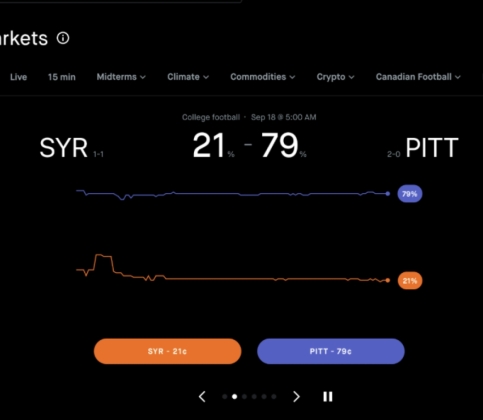
The 2026 NFL season is two weeks old and the division races…
 From the Desk of the Chairman
Sports communities are often built around things that have nothing to do…
 From the Desk of the Chairman
Every hall of fame eventually faces the same problem. The selection process…
100 Active Potential Football Hall of Famers
-
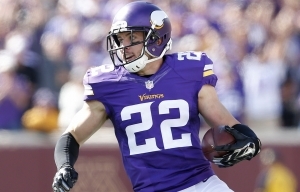 #28 Overall, Harrison Smith, Minnesota Vikings, Strong Safety, #2 Safety2025 Pre-Season Rank #38, 2024 Pre-Season Rank #50, 2023 Pre-Season Rank #72, 2022 Pre-Season Rank #79, 2021 Pre-Season Rank #90, 2020 Pre-Season Rank…in Safeties
 -
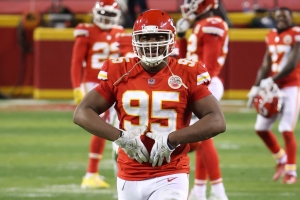 #19 Overall, Chris Jones, Kansas City Chiefs, Defensive Tackle, #8 Defensive Lineman/Linebacker: Pass Rusher2025 Pre-Season Rank #15, 2024 Pre-Season Rank #15, 2023 Pre-Season Rank #58, 2022 Pre-Season Rank #100. Peak Period 2020-24. When you think of…
 -
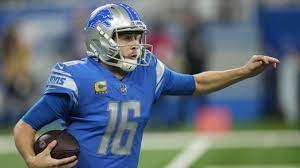 #45 Overall, Jared Goff, Detroit Lions, #8 Quarterback2025 Pre-Season Rank #46, pSeason 2024 Pre-Season Rank #89, 2023 Pre-Season Rank #100, 2022 Pre-Season Rank #112. 2021 Pre-Season Rank #106, 2020 Pre-Season…in Quarterbacks
 -
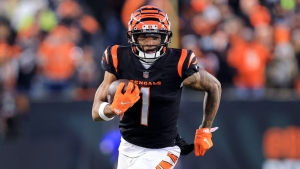 #42 Overall, Ja'Marr Chase, Cincinnati Bengals, #6 Wide Receiver2025 Pre-Season Rank #55, 2024 Pre-Season Rank #111, 2023 Pre-Season Rank #134, 2022 Pre-Season Rank #145. Peak Period: 2021-25* Ja’Marr Chase has been…
Visit the Fictitious Halls of Fame!


You May Also Like...
EDITOR’S CHOICE
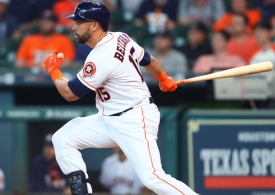
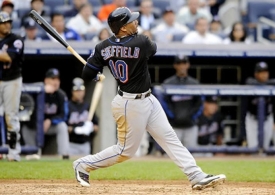 DDT's Pop Flies
When the veterans committee (VC), officially convening as the Contemporary Baseball Era…


 Live Music Head
Project/Objectan interview with André Cholmondeleyby Live Music HeadOriginally published at timessquare.com on…

LATEST RANKINGS


MOST POPULAR RANKINGS


Committee Chairman
RIP: Bobby Hull
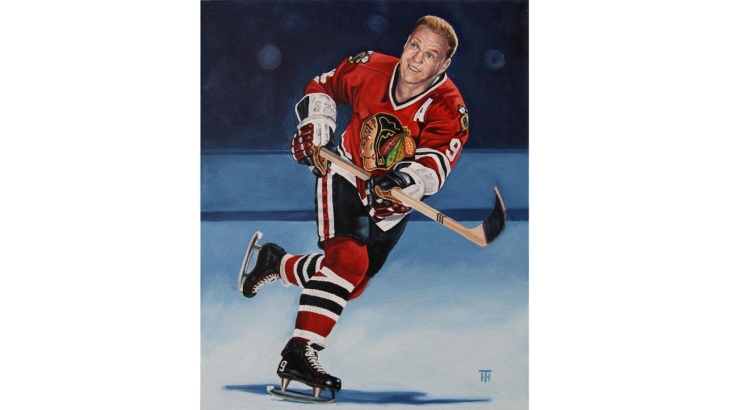
Hockey lost a legend today with the passing of Bobby Hull. He was 84 years old.
Hull made an impact in his first season in professional hockey. The gifted scorer was the runner-up for the Calder in the 1957-58 season and as the 60’s came calling he would win his first batch of individual awards as in the 1959-60 season he was the NHL’s leading goal scorer, the Art Ross Trophy winner and a First Team All Star. That is a career season for most players but for “The Golden Jet” it was just the beginning.
After helping Chicago win the 1961 Stanley Cup, Hull went on a tear where he was named to post-season All-Star Team eleven years in a row (nine First Team and two Second Team). Excelling at putting the puck in the net, Hull led the NHL in that category seven times and is the franchise all-time leader with 604 and he was the first player to exceed 50 Goals in a Season. A large part of the story of his success was the curved stick that he and teammate Stan Mikita popularized and as the possessor of one the fastest shots in the NHL (in addition to also being one of the quickest skaters) made him an offensive juggernaut. The Left Winger would also win the Hart Trophy and the Lady Byng in the 1964-65 season.
Like many star players of the National Hockey League, Hull felt underpaid and he jumped to the upstart World Hockey Association in 1972 when the Winnipeg Jets (who had his rights) shockingly met his asking price of one million dollars. He helped the Jets win the Avco Cup twice, and had a brief return to the NHL when the WHA merged with the NHL.
Hull entered the Hockey Hall of Fame in 1983 his first year of eligibility.
As phenomenal as he was on the ice, Hull was a controversial figure off it, known for a volatile temper, allegations of domestic abuse, and horrific comments in 1998 to a Moscow newspaper, though Hull denied those comments.
Louisiana Sports Betting: 2022 In Numbers

As each new US state passes legislation allowing online sports betting, a whole new audience gets to enjoy the pastime, and this has resulted in some staggering numbers in terms of money wagered and revenue generated by the licensed, regulated providers in the relevant territory.
Online sports betting in Louisiana went live in late January 2022, and it was not as simple a process as it has been in other states. Whereas in most states, the referendums used to dictate the possibility of legalization coming up on the docket in a state-wide referendum, in the Pelican State, the situation is broken down by county.
Of the 64 parishes that voted on the matter of online sports betting, 55 approved, and nine did not, but this led to a fairly absurd situation that meant that people in those parishes needed only to get in their vehicles and drive to a relevant neighborhood before placing their bets.
The state has eight legal sportsbook apps, including DraftKings Louisiana, which is, without doubt, one of the most popular and best available to residents, and in December, revenue hit a record $37.2 million, showing just how much potential there is in the market in the region.
This was in marked contrast to the revenue made in November, which saw the many sportsbooks take a big hit as Jim “Mattress Mack” McIngvale beat the bookies with a series of bets placed on the Houston Astros winning the MLB World Series.
He won a staggering $75 million from his bets, of which $58.7 million came in Louisiana, something that the providers in the state could not have possibly mitigated or predicted.
Over the course of 2022, the first year of legalization in Louisiana, the state broke the $30 million milestone for revenue four times, and December’s numbers were the highest of the whole year and a sign of things to come.
In 2022 sportsbooks accepted over $2.3 billion in bets, with $1.96 billion coming from mobile devices, which is evidence of a massive shift to mobile betting, which can be seen worldwide, not just in the sports betting world but also in the online casino industry.
The success of online sports betting hasn’t only been advantageous to the sportsbooks that are licensed to operate but also helped to bring in $33.9 million in tax receipts, with almost 40% of that total coming in the final quarter of 2022.
Those December numbers put Louisiana in seventh place in terms of sports betting handle, behind the following.
- 1) New York $1.63 billion
- 2) New Jersey $1.06 billion
- 3) Pennsylvania $754.8 million
- 4) Maryland$497.1 million
- 5) Tennessee$440.4 million
- 6) Indiana$431.4 million
- 7) Louisiana$254.3 million
- 8) Iowa$229.9 million
- 9) Kansas$182 million
- 10) West Virginia$66 million
Of the sports that attract bets in Louisiana, American football is top of the list, with basketball a distant second. Baseball lies in third.
2023 promises more of the same for Louisiana, with February likely to be a big month given the end of the NFL season and the Super Bowl on the 13th of February.
10 Active Wide Receivers Who Have Hall of Fame Potential
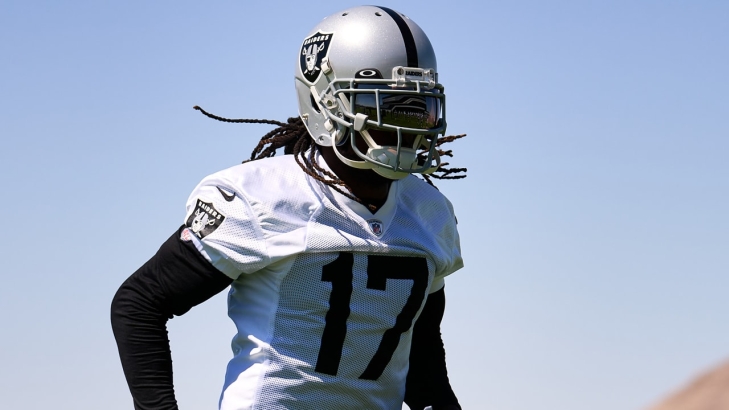
The wide receiver position in the NFL is one of the most important on the gridiron, as these players help convert passes into touchdowns. Having elite players in this position is a big boost to a team’s offense.
Here is a rundown of the top 10 wide receivers in the NFL today who look on course to finish their careers as Hall of Fame players.
10. Tyler Lockett (Seattle Seahawks)
With over 1,000 receiving yards in each of the last four seasons, Tyler Lockett has consistently been one of the league’s best wide receivers. The Seattle Seahawks man often produces explosive plays down the field for his team.
9. Stefon Diggs (Buffalo Bills)
One of the reasons for the success the Buffalo Bills have has in recent seasons is down to the plays Stefon Diggs has made at WR. He is the player who attracts the most attention from the opponents' defense. Diggs will be doing all he can to help his team to Super Bowl success this season. As of January 20, the AFC East champions are +300 in the sports betting for the Vince Lombardi Trophy at Super Bowl LVII.
8. Michael Thomas (New Orleans Saints)
Three-time Pro Bowler Michael Thomas was named the Offensive Player of the Year in the league in 2019. He finished that year with 149 receptions and 1,725 receiving yards. Injuries have limited the number of games he has played in recent years, but when fit, he remains an elite WR.
7. Cooper Kupp (LA Rams)
Super Bowl winner Cooper Kupp was the Offensive Player of the Year in 2021. He was also named the Super Bowl MVP after a huge performance against the Cincinnati Bengals at Super Bowl LVI. The LA Rams player has scored over 6,000 receiving yards in the last six years in the NFL.
6. Odell Beckham Jr. (free agent)
Former LSU wide receiver Odell Beckham Jr. made an immediate impact in the NFL in his opening year. He was named the Offensive Rookie of the Year after scoring 12 touchdowns for the New York Giants. Beckham Jr. moved to LA in 2021 to join the Rams and he helped them win the Super Bowl at their home stadium. He is set to attract a lot of interest in the offseason as a free agent.
5. Amari Cooper (Cleveland Browns)
Amari Cooper has been a star quarterback at three different franchises now. The talented WR is currently with the Cleveland Browns, and they will be hoping he can help them with their rebuild project. The four-time Pro Bowler led his team in receiving yards in 2021, accumulating a total of 1,160 yards in his debut season in Ohio.
4. Justin Jefferson (Minnesota Vikings)
Minnesota Vikings WR Justin Jefferson led the league in receiving yards in 2022. He finished the regular season with 1,809 yards and 128 receptions. He played a big role in the Vikings’ impressive offense. Jefferson has put up big numbers in each of his three years in the league and there is likely to be a lot more to come from him.
3. A.J. Brown (Philadelphia Eagles)
The Philadelphia Eagles signed A.J. Brown from the Tennessee Titans last year and he has helped turn them into Super Bowl contenders. The new Eagles man put up career-best figures in 2022, with 1,496 receiving yards, 88 receptions, and 11 touchdowns. Philadelphia will be hoping he continues that form into the playoffs.
2. Davante Adams (Las Vegas Raiders)
After eight years of playing with Aaron Rodgers at the Green Bay Packers, Davante Adams opted to join the Las Vegas Raiders in 2022. He proved he could have success with another franchise. Adams will be closing in on 10,000 career receiving yards in 2023. He is an exceptionally gifted catcher of the ball.
1. Tyreek Hill (Miami Dolphins)
Arguably the biggest trade before the 2022 season began came when the Miami Dolphins traded for Tyreek Hill from the Kansas City Chiefs. The explosive wide receiver has scored 63 receiving touchdowns in seven seasons in the NFL. His speed, low center of gravity, and ability to bring down the ball makes him one of the best of his generation at his position.
The above players will surely be in contention for many of the awards on offer at the 2023 NFL Honors in February in Arizona.
Notinhalloffame NBA Cup Standings Update (180)

If you are a regular visitor at Notinhalloffame.com, you know that we created the Notinhalloffame NBA Cup, where in every regular season game, we award points (5-4-3-2-1) to the top five performers. This is the third year that we have done this, and Denver’s Nikola Jokic won the first two.
To keep everyone regularly in the loop this time, we have decided to give regular updates, starting at when the first player cracked 100 Points, and tell all of you the top ten. We will this going forward with every update as the first player breaches the elevated ten-point threshold afterward.
Here is the current top ten, based on the first player to breach 180 Notinhalloffame Cup Points:
1. Luka Doncic, Dallas Mavericks, 182 Cup Points: 44 Games, 33.8 PPG, 9.1 RPG, 8.6 APG, 1.5 SPG, 0.5 BPG, 29.9 PER, 7.8 WS. (#1 on last ranking)
Doncic is still at number #1, but is he is still the MVP front-runner? The man at #2 is staking a claim for that. The European star is currently leading the NBA in Points per Game (33.8) and is 4th in Assists per Game (8.8). The Mavericks will go as far as Doncic can take them.
2. Jayson Tatum, Boston Celtics, 177 Points: 46 Games, 31.0 PPG, 8.6 RPG, 4.4 APG, 1.1 SPG, 0.7 BPG, 24.6 PER, 6.8 WS. (#2 on last ranking)
Tatum is threatening to top the list, and for many is the current front runner for the NBA MVP. He has never finished with a PPG over 30, but he has that currently (31.0).
3 (Tie). Nikola Jokic, Denver Nuggets, 160 Cup Points: 42 Games, 25.1 PPG, 11.0 RPG, 9.9 APG, 1.4 SPG, 0.6 BPG, 32.4 PER, 9.5 WS. (#3 on last ranking)
The “Joker” has been great lately, and we know someone wants to get that third Cup! He is currently leading the NBA in PER (32.4), VORP (5.4), Box Plus/Minus (13.2) and Win Shares (9.5).
3 (Tie). Shai Gilgeous-Alexander, Oklahoma City Thunder, 160 Cup Points: 43 Games, 30.7 PPG, 4.8 RPG, 5.5 APG, 1.7 SPG, 1.1 BPG, 27.0 PER, 7.1 WS. (#3 on last ranking)
Gilgeous-Alexander is going to be an All-Star this year, and is shattering last year’s averages, which were already good. How great will this Canadian be?
5 (Tie). Kevin Durant, Brooklyn Nets, 153 Cup Points: 39 Games, 29.7 PPG, 6.7 RPG, 5.3 APG, 0.8 SPG, 1.5 BPG, 26.8 PER, 6.4 WS. (#5 on last ranking)
The Nets were on fire, and Durant was posting his best numbers over the past three years. K.D. is now on the injured list with an MCL injury, and will miss a month, that will cost him the MVP and of course, the NIHOF Cup. He dropped three spots from out last update.
6 (Tie). Ja Morant, Memphis Grizzlies, 153 Cup Points: 39 Games, 27.2 PPG, 5.5 RPG, 7.9 APG, 1.0 SPG, 0.3 BPG, 23.5 PER, 4.1 WS. (#8 on last ranking)
Morant is the face of the Grizzles, and he is posting similar numbers from last year, when he took Memphis to the next level.
5 (Tie). Giannis Antetokounmpo, Milwaukee Bucks, 153 Cup Points: 36 Games, 30.9 PPG, 11.9 RPG, 5.3 APG, 0.8 SPG, 0.9 BPG, 26.9 PER, 4.4 WS. (#6 on last ranking)
The two-time MVP has the least amount of Games Played of anyone else in the top ten, and had he not missed them, would potentially be in the top spot.
8 (Tie). Julius Randle, New York Knicks, 148 Points: 49 Games, 24.6 PPG, 10.9 RPG, 4.0 APG, 0.7 SPG, 0.3 BPG, 21.1 PER, 5.8 WS. (#9 on last ranking)
Randle continues to climb the list, and currently has a higher PPG (24.4), as his All-Star year two years ago (24.1).
8 (Tie). Joel Embiid, Philadelphia 76ers, 148 Cup Points: 34 Games, 33.6 PPG, 9.8 RPG, 4.2 APG, 1.0 SPG, 1.7 BPG, 30.9 PER, 6.1 WS. (#9 on last ranking)
Embiid is currently second in Points per Game (behind Doncic), but is currently dealing with a foot injury.
10. Trae Young, Atlanta Hawks, 142 Points: 43 Games, 27.0 PPG, 2.9 RPG, 9.9 APG, 0.9 SPG, 0.1 BPG, 21.4 PER, 3.6 WS. (#10 on last ranking)
Young holds the final spot on the top ten, and is the face of an intriguing Hawks squad.
Our next update will happen after the first player breaches 170 Cup Points.
