

 Not in Hall of Fame News
Yes, we know that this is taking a while! As many of…
 Not in Hall of Fame News
Yes, we know that this is taking a while! As many of…
 Not in Hall of Fame News
2002 SEMI-FINAL RESULTS: Thank you for your participation in the Pro Football…
 Not in Hall of Fame News
Yes, we know that this is taking a while! As many of…
 Not in Hall of Fame News
We are diligently working away at Notinhalloffame on revising our Football lists…
 Not in Hall of Fame News
We are diligently working away at Notinhalloffame on revising our Football lists…
 From the Desk of the Chairman
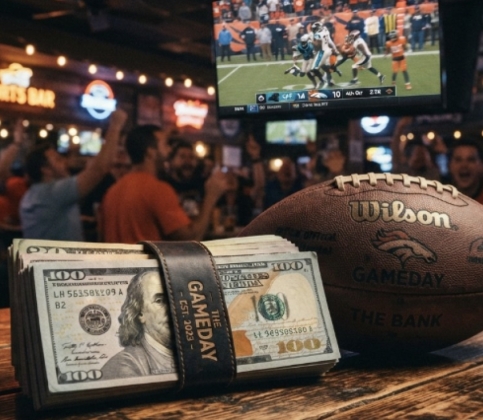
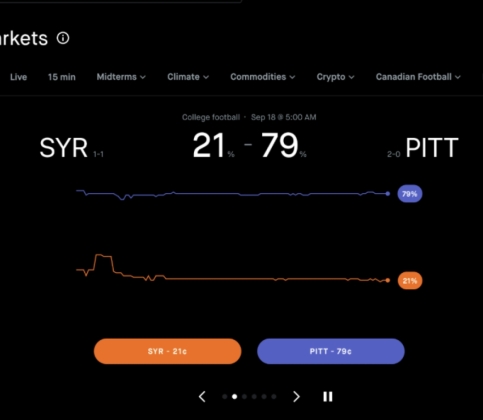
Sports fans thrive on calculating strategy, reading momentum, and maximizing every tactical…
 From the Desk of the Chairman
The 2026 NFL season is two weeks old and the division races…
 From the Desk of the Chairman
Sports communities are often built around things that have nothing to do…
 From the Desk of the Chairman
Every hall of fame eventually faces the same problem. The selection process…
 From the Desk of the Chairman
Pete Rose died in 2024. On May 13, 2025, Commissioner Rob Manfred…
 From the Desk of the Chairman
For NFL fans, game day offers much more than three hours of…

100 Active Potential Football Hall of Famers
-
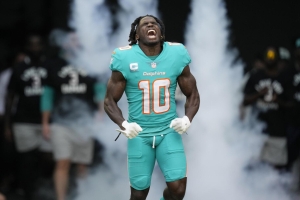 #25 Overall, Tyreek Hill, Free Agent, #3 Wide Receiver2025 Pre-Season Rank #18, 2024 Pre-Season Rank #8, 2023 Pre-Season Rank #28, 2022 Pre-Season Rank #35, 2021 Pre-Season Rank #53. Peak Period: 2019-23…
 -
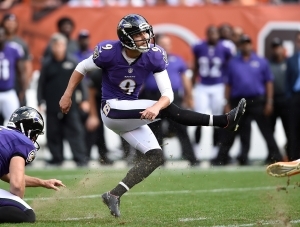 #36 Overall, Justin Tucker: Free Agent, Place Kicker, #1 Kickers & Special Teams2025 Pre-Season Rank #29, 2024 Pre-Season Rank #26, 2023 Pre-Season Rank #22, 2022 Pre-Season Rank #28, 2021 Pre-Season Rank #42, 2020 Pre-Season Rank…
 -
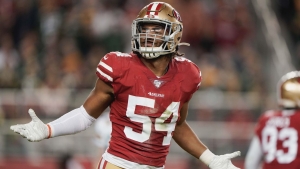 #30 Overall, Fred Warner, San Francisco 49ers Linebacker, #2 Defensive Lineman/Linebacker: Interior Lineman2025 Pre-Season Ranking #22, 2024 Pre-Season Rank #49, 2023 Pre-Season Rank #79, 2022 Pre-Season Rank #118, 2021 Pre-Season Rank #142. Peak Period: 2020-24…
 -
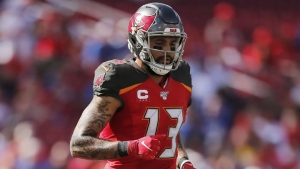 #18 Overall, Mike Evans, San Francisco 49ers, #1 Wide Receiver2025 Pre-Season Rank #13, 2024 Pre-Season Rank #18, 2023 Pre-Season Rank #35, 2022 Pre-Season Rank #58, 2021 Pre-Season Rank #73. Peak 2020-24 How…
Visit the Fictitious Halls of Fame!


You May Also Like...
EDITOR’S CHOICE
 DDT's Pop Flies
When the veterans committee (VC), officially convening as the Contemporary Baseball Era…


 Live Music Head
Project/Objectan interview with André Cholmondeleyby Live Music HeadOriginally published at timessquare.com on…

LATEST RANKINGS



MOST POPULAR RANKINGS








Committee Chairman
Notinhalloffame NBA Cup Standings Update (260)
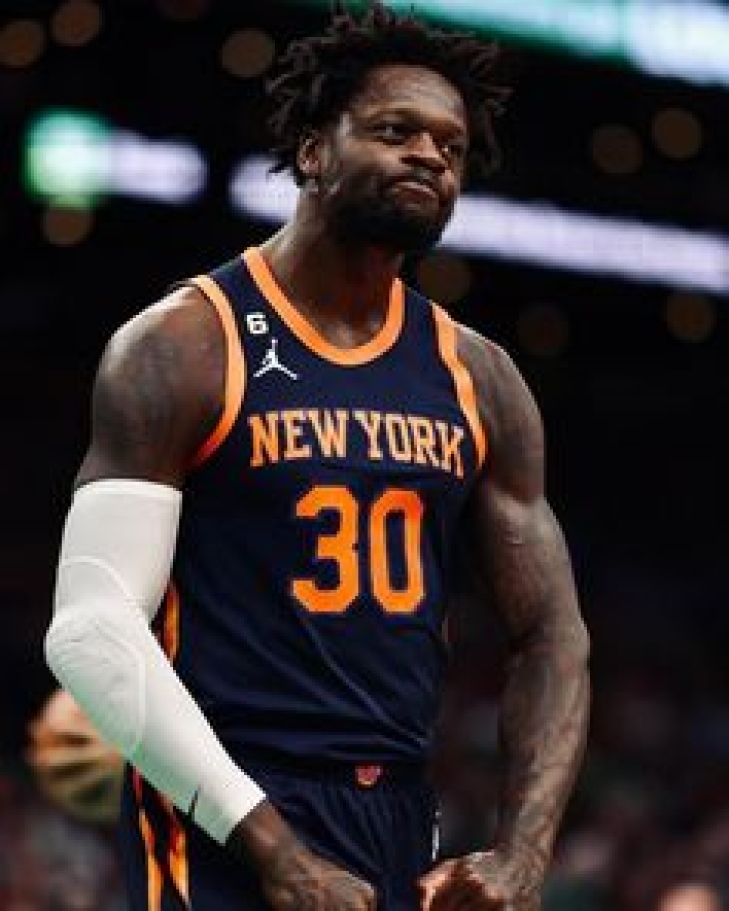
If you are a regular visitor at Notinhalloffame.com, you know that we created the Notinhalloffame NBA Cup, where in every regular season game, we award points (5-4-3-2-1) to the top five performers. This is the third year that we have done this, and Denver’s Nikola Jokic won the first two.
To keep everyone regularly in the loop this time, we have decided to give regular updates, starting at when the first player cracked 100 Points, and tell all of you the top ten. We will this going forward with every update as the first player breaches the elevated ten-point threshold afterward.
Here is the current top ten, based on the first player to breach 260 Notinhalloffame Cup Points:
1. Nikola Jokic, Denver Nuggets, 263 Cup Points: 65 Games, 24.3, PPG, 11.9 RPG, 9.9 APG, 1.3 SPG, 0.6 BPG, 31.9 PER, 14.5 WS. (#1 on last ranking)
The two-time defending MVP (and NIHOF Cup Champion) remains at the top, and is the first to break 250 Cup Points. Jokic is leading the league in PER (31.9), Win Shares (14.5), VORP (8.5) and Box Plus/Minus (13.2). He is also averaging a triple-double, is leading the NBA in that stat, and is second in Rebounds per Game.
2. Joel Embiid, Philadelphia 76ers, 256 Cup Points: 59 Games, 33.2 PPG, 10.2 RPG, 4.2 APG, 1.1 SPG, 1.6 BPG, 31.5 PER, 11.2 WS. (#2 on last ranking)
Embiid remains in the number two hole, and is a bona fide MVP contender, and in a dogfight with Jokic. He is currently the scoring leader (33.2) and is second in PER (31.5). Embiid is also in the top five in Wins Shares, VORP and Box Plus/Minus. Could this be the season he takes Philadelphia all the way to a title and finish “The Process?”
3. Jayson Tatum, Boston Celtics, 243 Cup Points: 68 Games, 30.1 PPG, 8.9 RPG, 4.7 APG, 1.0 SPG, 0.8 BPG, 23.4 PER, 9.2 WS. (#3 on last ranking)
Tatum climbed back into the top three. He is still a huge threat to win this award, though the MVP, that he was once in contention for won’t fall his way this season. He should finish over 30 Points per Game (he is currently sixth).
4. Giannis Antetokounmpo, Milwaukee Bucks, 240 Cup Points: 57 Games, 31.2 PPG, 11.9 RPG, 5.5 APG, 0.7 SPG, 0.8 BPG, 28.8 PER, 7.9 WS. (#4 on last ranking)
The two-time MVP would have probably been on the top had he not missed a series of Games earlier in the season. He is now a six-time All-Star, and is in the top five in both Points and Rebounds per Game.
5 TIE. Luka Doncic, Dallas Mavericks, 232 Cup Points: 58 Games, 32.9 PPG, 8.6 RPG, 8.2 APG, 1.5 SPG, 0.5 BPG, 29.3 PER, 9.3 WS. (#4 on last ranking)
Doncic is back, and the man who was once in the top spot held on to his rank. He is second in scoring (33.0), and was an early MVP contender, but that may not the case anymore.
5 TIE. Shai Gilgeous-Alexander, Oklahoma City Thunder, 232 Cup Points: 61 Games, 31.4 PPG, 4.8 RPG, 5.5 APG, 1.6 SPG, 1.1 BPG, 27.2 PER, 10.2 WS. (#6 on last ranking)
Gilgeous-Alexander went to his first All-Star Game, and is shattering last year’s averages, which were already good. He is currently dealing with some nagging injuries, but you have to imagine just how pathetic the Thunder would be without SGA.
7. Julius Randle, New York Knicks, 225 Cup Points: 74 Games, 25.5 PPG, 10.1 RPG, 4.2 APG, 0.6 SPG, 0.3 BPG, 20.6 PER, 8.2 WS. (#7 on last ranking)
Randle holds in at #7, and currently has a higher PPG (25.2), than his first All-Star year two years ago (24.1).
8. Trae Young, Atlanta Hawks, 222 Cup Points: 66 Games, 26.8 PPG, 3.1 RPG, 10.0 APG, 1.2 SPG, 0.2 BPG, 22.6 PER, 6.3 WS. (#8 on last ranking)
Young is the face of an intriguing Hawks squad, but was unable to make the NBA All-Star Team. This could be the player that intrigues us he most in the next two years.
9. Lauri Markkanen, Utah Jazz, 209 Cup Points: 64 Games, 25.7 PPG, 8.6 RPG, 1.9 APG, 0.6 SPG, 0.6 BPG, 22.5 PER, 8.3 WS. (Not on last ranking)
Markkanen roars back into the top ten with his highest position to date. This unexpected campaign could be a one-off or the start of something special.
10. Domantas Sabonis, Sacramento Kings, 208 Cup Points: 70 Games, 19.0 PPG, 12.5 RPG, 7.3 APG, 0.8 SPG, 0.5 BPG, 23.3 PER, 11.1 WS. (#10 on last ranking)
Sabonis is currently the NBA leader in Rebounds per Game (12.6). He added a third All-Star this year.
Memphis’s Ja Morant fell off the top ten.
Our next update will happen after the first player breaches 260 Cup Points.
Mastering AFL Betting: Top Tips and Strategies for Success
AFL (Australian Football League) is one of the most popular sports in Australia, with millions of fans tuning in to watch matches every year. For many fans, betting is a fun and exciting way to engage with the sport and potentially win some money. But with so many variables in each match, consistently making successful bets can be difficult. This article will provide some top tips and strategies for mastering AFL betting.
Tips for AFL Betting
Tip #1: Do Your Research
Before placing betting on AFL matches, it's important to do your research. This includes researching each team's recent form, injuries, and head-to-head record. You should also consider weather conditions, playing venues, and travel schedules. By understanding these factors, you can make more ideal bets and increase your chances of success.
Tip #2: Look for Value Bets
Value bets have a higher probability of winning than the odds suggest. For example, if a team has odds of 2.50 to win but you believe they have a 60% chance of winning, this represents a value bet. You can increase your potential returns and minimise losses by looking for value bets.
Tip #3: Bet Responsibly
While AFL betting can be a fun and exciting way to engage with the sport, it's important to bet responsibly. This means only betting what you can afford to lose and setting limits on your betting activity. It's also important to avoid chasing losses, which can lead to impulsive and irrational betting behaviour.
Tip #4: Consider Player Match-Ups
Player match-ups can be a crucial factor in determining the outcome of an AFL match. For example, if one team has a dominant ruckman who can consistently win the ball out of the centre, this can give them a significant advantage. Similarly, if one team has a key forward likely to dominate their match-up, this can also impact the match's outcome. Considering player match-ups can enhance your betting decisions and improve your likelihood of winning.
Strategies for AFL Betting
Strategy #1: Handicap Betting
Handicap betting is a popular strategy in AFL betting, where a handicap is given to one team to level the playing field. For example, if one team is considered the favourite, they may be given a -10.5 handicap, meaning they must win by 11 or more points to win the bet.
Conversely, the underdog team may be given a +10.5 handicap, meaning they can lose by up to 10 points and still win the bet. Handicap betting can be a great way to increase your bets' odds and potential returns.
Strategy #2: Head-to-Head Betting
Head-to-head betting is a simple strategy in AFL betting, where you bet on the match's outcome. This involves choosing either the home team, the away team, or a draw. While head-to-head betting may offer lower odds and potential returns than other strategies, it can be a good option for beginner bettors or when there is a clear favourite in the match.
Strategy #3: Margin Betting
Margin betting involves betting on the winning margin of a match. For example, you may bet on one team to win by a certain number of points or on a specific range of winning margins. Margin betting can offer higher odds and potential returns than other strategies, but it requires a more in-depth understanding of each team's playing style and recent form.
In Conclusion
AFL matches betting can be a fun and exciting way to engage with the sport and potentially win some money. By researching, looking for value bets, and betting responsibly, you can increase your chances of success. Handicap, head-to-head, and margin betting are popular strategies that offer different odds and potential returns. Ultimately, staying informed, disciplined, and focused on your goals is the key to mastering AFL betting.
Our All-Time Top 50 Seattle Mariners have been updated to reflect the 2022 Season
Yes, we know that this is taking a while!
As many of you know, we here at Notinhalloffame.com are slowly generating the 50 of each major North American sports team. That being said, we have existing Top 50 lists out and we always consistently look to update them when we can and based on necessity. As such, we are very happy to present our post 2022 revision of our top 50 Seattle Mariners.
As for all of our top 50 players in baseball we look at the following:
1. Advanced Statistics.
2. Traditional statistics and how they finished in the American League.
3. Playoff accomplishments.
4. Their overall impact on the team and other intangibles not reflected in a stat sheet.
Last year, the Mariners returned to the playoffs, and the season gave us one small move in the Top 50, and one new entrant.
As always, we present our top five, which had no changes.
You can find the entire list here.
The new addition was Infielder, J.P. Crawford, who debuted at #45.
We welcome your input and comments and as always, we thank you for your support.
20. J.P. Crawford
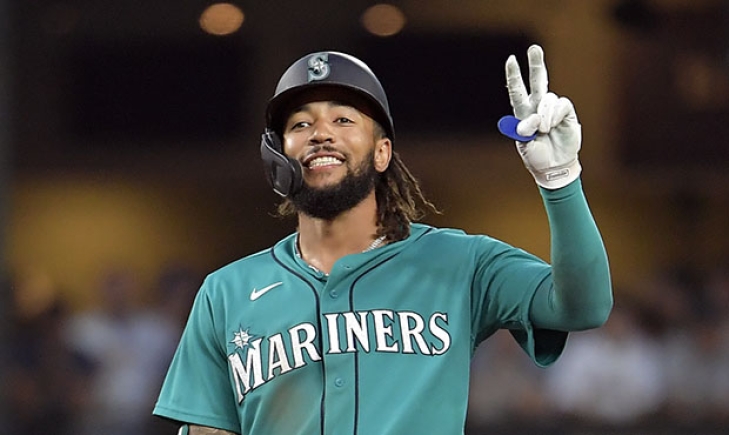
J.P. Crawford was initially a highly touted first-round draft pick by the Philadelphia Phillies in 2013. He made his debut in the big leagues in Eastern Pennsylvania, playing 71 games over two seasons. Hoping to give his career a fresh start, the Seattle front office made a big trade in December 2018 to bring this talented young infielder to the Pacific Northwest. It’s clear that the new environment truly helped him unlock his full baseball potential.
By the pandemic-shortened 2020 campaign, Crawford permanently secured the position of everyday starting shortstop, demonstrating exceptional lateral range and refined glove work to earn his first American League Gold Glove Award. Upon the resumption of a full 162-game schedule, his offensive capabilities began to match his outstanding defensive skills. During a remarkable 2021 season, Crawford exhibited exceptional contact-hitting ability, accumulating a career-high 169 hits and achieving a batting average of .273.
He skillfully preserved that dependable baseline with a 126-hit encore in 2022, prior to producing a remarkable, award-winning regular-season performance in 2023. During that summer, he fundamentally redefined his offensive profile, hitting a career-high 19 home runs while leading the American League with an exceptional 94 walks—resulting in a strong .818 OPS and securing a notable 16th-place position in the AL Most Valuable Player voting.
However, the 2024 campaign threw severe contact leaks his way, as nagging injuries restricted him to 105 games and sapped his offensive efficiency down to a frustrating .202 mark.
Rather than letting that poor performance define his future, Crawford crafted an impressive and resilient bounce-back in 2025. Serving as the team’s heartbeat and leadoff hitter, he played 157 games, batting .265 with 151 hits, 24 doubles, 12 home runs, and 58 RBIs. He restored his signature plate discipline by drawing 74 walks, resulting in a.352 on-base percentage. His leadership qualities also earned him a nomination for the prestigious Roberto Clemente Award. Most notably, Crawford’s consistent presence in the clubhouse and key moments—such as his sixth career grand slam and seventh walk-off—helped propel the Mariners to a thrilling seven-game American League Championship Series.
Currently, as the Mariners formally transition into the highly anticipated 2026 campaign, Crawford finds himself at a significant professional milestone. During his seven active seasons solely representing the Mariners, he has amassed a substantial record of 797 hits, 143 doubles, and 338 runs scored.
