

 Not in Hall of Fame News
Yes, we know that this is taking a while! As many of…
 Not in Hall of Fame News
We are diligently working away at Notinhalloffame on revising our Football lists…
 Not in Hall of Fame News
We are diligently working away at Notinhalloffame on revising our Football lists…
 Not in Hall of Fame News
We are diligently working away at Notinhalloffame on revising our Football lists…
 Not in Hall of Fame News
We are diligently working away at Notinhalloffame on revising our Football lists…
 Not in Hall of Fame News
We are diligently working away at Notinhalloffame on revising our Football lists…
 From the Desk of the Chairman
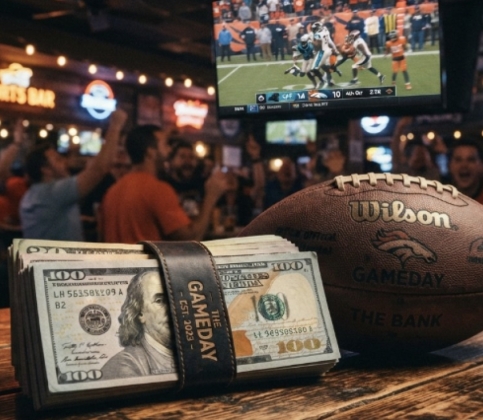
Sports fans thrive on calculating strategy, reading momentum, and maximizing every tactical…
 From the Desk of the Chairman
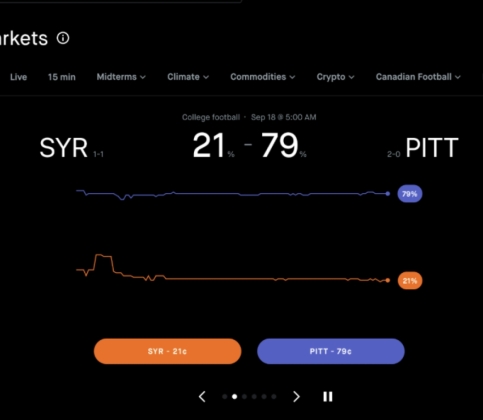
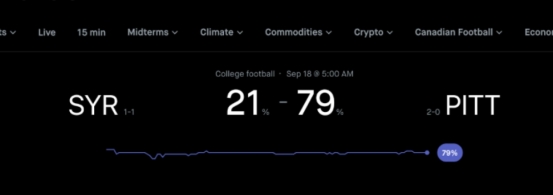
The 2026 NFL season is two weeks old and the division races…
 From the Desk of the Chairman
Sports communities are often built around things that have nothing to do…
 From the Desk of the Chairman
Every hall of fame eventually faces the same problem. The selection process…
 From the Desk of the Chairman
Pete Rose died in 2024. On May 13, 2025, Commissioner Rob Manfred…
 From the Desk of the Chairman
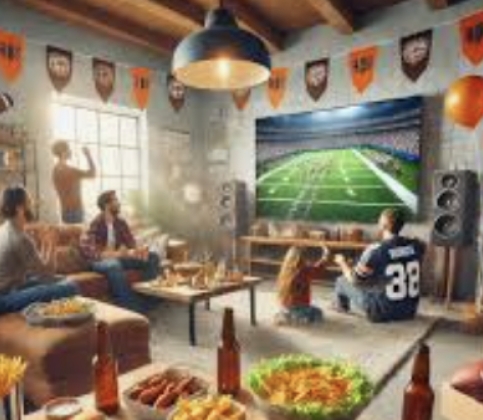
For NFL fans, game day offers much more than three hours of…
100 Active Potential Football Hall of Famers
-
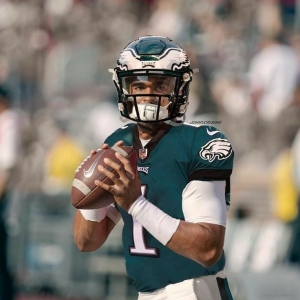 #32 Overall, Jalen Hurts, Philadelphia Eagles, #6 Quarterback2025 Pre-Season Rank #33, 2024 Pre-Season Rank #53, 2023 Pre-Season Rank #121. Peak Period: 2021-25 And in 2024, he became a champion. Jalen…in Quarterbacks
 -
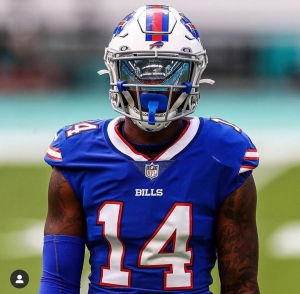 #43 Overall, Stefon Diggs, Washington Commanders, #7 Wide Receiver2025 Pre-Season Rank #40, 2024 Pre-Season Rank #38, 2023 Pre-Season Rank #48, 2022 Pre-Season Rank #57, 2021 Pre-Season Rank #118. Peak Period 2019-23…
 -
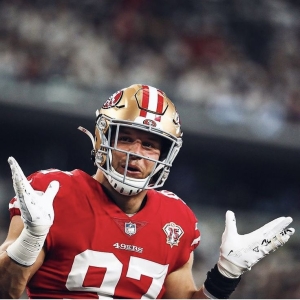 #39 Overall, Nick Bosa, San Francisco 49ers, #12 Defensive End: Defensive Linemen/Linebackers: Pass Rushers2025 Pre-Season Rank #42, 2024 Pre-Season Rank #52, 2023: Pre-Season Rank #83. Peak Period: 2019-23 The explosive Nick Bosa is one of a…
 -
 #40 Overall, Justin Jefferson, Minnesota Vikings, #5 Wide Receiver2025 Pre-Season Rank #38, 2024 Pre-Season Rank #50, 2023 Pre-Season Rank #101, 2022 Pre-Season Rank #130. Peak Period: 2020-24 Since he debuted in…
Visit the Fictitious Halls of Fame!

You May Also Like...
EDITOR’S CHOICE
 DDT's Pop Flies
When the veterans committee (VC), officially convening as the Contemporary Baseball Era…

 Live Music Head
Project/Objectan interview with André Cholmondeleyby Live Music HeadOriginally published at timessquare.com on…

LATEST RANKINGS


MOST POPULAR RANKINGS







Committee Chairman
Adrian Peterson named to the Minnesota Vikings Hall of Fame

Regular visitors of Notinhalloffame.com know that we are slowly working on the top 50 of every major team in the NHL, NBA, NFL, and MLB. Once that is done, we will examine how each team honors its past players, coaches, and executives. As such, it is important to us that the Minnesota Vikings will enshrine Adrian Peterson into their Ring of Honor this year.
From the University of Oklahoma, Peterson was taken seventh overall in 2017, and he immediately established himself as an elite NFL Running Back. Peterson won the Offensive Rookie of the Year Award off of a 1,609 Yards From Scrimmage year, and in his sophomore campaign, he won his first rushing title with 1,760 Yards. A Pro Bowl Selection in his four seasons, Peterson led the NFL in Rushing Touchdowns (18).
Peterson missed the 2011 Pro Bowl due to injuries, but in 2012, he had the most productive rushing season in team history. That year, he won his second Rushing Title, a whopping 2,097 Yards, which was the second-highest in league history. He won the MVP and the Offensive Player of the Year Award, cementing his legacy in team history.
After another solid year in 2013, Peterson missed most of the 2014 season due to child abuse charges, which landed him on the Exempt List, and later a suspension. He rebounded with a third rushing title in 2015 (1,485), which netted him a fourth First Team All-Pro and seventh Pro Bowl, but injuries held him to only three games in 2016, and the Vikings did not exercise his option. Peterson played four more years in the NFL with stops in New Orleans, Washington, Detroit, Tennessee, and Seattle.
Overall, with the Vikings, Peterson rushed for 11,747 Yards, caught another 1,945 Yards from the air, and had 102 Touchdowns from Scrimmage.
Peterson is eligible for the Pro Football Hall of Fame in 2027.
We here at Notinhalloffame.com would like to congratulate Adrian Peterson for his upcoming honor.
Legal Steps Following An Unexpected Accident At A Spartanburg Youth Sports Tournament

Parents sign thousands of youth sports liability agreements annually without realizing that those documents rarely protect facilities from gross negligence. A standard registration form provides zero legal cover for a complex, ignoring structural hazards or hiring unvetted staff. Facilities depend on the assumption that a signed paper prevents civil action.
That assumption stops families from uncovering maintenance failures, causing severe bodily harm. Liability requires a factual examination of maintenance logs and facility compliance rather than just a quick reading of an electronic waiver. Investigating these specific failures determines whether actionable negligence exists following a severe sports injury.
Immediate Preservation Of The Incident Scene
Physical conditions change rapidly after emergency personnel clear an area. Facility managers often repair broken equipment or alter the site layout within hours to prevent subsequent injuries. Documenting the exact mechanism of harm requires photographic evidence captured before any modifications occur at the venue.
"Defense investigators photograph the hazard immediately while parents focus entirely on the ambulance transport, leaving families with zero visual proof of the defect by the next morning," stated Sam Bass, a Spartanburg personal injury attorney. Equipment fails for specific reasons.
Medical documentation provides the necessary clinical foundation. Transport to Spartanburg Medical Center generates initial hospital records establishing the immediate severity of the physical trauma. According to the Centers for Disease Control and Prevention, traumatic brain injuries account for roughly 283,000 emergency visits annually among children participating in recreation. Matching the injury mechanism to the specific site conditions proves causation.
The Reality Of Tournament Liability Waivers
Waivers create a false sense of immunity for tournament organizers. Courts scrutinize these documents heavily because enforcing broad exculpatory clauses violates public policy regarding child safety. A facility cannot contract away fundamental duties to maintain safe premises.
Finding a viable path forward requires examining specific liability exceptions. Retaining a Spartanburg personal injury lawyer as mentioned by Martindale, www.stewartlawoffices.net, a legal practice managing civil claims in South Carolina since 1995 under the leadership of Brent Stewart, can help to establish early procedural boundaries. Organizers frequently reject initial reports of unsafe conditions. Defense representatives immediately point to the digital signature to discourage further inquiry.
Identifying The Responsible Entities
Determining fault requires unpacking a complex web of corporate and municipal relationships. Tournaments operate through overlapping layers of management. Pinpointing the correct defendant dictates the procedural rules for the entire civil claim.
Independent Contractors And Referees
League organizers frequently hire third-party vendors for officiating and site security. These individuals act outside the direct employment of the host venue. Establishing vicarious liability means analyzing the specific contracts governing those temporary roles.
Facility Management And Municipalities
Publicly owned venues require adherence to governmental tort claims procedures. Claims involving the Spartanburg County Parks Department demand strict notice requirements differing significantly from private corporate litigation. Failing to meet municipal notice periods removes the opportunity to extend your legal timeline, but it does not bar financial recovery if a lawsuit is initiated within the standard two-year timeframe. Actions speak volumes.
Securing Witness Testimony Before Memories Fade
Spectators possess the most objective perspective regarding tournament conditions leading up to an incident. Background video captured by parents from opposing teams inadvertently documents structural failures or inadequate security measures. Identifying these individuals on the day of the event prevents valuable digital evidence from vanishing forever.
Witness accounts decay rapidly. Extracting specific details about a collapsed netting structure at the Upward Star Center requires immediate interviews. People forget precise sequences of events within weeks, replacing factual memories with assumptions based on later conversations.
An unexpected injury at the Upward Star Center can disrupt your whole family. Reach out to Stewart Law Offices at (864) 583-2223 or stop by 409 S Pine St, Spartanburg, SC 29302, and remember their attorneys can travel to visit you if you cannot make it in.
Insurance Coverage Triggers And Limitations
Commercial general liability policies contain strict exclusions for athletic participants, forcing organizers to purchase distinct policy layers for spectators versus active players. Private carriers frequently mandate formal written incident reports within 30 days to trigger coverage. Deadlines dictate policy availability.
Public venues invoke different rules. The South Carolina Tort Claims Act establishes a one-year window under SECTION 15-78-80(d) for filing an optional verified notice of loss to extend litigation deadlines; missing this administrative benchmark does not bar recovery or insurance access, provided a lawsuit is filed within the two-year statutory window. Missing this administrative deadline bars insurance access completely, regardless of injury severity.
Filing Timelines For Civil Claims
Statutes of limitations establish the absolute deadline for initiating a lawsuit. South Carolina generally allows three years for personal injury filings against private entities. Municipal involvement automatically reduces the baseline lawsuit window to two years, though specific administrative notice provisions can extend that window back to three years if utilized correctly.
Delaying action destroys leverage. Filing formal complaints at the Spartanburg County Courthouse requires extensive preparation and preliminary evidence gathering. A rushed filing invites procedural errors and immediate motions to dismiss from defense counsel.
Questions About Spartanburg Youth Sports Accidents
Who pays the medical bills while a tournament liability claim remains pending?
Health insurance remains the primary payer for immediate clinical treatments following an incident. Subrogation clauses allow health insurers to place liens on future civil settlements. Establishing a letter of protection with specialized providers delays direct billing until the litigation resolves. Details dictate the outcome.
Does an injury caused by another player qualify for a civil lawsuit?
Intentional misconduct provides grounds for civil action. Standard physical contact inherent to the sport lacks liability entirely. Proving a player acted with malicious intent outside the established rules of the game requires demonstrating physical behavior far exceeding any expected competitive aggression.
What specific documents must families request from the sports facility immediately?
Families need the official incident report generated by the on-site security team. Securing the maintenance logs for the specific equipment involved establishes baseline compliance. These documents provide the necessary foundation for proving the facility knew about existing material hazards beforehand.
This content is for informational purposes only and does not constitute legal advice. Readers should consult a licensed attorney like the one mentioned in the article for guidance specific to their situation.
40. Andres Munoz

Originally signed by San Diego and debuting as a 20-year-old fireballer in 2019, Andrés Muñoz’s trajectory faced an immediate obstacle when he needed Tommy John surgery. As a result, the Padres included him as part of a major seven-player trade to Seattle in August 2020. The Mariners' training staff managed his rehab meticulously, transforming him from a raw thrower with triple-digit velocity into one of the most effective and well-rounded closers in professional baseball.
Muñoz’s rise to the top tier of modern relievers is fueled by a remarkable two-pitch arsenal that leaves major-league hitters completely stymied. His powerful, high-90s four-seam fastball, which can hit triple digits, combines with what is arguably the sport’s most devastating breaking ball—a sweeping slider that regularly keeps opponents’ batting averages below .130. After demonstrating his incredible swing-and-miss ability as a high-pressure setup man during Seattle's exciting 2022 postseason run, he smoothly stepped into the closer role. In 2024, he earned his first American League All-Star nod by notching 22 saves and maintaining a stellar 2.12 ERA.
The 2025 campaign was a historic exhibition of absolute, high-leverage dominance. Stepping onto the mound with his trademark calm demeanor, Muñoz served as an ironclad firewall at the back of the bullpen, capturing the AL Reliever of the Month honors for March/April after rattling off 15 consecutive scoreless appearances to start the summer. He paced the Mariners' relief corps with a brilliant 3–3 record and a dazzling, career-best 1.73 ERA across 62.1 frames of work.
True to form, he was completely untouchable. Muñoz shattered a historic franchise record by putting together 12 consecutive hitless appearances from July 5 to August 14. He struck out 83 batters while holding opposing lineups to a comical .167 batting average, converting a career-high 38 saves—making him the first Mariner to eclipse the 30-save threshold since Edwin Díaz's legendary 2018 run. His suffocating era dominance earned him a second consecutive All-Star nod, a spot on the All-MLB Second Team, and critical clean sheets during Seattle's October postseason run.
Entering the highly anticipated 2026 campaign at just 27 years old, Muñoz firmly establishes himself as the premier anchor of a loaded Seattle bullpen, widely projected as one of the most lethal late-inning lock-down units in all of baseball.
46. Logan Webb

Hooks Wiltse didn’t just throw a curveball; he weaponized it. In an era dominated by blazing fastballs and deceptive spitballs, the crafty southpaw possessed a sharp, sweeping breaking ball that was universally recognized as far more lethal than his heater—a rarity for the Deadball Era that quickly earned him his iconic nickname. Joining John McGraw’s powerhouse New York Giants in 1904, Wiltse made the most explosive first impression in major-league history by winning his first 12 consecutive decisions, a legendary rookie record that stood unmatched for 70 years.
Wiltse quickly became the ideal left-handed counterpart to the legendary Christy Mathewson. Together, they formed one of the most renowned and successful lefty-righty pairings in baseball history, amassing 435 wins over their 11 years in Manhattan. Wiltse's efficient pitching contributed significantly to the Giants winning five National League pennants during that period. Although he sat in the dugout during the 1905 World Series while Mathewson threw three historic shutouts to win the title, it was Wiltse's regular-season performance that fueled their success.
His career's peak came during an impressive late-decade period when he became a back-to-back 20-win pitcher, recording a 23–14 record in 1908 and following it with a 20–11 season in 1909.
Although it might seem that the heavy workload of the Deadball Era took a toll on him, his efficiency tells a different story. In his peak years, Wiltse was a top-tier run suppressor, maintaining a season ERA below 2.50 for five straight summers from 1905 to 1909, with a career-low of 2.00. It was only after 1910, as he entered his thirties and his shoulder fatigue persisted, that his ERA rose above that 2.50 mark.
Beyond his prowess on the mound, Wiltse was seen as one of the most versatile athletes on the team. McGraw often relied on his keen instincts for pinch-hitting and defensive roles, even assigning him to first base in Game 2 of the 1913 World Series. He concluded his time with the Giants with 155 hits and a solid .215 batting average. After shifting to a relief pitcher role, the Giants released him after the 1914 season, which led to a brief final stint with the Brooklyn Tip-Tops of the Federal League.
Wiltse's ten-year New York residency includes a 136–85 record, 2.48 ERA, and 948 strikeouts in 339 games.
