

 Not in Hall of Fame News
Yes, we know that this is taking a while! As many of…
 Not in Hall of Fame News
We are diligently working away at Notinhalloffame on revising our Football lists…
 Not in Hall of Fame News
We are diligently working away at Notinhalloffame on revising our Football lists…
 Not in Hall of Fame News
We are diligently working away at Notinhalloffame on revising our Football lists…
 Not in Hall of Fame News
We are diligently working away at Notinhalloffame on revising our Football lists…
 Not in Hall of Fame News
We are diligently working away at Notinhalloffame on revising our Football lists…
 From the Desk of the Chairman
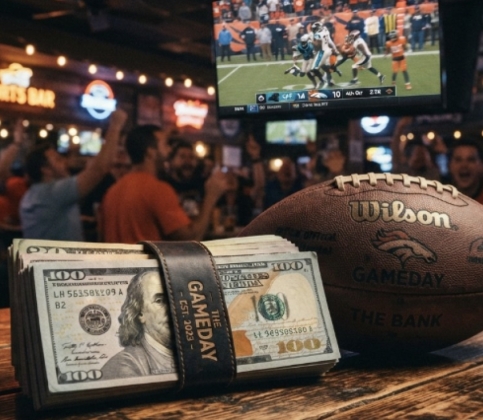
Sports fans thrive on calculating strategy, reading momentum, and maximizing every tactical…
 From the Desk of the Chairman
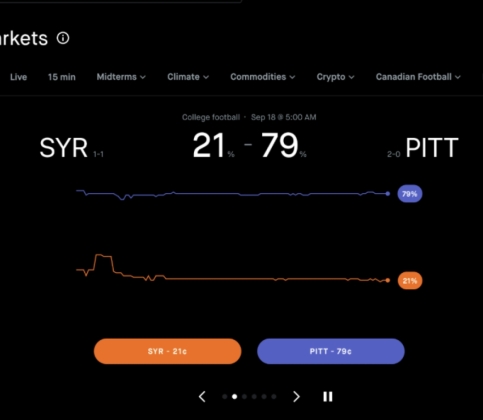
The 2026 NFL season is two weeks old and the division races…
 From the Desk of the Chairman
Sports communities are often built around things that have nothing to do…
 From the Desk of the Chairman
Every hall of fame eventually faces the same problem. The selection process…
 From the Desk of the Chairman
Pete Rose died in 2024. On May 13, 2025, Commissioner Rob Manfred…
 From the Desk of the Chairman
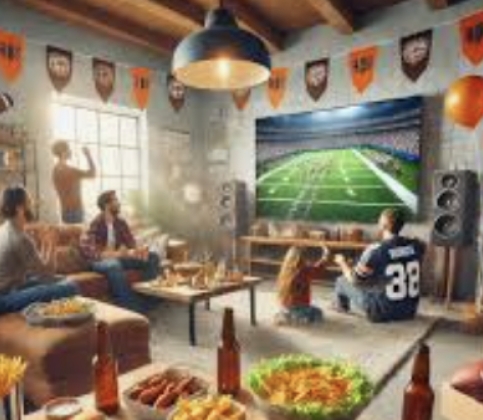
For NFL fans, game day offers much more than three hours of…

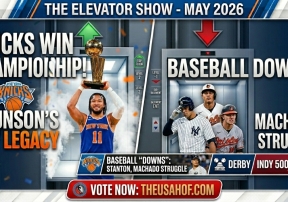

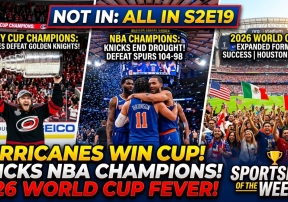


100 Active Potential Football Hall of Famers
-
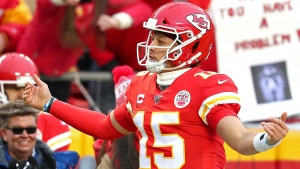 #4 Overall, Patrick Mahomes: Kansas City Chiefs, #2 Quarterback2025 Pre-Season Rank #4, 2024 Pre-Season Rank #2, 2023 Pre-Season Rank #10, 2022 Pre-Season Rank #21, 2021 Pre-Season Rank #31, 2020 Pre-Season Rank…in Quarterbacks
 -
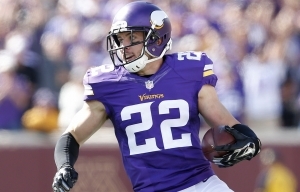 #28 Overall, Harrison Smith, Minnesota Vikings, Strong Safety, #2 Safety2025 Pre-Season Rank #38, 2024 Pre-Season Rank #50, 2023 Pre-Season Rank #72, 2022 Pre-Season Rank #79, 2021 Pre-Season Rank #90, 2020 Pre-Season Rank…in Safeties
 -
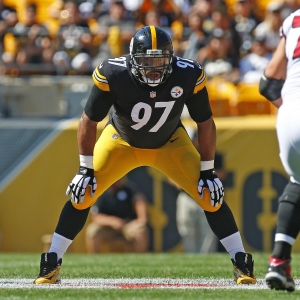 #20 Overall, Cameron Heyward, Pittsburgh Steelers, Defensive End, #9 Defensive Lineman/Linebackers: Pass Rushers2025 Pre-Season Rank #19, 2024 Pre-Season Rank #28, 2023 Pre-Season Rank #33, 2022 Pre-Season Rank #38, 2021 Pre-Season Rank #75, 2020 Pre-Season Rank…
 -
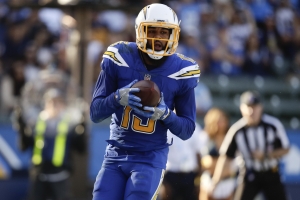 #49 Overall, Keenan Allen, Indianapolis Colts, #8 Wide Receiver2025 Pre-Season Rank #46, 2024 Pre-Season Rank #41, 2023 Pre-Season Rank #45, 2022 Pre-Season Rank #48, 2021 Pre-Season Rank #66, 2020 Pre-Season Rank…
Visit the Fictitious Halls of Fame!


You May Also Like...
EDITOR’S CHOICE
 DDT's Pop Flies
When the veterans committee (VC), officially convening as the Contemporary Baseball Era…

 Live Music Head
Project/Objectan interview with André Cholmondeleyby Live Music HeadOriginally published at timessquare.com on…

LATEST RANKINGS

MOST POPULAR RANKINGS






Committee Chairman
The Notinhalloffame Baseball list has been revised: 226-250

Last January, the Baseball Hall of Fame announced the Class of 2026, and for us at Notinhalloffame.com, this means it is time to revise the list of those to consider for the Hall.
At present, it is a work in progress, as we have multiple projects underway (including prepping the ballot for the 2026 United States Athletic Hall of Fame), but we are also slowly working on the Baseball Hall revision.
Our revisions take into account the following:
- Removing those who were inducted and including those who are now eligible.
- Taking in your votes and comments and adjusting accordingly.
Simple, right?
As this is a work in progress, the section is under construction, but we will keep you apprised of the changes as we go.
The entire list (again, it is under construction) is here, but in the meantime, here is the revised 226-250:
226. Harvey Haddix
227. Tony Phillips
228. Magglio Ordonez
229. Dick Groat
230. Art Fletcher
231. Guy Hecker
232. Eddie Rommell
233. Will White
234. Rudy York
235. Harry Breechen
236. Ed Konetchy
237. Davey Lopes
238. Jim Perry
239. Joe Judge
240. Pedro Guerrero
241. Tommy Henrich
242. Bill White
243. Nap Rucker
244. Charlie Root
245. Bob Welch
246. Mel Stottlemyre
247. Amos Otis
248. Frank Viola
249. Larry French
250. Paul O’Neill
Look for more updates soon.
The Ultimate Predictor: How Modern Sports Analytics Forecast Future Hall of Fame Players

Modern sports analytics has transformed the way fans, analysts, and bettors evaluate athletic performance. Rather than relying solely on reputation or memorable highlights, today's predictive models combine historical statistics, advanced performance metrics, and long-term trends to build a more complete picture of a player's career. These analytical tools help identify athletes whose consistency, impact, and achievements may eventually earn them a place in the Hall of Fame. The same evidence-based approach has also influenced modern sports betting, where informed decisions are increasingly driven by research instead of intuition.
Data-Driven Research Comes Before Every Bet
Every successful betting strategy begins with reliable research long before any wager is placed. Experienced bettors understand that choosing a trusted sportsbook such as SALJU88 is only one part of the decision-making process before evaluating player statistics, injury reports, historical matchups, pace of play, and other performance metrics. Rather than relying on team reputation or public opinion alone, informed bettors use data-driven analysis to identify long-term value and make smarter betting decisions.
This same approach also applies to Hall of Fame projections. Consistent performance, durability, postseason impact, awards, and year-over-year improvement all help analysts evaluate whether a player has built a career worthy of long-term recognition. Understanding these indicators allows fans and analysts to identify overlooked candidates before broader public attention catches up.
Predictive Models Reduce Emotional Decisions
Emotion often influences sports predictions, especially when fans evaluate their favorite teams or players. Analytics helps reduce that bias by focusing on measurable factors such as past performance, opponent strength, venue, weather, injuries, and recent team form.
For bettors, this kind of objective analysis is essential. Instead of relying on loyalty or public hype, informed users can compare statistics, identify value, and avoid chasing unlikely outcomes. The same forecasting methods are also useful when evaluating player milestones, award races, and long-term career achievements that may shape future Hall of Fame debates.
How Analytics Are Transforming Modern Betting Websites
Predictive analytics has become a core feature of today's online betting websites. Advanced algorithms process real-time match statistics, player performance, injury reports, and historical trends to deliver more accurate odds and valuable insights before and during live events. These innovations help users make informed decisions instead of relying solely on intuition.
Modern betting platforms continue to enhance the user experience by combining comprehensive sports coverage, live betting markets, and data-driven features in a single platform. Platforms such as SALJU88 also simplify the user journey with a straightforward registration process and a secure login system, allowing members to quickly access live odds, match analysis, and responsible betting features. As technology continues to evolve, betting websites are becoming more intelligent, transparent, and accessible for sports enthusiasts who value research-backed decision-making.
The Future of Predictive Sports Intelligence
Artificial intelligence continues to reshape the future of sports forecasting by combining historical records with real-time performance data. As predictive models become more sophisticated, analysts and bettors can evaluate team form, player development, and market trends with greater accuracy than ever before.
These innovations are also influencing how modern betting platforms operate. From personalized match insights to faster odds updates, technology helps create a more efficient experience for both new and experienced users. SALJU88 Sportsbook continues to reflect this trend by offering live betting markets, comprehensive match insights, and data-driven features that support more informed betting decisions.
Conclusion
Predicting future Hall of Fame players is no longer based solely on reputation or memorable moments. Advanced analytics, historical performance data, and predictive technology now provide a more objective way to evaluate long-term success. The same analytical approach has transformed modern sports betting, helping users make more informed decisions through reliable statistics and real-time insights.
Whether following player performance, comparing betting markets, or accessing SALJU88 Login, informed decisions will always begin with accurate data. For new users, the SALJU88 Registration process provides a straightforward way to access modern sports betting features backed by real-time analytics.
Frequently Asked Questions
1. Why are analytics important in sports betting?
Analytics allow sports bettors to evaluate historical performance, player statistics, team form, injury reports, and other measurable factors before placing a wager. While they cannot predict every outcome, they provide a stronger foundation for informed decision-making.
2. Do analytics guarantee winning bets?
No. Analytics improve the quality of decision-making by helping bettors evaluate relevant data and probabilities, but unpredictable factors such as injuries, officiating decisions, and unexpected performances can always influence the outcome of a sporting event.
3. How do predictive models help sports bettors?
Predictive models help bettors compare player statistics, team form, injury reports, and historical trends before making decisions. They do not guarantee results, but they can provide a more informed view of possible outcomes.
4. Why is a secure SALJU88 Login important before placing online sports bets?
A secure SALJU88 Login helps protect user accounts, personal information, and betting activity while providing safe access to sports markets, live odds, and responsible gaming features.
O.J. Simpson will not be honored by the Buffalo Bills in the new stadium

This season, the Buffalo Bills will begin play in their new facility, Highmark Stadium, which will include the Wall of Fame, which began in 1980. However, its inaugural member will not be honored in the new facility.
O.J. Simpson, who played for the Bills from 1969 to 1977, was the first overall pick in 1969, and in 1973, the Running Back would become the first player in league history to exceed 2,000 Rushing Yards in a season. That season, Simpson won the MVP and the Offensive Player of the Year. He was also a five-time First Team All-Pro, a five-time Pro Bowl selection, and a four-time rushing leader, and in 1985, he entered the Pro Football Hall of Fame in his first year of eligibility.
Simpson went on to become a star in movies and television, but he was charged with the murder of his ex-wife, Nicole Brown Simpson, and her friend, Ronald Goldman, in 1994. While he was found not guilty, he was held liable in a civil suit. At the time, there was pressure on the organization to remove Simpson from the Wall of Fame, but the team kept his name on display. This will not be the case in Highmark Stadium.
In a statement from COO Pete Guelli, he said that Simpson’s removal from the physical Wall of Fame was:
“We have made an organizational decision that he is not a fit to display inside our new stadium and family circle.”
Specifically, the Family Circle will be a year-round plaza outside the stadium’s entrance where the plaques honoring the greats will be displayed.
Notably, Simpson is still recognized as a member of the Wall of Fame on the team’s website.
The Notinhalloffame Baseball list has been revised: 201-225

Last January, the Baseball Hall of Fame announced the Class of 2026, and for us at Notinhalloffame.com, this means it is time to revise the list of those to consider for the Hall.
At present, it is a work in progress, as we have multiple projects underway (including prepping the ballot for the 2026 United States Athletic Hall of Fame), but we are also slowly working on the Baseball Hall revision.
Our revisions take into account the following:
- Removing those who were inducted and including those who are now eligible.
- Taking in your votes and comments and adjusting accordingly.
Simple, right?
As this is a work in progress, the section is under construction, but we will keep you apprised of the changes as we go.
The entire list (again, it is under construction) is here, but in the meantime, here is the revised 201-225:
201. Jose Bautista
202. Tony Fernandez
203. Kevin Appier
204. Brian Giles
205. Claude Passeau
206. Kenny Rogers
207. Wally Berger
208. Bobby Shantz
209. Jack Fournier
210. Cy Williams
211. Ellis Burks
212. George Mullin
213. Roger Peckinpaugh
214. Brett Gardiner
215. Jack Stivetts
216. Mark Belanger
217. Del Pratt
218. Lave Cross
219. Steve Rogers
220. Cecil Cooper
221. Bob Friend
222. Jimmy Ryan
223. Babe Herman
224. Al Orth
225. Gil McDougald
Look for more updates soon.
