

 Not in Hall of Fame News
Would you like to know what we love the most about the…
 Not in Hall of Fame News
1993 SEMI-FINAL RESULTS: Thank you for your participation in the Pro Football…
 Not in Hall of Fame News
Regular visitors of Notinhalloffame.com know that we are slowly working on the…
 Not in Hall of Fame News
Last January, the Baseball Hall of Fame announced the Class of 2026,…
 Not in Hall of Fame News
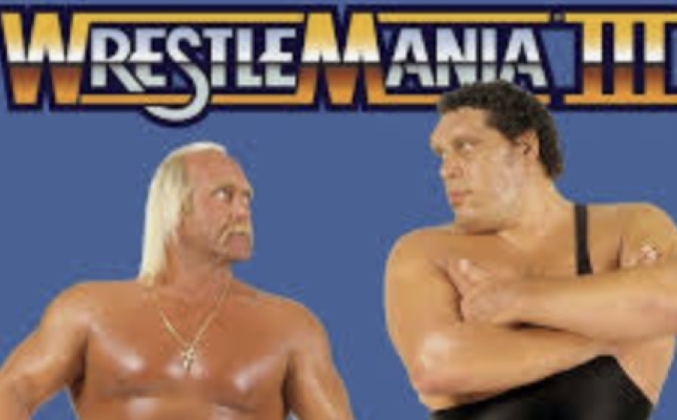
The WWE Hall of Fame announced that the Hulk Hogan vs Andre…
 Not in Hall of Fame News
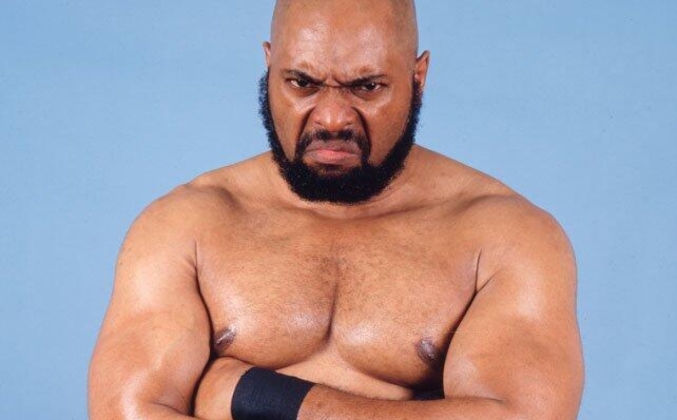
It was announced that Bad News Brown will be inducted into the…
 From the Desk of the Chairman
Synthetic turf has become an increasingly familiar surface in the sports world.…
 From the Desk of the Chairman
Athletic performance is shaped by discipline, training, and resilience, but motivation often…
 From the Desk of the Chairman
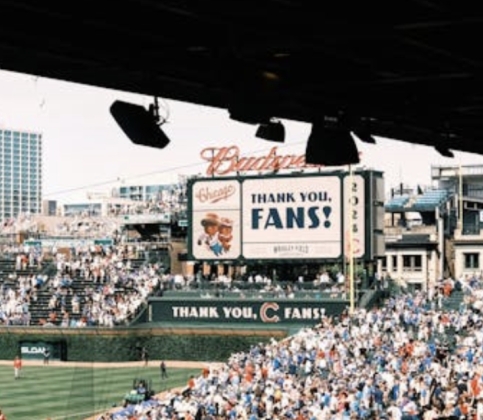
The first month of the MLB season always feels a bit unsettled.…
 From the Desk of the Chairman
Sports and regular physical activity are widely celebrated for building strength, improving…
 The Buck Stops Here
The wait is over! Join the NotInHallOfFame.com crew—Kirk Buchner, Evan Nolan, and…
 The Buck Stops Here
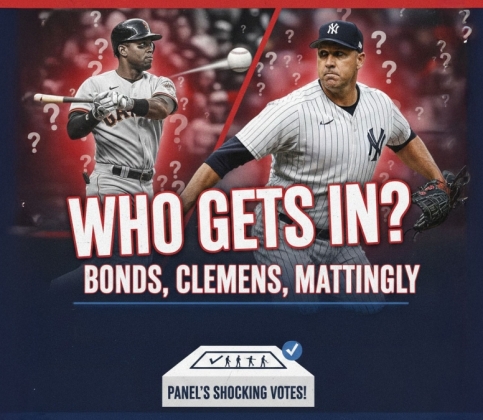
Join Kirk Buchner and Evan Nolan from NotInHallOfFame.com for a special roundtable…




100 Active Potential Football Hall of Famers
-
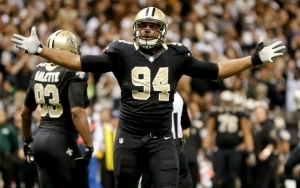 #14 Overall, Cameron Jordan, New Orleans Saints, Defensive End, #6 Defensive Lineman/Linebacker: Pass Rusher2024 Pre-Season Rank #21, 2023 Pre-Season Rank #27, 2022 Pre-Season Rank #25, 2021 Pre-Season Rank #36, 2020 Pre-Season Rank #42. Peak Period: 2017-21…
 -
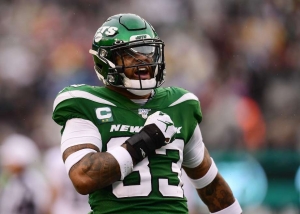 #94 Overall, Jamal Adams, Las Vegas Raiders, Strong Safety, #5 Safety2024 Pre-Season Rank #95, 2023 Pre-Season Rank #90, 2022 Pre-Season Rank #86, 2021 Pre-Season Rank #94, 2020 Pre-Season Rank #116. Peak Period: 2018-22…in Safeties
 -
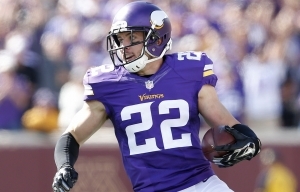 #38 Overall, Harrison Smith, Minnesota Vikings, Strong Safety, #2 Safety2024 Pre-Season Rank #50, 2023 Pre-Season Rank #72, 2022 Pre-Season Rank #79, 2021 Pre-Season Rank #90, 2020 Pre-Season Rank #72. Peak Period: 2015-19.…in Safeties
 -
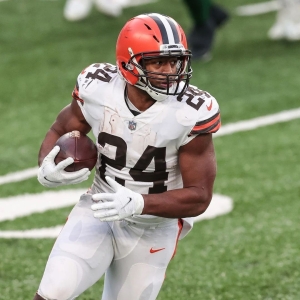 #38 Overall, Justin Jefferson, Minnesota Vikings, #5 Wide Receiver2024 Pre-Season Rank #50, 2023 Pre-Season Rank #101, 2022 Pre-Season Rank #130. Peak Period: 2020-24 Since he debuted in 2020, Justin Jefferson has…
Visit the Fictitious Halls of Fame!


You May Also Like...
EDITOR’S CHOICE
 DDT's Pop Flies
When the veterans committee (VC), officially convening as the Contemporary Baseball Era…


 Live Music Head
Project/Objectan interview with André Cholmondeleyby Live Music HeadOriginally published at timessquare.com on…
LATEST RANKINGS



MOST POPULAR RANKINGS


Site Admin
42. Nels Potter
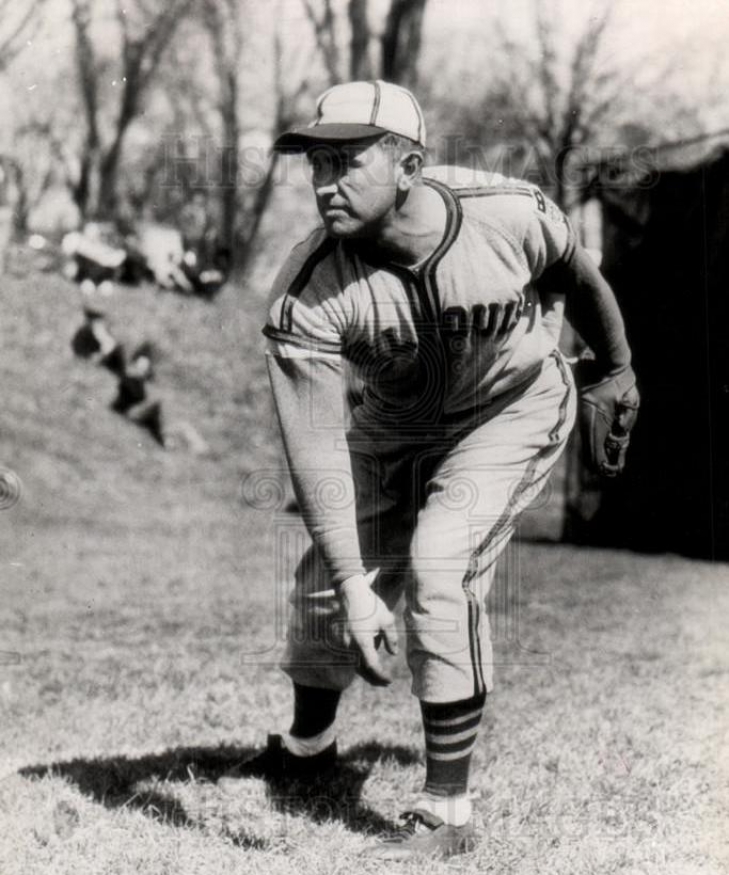
Nels Potter arrived in St. Louis as a 31-year-old journeyman, a screwball specialist who had struggled to find consistency until the Browns plucked him from the Red Sox organization in the 1942 Rule 5 Draft. In the high-pressure environment of wartime baseball, Potter didn't just find a home; he became the statistical engine that drove the Browns to their greatest heights.
Potter’s 1944 campaign remains a landmark in franchise history. As the Browns battled for their first American League Pennant, Potter delivered a 19–7 record and a career-best 5.7 bWAR, finishing ninth in the MVP voting. Though he was famously the first pitcher ever suspended for using a "foreign substance" (the spitball) earlier that year, he returned to lead the club into the World Series. On the game's biggest stage, he was nearly flawless, posting a 0.93 ERA in the Fall Classic—a performance that cemented his status as a big-game anchor.
While skeptics point to the diluted talent pool of the WWII era, Potter’s 1945 season silenced the critics. He was arguably even more dominant, posting a 2.47 ERA and a league-leading 1.097 WHIP, which earned him a staggering 7.2 bWAR—the second-highest mark in the American League. It was a masterclass in finesse and control that proved his success was rooted in skill, not just circumstance.
Age and the return of pre-war stars eventually slowed his momentum, leading to his sale back to the Athletics in 1948. However, Potter’s legacy is etched in the history books as the man who pitched the Browns into their only World Series.
30. Scott McGregor
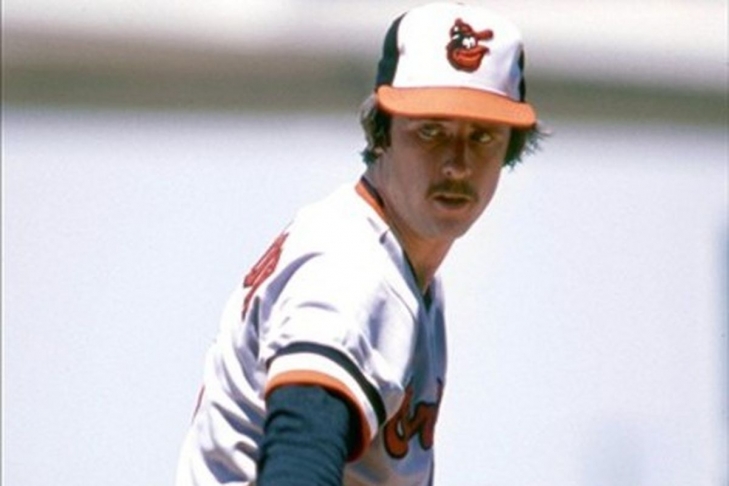
A "Lifer" who spent his entire thirteen-year Major League career in Baltimore, Scott McGregor was the tactical backbone of the Orioles' rotation. While he may not have had a blistering fastball, he embodied the "Oriole Way" through impeccable control, varied speeds, and a competitive grit that made him a premier second- or third-starter for over a decade.
After a 15-win breakout in 1978, McGregor entered a period of sustained excellence. From that season through 1985, he never posted a losing record, a feat that culminated in an All-Star selection in 1981 and a 20-win season in 1980. However, his 1979 campaign remains his most intriguing masterpiece; despite recording only 81 strikeouts, he led the American League in WHIP (1.07) and Strikeout-to-Walk ratio, proving that precision could be just as dominant as power.
McGregor’s greatest contribution to franchise lore came during the 1983 World Series. He was nearly untouchable on the game's biggest stage, posting a microscopic 1.06 ERA over 17 innings and throwing a complete-game shutout in the decisive Game 5 to clinch the World Championship. It was the ultimate "big game" performance from a pitcher who always seemed to stay calm under pressure.
Though injuries slowed his production in his final three seasons, McGregor retired in 1988 with 138 wins and a legacy of elite efficiency, having walked only 518 batters in over 2,100 innings. Inducted into the Orioles Hall of Fame in 1990, McGregor remains the gold standard for left-handed control pitchers in Baltimore history.
33. Rafael Palmeiro
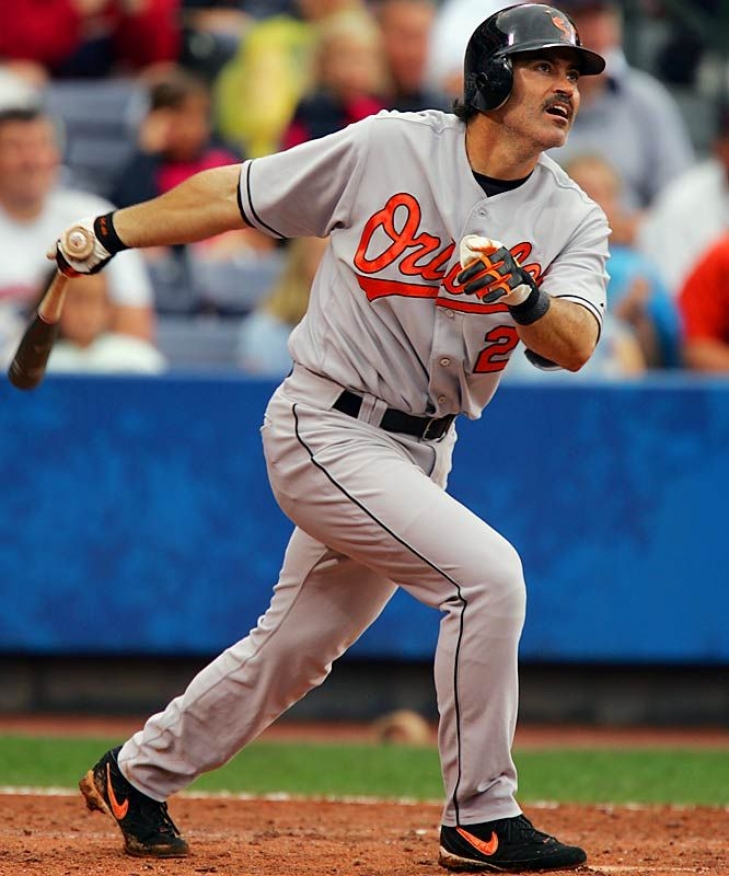
Rafael Palmeiro arrived in Baltimore in 1994 as a finished product—a smooth-swinging first baseman with a surgical approach to the plate. Despite playing in an era crowded with legendary power hitters, Palmeiro’s five-season run in the 1990s stands as one of the most consistently productive offensive stretches in Orioles history.
From 1994 to 1998, Palmeiro was a fixture in the American League leaderboards. He finished in the top ten in home runs every single year of his first Baltimore stint, providing the thunder for the 1996 and 1997 postseason teams. His 1996 campaign was a statistical peak, during which he batted .289 with 39 home runs and 142 RBIs, finishing sixth in the MVP voting. He earned the Silver Slugger in 1998 and received MVP votes in every season of his first run, cementing his status as the premier offensive engine of the lineup.
After a period in Texas, Palmeiro returned to the Orioles in 2004 to chase history. In 2005, he achieved the ultra-rare milestone of joining the 3,000 Hit / 500 Home Run Club in an Orioles uniform. However, the celebration was short-lived. Just ten days after his 3,000th hit, and only months after his infamous congressional testimony, Palmeiro was suspended for PED use.
The fallout from 2005 cast a long shadow over a career that included 1,071 hits, 223 home runs, and a massive .520 slugging percentage in Baltimore
28. Al Bumbry
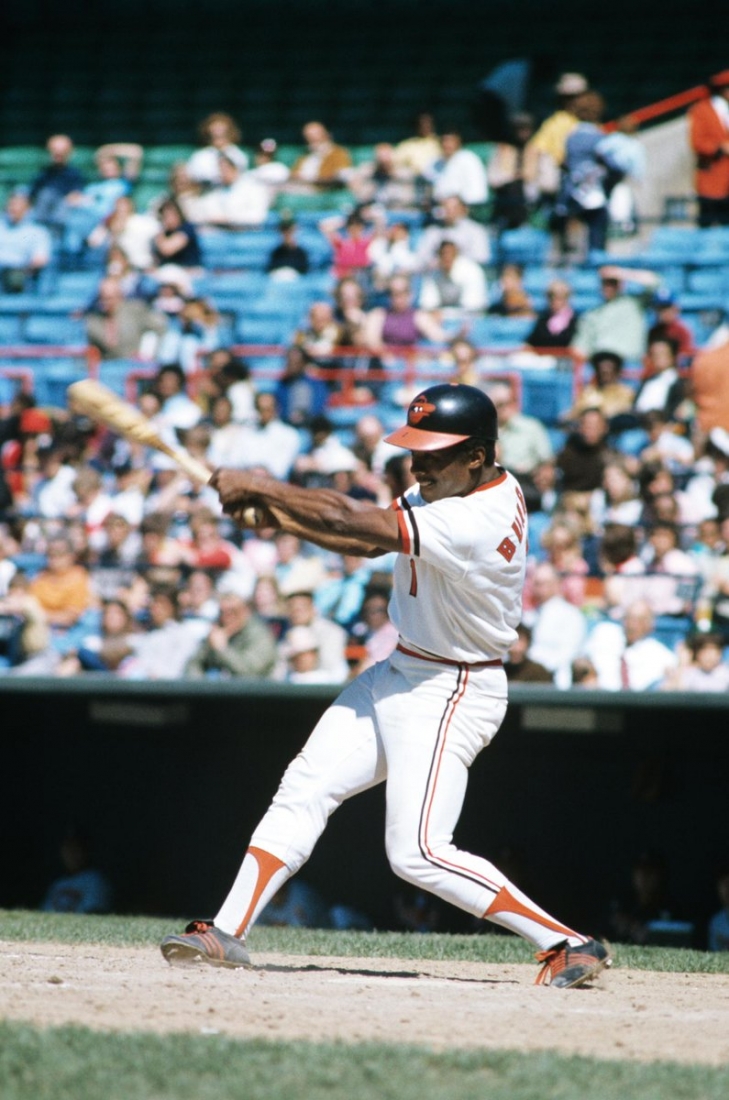
Al Bumbry spent nearly his entire 14-year career in a Baltimore uniform, serving as the swift, left-handed catalyst at the top of the Orioles' lineup. A decorated Vietnam War veteran before his MLB arrival, Bumbry made an immediate impact in 1973, capturing the American League Rookie of the Year award. That season, he showcased his elite speed by leading the league with 11 triples while posting a blistering .337 batting average.
Though his production fluctuated in the mid-70s, Bumbry’s resilience became his trademark. He engineered a massive "bounce-back" campaign in 1977, hitting .317, and reached his statistical zenith in 1980. That year, he earned his first All-Star selection, recording a career-high 205 hits and batting .318. When "The Bee" was on his game, he was arguably the most dangerous contact-hitting center fielder in the American League, using his wheels to turn routine grounders into base hits and doubles into triples.
Bumbry’s tenure was defined by winning; he patrolled center field for two pennant-winning teams (1979 and 1983) and was a veteran leader during the 1983 World Series Championship run. He concluded his Baltimore career with 1,403 hits, 252 stolen bases, and a robust .283 batting average. In 1987, the Orioles honored his consistency and character by inducting him into the franchise Hall of Fame, cementing his legacy as one of the most beloved "Lifers" in team history.