

 Not in Hall of Fame News
1993 Pro Football Hall of Fame Revisited Project Class. Here we are! …
 Not in Hall of Fame News
Afrika Bambaataa, the legendary DJ, producer, and widely recognized "Godfather" of hip-hop…
 Not in Hall of Fame News
Would you like to know what we love the most about the…
 Not in Hall of Fame News
1993 SEMI-FINAL RESULTS: Thank you for your participation in the Pro Football…
 Not in Hall of Fame News
Regular visitors of Notinhalloffame.com know that we are slowly working on the…
 Not in Hall of Fame News
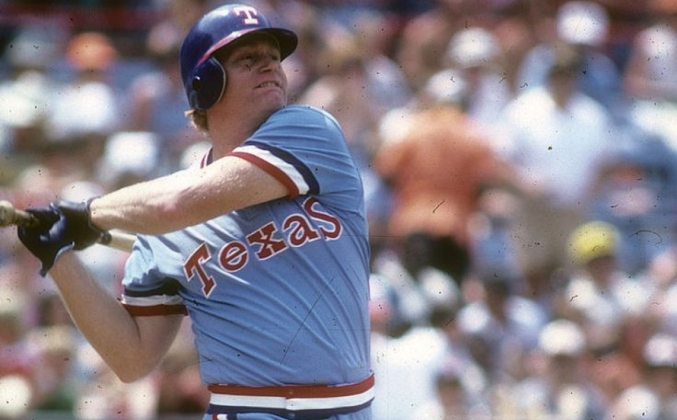
Last January, the Baseball Hall of Fame announced the Class of 2026,…
 The Buck Stops Here
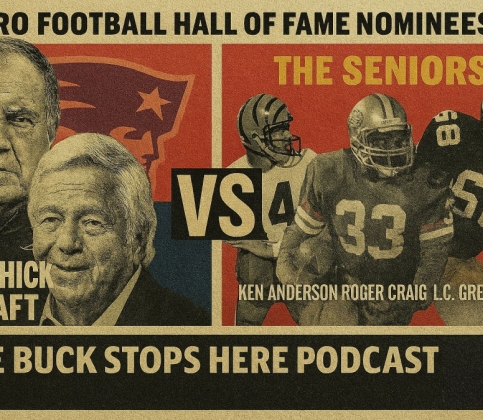
Kirk Buchner and Chris Mouradian dive into the massive list of over…
 The Buck Stops Here
Welcome to Season 6, Episode 16 of The Hall of Fame Show…
 The Buck Stops Here
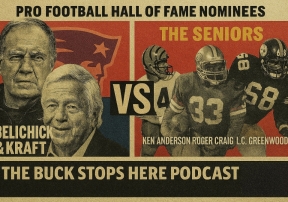
Bill Belichick & Robert Kraft vs. The Seniors: Analyzing the ProFootball Hall of Fame Class Nominees
The Pro Football Hall of Fame voting process is more complicated than…
 From the Desk of the Chairman
Recreational cannabis laws have changed how adults can buy cannabis in many…
 From the Desk of the Chairman
Synthetic turf has become an increasingly familiar surface in the sports world.…
 From the Desk of the Chairman
Athletic performance is shaped by discipline, training, and resilience, but motivation often…


 The Buck Stops Here
Bill Belichick & Robert Kraft vs. The Seniors: Analyzing the ProFootball Hall of Fame Class Nominees
The Pro Football Hall of Fame voting process is more…
100 Active Potential Football Hall of Famers
-
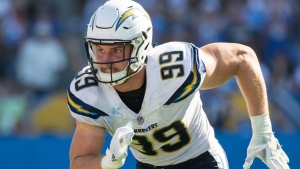 #63 Overall, Joey Bosa, Buffalo Bills, Defensive End, #14 Defensive Lineman/Linebackers: Pass Rushers2024 Pre-Season Rank #71, 2023 Pre-Season Rank #51, 2022 Pre-Season Rank #60, 2021 Pre-Season Rank #82, 2021 Pre-Season Rank #97. Peak Period: 2017-21…
 -
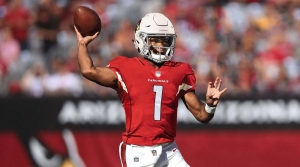 #81 Overall, Kyler Murray, Arizona Cardinals, #13 Quarterback2024 Pre-Season Rank #99, 2023 Pre-Season Rank #82, 2022 Pre-Season Rank #82, 2021 Pre-Season Rank #115. Peak Period: 2019-21/23-24 The first three seasons…in Quarterbacks
 -
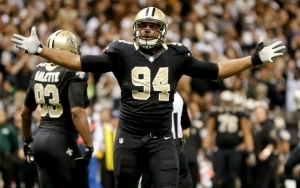 #14 Overall, Cameron Jordan, New Orleans Saints, Defensive End, #6 Defensive Lineman/Linebacker: Pass Rusher2024 Pre-Season Rank #21, 2023 Pre-Season Rank #27, 2022 Pre-Season Rank #25, 2021 Pre-Season Rank #36, 2020 Pre-Season Rank #42. Peak Period: 2017-21…
 -
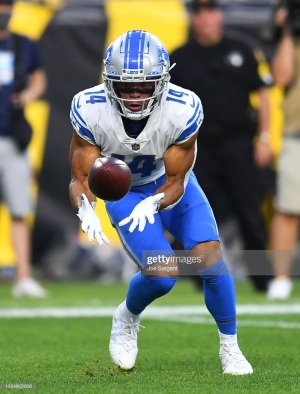 #98 Overall, Amon-Ra St. Brown, Detroit Lions, #16 Wide Receiver2024: Pre-Season Rank: #144. Peak Period: 2021-24* Amon-Ra St. Brown has only been in the NFL for four years, but has put forth…
Visit the Fictitious Halls of Fame!


You May Also Like...
EDITOR’S CHOICE
 DDT's Pop Flies
When the veterans committee (VC), officially convening as the Contemporary Baseball Era…



 Live Music Head
Project/Objectan interview with André Cholmondeleyby Live Music HeadOriginally published at timessquare.com on…
LATEST RANKINGS


MOST POPULAR RANKINGS


Site Admin
6. Roy Oswalt
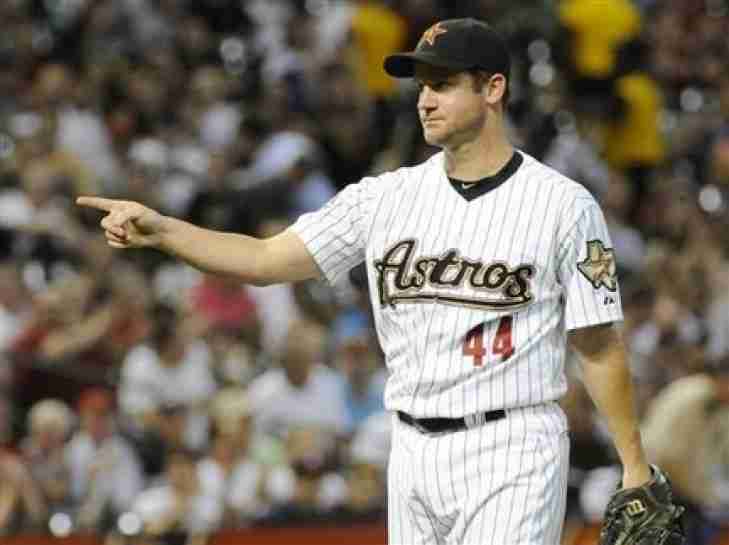
Roy Oswalt’s arrival in Houston in 2001 was like a jolt of electricity to a franchise already boasting legendary arms. A 23rd-round draft pick with a mid-90s heater and a "12-to-6" curveball that dropped off a table, Oswalt skipped the traditional grace period for rookies. He stepped onto the mound at Enron Field and immediately began dismantling big-league lineups with a surgical precision that made his 6'0" frame seem much larger.
He burst onto the scene in 2001 with a 14-3 record and a 2.73 ERA, finishing second for the Rookie of the Year and fifth in the Cy Young race. This wasn't a fluke; it was a blueprint. His best years were between 2004 and 2005, when he recorded back-to-back 20-win seasons, the first Astro to do so in a quarter-century. During this run, he led the National League in wins (2004) and provided a masterclass in durability, consistently eclipsing the 200-inning mark with a focused intensity that demoralized opposing hitters.
The hallmark of his time in Houston was his ability to rise to the occasion when the stakes were highest. During the 2005 postseason, Oswalt reached a historic outlier status. In the NLCS against St. Louis, he delivered a legendary performance in Game 6, pitching seven innings of one-run ball to clinch the pennant. His efforts earned him the NLCS MVP and famously won him a brand-new Caterpillar bulldozer from owner Drayton McLane. He possessed a specialized mental toughness that allowed him to thrive alongside Hall of Fame teammates like Roger Clemens and Andy Pettitte, often outshining them as the most reliable arm on the staff.
During the 2010 season, Oswalt was traded to Philadelphia, marking the end of a decade-long journey that saw him transform from a late-round sleeper into a statistical titan. He departed with 1,593 strikeouts and a reputation as a man who simply refused to be beaten, especially with a championship on the line.
As an Astro, Oswalt compiled 143 wins and 1,593 strikeouts while securing the 2005 NLCS MVP and an NL ERA title. The organization provided the final punctuation on his legacy in 2020 by inducting him into the Astros Hall of Fame.
7. Jose Cruz
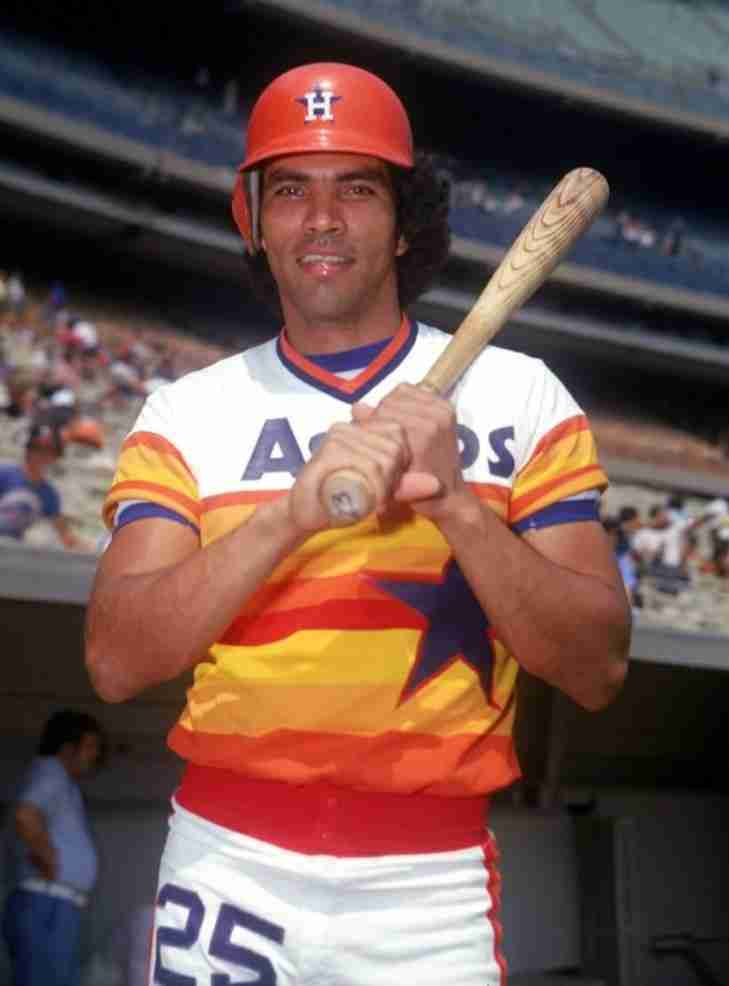
Long before the "Killer B's" took over Houston, the Astrodome belonged to a left-handed contact artist from Puerto Rico named Jose Cruz. Arriving in 1975 after a stint in St. Louis, "Cheo" became the definitive face of the franchise during the most pitcher-friendly era in baseball history. In a cavernous ballpark where home runs went to die, Cruz mastered the art of the line drive, carving out a legacy as one of the most consistent and beloved hitters to ever wear the tequila-sunrise stripes.
Cruz’s tenure in Houston was a masterclass in hitting for average and creating chaos on the basepaths. He hit his stride in the late 1970s and stayed there for a decade, posting a batting average of .300 or better in six different seasons. His best year was in 1983, a summer where he led the National League with 189 hits and drove in 92 runs, earning a Silver Slugger and a third-place finish in the MVP race. He was a model of specialized efficiency, utilizing a short, lightning-quick stroke to slice doubles into the gaps and providing the steady-state production that carried the Astros to their first-ever division titles in 1980 and 1986.
Cruz’s versatile athleticism often went overlooked in the national spotlight. He wasn't just a slap hitter; he possessed a deceptive burst of speed that saw him eclipse the 30-stolen base plateau five times as an Astro. He possessed a professional resilience that allowed him to remain a high-frequency contributor well into his late 30s, eventually amassing 1,937 hits in a Houston uniform. He served as the primary engine for the 1980 "Cardiac Kids," utilizing his veteran-like poise to lead the club through a grueling one-game playoff and into the postseason for the first time in franchise history.
He left for the New York Yankees after the 1987 season and would go on to amass 1,937 hits, 288 stolen bases, and a .292 batting average while finishing in the top ten of the MVP voting three times. Houston bestowed the ultimate honor on Cruz: a franchise Hall of Fame induction in 2019.
5. Cesar Cedeno
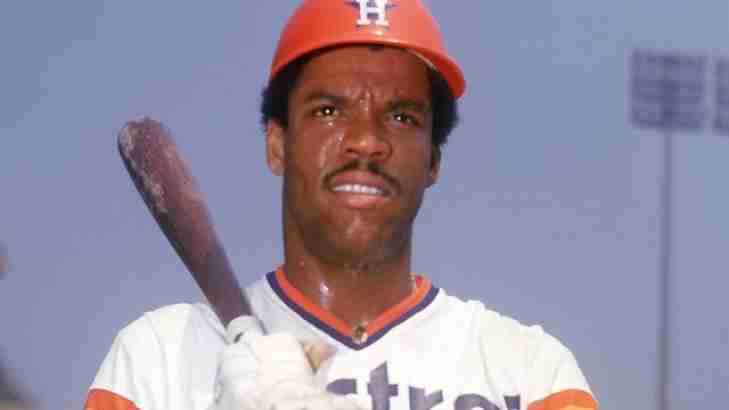
The arrival of Cesar Cedeño in Houston during the summer of 1970 felt like a glimpse into the future of baseball. A teenage prodigy from the Dominican Republic, Cedeño didn't just play center field; he patrolled it with an electric, high-speed elegance that drew immediate comparisons to the game's greatest icons. Before the term "five-tool player" became a common refrain, Cedeño was living it in the Astrodome, combining a lightning-quick bat with a defensive range that seemed to shrink the furthest reaches of the outfield.
After a strong rookie showing, he orchestrated a historic run of production starting in 1972. That year, he became only the second player in major league history to join the 20/50 club, blasting 22 home runs while swiping 55 bases. He didn't just touch that milestone; he owned it, repeating the feat in 1973 and 1974. He was a model of specialized athleticism, leading the league in doubles twice and serving as the primary offensive spark for a franchise finding its footing in the 1970s.
His game was a relentless, high-frequency aggression on the basepaths and in the field. Cedeño was a fixture among the league's elite runners, putting together six consecutive seasons with at least 50 stolen bases. His defensive craftsmanship was equally profound, earning him five straight Gold Gloves for a center field display that was as flashy as it was efficient. He possessed a rare ability to impact the game in every phase, ranking in the top five of the National League for offensive bWAR four times.
In 1981, he was traded to the Cincinnati Reds, marking the end of a twelve-year journey that saw him evolve from a "Super Nova" prospect into one of the most decorated players in club history. He departed as the franchise’s all-time leader in stolen bases at the time, a title that reflected a career built on speed and technical excellence.
With the Astros, Cedeño compiled 1,659 hits, 487 stolen bases, and 163 home runs while winning five Gold Gloves. The organization provided the final punctuation on his legacy in 2020 by inducting him into the Astros Hall of Fame.
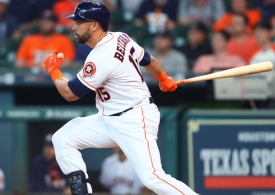
4. Lance Berkman
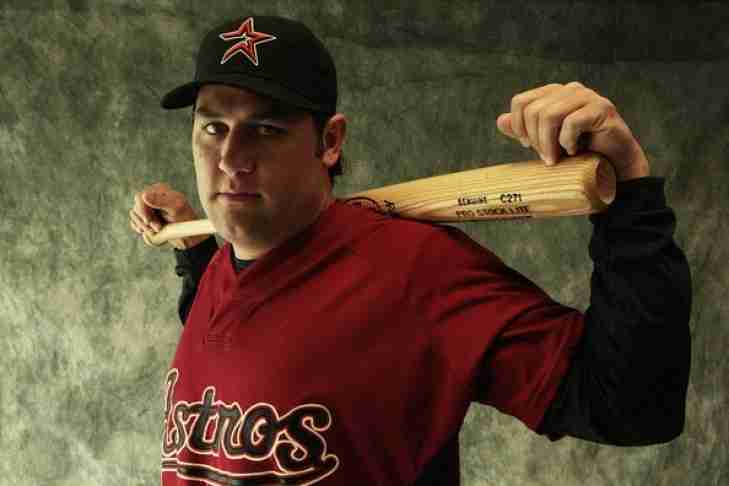
When Lance Berkman broke into the Houston lineup at the turn of the millennium, he joined a roster already defined by two titans of the game. Yet, rather than simply filling a supporting role, the switch-hitting outfielder—affectionately dubbed "Big Puma”, carved out a legacy that stands shoulder-to-shoulder with any great in franchise history.
Berkman’s decade in Houston showed elite production from both sides of the plate. After a 1999 debut, he locked in his status as a perennial force by 2001, hitting .331 and leading the league with 55 doubles. This was the first of five seasons in which he would finish in the top 10 of the MVP voting as an Astro. He wasn't just a power threat; he was a model of disciplined hitting, frequently surpassing the .400 mark in on-base percentage and batting over .300 four times. Whether he was launching one of his 326 home runs or utilizing his keen eye to anchor the middle of the order, he operated with a calm that belied his massive impact on the scoreboard.
The most profound aspect of his tenure was his ability to carry the torch as the franchise transitioned through different eras. While he shared the stage with Bagwell and Biggio during the club's 2005 World Series run, Berkman eventually became the primary engine of the Houston offense. He delivered five seasons with at least 30 homers and five campaigns with over 100 RBIs, including a spectacular 2006 season in which he drove in a career-high 136 runs. He possessed a specialized skill set that allowed him to move from the outfield to first base without losing a step, providing the flexibility the organization needed to remain competitive throughout the 2000s.
Though his journey took him to New York and eventually to a championship in St. Louis, his heartbeat remained in Texas. He proved his loyalty to the organization by signing a ceremonial one-day contract in 2013, ensuring he would officially retire in the same uniform in which his career began.
With the Astros, Berkman compiled 1,648 hits, 326 home runs, and 1,090 RBIs while earning five All-Star selections.
The organization provided the final punctuation on his Houston career in 2020 by inducting him into the Astros Hall of Fame.