
 Not in Hall of Fame News
Yes, we know that this is taking a while! As many of…
 Not in Hall of Fame News
1993 Pro Football Hall of Fame Revisited Project Class. Here we are! …
 Not in Hall of Fame News
Afrika Bambaataa, the legendary DJ, producer, and widely recognized "Godfather" of hip-hop…
 Not in Hall of Fame News
Would you like to know what we love the most about the…
 Not in Hall of Fame News
1993 SEMI-FINAL RESULTS: Thank you for your participation in the Pro Football…
 Not in Hall of Fame News
Regular visitors of Notinhalloffame.com know that we are slowly working on the…
 The Buck Stops Here
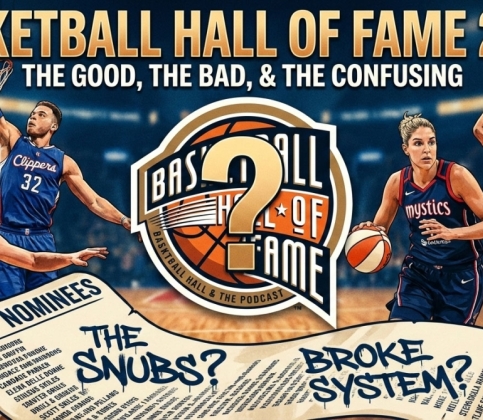
Kirk Buchner and Chris Mouradian dive into the massive list of over…
 The Buck Stops Here
Welcome to Season 6, Episode 16 of The Hall of Fame Show…
 The Buck Stops Here
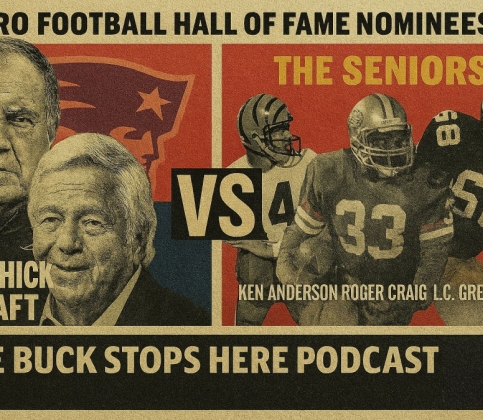
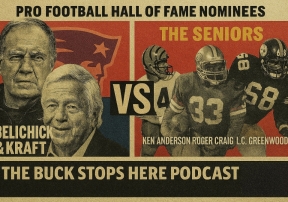
Bill Belichick & Robert Kraft vs. The Seniors: Analyzing the ProFootball Hall of Fame Class Nominees
The Pro Football Hall of Fame voting process is more complicated than…
 From the Desk of the Chairman
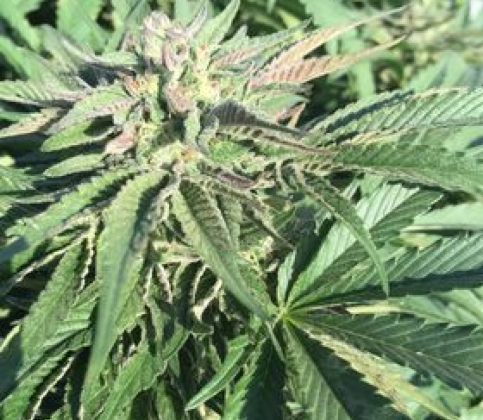
Recreational cannabis laws have changed how adults can buy cannabis in many…
 From the Desk of the Chairman
Synthetic turf has become an increasingly familiar surface in the sports world.…
 From the Desk of the Chairman
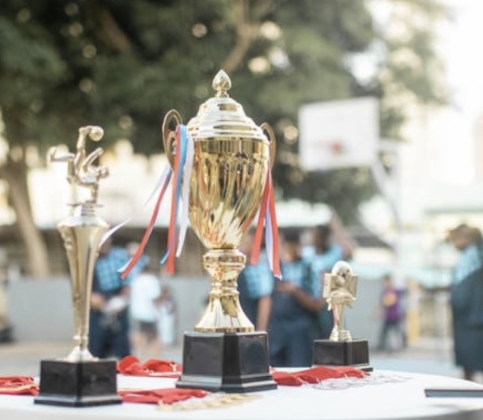
Athletic performance is shaped by discipline, training, and resilience, but motivation often…

 The Buck Stops Here
Bill Belichick & Robert Kraft vs. The Seniors: Analyzing the ProFootball Hall of Fame Class Nominees
The Pro Football Hall of Fame voting process is more…
100 Active Potential Football Hall of Famers
-
 #91 Overall, Creed Humphrey, Kansas City Chiefs, Center, #13 Offensive Lineman2024 Pre-Season Rank #124. Peak Period: 2021-24* Last season, we said that Creed Humphrey was one of the best Centers going into the…
 -
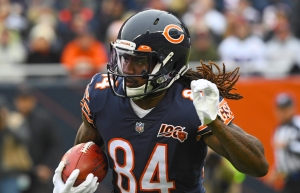 #95 Overall, Cordarelle Patterson, Free Agent, Returner, #3 Kickers & Special Teams2024 Pre-Season Rank #94, 2023 Pre-Season Rank #93, 2022 Pre-Season Rank #80, 2021 Pre-Season Rank #91, 2020 Pre-Season Rank #99. Patterson is here…
 -
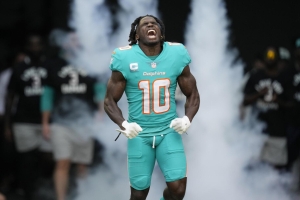 #18 Overall, Tyreek Hill, Miami Dolphins, #2 Wide Receiver2024 Pre-Season Rank #8, 2023 Pre-Season Rank #28, 2022 Pre-Season Rank #35, 2021 Pre-Season Rank #53. Peak Period: 2019-23Tyreek Hill was a three-time…
 -
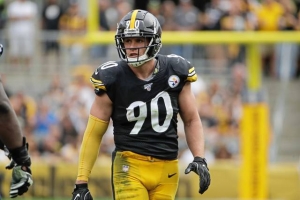 #7 Overall, T.J. Watt, Pittsburgh Steelers, #2 Defensive Lineman/Linebacker Pass Rusher2024 Pre-Season Rank #11: 2023 Pre-Season Rank #15, 2022 Pre-Season Rank #24, 2021 Pre-Season Rank #68, 2020 Pre-Season Rank #102. Peak Period: 2019-23.Watching…
Visit the Fictitious Halls of Fame!

You May Also Like...
EDITOR’S CHOICE
 DDT's Pop Flies
When the veterans committee (VC), officially convening as the Contemporary Baseball Era…



 Live Music Head
Project/Objectan interview with André Cholmondeleyby Live Music HeadOriginally published at timessquare.com on…

LATEST RANKINGS


MOST POPULAR RANKINGS


Site Admin
25. Denny McLain
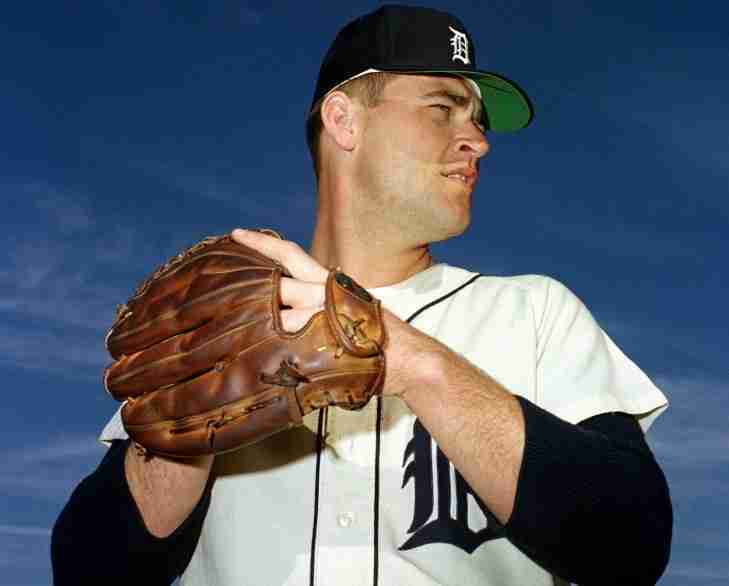
For a brief, white-hot stretch in the late sixties, Denny McLain wasn't just the best pitcher in the American League; he was a cultural phenomenon who lived life at a breakneck speed that mirrored his fastball. While his time at the summit was fleeting, McLain provided the Motor City with a statistical explosion that remains one of the most singular achievements in the history of the sport.
McLain’s rise in Detroit began with a glimpse of his massive ceiling in the mid-sixties. He broke out in 1966, winning 20 games for the first time and signaling a transition from a young arm with potential to a frontline starter. He possessed a focused intensity and a disregard for the game’s established norms, a style that culminated in the historic 1968 campaign. That summer, McLain reached a peak that no pitcher has touched since, winning 31 games and becoming the last man to cross the thirty-victory threshold. It was a statistical outlier of a season where he captured both the Cy Young and the MVP, leading the Tigers to a World Series title and cementing his legacy as the premier outlier of his era.
The core of his tenure was defined by a three-year run of unrivaled dominance and high-frequency workloads. In 1969, he proved his arm hadn't lost its bite, winning 24 games and securing a second consecutive Cy Young Award. He showed the organization that a pitcher could lead the league in starts, innings, and complete games simultaneously, providing the steady-state reliability that made the Tigers a perennial threat. However, the distractions of a high-profile life off the diamond soon caught up with him. In 1970, the commissioner handed down a series of suspensions, initially sparked by his involvement in a bookmaking operation and later compounded by a clubhouse prank involving a bucket of water, which effectively derailed his momentum and cost him a significant portion of the season.
Everything culminated in a rapid shift in direction following that tumultuous 1970 campaign. Between the disciplinary issues and a sudden loss of efficiency on the mound, the Tigers traded the two-time Cy Young winner to the Washington Senators. He left Detroit with 117 wins and 1,150 strikeouts, a statistical footprint that felt like a meteor strike, brilliant, devastating, and gone far too soon.
40. Travis Fryman
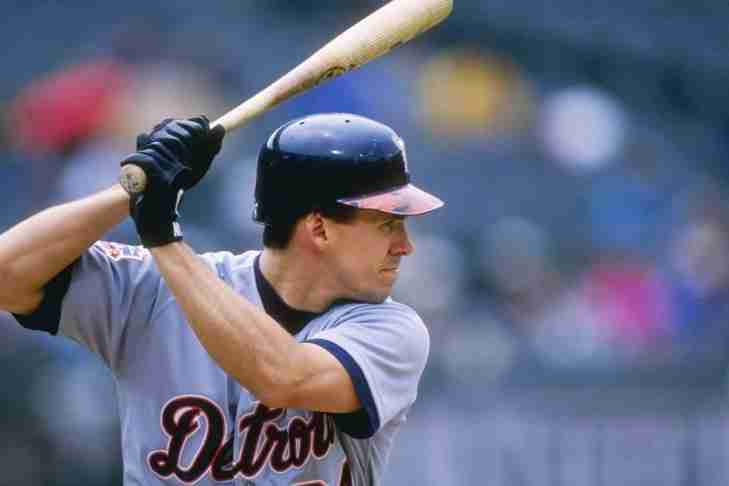
Travis Fryman arrived in Detroit during the summer of 1990 as the heir apparent to a lineage of legendary infielders, stepping into the void left by aging icons. For eight seasons in the Motor City, he served as the most consistent and reliable offensive threat on the team,
During the 1993 campaign, he evolved into one of the premier offensive infielders in the American League, recording a career-high .300 batting average while clubbing 22 home runs and driving in 97 runs. He demonstrated a specialized ability to drive the ball into the gaps of Tiger Stadium, earning his second of four All-Star selections with the club.
Between 1992 and 1997, Fryman was a statistical standout, averaging nearly 20 home runs a year and serving as a perennial fixture at the mid-summer classic. He possessed a focused intensity that allowed him to transition seamlessly from shortstop to third base, providing the defensive stability required of a veteran leader. Despite the Tigers' struggles in the standings during the mid-nineties, he remained a model of consistency, eventually amassing 1,176 hits and 149 home runs while wearing the Old English “D."
In November 1997, the Tigers sent Fryman to the Arizona Diamondbacks as part of a deal for Joe Randa and Gabe Alvarez. However, Arizona was an expansion team at the time, and they were essentially using Fryman as a high-value chip to build their roster.
41. Kirk Gibson
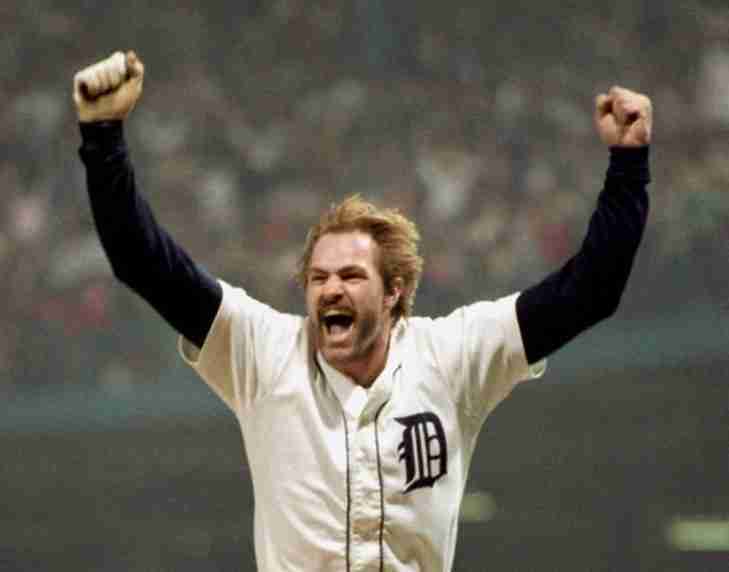
Kirk Gibson arrived in Detroit as a blue-chip dual-sport phenomenon from Michigan State, a player whose high-velocity intensity and raw physical tools made him the ultimate high-upside gamble for the hometown Tigers. While he initially struggled to harness his aggressive approach at the plate, he quickly evolved into the emotional and physical engine of the most dominant era in modern Detroit history.
Gibson’s journey in a Detroit uniform reached a historic peak during the legendary 1984 campaign. As the club sprinted to a world championship, he transitioned into the definitive big-game performer of his generation, capturing the MVP award for the ALCS. He demonstrated a specialized ability to deliver when the lights were brightest, famously punctuating the World Series with a three-run blast off Goose Gossage that remains the signature image of the decade in Michigan.
Between 1983 and 1987, Gibson was a statistical standout, routinely flirting with 30-30 seasons and maintaining a focused intensity that made him a nightmare for opposing pitchers. Everything culminated in a career that saw him leave as a free agent following the 1987 season, only to return for a sentimental final act from 1993 to 1995. While his physical tools had naturally slowed during his second stint, he provided the veteran-like poise and leadership needed for a roster in transition.
With the Tigers, Gibson compiled 195 home runs, 194 stolen bases, and was the 1984 ALCS MVP.
23. Jerry Springer