

 Not in Hall of Fame News
Yes, we know that this is taking a while! As many of…
 Not in Hall of Fame News
1993 Pro Football Hall of Fame Revisited Project Class. Here we are! …
 Not in Hall of Fame News
Afrika Bambaataa, the legendary DJ, producer, and widely recognized "Godfather" of hip-hop…
 Not in Hall of Fame News
Would you like to know what we love the most about the…
 Not in Hall of Fame News
1993 SEMI-FINAL RESULTS: Thank you for your participation in the Pro Football…
 Not in Hall of Fame News
Regular visitors of Notinhalloffame.com know that we are slowly working on the…
 The Buck Stops Here
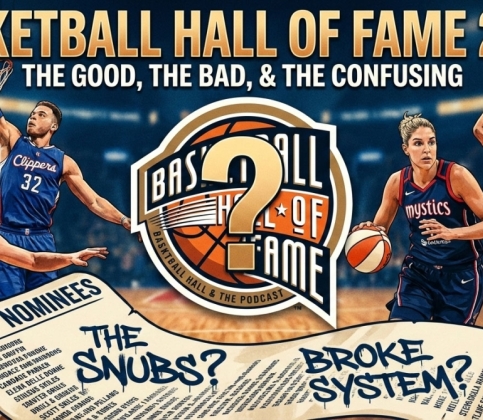
Kirk Buchner and Chris Mouradian dive into the massive list of over…
 The Buck Stops Here
Welcome to Season 6, Episode 16 of The Hall of Fame Show…
 The Buck Stops Here
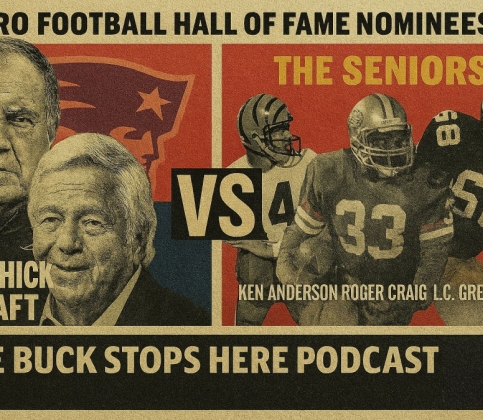
Bill Belichick & Robert Kraft vs. The Seniors: Analyzing the ProFootball Hall of Fame Class Nominees
The Pro Football Hall of Fame voting process is more complicated than…
 From the Desk of the Chairman
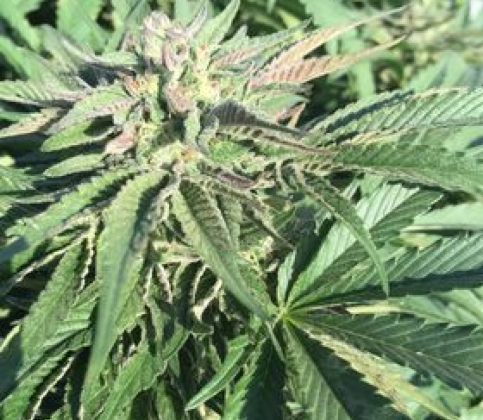
Recreational cannabis laws have changed how adults can buy cannabis in many…
 From the Desk of the Chairman
Synthetic turf has become an increasingly familiar surface in the sports world.…
 From the Desk of the Chairman
Athletic performance is shaped by discipline, training, and resilience, but motivation often…


 The Buck Stops Here
Bill Belichick & Robert Kraft vs. The Seniors: Analyzing the ProFootball Hall of Fame Class Nominees
The Pro Football Hall of Fame voting process is more…
100 Active Potential Football Hall of Famers
-
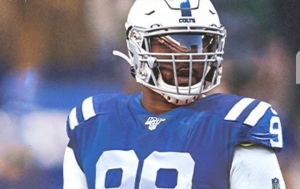 #61 Overall, DeForest Buckner, Indianapolis Colts, Defensive Tackle, #13 Defensive Lineman: Defensive Linemen/Linebackers: Pass Rushers2024 Pre-Season Rank #58, 2023 Pre-Season Rank #74, 2022 Pre-Season Rank #76, 2021 Pre-Season Rank #93, 2020 Pre-Season Rank #128. Peak Period: 2018-22…
 -
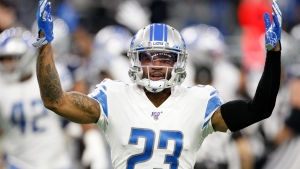 #48 Overall, Darius Slay, Pittsburgh Steelers, #3 Cornerback2024 Pre-Season Rank #58, 2023 Pre-Season Rank #70, 2022 Pre-Season Rank #101, 2021 Pre-Season Rank #125, 2020 Pre-Season Rank #125. Peak Period: 2017-21…in Cornerbacks
 -
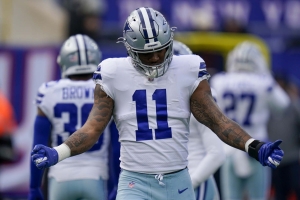 #54 Overall, Micah Parsons, Green Bay Packers, Linebacker, #11 Defensive Lineman/Linebacker: Pass Rusher2024 Pre-Season Rank #79, 2023: Pre-Season Rank #102. Peak Period: 2021-24* The biggest surprise of the 2025 off-season is that Micah Parsons was…
 -
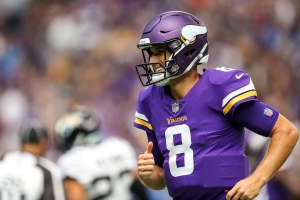 #79 Overall, Kirk Cousins, Atlanta Falcons, #12 Quarterback2024 Pre-Season Rank #78, 2023 Pre-Season Rank #61, 2022 Pre-Season Rank #87, 2021 Pre-Season Rank #121. Peak Period: 2016-20 The run of Kirk…in Quarterbacks
Visit the Fictitious Halls of Fame!


You May Also Like...
EDITOR’S CHOICE
 DDT's Pop Flies
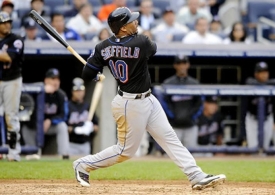
When the veterans committee (VC), officially convening as the Contemporary Baseball Era…



 Live Music Head
Project/Objectan interview with André Cholmondeleyby Live Music HeadOriginally published at timessquare.com on…

LATEST RANKINGS


MOST POPULAR RANKINGS




Site Admin
7. Dustin Byfuglien
4. Ilya Kovalchuk

49. Curtis Granderson
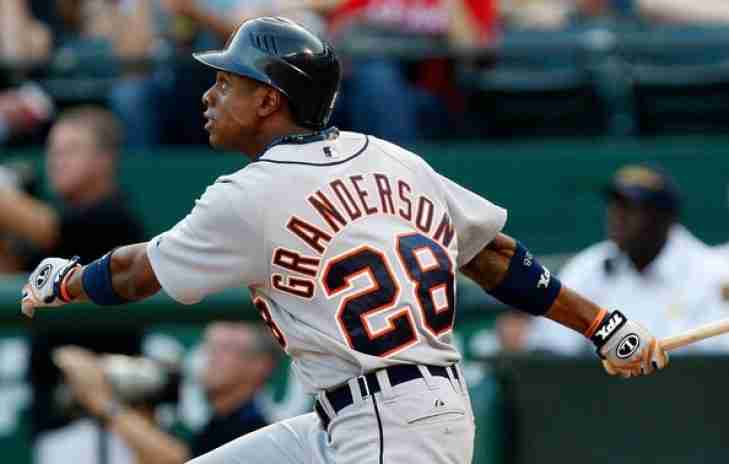
Curtis Granderson joined the Detroit Tigers as a third-round selection in the 2002 draft out of the University of Illinois Chicago, a high-velocity athlete who possessed a rare blend of speed and power. He made his debut in late 2004 and quickly transitioned into the definitive spark plug of the Tigers' mid-2000s resurgence. By 2006, he had officially seized the starting center field job, clouting 19 home runs and leading the American League with nine triples as a rookie.
In the 2007 campaign, he became the third player in Major League history to join the "20-20-20-20 Club." He demonstrated a specialized ability to spray the ball across the vast gaps of Comerica Park, recording 38 doubles, 23 triples, and 23 home runs while adding 26 stolen bases. He showed the organization that he was a foundational cornerstone, finishing 10th in the MVP voting.
Between 2006 and 2009, Granderson was a constant presence at the top of the order, averaging nearly 100 runs scored per season and maintaining a focused intensity that made him a perennial threat. He reached a peak for offensive versatility in 2007, recording a career-high .302 batting average and proving he was far more than just a speed specialist.
Following the 2009 season, the Tigers sent their franchise centerpiece to the New York Yankees in a deal that brought back Max Scherzer and Austin Jackson. With the Tigers, Granderson compiled 102 home runs, twice led the AL in triples, and achieved the rare 20-20-20-20 season in 2007.
48. Bobby Higginson
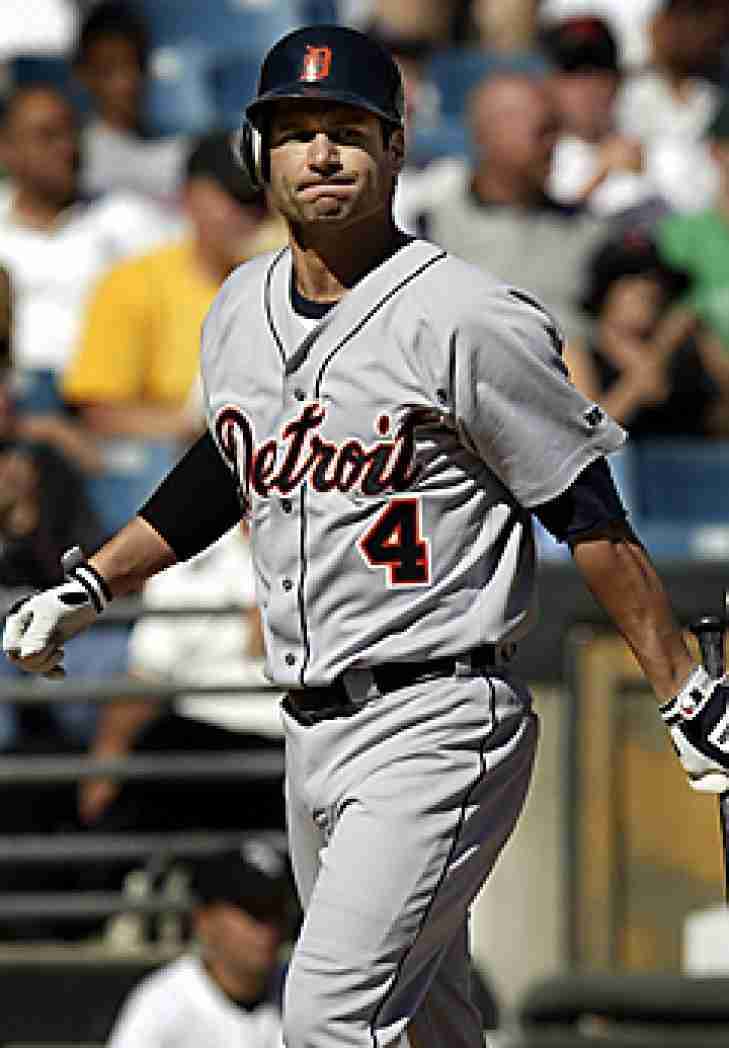
Bobby Higginson entered the Detroit system as an unheralded 12th-round pick in 1992 out of Temple University, a hard-nosed outfielder who defied the odds to become the face of the franchise during its most challenging decade. After a rapid three-year climb through the minors, he made his debut in 1995 and immediately established himself as a gritty left-handed bat with a cannon for an arm.
In 1997, he clouted 27 home runs and drove in 101 runs, following it up three years later with a career-high .300 batting average and 30 home runs. He showed the organization that he was a foundational leader, providing the steady-state production required to anchor a lineup in transition. Despite playing in a pitcher-friendly park and on rosters that struggled in the standings, he possessed a specialized ability to drive the ball into the gaps, twice earning the "Mr. Tiger" award as the team's most valuable player.
Between 1996 and 2003, Higginson was a statistical standout in right field, routinely leading the league in outfield assists and providing a specialized deterrent for baserunners. He possessed a high-velocity arm that became his calling card, famously recording 20 assists in 1996 and another 18 in 1997. Despite the lack of All-Star or Gold Glove hardware, he remained a model of durability and loyalty, eventually amassing 1,336 hits and 187 home runs.