

Baseball
Established in 1936, and currently based in Cooperstown, New York, the Baseball Hall of Fame may be the most prestigious of any Sports Hall of Fame. Although Baseball may have taken a backseat to Football in recent years, there is no doubt that Baseball’s version of the Hall of Fame is by far the most relevant and the most difficult to get enshrined in. At present, a player has to receive seventy five percent of the votes from the Baseball Writers Association of America, which has proven to be no easy task. Failing that, a player could be inducted by the Veterans committee, though few have been inducted this way. Our list will focus on the players only, and although we could easily do a tally focusing on mangers, broadcasters or other vital personnel, as always it is far more enjoyable to discuss the merits of those on the field as oppose to those off of it.Until Then, Let’s get some peanuts and cracker jacks and cast some votes of our own!
Sincerely,
The Not in Hall of Committee.
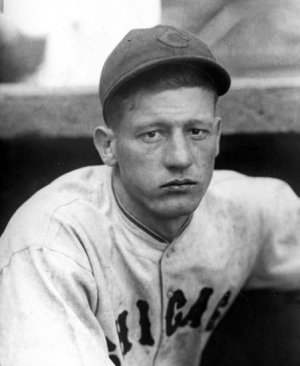
Lon Warneke played his entire career in the National League, splitting his run with rivals Chicago and St. Louis. Warneke had one game in 1930 and 20 in 1931 for the Cubs, and while some scouts viewed him as a future star, they were likely surprised by what he accomplished in 1932. That year, “The Arkansas Hummingbird” led the NL in Wins (22), ERA (2.37), and he was second in MVP voting. He helped the Cubs win the Pennant, though they would lose the World Series to the New York Yankees. Warneke proved he was not a one-year wonder: he went to…
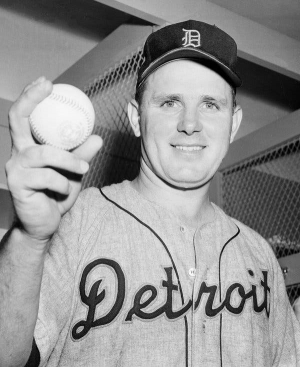
While we never thought Virgil Trucks' nickname of "Fire" was that creative, we did believe that the Alabaman was a pretty good Pitcher in his day. Trucks Strikeout numbers may not be that impressive today, but for his day, he was one of the most capable flamethrowers in Baseball. The righthander played the first two-thirds of his career with the Detroit Tigers. In Detroit, he had five seasons in which he posted at least 14 wins and was an All-Star in 1949, when he went 19-11 and led the American League in Strikeouts with 153. Trucks helped Detroit win the 1945 win the…
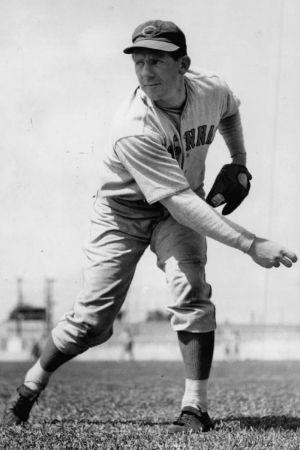
In 1931, Paul Derringer had a very good rookie year, going 18-8 and helping his St. Louis Cardinals win the World Series. He had a poor 1932 season, and he was traded early in ’33 to the Cincinnati Reds. His year ended with an abysmal 7-27 record. It would slowly turn around for Derringer after that. With the Reds, he would go to six All-Star Games and had four 20 Win years. While he allowed many Hits, he did not walk very many batters and led the National League twice in BB/9 (1939 & 1940). In both of those seasons, Derringer finished in the…
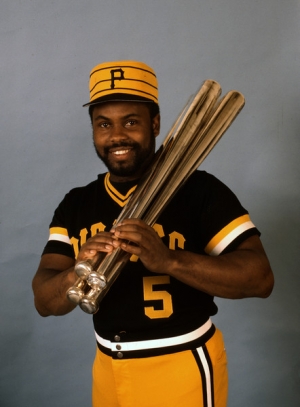
Bill Madlock is one of the more unlikely multi-time Batting Champions, as when you look in the annals of baseball history, Madlock is not on the tip of your tongue. He should be, as this is a four-time National League Batting Champion. Madlock began his career with the Texas Rangers, but it was brief, as he was traded to the Chicago Cubs after his rookie year. The infielder would show his batting skill quickly as he led the National League in Batting Average in both 1975 and 1976, and that was in the midst of a five-year run of .300 years spent…
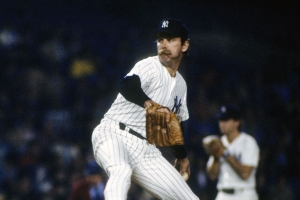
One of the most recognized Relief Pitchers of the 1970s is Sparky Lyle, who first debuted in the Majors with the Boston Red Sox in 1967. Lyle became Boston's closer in 1969, putting forth three straight 15 Save years, but he was deemed expendable, and the Red Sox traded him to the New York Yankees, who, as history would show, gave up nothing in return for him. Lyle blossomed in New York, setting a then American League record 35 Saves and finishing third for the MVP, and raising the bar for closers. Lyle was an All-Star three times in the 70s, was…
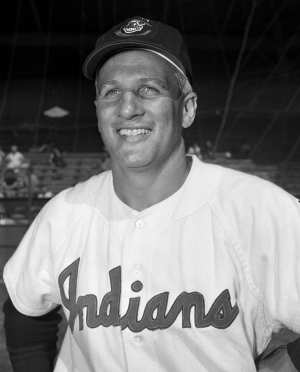
Al Rosen made his first appearance for the Cleveland Indians in 1947, and this would be the only Major League team he ever played for.
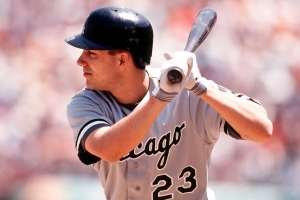
Forget about Robin Ventura headbutting Nolan Ryan’s fist. Before he reached the Majors, Robin Ventura already had a full trophy case. In 1988, the Oklahoma State star was a three-time All-American, won the Dick Howser Trophy, the Golden Spikes Award, and was a Gold Medal winner for the United States. Professionally, Ventura proved to be a good-hitting third baseman who spent the majority of his career with the Chicago White Sox, the team he debuted with in 1989. Ventura became a starter in 1990 and was an All-Star in 1992. With the Chi-Sox, Ventura had five 20 Home Run years and six 90-plus…
SEATTLE MARINERS GIFT CARDS
Jan 01, 1970
Buy your Tickets to see Seattle Mariners Gift Cards HERE!
TOURS: TRUIST PARK
Oct 27, 2026
Buy your Tickets to see Tours: Truist Park HERE!
MILWAUKEE BREWERS AT TAMPA BAY RAYS: WORLD SERIES (HOME GAME 2)
Oct 28, 2026
Buy your Tickets to see Milwaukee Brewers at Tampa Bay Rays: World Series (Home Game 2) HERE!
CLASSIC TOUR AT YANKEE STADIUM
Jan 01, 1970
Buy your Tickets to see Classic Tour at Yankee Stadium HERE!
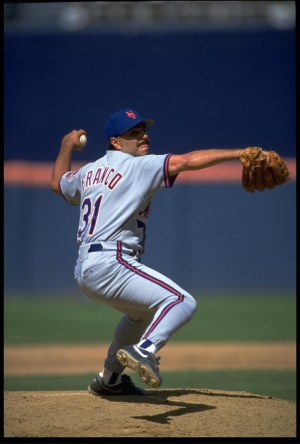
If you were to look at some of the all-time marks for Relief Pitchers, you would find John Franco in the upper echelon of those lists. Unlike many of those hurlers, you would also see that Franco was not a journeyman who bounced from team to team. Franco first cracked a Major League roster in 1984 with the Cincinnati Reds, where he played for six seasons and was an All-Star for three of them. Franco led the National League in Games Finished twice and in Saves once as a Red, and the closer established himself as an elite closer during that time. …
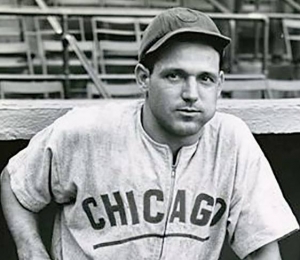
Bill Nicholson had a cup of coffee with the Philadelphia Athletics in 1936, but it was with the Chicago Cubs, a team he returned to the Majors with in 1939, where he became a star in baseball. Nicholson was an All-Star in both 1940 and 1941, as the Cubs’ starting Rightfielder, and his powerful swing (he was nicknamed "Swish") generated fear from National League Pitchers. Nicholson belted at least 20 or more Home Runs annually from 1940 to 1944, and in those last two seasons, he was the NL leader in Home Runs and Runs Batted In. Nicholson did not receive…
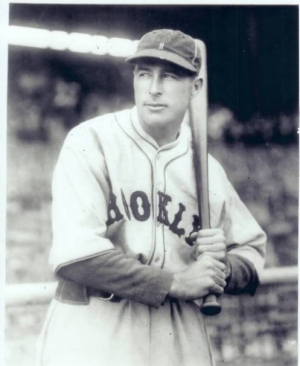
Lefty O'Doul had a unique career, in that he began as a struggling Pitcher, who eked out 32 Games over five years (1918-23) on the Major League level on the mound. These games were spent as either a New York Yankee or Boston Red Sox, but he was basically a minor league player through his 20s. O’Doul’s 30s would be very different. After last appearing in the Majors in 1923, he re-emerged with the New York Giants in 1928 as an Outfielder. O'Doul batted .311 that year in 354 at-bats. That was decent, but he was traded to the Philadelphia Phillies, and he had…
The career of Jose Bautista is a fascinating one. After years of obscurity, a switch in his batting stance took him from journeyman to All-Star and to someone we deemed worthy of discussion. Seriously, it came out of nowhere. At 29, with his fifth team (Toronto), it clicked. Bautista would be an All-Star for the first time, and he shot up from 13 to 54 Home Runs and would win the American League Home Run Title. He earned his second HR strap the year after (43), and this was year two of six straight All-Star Games. The power hitter would…
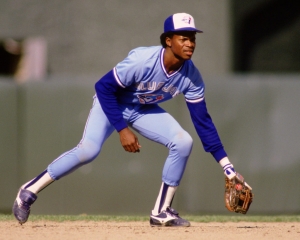
Does the city of San Pedro de Macorís in the Dominican Republic have a formula to create infielders for Major League Baseball? If they do, one of the best ones they ever gave us is Tony Fernandez. Fernandez was scouted and signed by the Toronto Blue Jays and made his Major League debut in 1983. As the Jays improved in the mid-80s, the Dominican Shortstop was one of their stalwarts. From 1985 to 1988, he would receive MVP votes, showing off strong contact, hitting, and defense. In all of those four seasons, Fernandez was named a Gold Glove winner, and he would at…
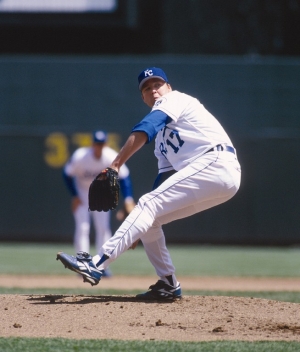
Kevin Appier was arguably one of the most underrated Pitchers of the 1990s, and perhaps we can shed some light on a career that feels unknown outside of Kansas City. After finishing 12-8 with a third-place finish in Cy Young voting in 1990, Appier was a fundamentally sound, albeit somewhat hidden, player in the small market of Kansas City. The righthander had a great 1993 season, going 18-8, and leading the American League in ERA (2.56), ERA+ (179), FIP (2.90), and bWAR (9.3). Appier was third in Cy Young voting, though his bWAR was more than double that of the winner, Jack…
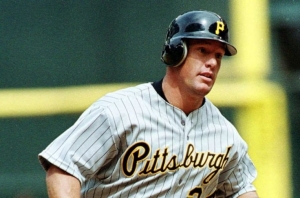
One of the most underrated players was Brian Giles, who played for three mediocre teams (Cleveland, Pittsburgh, and San Diego) and did not see as much love as he should have. The Outfielder played his first four seasons (1995-98) as an Indian before he moved to the National League with Pittsburgh, and in his four full seasons as a Pirate, he never had less than 35 Home Runs, 95 RBIs, or a .298 Batting Average. His On Base Percentage was over .400 in all of those seasons and received at least one MVP vote. The Pirates traded him to San Diego…
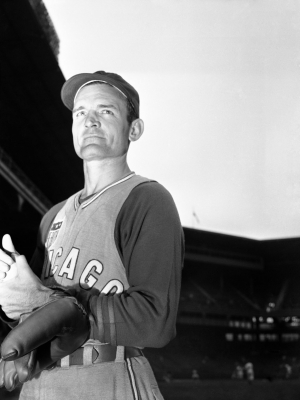
Claude Passeau appeared in one game in 1935 for the Pittsburgh Pirates, and the three innings he had shown nothing that would make you think he would be a future All-Star. Passeau won a regular role with the Philadelphia Phillies, where he lost more games than he won, but he was a serviceable Pitcher and worthy of a Major League roster spot, and his advanced metrics were very good. During the 1939 season, Passeau was traded to the Chicago Cubs, and his fortunes changed. Passeau was second that season in bWAR for Pitchers (6.0) and eighth in ERA (3.28), and in 1940,…
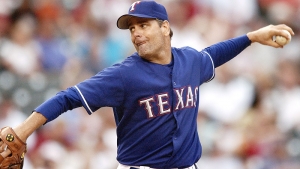
Owning the same name as a Country-Pop legend, Kenny Rogers was one of the most durable pitchers of the modern era.
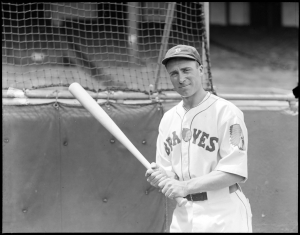
Wally Berger was one of the better sluggers of the National League in the first half of the 1930s, and the Boston Braves were lucky to have him. Berger had a spectacular rookie season in 1930, where the Outfielder batted .310 and blasted 38 Home Runs, which would be his career-high. His power dipped below the 20 HR mark in the next two years, but he batted over .300 in his first four seasons. When the Majors debuted their All-Star Game in 1933, Berger was a part of the first four. In those four seasons, Berger would have at least 25 Home…
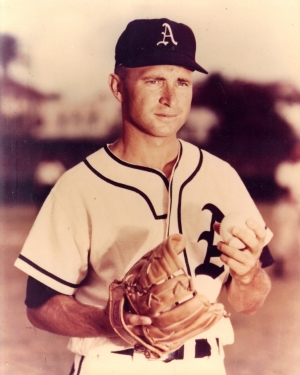
When you look at the past MVPs in baseball history, Bobby Shantz is one of the more curious players to win it.
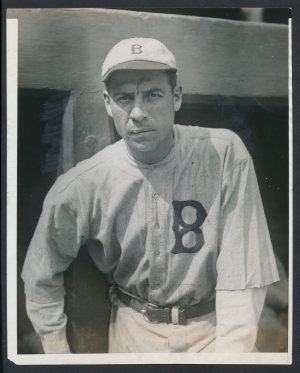
Jack Fournier was a Manager’s enigma. He could hit well, but his fielding was so bad that in the era before the Designated Hitter, the talented batsmen would have spells where he could not make the Majors. Fournier first made the Majors in 1912 when he broke in with the Chicago White Sox. Fournier led the American League in Slugging in 1915 (.491), and he batted .322 with a .311 mark the year before. Despite that, he was relegated to a platoon with Jack Ness in 1916, and he began to slump, making him expendable. He was waived and returned to the minors. The New…
