
gold star for USAHOF

Top 50 Kansas City Royals

An expansion team in 1969, the Kansas City Royals brought baseball back to KC after the Athletics relocated to Oakland in 1967.  The Royals struggled early as expected of any expansion team but they would make their first playoff in 1976 and return in ’77, ’78, and 1980.  The latter year would see the Royals make their first World Series although they would go down in defeat to the Philadelphia Phillies.

The first half of the 1980s was good to the Royals and in 1985 they would put it all together and win the World Series by defeating their cross-state rival, the St. Louis Cardinals in 1985.  The Royals would remain decent for the next ten years (although they did not reach the playoffs) but from the mid 90’s to the early 2010’s organizations did not perform very well and more often than not found themselves in the bottom half of the standings.

After 29 years, the Royals returned to the postseason as a wild card team and advanced to the World Series but were beaten by the San Francisco Giants.  The next year they would return to the World Series but this time they would beat the New York Mets to take their second championship.

Note: Baseball lists are based on an amalgamation of tenure, traditional statistics, advanced statistics, playoff statistics, and post-season accolades. 

This list is updated up until the end of the 2025 Season.
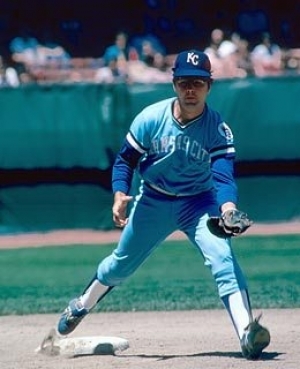
Freddie Patek joined the Kansas City organization in late 1970 via a trade with the Cincinnati Reds, a move that brought the man affectionately known as "The Flea" to Missouri in exchange for Roger Nelson and Richie Scheinblum. At 5-foot-5, he was frequently the smallest player on any field he stepped onto, but he quickly proved that his impact on the game was anything but miniature. The climb toward Patek’s peak in the mid-1970s was a study in defensive mastery and relentless, high-frequency base-running. After taking over the starting shortstop role, he demonstrated a specialized ability to cover more ground…
Larry Gura joined the Kansas City organization in mid-1976 via a trade with the New York Yankees, a transaction that sent reserve catcher Fran Healy to the Bronx. While he had struggled to find a permanent role in Chicago or New York, the move to Missouri unlocked a dormant potential in the southpaw. The climb toward Gura’s peak in the late 1970s was a study in tactical reinvention and high-frequency reliability. After bouncing between the bullpen and the rotation during his first two years in Kansas City, he demonstrated a specialized ability to neutralize the powerhouse hitters of the American…
Carlos Beltrán joined the Kansas City organization as a second-round selection in the 1995 draft out of Puerto Rico, a switch-hitting phenom who would quickly become the most electric five-tool talent the franchise had seen in decades. After skipping Triple-A entirely, he debuted in late 1998 and immediately secured the starting centerfield job for the following spring. In 1999, he demonstrated a specialized ability to dominate the league as a newcomer, becoming just the eighth rookie in the modern era to record 100 runs and 100 RBIs. He surged to the American League Rookie of the Year Award, showing the…
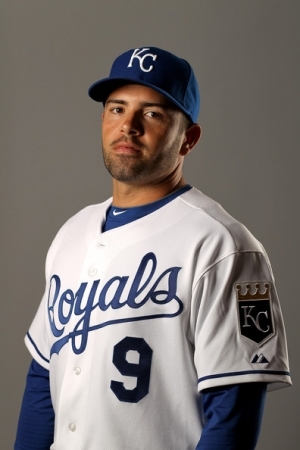
Whit Merrifield joined the Kansas City organization as a ninth-round selection in the 2010 draft, famously arriving with a championship pedigree after driving in the winning run for South Carolina in the College World Series. A quintessential late-bloomer, he spent six seasons grinding through the minors before finally making his debut in 2016 at the age of 27. After seizing the starting second base job in late 2016, he demonstrated a specialized ability to dictate the pace of a game from the top of the order. He surged into the league lead in stolen bases in 2017 with 34, a…
Charlie Leibrandt joined the Kansas City organization in mid-1983 via a trade with the Cincinnati Reds, a transaction that brought the left-hander to Missouri in exchange for Bob Tufts. After spending the remainder of that first summer in the minors, he surged into the Royals' rotation in 1984 and immediately established himself as the team’s most reliable southpaw. After earning a permanent role in the rotation, he demonstrated a specialized ability to dictate the tempo of a game, recording five consecutive seasons with at least ten victories. He surged into the spotlight during the 1985 campaign, recording a career-high 17…
Darrell Porter joined the Kansas City organization in December 1976 via a significant trade with the Milwaukee Brewers, a transaction that sent Jamie Quirk and Jim Wohlford to the Cream City in exchange for the left-handed-hitting backstop. After several seasons of unfulfilled potential in Milwaukee, he arrived in Kansas City and immediately evolved into one of the better offensive catchers in the American League. After taking over the starting role in 1977, he demonstrated a specialized ability to drive the ball while maintaining an elite eye for the strike zone. He surged into the spotlight in 1978, recording 18 home…
Danny Duffy joined the Kansas City organization as a third-round selection in 2007, a high-ceiling left-hander who would become one of the most beloved figures of the modern era. After making his debut in 2011 and overcoming Tommy John surgery early in his career, he evolved into a foundational piece of the rotation. In 2014, he moved into the rotation full-time and posted a career-best 2.53 ERA, setting the stage for the team’s historic postseason run. During the 2015 championship season, he demonstrated a specialized resilience by transitioning to a relief role late in the year. He showed the organization…
Eric Hosmer joined the Kansas City organization as the third overall selection in the 2008 draft, a high-ceiling prospect from Florida who would become the face of the Royals' resurgence. After a rapid ascent through the minors, he debuted in May 2011 and immediately secured the starting first base job. In 2011, he demonstrated a specialized ability to handle the bright lights of the American League, batting .293 and finishing third in the Rookie of the Year voting. He showed the organization that he was a foundational winner during the 2014 and 2015 postseason runs, delivering veteran-like poise and a…
Joakim Soria joined the Kansas City organization as a Rule 5 selection from the San Diego Padres in late 2006, a diamond-in-the-rough find who would immediately transform into one of the most dominant closers in the game. Making his debut in 2007, the right-hander from Monclova quickly earned the nickname "The Mexicutioner" for his cold-blooded efficiency in the ninth inning. After saving 17 games as a rookie, he evolved into an elite force between 2008 and 2010. During this stretch, he demonstrated a specialized ability to lock down games with a microscopic 1.84 ERA and a 1.005 WHIP. He showed…
Greg Holland was developed as a pure reliever from the moment the Royals drafted him in 2007. Armed with a high-90s four-seam fastball and a biting slider, he never started a single game for the organization. He spent two seasons as a high-leverage setup man before the 2012 trade of Jonathan Broxton to Cincinnati opened the door for him to become the full-time closer. Holland reached a historic peak of efficiency during the 2013 and 2014 campaigns. In 2013, he recorded a franchise-record 47 saves and followed it with 46 the next year. He maintained an elite dominance during this…
Johnny Damon was selected by the Kansas City organization in the first round of the 1992 draft, a high-ceiling speedster from Orlando who would become the face of the franchise’s late-nineties outfield, and he debuted in 1995 and immediately established himself as a premier leadoff threat. In 1999, he broke through as a .300 hitter for the first time, recording 101 runs and 36 stolen bases. He followed that with a monumental 2000 season in which he became the most prolific run-scorer in the American League. That summer, he recorded a career-high 136 runs and 46 stolen bases, leading the…

2026 SEATTLE MARINERS FLEX MEMBERSHIPS

Jan 01, 1970

Buy your Tickets to see 2026 Seattle Mariners Flex Memberships HERE!

ATLANTA BRAVES VS. CHICAGO CUBS

May 14, 2026

Buy your Tickets to see Atlanta Braves vs. Chicago Cubs HERE!

ATLANTA BRAVES V. CHICAGO CUBS * PREMIUM SEATING *

May 14, 2026

Buy your Tickets to see Atlanta Braves v. Chicago Cubs * Premium Seating * HERE!

CHICAGO WHITE SOX VS. KANSAS CITY ROYALS

May 14, 2026

Buy your Tickets to see Chicago White Sox vs. Kansas City Royals HERE!

 
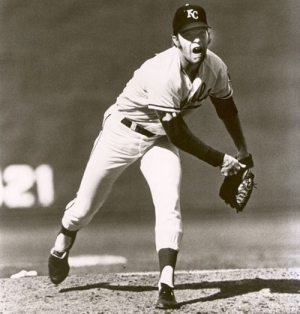
Steve Busby joined the Kansas City organization as a second-round selection in 1971 out of USC, a right-hander whose arrival signaled the dawn of the Royals' competitive era. Debuting in late 1972, he immediately established himself as a historic outlier by tossing a no-hitter in just his tenth career start. Busby reached a historic peak of efficiency and individual recognition between 1973 and 1975. After a 16-win rookie campaign, he surged to a career-high 22 wins in 1974, becoming the first Royal to reach the 20-victory plateau. He showed the organization he was a foundational superstar by throwing his second…
Kevin Seitzer joined the Kansas City organization as an 11th-round selection in 1983, a polished hitter from Eastern Illinois who became an immediate fixture at the hot corner. After a brief cup of coffee in late 1986, he took over the starting job in 1987. That summer, he evolved into the most prolific hit-maker in the American League, leading the circuit with 207 hits and a league-best 151 singles.  He batted .323 and earned an All-Star selection, eventually finishing as the runner-up for the Rookie of the Year Award behind the record-breaking Mark McGwire. His specialized dominance was never clearer…
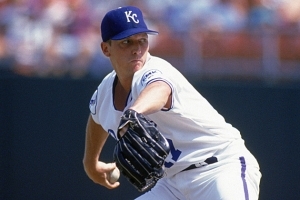
David Cone was the "hometown boy" who became one of the most surgical arms in baseball history. A Kansas City native, he was drafted by the Royals in 1981 and debuted as a reliever in 1986 before the organization made a historic tactical error by trading him to the Mets for catcher Ed Hearn. While his "gun for hire" reputation was forged in New York and Toronto, he returned to the Royals in 1993 to deliver the most efficient individual pitching stretch in franchise history, proving that he was much more than a postseason specialist. Upon returning as a high-profile…
A fourth-round pick from Rutgers in 2000, David DeJesus made it to the bigs in 2003, took over center field in 2004, and immediately finished sixth in the American League Rookie of the Year voting. During the 2008 campaign, he recorded a career-high .307 batting average with 12 home runs and 73 RBIs while providing steady-state production at the top of the order. He demonstrated a specialized ability to manufacture runs in a cavernous home ballpark, recording 159 hits and a .366 on-base percentage, and from 2007 to 2009 had at least 155 hits per season. In 2006, he demonstrated…
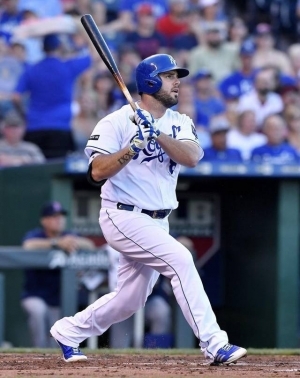
Mike Moustakas arrived in Kansas City as the second overall pick in the 2007 draft, carrying the heavy expectations of a franchise desperate for a turnaround. While his traditional numbers often sparked debate among evaluators, he became the emotional heartbeat of the team's championship era. In the middle of the 2010s, “Moose” was the man in the Royals baseball.  Moustakas first demonstrated a specialized ability to deliver in the clutch during the historic 2014 postseason run. After a regular season where he struggled with consistency, he evolved into a tactical legend in October, belting five home runs during the playoffs…
Al Fitzmorris was a cornerstone of the original Kansas City rotation, joining the organization as a selection from the Chicago White Sox in the 1968 Expansion Draft. While it took several years to find a permanent role in the shifting hierarchy of the new franchise, he eventually emerged as one of the most reliable right-handers of the early 1970s. Fitzmorris spent the first half of his Kansas City tenure as a versatile weapon, moving between the bullpen and the rotation while the club searched for its identity. He demonstrated a specialized ability to eat innings in 1973, when he was…
Tom Gordon arrived in Kansas City as a high-velocity prospect drafted in the sixth round of the 1986 draft. Known for an electric curveball and a 90s-era heater, he quickly earned the nickname "Flash" as he surged through the minor leagues. Debuting in late 1988, Gordon had a spectacular 1989, posting a 17-9 record and a 3.64 ERA. He showed the organization he was a foundational superstar by recording 153 strikeouts, the tenth-highest total in the league, and finishing as the runner-up for the American League Rookie of the Year Award behind Gregg Olson. This breakout performance served as the…
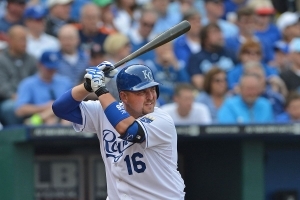
Billy Butler arrived in the Kansas City organization as a first-round selection in 2004, a hitter whose natural affinity for the gaps made him one of the most prolific doubles machines in franchise history. While his defensive limitations eventually led to a permanent role as a designated hitter, he became the club’s primary offensive engine during the lean years of the late 2000s. Debuting for the Royals in 2007, Butler recorded a career-high 29 home runs and 107 RBIs while batting .313.  That season, he won his first career All-Star selection and won the Edgar Martinez Award as the American…