


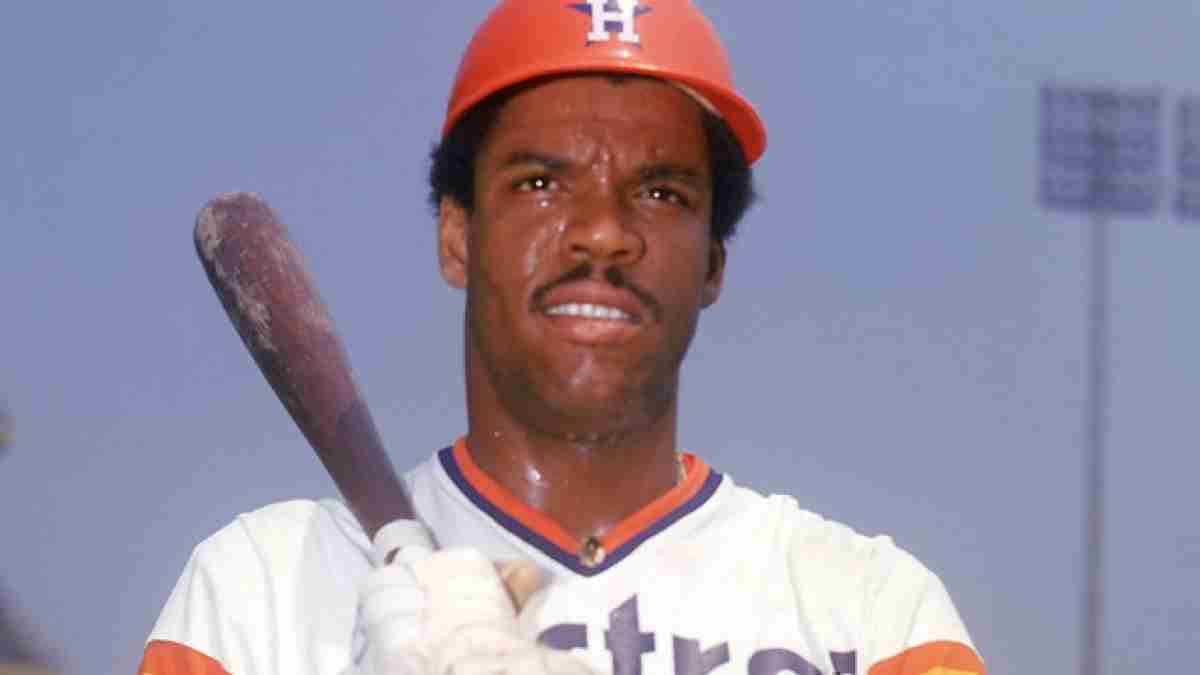



The arrival of Cesar Cedeño in Houston during the summer of 1970 felt like a glimpse into the future of baseball. A teenage prodigy from the Dominican Republic, Cedeño didn't just play center field; he patrolled it with an electric, high-speed elegance that drew immediate comparisons to the game's greatest icons. Before the term "five-tool player" became a common refrain, Cedeño was living it in the Astrodome, combining a lightning-quick bat with a defensive range that seemed to shrink the furthest reaches of the outfield.
After a strong rookie showing, he orchestrated a historic run of production starting in 1972. That year, he became only the second player in major league history to join the 20/50 club, blasting 22 home runs while swiping 55 bases. He didn't just touch that milestone; he owned it, repeating the feat in 1973 and 1974. He was a model of specialized athleticism, leading the league in doubles twice and serving as the primary offensive spark for a franchise finding its footing in the 1970s.
His game was a relentless, high-frequency aggression on the basepaths and in the field. Cedeño was a fixture among the league's elite runners, putting together six consecutive seasons with at least 50 stolen bases. His defensive craftsmanship was equally profound, earning him five straight Gold Gloves for a center field display that was as flashy as it was efficient. He possessed a rare ability to impact the game in every phase, ranking in the top five of the National League for offensive bWAR four times.
In 1981, he was traded to the Cincinnati Reds, marking the end of a twelve-year journey that saw him evolve from a "Super Nova" prospect into one of the most decorated players in club history. He departed as the franchise’s all-time leader in stolen bases at the time, a title that reflected a career built on speed and technical excellence.
With the Astros, Cedeño compiled 1,659 hits, 487 stolen bases, and 163 home runs while winning five Gold Gloves. The organization provided the final punctuation on his legacy in 2020 by inducting him into the Astros Hall of Fame.

Comments powered by CComment