

274. Jose Rijo
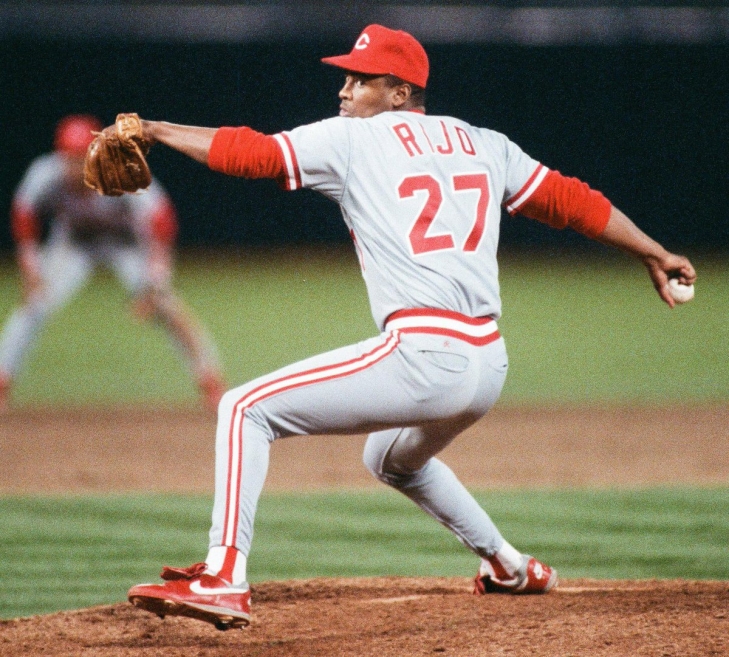
There was a lot of hype for years around Dominican Pitcher Jose Rijo, so much so that the New York Yankees (likely due to the owner, George Steinbrenner) rushed him into the majors at age 18. Rijo did not do well as a rookie, but what 18-year-old in the Majors does?
19. Jose Rijo
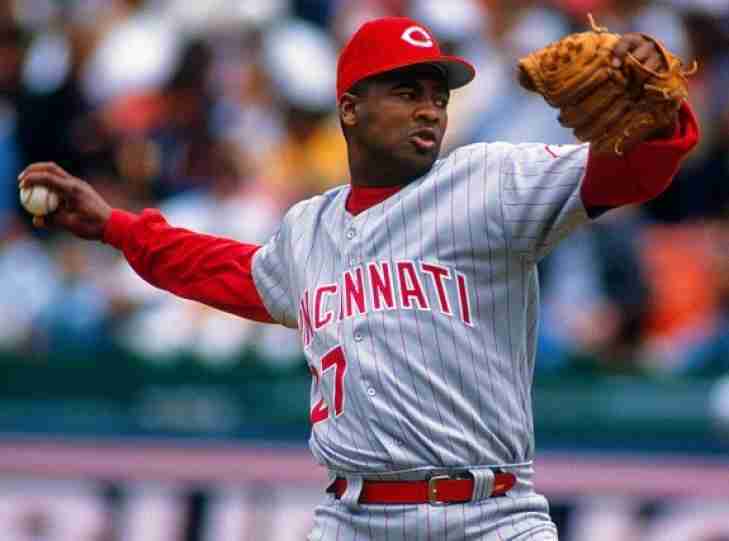
When Jose Rijo arrived in 1988, he was a pitcher looking to harness elite raw tools, but he quickly matured into a tactical ace who thrived under the brightest lights. Though surprisingly only recognized as an All-Star once, his efficiency was undeniable. He was a perennial fixture at the top of the leaderboards, finishing in the top five in ERA four times during his stay. He arrived as a hard-thrower and evolved into an efficiency machine, leading the National League in WHIP in 1991 and in strikeouts and overall bWAR for pitchers in 1993.
The absolute pinnacle of his career, and a defining moment for the franchise, arrived during the 1990 World Series. Facing a heavily favored Oakland Athletics dynasty, Rijo authored a masterpiece of run suppression. He went 2-0 with a microscopic 0.59 ERA in the Fall Classic, essentially silencing the Oakland bats and earning World Series MVP honors as the Reds completed a shocking four-game sweep. He wasn't just a part of the rotation; in that moment, he was the most dangerous man on a baseball diamond, providing the high-leverage excellence that delivered a championship to the South Ohio faithful.
His identity was synonymous with a relentless competitive spirit, though his body eventually struggled to keep pace with his arm. After a series of elbow issues seemingly ended his career in the mid-90s, Rijo made a historic and unprecedented return to the mound five years later, becoming the first player to ever return to the Majors after having already appeared on a Hall of Fame ballot. This two-year stint in middle relief served as a testament to his durability and love for the organization, allowing him to finish his journey where it mattered most.
The chapter finally reached its formal conclusion after the 2002 season, but his impact on the franchise remained indelible. He left the organization as a statistical titan of the modern era, a man whose peak performance was as brilliant as any in the team's long history. He proved that greatness isn't always about accumulating 300 wins; sometimes, it’s about being the absolute best in the world when the world is watching.
In 2005, the Reds ensured his immortality by inducting him into the Cincinnati Reds Hall of Fame.
