

Site Admin
16. Rick Reuschel
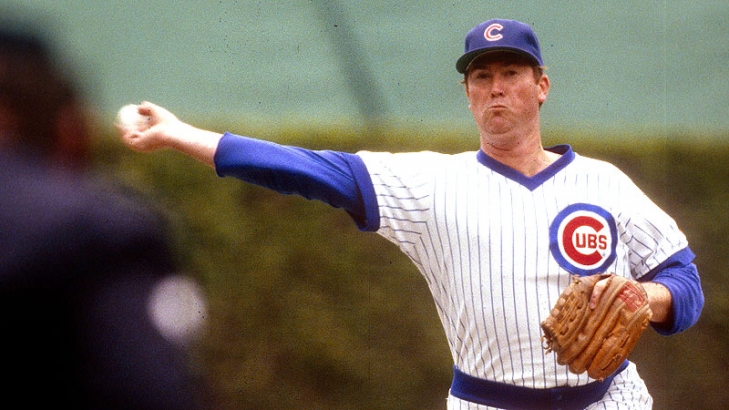
Listed at 6'3" and well over 220 pounds, the man they called "Big Daddy" looked more like a neighborhood plumber than a premier athlete. But that portly physique masked a startlingly athletic pitcher who could move off the mound with a cat’s grace and run the bases well enough to be used as a pinch-runner. He didn't overpower hitters with heat; he dismantled them with a sinking fastball and a relentless refusal to give away free passes.
His run in Chicago was defined by a quiet, high-level competence that was frequently wasted on mediocre teams. While he amassed 135 wins in a Cubs uniform, his value was often obscured by a lack of run support and a shaky defense behind him. The singular, traditional peak of his tenure arrived in 1977, a season where everything finally aligned. Reuschel captured 20 wins, earned his first All-Star nod, and finished third in the Cy Young voting, leading the league in home-runs-per-nine innings. It was the year the old-school stats caught up to his actual talent.
However, the real story of Reuschel’s tenure is found in the numbers that weren't sexy at the time. Modern metrics reveal that he was a sabermetric titan hiding in plain sight. He led the Cubs in bWAR seven times, including a five-year streak from 1976 to 1980. He was a workhorse who specialized in the unseen skills, inducing ground balls, limiting damage, and keeping the ball in the park, that wouldn't be fully appreciated until the 21st century.
After a brief, injury-plagued exit and return in the early 80s, Reuschel eventually found his second act elsewhere, but his identity remained rooted in Chicago. He left the franchise with 49.1 bWAR, a total that places him among the most effective players to ever call Wrigley home. When the Cubs inaugurated their Hall of Fame in 2021, "Big Daddy" was an automatic selection for the first class. He arrived as a deceptive rookie and left as a retroactive superstar, the man who proved that you don't have to look the part to dominate the game.
15. Frank Chance
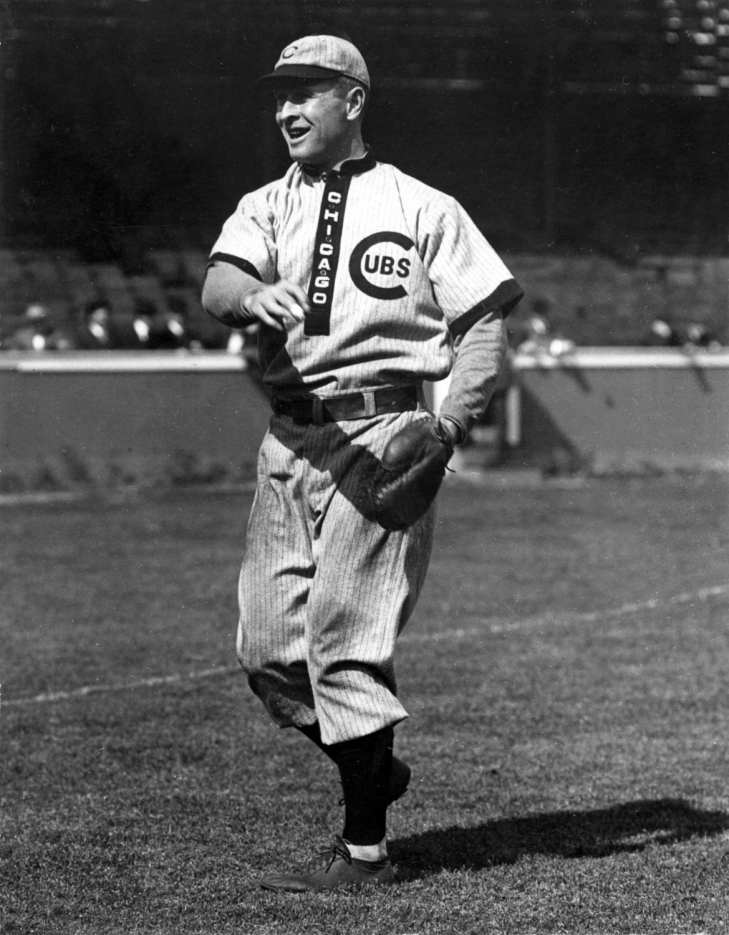
When Frank Chance joined the Chicago roster in 1898, he arrived as a catcher, but his destiny lay at the opposite end of the infield. By the time he transitioned to first base, he had become the heartbeat of a Chicago squad that would soon terrorize the National League. Chance was the rare thinker of the Deadball Era, a man who combined a sophisticated understanding of the game’s nuances with a raw, aggressive playing style. He didn't just inhabit the bag at first; he patrolled it like a commanding officer, serving as the final, reliable destination for the throws coming from Tinker and Evers.
His offensive presence was a nightmare for opposing pitchers who were used to easy outs at the bottom of the order. From 1903 to 1906, Chance put together a run of four consecutive seasons batting over .300, but his true genius lay in his ability to reach base by any means necessary. In 1905, he paced the league with an extraordinary .450 On-Base Percentage, a figure that underscored his elite discipline and refusal to give away an out. Once he was on, he was even more dangerous; a two-time stolen base king, he eventually swiped 402 bags in a Chicago uniform, blending the power of a first baseman with the speed of a pure leadoff threat.
The defining arc of Chance’s tenure was his dual role as player-manager. Under his leadership, the Cubs reached the summit of the baseball world, capturing four pennants and back-to-back World Series titles in 1907 and 1908. He was the "Peerless Leader" because he demanded the same relentless excellence from his teammates that he himself showed on the field, finishing in the top seven in bWAR for five straight years during the team's most fertile era.
By the time his run concluded in 1912, Chance had amassed a .394 OBP and a legacy that was inseparable from the city's first golden age. He arrived as a versatile prospect and left as the architect of a championship culture. The Old Timers Committee rightfully ushered him into Cooperstown in 1946, and when the Cubs finally built their own Hall of Fame in 2021, the man who provided the "Chance" in the game’s most famous trio was one of the first names carved into the stone.
13. Charlie Root
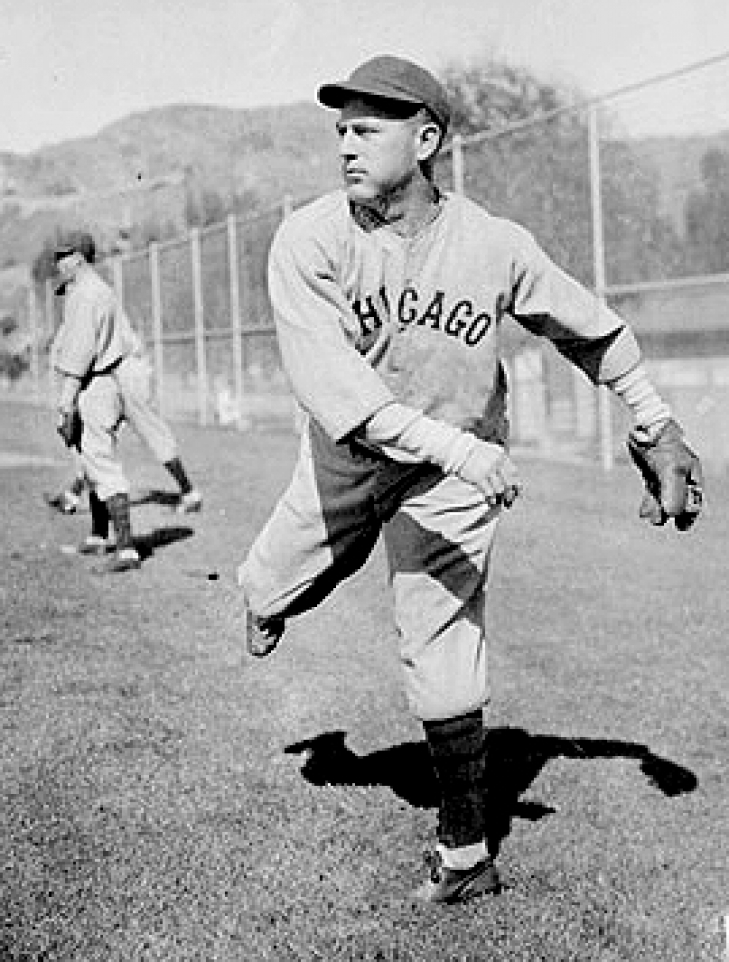
In the long, star-studded history of Chicago Cubs pitching, there are bigger names and flashier legends, but there is only one man at the top of the mountain when it comes to the "W." Charlie Root arrived in Chicago in 1926 as a castoff from the St. Louis Browns, and he spent the next 16 seasons proving that the Browns had made a historic mistake. His story is one of pure, unadulterated durability, who in every sense of the word took the ball more often, threw more innings, and walked off the mound a winner more times than any other pitcher to ever wear the blue pinstripes.
His arrival was a baptism by fire. In his first full season in 1926, Root led the league in losses, but he also showed flashes of the brilliance to come with 18 wins. The true breakout, the moment he became the undisputed ace of the staff, arrived in 1927. In a performance that earned him a fourth-place finish in the MVP voting, Root led the National League with 26 wins, serving as the high-velocity engine for a Cubs team that was suddenly a perennial contender. For the next six years, Root was the model of metronomic consistency, never dipping below 14 wins and serving as the foundational piece of the rotation.
As the 1930s progressed, Root’s play evolved. He transitioned from the young firebrand at the top of the rotation to the veteran stabilizer in the bullpen, proving that his value to the franchise was immune to the passing of time. By the time he threw his final pitch in 1941, he had amassed a franchise-record 201 wins and tossed an incredible 3,137 innings. He left the game as the Cubs' all-time leader in games pitched and Win Probability Added, a statistical titan whose legacy was built on showing up, every single day, for nearly two decades.
The story reached its permanent acknowledgment in 2021. When the Cubs finally opened the doors to their own Hall of Fame, Charlie Root was an automatic selection for the inaugural class. He arrived as a young pitcher with a point to prove and left as the winningest hurler in the franchise's history, the man who defined what it meant to be a Chicago Cub on the mound.
11. Grover Cleveland Alexander
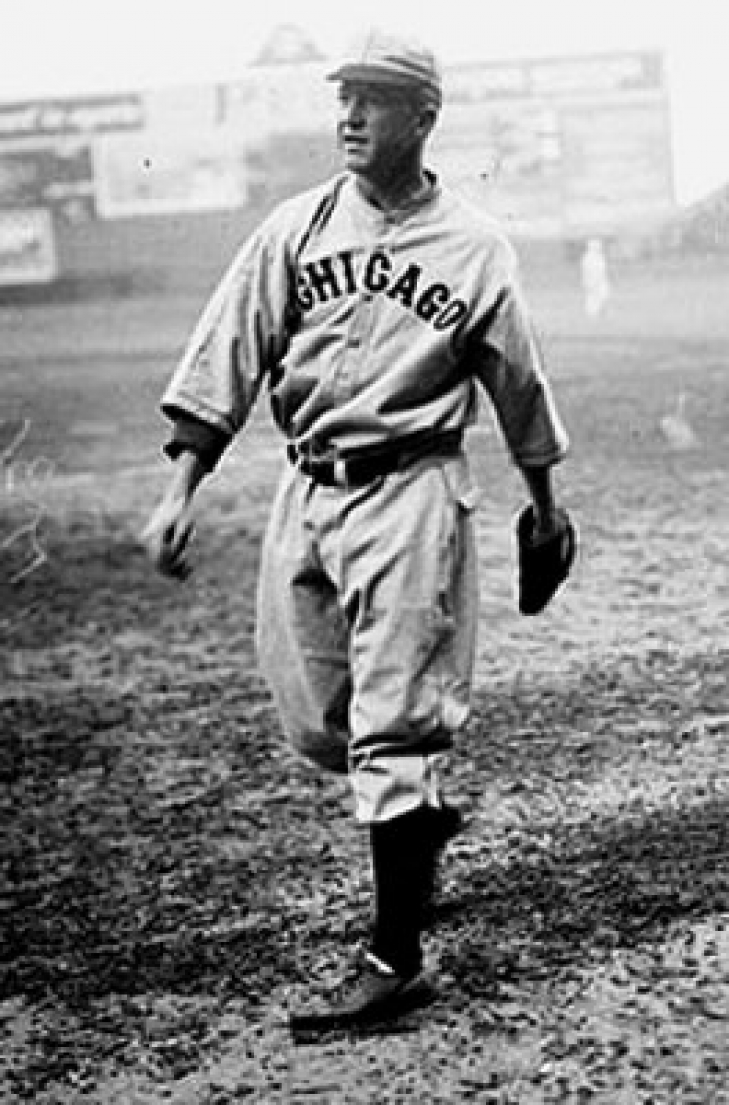
When Grover Cleveland Alexander arrived in Chicago in 1918, he didn't come by choice, and he didn't come whole. The Philadelphia Phillies, desperate for cash, had sold the greatest pitcher of the era to the Cubs just as the shadow of World War I loomed over the sport. Before he could throw a meaningful pitch for Chicago, Alexander was shipped to the front lines of France. He returned a year later, physically alive but mentally scarred—suffering from shell shock, partial deafness from the artillery fire, and a growing dependency on alcohol to quiet the ringing in his ears. It was a tragic transformation for a man who had already won two Triple Crowns.
But even a broken "Old Pete" was a marvel of the mound. His run with the Cubs from 1919 to 1920 remains one of the most improbable displays of pure, localized dominance in the history of the game. Despite the trauma and the seizures that began to plague him, he captured back-to-back ERA titles in his first two full seasons at Wrigley. In 1920, he authored a masterpiece: a 27-win season with a 1.91 ERA that secured his third career Triple Crown. It was a defiant statement from a veteran who was supposed to be washed up, a performance that proved his control and pinpoint accuracy were immune to the ghosts of the war.
The middle chapters of his Chicago story were defined by a steady, professional decline. While he never again touched the heights of 1920, he remained a formidable force for the next five years, anchoring a Cubs rotation that relied on his veteran savvy. However, his off-field struggles eventually wore thin with the front office. Midway through the 1926 season, he was unceremoniously waived and claimed by the St. Louis Cardinals, where, in a bit of poetic justice, he would go on to win the World Series that very autumn.
Alexander left Chicago with a sterling 128-83 record and a 2.84 ERA, marks that would be career-defining for any other pitcher but were merely a second act for him. His legacy was officially set in stone when he entered Cooperstown in 1938 as part of the Hall's third-ever class. Decades later, when the Cubs finally inaugurated their own Hall of Fame in 2021, "Old Pete" was an automatic selection for the first class. He arrived as a broken soldier and left as a testament to the enduring power of a master at work.