


Site Admin
31. B. J. Surhoff
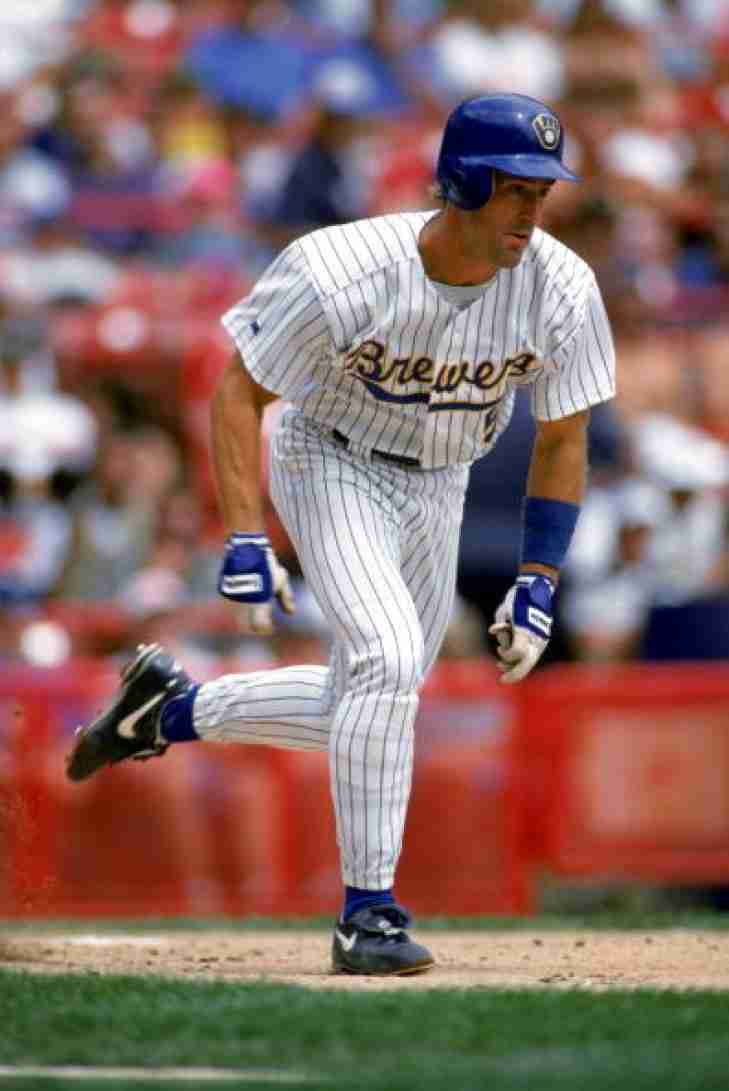
B.J. Surhoff joined Milwaukee in 1987 as the top overall pick from the 1985 draft, a highly regarded prospect known for his unique blend of college success and defensive skill. Although he reached the height of his statistics in Baltimore later on, he spent almost ten years with the Brewers, where he was a key contact hitter and an important part of the team’s lineup.
In 1987, Surhoff hit a remarkable milestone for a rookie catcher by batting .299 and playing a key role in igniting the team's memorable 13-0 start to the season. He demonstrated an impressive mastery of the strike zone right from the beginning, earning a reputation as one of the most challenging outs in the American League. Although he was initially drafted as a catcher, he showed incredible versatility by eventually playing at third base and in the outfield.
Between 1988 and 1991, Surhoff was a key catcher, playing over 125 games each season. He displayed excellent strike zone control, never striking out more than 49 times annually. In 1990, he hit a peak in situational hitting, stealing 18 bases and hitting 21 doubles.
In 1992, the organization started to shift behind the plate. While he remained a key player, with 121 hits and helping Milwaukee vie for the AL East title until the final weekend, he also began to make a special move across the diamond. By 1993, he had become remarkably versatile, taking on the role of the team's main third baseman. That year, he delivered a remarkable display of resilience. After a slow start, he soared to a career-high 38 doubles and 79 RBIs, earning the Brewers' Unsung Hero Award for his smooth transition to the hot corner.
After the 1995 season, Surhoff departed for Baltimore as a free agent. He batted .274 with 1,064 hits for the Blue Brew Crew.
23. Jim Slaton
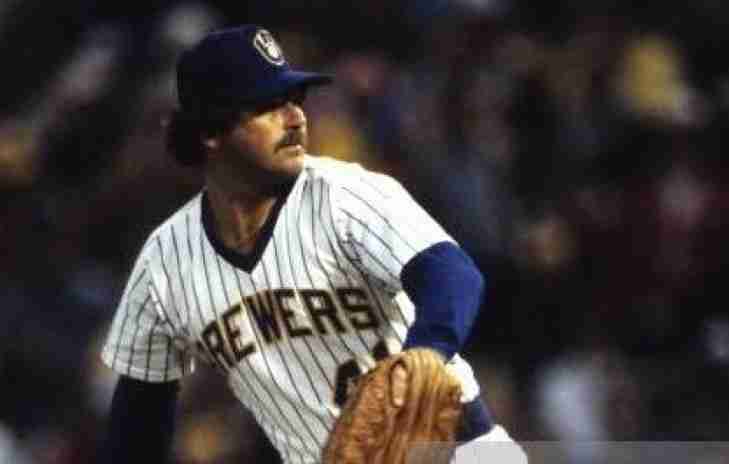
Jim Slaton didn't just play for the Brewers; he essentially grew up with them. Drafted by the Seattle Pilots before they packed up for Milwaukee, the right-hander arrived in 1971 as a 20-year-old and spent the better part of the next 13 years becoming the most prolific workhorse in franchise history.
In the mid-70s, Slaton established a durability benchmark of the era, throwing at least 217 innings for five straight seasons. His first major individual accolade came in 1977 when he earned his only All-Star nod after a strong first half that helped stabilize a transitioning rotation. He demonstrated complete mastery over his pitches, finishing 1976 with 14 wins, a 3.44 ERA, and an impressive 292.2 innings pitched.
After a one-year stint in Detroit, Slaton returned to the 414 in 1979 and quickly achieved a new level of efficiency. He posted a 15-9 record with a 3.63 ERA, helping to bridge the gap to the most celebrated period in Brewers history. His career reached its most memorable point during the 1982 "Harvey's Wallbangers" season. Although his role had shifted to the bullpen, he remained a key part of the team, and his legacy was cemented when he earned the win in Game 4 of the 1982 World Series against St. Louis.
Following the 1983 season, he finalized a deal to join the California Angels. Slaton compiled a 117-121 record, a 3.83 ERA, and 929 strikeouts with Milwaukee.
36. Jeromy Burnitz
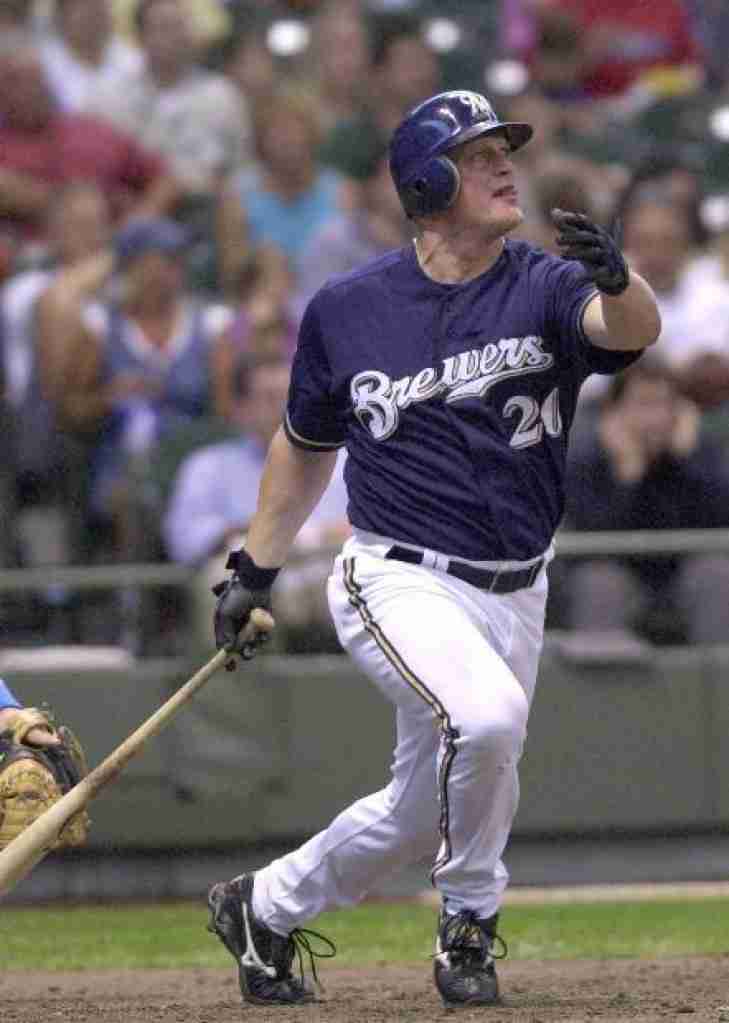
Jeromy Burnitz joined Milwaukee in late 1996, a former first-round draft pick who faced difficulties establishing himself in New York and Cleveland. The transaction that sent him to the Brewers in exchange for Kevin Seitzer is regarded as one of the most advantageous trades in franchise history, as Burnitz promptly became the central force of the Milwaukee offense.
After establishing his footing in late 1996, Burnitz reached a peak in 1997, contributing to a season that included 27 home runs and a career-high 20 stolen bases. He demonstrated comprehensive dominance within the American League during that summer, ranking within the top ten for slugging percentage and triples. Additionally, he became the first player in Brewers history to hit a home run in five consecutive games, exemplifying the essential catalyst for a lineup preparing for its notable transition to the National League.
Between 1998 and 2001, he had four consecutive seasons with at least 30 home runs, becoming only the second player in franchise history to reach that summit after Gorman Thomas. In 1998, he reached a career high in run production, with 38 home runs and 125 RBIs, finishing in the top ten in both categories. He attained a new level of individual recognition in 1999, earning his first All-Star selection and notably finishing as the runner-up in the Home Run Derby at Fenway Park. He was a consistent professional figure who appeared to set a historic milestone each summer, including hitting the first-ever ball into the upper deck in right field at Houston’s Enron Field in 2000.
With Milwaukee, Burnitz had 165 Home Runs, 714 Hits with a .258 Batting Average.
33. Greg Vaughn
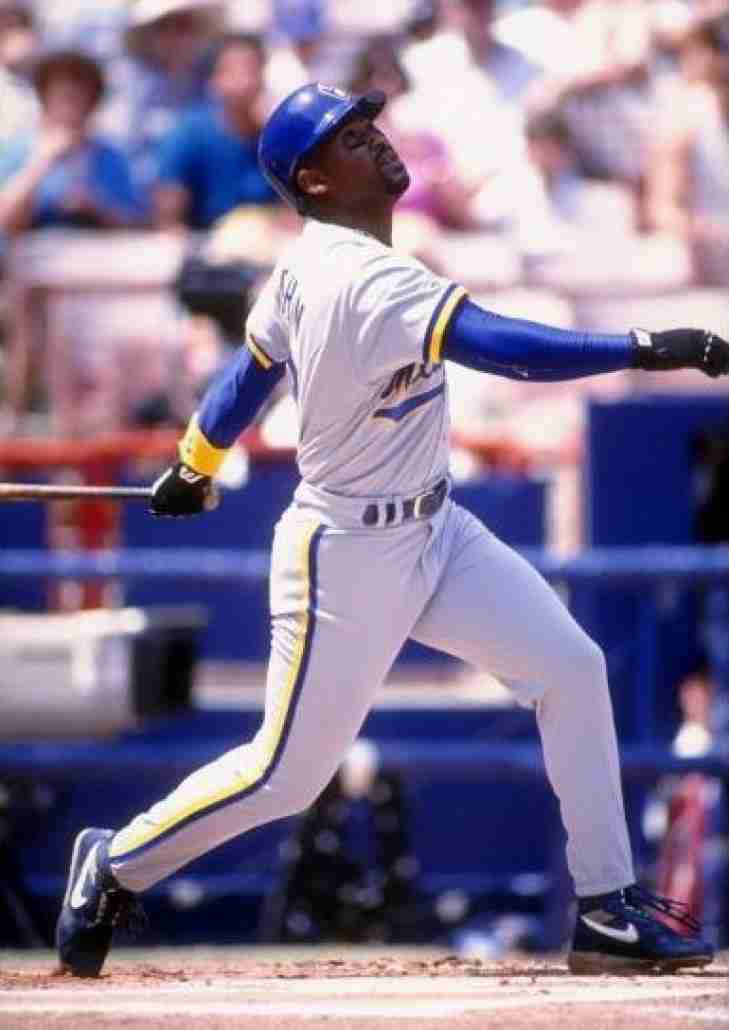
Greg Vaughn debuted for the Brewers in 1989 as a former fourth-overall draft pick. Known for his powerful swing, he inspired the "Vaughn’s Valley" section in the left-field bleachers, which became iconic in Brewers baseball during the early 90s. Although he eventually hit his career high with 50 homers in San Diego, Vaughn spent nearly eight seasons in Milwaukee as the team's leading power hitter.
Following his debut at the age of 24, Vaughn attained a peak of productivity in 1991, orchestrating a breakthrough season with 27 home runs and 98 RBIs. He demonstrated comprehensive mastery of the strike zone typical of a power hitter, initiating a sequence of three consecutive seasons in which he surpassed 20 home runs. By 1993, he achieved a historic milestone for a Brewers outfielder, earning his inaugural All-Star selection and delivering an exemplary season with 30 home runs and 97 RBIs. Throughout this period, he was a consistent professional presence, concluding the year with an impressive .850 OPS.
In 1996, during a pivotal trade deadline, he had a remarkable period in which he hit 31 home runs in just 102 games for the Brewers. That summer, he demonstrated complete dominance in the American League, earning his second All-Star nod and achieving a career-high .948 OPS by July. However, as the organization shifted toward a youth focus, his time in Milwaukee ended on July 31, 1996. The Brewers made a major trade, sending the popular slugger to the San Diego Padres in exchange for a package that included Marc Newfield and Bryce Florie.
In Milwaukee, Vaughn compiled 169 home runs, 566 RBI, and a .244 batting average.
