


Site Admin
27. Smoky Joe Wood
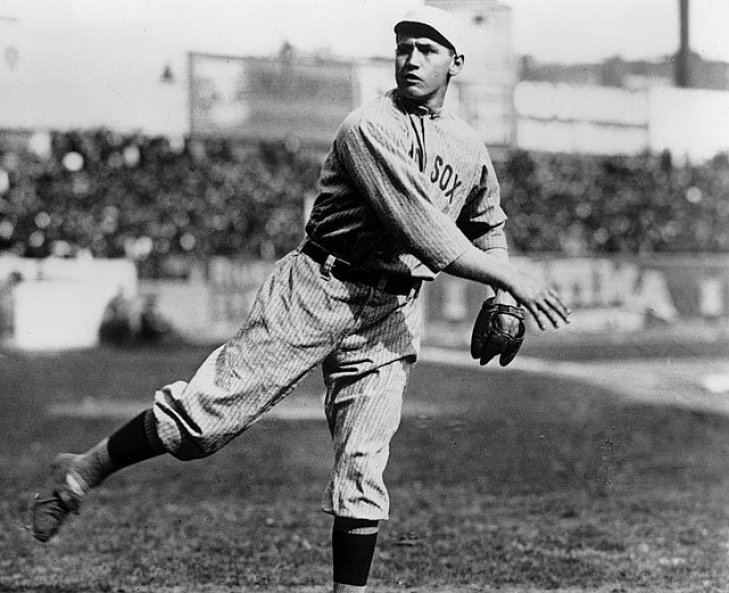
Howard Ellsworth Wood didn't just pitch; he threw "smoke." Debuting as a teenager in 1908, he quickly established himself as the hardest thrower of the Deadball Era. By 1910, he was already an "Efficiency Outlier," posting a 1.69 ERA. In 1911, he led the American League in FIP (2.13) and Strikeouts per 9 innings (7.5), a metric that proved his dominance was no fluke of defense; he was simply missing bats at a rate his peers couldn't match.
The 1912 campaign remains a statistical monument in the Red Sox wing of the Lab. Wood authored a season for the ages, winning a league-leading 34 games against only 5 losses. He paired that massive win total with a 1.91 ERA and a career-best 1.015 WHIP. This was a statistical accomplishment that propelled the Red Sox to the 1912 World Series title. In that Fall Classic, Wood cemented his legacy by winning three games, proving he was the ultimate high-leverage weapon when the championship was on the line.
While arm fatigue eventually caught up to him, Wood’s efficiency remained elite until the very end of his Boston tenure. In 1915, he secured the AL ERA Title with a 1.49 mark, though his declining workload limited him to only 25 appearances. Wood was an exceptional hitting pitcher who batted .244 for Boston, a skill that eventually allowed him to transition into a full-time outfielder later in his career with Cleveland.
Wood departed Boston after 1915 with a staggering 117–56 record and a career 1.99 ERA—one of the lowest marks in franchise history. Though his pitching career was cut short, his impact on the Red Sox's first golden era was undeniable. Inducted into the Red Sox Hall of Fame in 1995, he remains the definitive example of a "shooting star,” a pitcher who burned twice as bright for half as long. In the Lab, Joe Wood is the benchmark for pure, unadulterated power in the Deadball Era.
24. Luis Tiant
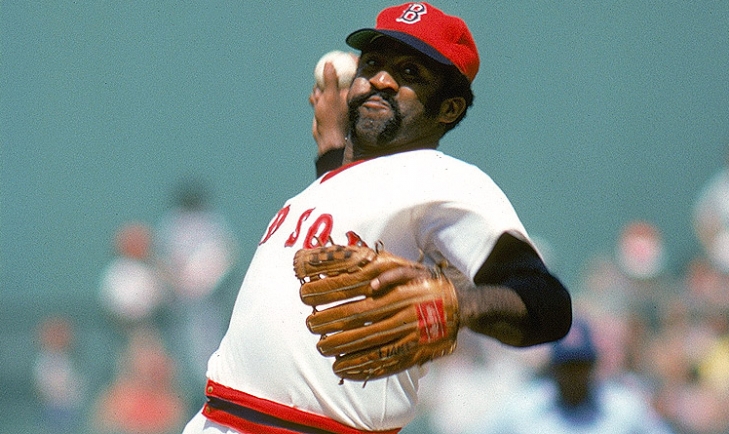
Luis Tiant’s journey to Boston began in 1971 on a humble minor league contract. After a dominant early career in Cleveland, injury and inconsistency had seemingly derailed the Cuban right-hander. His first year in Boston (1-7, 4.85 ERA) suggested he was finished. However, what followed in 1972 was one of the most spectacular career resurrections in baseball history. Tiant didn't just return; he reinvented himself, debuting a dizzying, corkscrew windup that left American League hitters completely baffled.
The 1972 season was a masterpiece of efficiency. Tiant secured the AL ERA Title with a 1.91 mark, going 15–6 and winning the AL Comeback Player of the Year. This was the start of a legendary run in which he became a 20-game winner in three of four seasons (1973, 1974, and 1976). Tiant was a rubber-armed workhorse who regularly threw over 250 innings a year, serving as the high-leverage heart of the Red Sox rotation.
Tiant’s Red Soximpact reached its zenith during the 1975 postseason. He was untouchable, going 3–0 in the playoffs, including a complete-game shutout of the powerhouse Oakland A's in the ALCS and two gritty wins in the World Series against Cincinnati's "Big Red Machine." His performance in Game 4, a 163-pitch complete-game victory, remains the gold standard for competitive fire in Red Sox lore. Though the team fell in seven games, Tiant’s heroics made him a permanent folk hero.
Over his eight seasons in Boston, Tiant compiled a 122–81 record with 1,075 strikeouts. He finished in the top six of Cy Young voting three times, providing the veteran stability that kept the Red Sox in contention throughout the mid-70s. Though he eventually signed with the rival Yankees after the 1978 season, his heart remained in Boston. Inducted into the Red Sox Hall of Fame in 1997, "El Tiante" is remembered as the pitcher who proved that style and substance could combine to capture a city's soul.
21. Dom DiMaggio
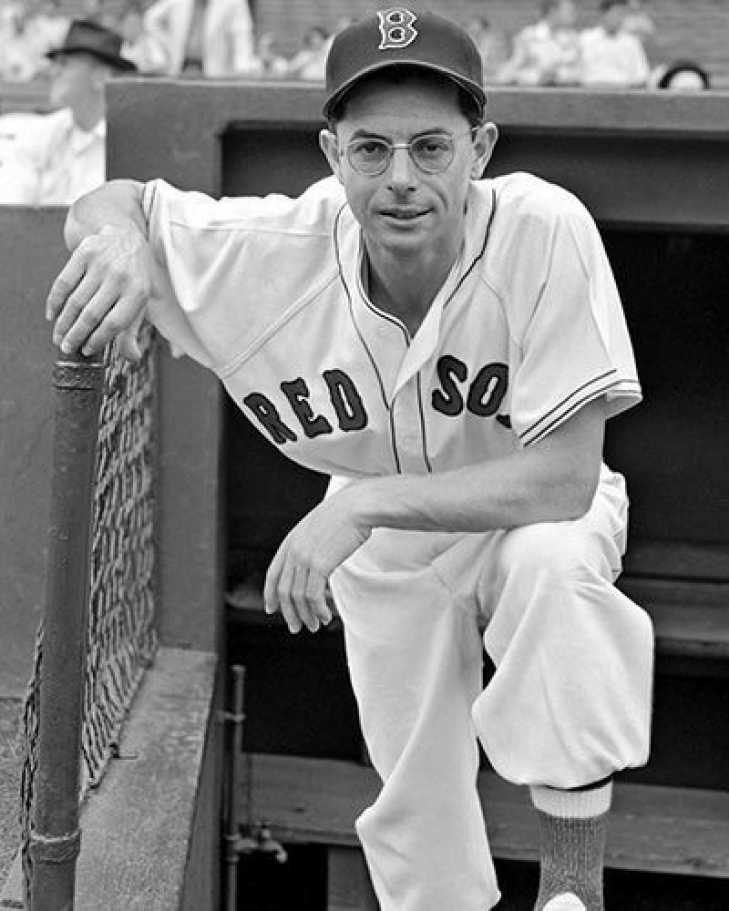
Though often introduced as the brother of Joe, Dom DiMaggio carved out a legacy in Boston that was entirely his own. Nicknamed "The Little Professor" for his spectacles and scholarly demeanor, he proved to be a clinical technician at the top of the lineup from the moment he debuted in 1940. A natural lead-off man, DiMaggio combined elite plate discipline with a high-contact bat, securing All-Star selections in each of his first two full seasons while consistently pacing the Red Sox offense with 165+ hits a year.
Like many of his teammates, DiMaggio’s career was interrupted by three years of military service during World War II. However, his return in 1946 was a masterclass in "Era Dominance" (Category 3). He batted a career-high .316 and earned his third All-Star nod, proving he hadn't missed a beat during his time away. Between 1949 and 1952, he was a perennial All-Star, showcasing a speed-and-discipline profile. His 1950 campaign was a statistical outlier; he led the American League in Runs Scored (131), Triples (11), and Stolen Bases (15), serving as the catalytic engine for the high-powered Boston offense.
Defensively, DiMaggio was considered one of the most intelligent center fielders of his era. He utilized a deep knowledge of opposing hitters to position himself with mathematical precision, often neutralizing the tricky dimensions of Fenway Park. 383 On-Base Percentage was a mark of consistency that ensured he was almost always on base for the heart of the order. He played his entire 11-season career in a Red Sox uniform, finishing with 1,680 hits and a near-.300 career average.
Though his career ended abruptly in 1953, the "Little Professor" remained one of the most beloved figures in franchise history and embodied the grit and intelligence of the post-war Red Sox. Inducted into the Red Sox Hall of Fame in 1995, his legacy is defined not by his family name but by his role as the premier table-setter for a generation of Boston greats.
20. Fred Lynn
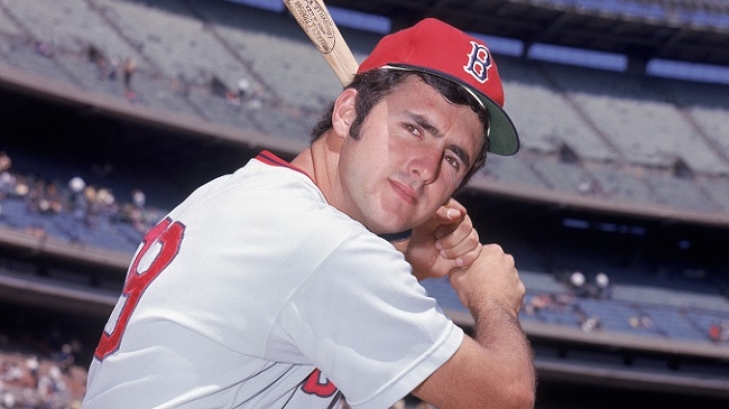
Fred Lynn arrived in Boston as a winner, having led USC to three consecutive College World Series titles before being drafted in 1973. After a brief 15-game cup of coffee in 1974, he entered 1975 ready to make history. In a feat that remained unmatched for decades, Lynn became the first player in Major League history to sweep the AL Rookie of the Year and MVP awards in the same season. As the defensive anchor in center field, he combined acrobatic catches with a bat that led the league in Runs (103), Doubles (47), Slugging (.566), and OPS (.967), propelling the Red Sox to an unforgettable World Series appearance.
Lynn’s brilliance wasn't limited to his historic debut. Over his seven seasons in a Red Sox uniform (1974–1980), he was a perennial force, being named an All-Star every single year he was in Boston. While his 1975 season is more famous, his 1979 campaign was statistically superior in nearly every significant metric. That year, he reached an untouchable offensive ceiling, winning the AL Batting Title (.333) and leading the league in OBP (.423) and Slugging (.637) while smacking a career-high 39 home runs and 122 RBIs. Despite this Triple Crown-caliber slash line, he finished a controversial fourth in MVP voting, losing to a statistically inferior Don Baylor.
Defensively, Lynn was the gold standard, earning four Gold Gloves during his Fenway tenure. His run in Boston was defined by his fearlessness; in Game 6 of the 1975 World Series, he famously crashed into the unpadded center-field wall, a moment of high-leverage sacrifice that defines his Boston legacy. Though he was traded to the California Angels after the 1980 season, he left a statistical footprint that includes 944 hits, 124 home runs, and a stellar .308/.383/.520 slash line.
