


gold star for USAHOF
 

20. Fred Lynn

20. Fred Lynn
  1. General
  2. Awards
  3. Career Stats
  • Born: February 3, 1952 in Chicago, IL USA
  • Weight: 185 lbs.
  • Height: 6'1"
  • Bats: L
  • Throws: L
  • Debut: September 05, 1974
  • Final Game: October 03, 1990
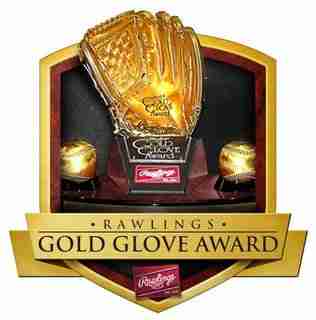
  • Gold Glove - 1975
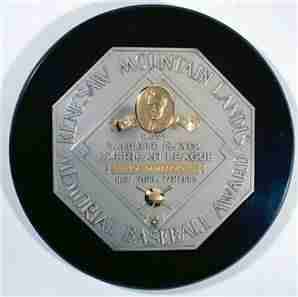
  • Most Valuable Player - 1975
  • Rookie of the Year - 1975
  • TSN All-Star - 1975
  • TSN Player of the Year - 1975
  • Gold Glove - 1978
  • TSN All-Star - 1978
  • Gold Glove - 1979
  • TSN All-Star - 1979
  • Gold Glove - 1980
  • ALCS MVP - 1982
  • All-Star Game MVP - 1983
  • MVP - 1975
  • MVP - 1978
  • MVP - 1979
  • MVP - 1980
  • Rookie of the Year - 1975
 
ABRHHRRBISBAVG
13850212639206122222144 0.283
 

Fred Lynn arrived in Boston as a winner, having led USC to three consecutive College World Series titles before being drafted in 1973. After a brief 15-game cup of coffee in 1974, he entered 1975 ready to make history. In a feat that remained unmatched for decades, Lynn became the first player in Major League history to sweep the AL Rookie of the Year and MVP awards in the same season. As the defensive anchor in center field, he combined acrobatic catches with a bat that led the league in Runs (103), Doubles (47), Slugging (.566), and OPS (.967), propelling the Red Sox to an unforgettable World Series appearance.

Lynn’s brilliance wasn't limited to his historic debut. Over his seven seasons in a Red Sox uniform (1974–1980), he was a perennial force, being named an All-Star every single year he was in Boston. While his 1975 season is more famous, his 1979 campaign was statistically superior in nearly every significant metric. That year, he reached an untouchable offensive ceiling, winning the AL Batting Title (.333) and leading the league in OBP (.423) and Slugging (.637) while smacking a career-high 39 home runs and 122 RBIs. Despite this Triple Crown-caliber slash line, he finished a controversial fourth in MVP voting, losing to a statistically inferior Don Baylor.

Defensively, Lynn was the gold standard, earning four Gold Gloves during his Fenway tenure. His run in Boston was defined by his fearlessness; in Game 6 of the 1975 World Series, he famously crashed into the unpadded center-field wall, a moment of high-leverage sacrifice that defines his Boston legacy. Though he was traded to the California Angels after the 1980 season, he left a statistical footprint that includes 944 hits, 124 home runs, and a stellar .308/.383/.520 slash line.

The Bullet Points

  • Position: Outfield
  • Acquired: Selected in the 2nd Round of the Amateur Draft 6/5/73.
  • Departed: Traded to the California Angels with Steve Renko for Jim Dorsey, Joe Rudi, and Frank Tanana 1/23/81.
  • Games Played: 828
  • Notable Statistics: 523 Runs Scored
    944 Hits
    217 Doubles
    29 Triples
    124 Home Runs
    521 Runs Batted In
    43 Stolen Bases
    .308/.383/.520 Slash Line
    32.1 bWAR

    10 Playoff Games
    4 Runs Scored
    11 Hits
    2 Doubles
    0 Triples
    1 Home Run
    8 Runs Batted In
    0 Stolen Bases
    .306/.350/.444 Slash Line
  • Major Accolades and Awards:

    MVP (1975)
    All-Star (1975, 1976, 1977, 1978 & 1979)
    Rookie of the Year (1975)
    Gold Glove (1975, 1978, 1979 & 1980)
    Highest bWAR for a Position Player (1979)
    Highest Offensive bWAR (1979)
    Highest Batting Average (1979)
    Highest On Base Percentage (1979)
    Highest Slugging Percentage (1975 & 1979)
    Highest OPS (1975 & 1979)
    Most Runs Scored (1975)
    Most Doubles (1975)
    Highest OPS+ (1979)
    Highest Championship Win Probability Added (1975 & 1978)
    Most Double Plays Turned by a Centerfielder (1976 & 1980)
    Highest Fielding Percentage by a Centerfielder (1980)

  • Other Points of Note: Top Ten MVP Finishes:
    1st in 1975 & 4th in 1979
Tagged under

Comments powered by CComment