


Site Admin
92. Tommy Leach
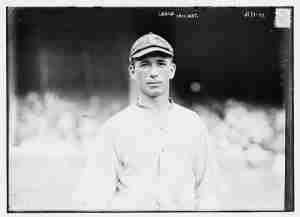
How many times is an athlete described as “small in stature but big in heart”? This analogy has been used more times than we can determine, but far too often, and it was an accurate assessment when describing the turn-of-the-century ballplayer Tommy Leach.
“Wee” Tommy Leach was a triples machine and one of the fastest ballplayers of his day. Leach hit a few Home Runs in the dead-ball era, though most of them were of the inside-the-park variety. For all intents and purposes, Leach was a power hitter and often cleared the bases, or would himself get on base for the legendary Honus Wagner, who batted behind him during his heyday in Pittsburgh. It was fitting that it was Tommy Leach who would get the first hit and first run in World Series history. Injuries would catch up to him by 1910, and he wasn’t the same player, but Leach is a forgotten star in the first century of the 1900’s.
Should Tommy Leach be in the Hall of Fame?
80. Urban Shocker
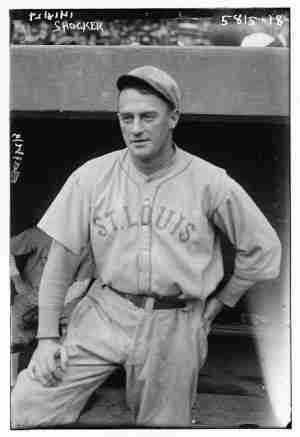
Seriously, is this not the coolest name on this list? Just that name alone would make him a star in any era. Make no mistake, Shocker was a star, but because his best years were with the St. Louis Browns, he was often out of the spotlight despite dominating seasons in the early 1920s.
Those aforementioned campaigns saw Shocker post four consecutive years of 20-plus victories, including a 27-win season in 1921. In fact, at no point in his career did he ever have a losing season. Shocker was known on the mound for a beautiful delivery and an intense approach to the game. He rarely smiled and was content not to draw any attention to himself. Even when he left St. Louis and was traded to the New York Yankees (a team he dominated when up against), he faded to the background, likely just the way he wanted.
Baseball is full of colorful characters with colorful names. As petty as it sounds, Urban Shocker might have been significantly more famous had he been half as interesting as his name.
Should Urban Shocker be in the Hall of Fame?
120. Bob Elliott
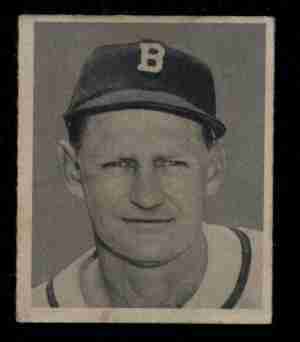
In this era of the overpriced, overpampered, selfish athlete, we can’t help but like a player who was nicknamed “Mr. Team”. This isn’t to say that Bob Elliott did not still rack up some impressive individual accolades, as he certainly did just that.
Bob Elliott had some solid campaigns for the Pittsburgh Pirates, but because many of the great stars were away during World War II, he did not have many to compete against. Elliott would still prove valuable, as when the League returned to full strength, he put up his best numbers (as a member of the Boston Braves) and would win the NL MVP in 1947.
At the time of his retirement, Bob Elliott was the all-time leader for Home Runs and Slugging for Third Basemen. This has been surpassed by many since then, but it should not be forgotten what he accomplished during his era.
Should Bob Elliot be in the Hall of Fame?
7. Jim McCormick
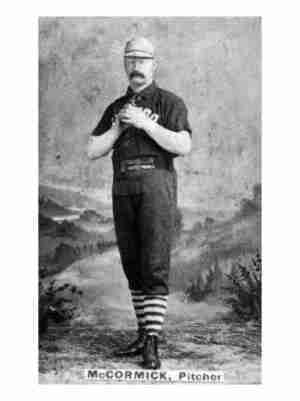
A dominating pitcher for a few seasons in the early 1880s, Jim McCormick was a bruising Scotsman whose underhanded prowess netted him 265 wins in what was a relatively brief career. Of course, he played in a time when teams essentially rode the same two pitchers. It wasn’t like McCormick could blame his manager in those early seasons; he was the Player/Manager.
Had there been a Cy Young Award in 1880 and 1882, Jim McCormick may very well have won it. In those two campaigns, he led the National League in every major Pitching Category. The issue with McCormick is that, even though he was a dominant player, he was not for long, and no position on the mound has changed more; those early flame throwers are often too easily overlooked. Had he won 300 Games, a milestone that ensured a Hall of Fame induction in the early days, McCormick would be inducted.